

Here’s the scenario every barrier exists for: you’re merging onto the highway, your dog decides the front seat looks better, and suddenly there’s a 70-lb Lab head in your lap and a paw on the steering wheel. Or the red-light version — nose in your ear, drool on the center console. A dog barrier keeps your dog in the back seat, which keeps you focused on driving. It’s the simplest safety upgrade in car travel.
The honest note most roundups skip: a barrier is a divider, not a restraint. It won’t protect your dog in a crash the way a secured crate or crash-tested harness does — a determined dog can push past, chew through, or jump over most of them. The real question is which type matches your dog: mesh nets are cheap and packable but sag; metal tube barriers are sturdy but leave side gaps; hammock-style barriers protect your seats but add bulk. This guide covers six real barriers for regular cars and sedans, where the back seat — not a cargo area — is the dog zone, with the complaints owners actually report.
Pet Travel Items is reader-supported. When you buy through links on this page, we may earn a commission at no extra cost to you. Our picks are driven by documented owner feedback, never by commission rates.
Best Dog Barriers for Cars at a Glance
| # | Product | Key Spec | Best For | |
|---|---|---|---|---|
| 1 | PetSafe Happy Ride Dog Barrier | Mesh · headrest straps | Best overall | Check Price |
| 2 | High Road Back Seat Barrier | Steel frame · coated net | Best framed barrier | Check Price |
| 3 | Wellbro Dog Car Backseat Barrier | Padded nylon net · 2 windows | Budget pick | Check Price |
| 4 | Zookeeper Vehicle Pet Barrier | Metal tube · 42–61″ wide | Best metal barrier | Check Price |
| 5 | Amazon Basics Adjustable Dog Car Barrier | Steel mesh · 48–57″ wide | Best budget metal | Check Price |
| 6 | URPOWER High Barrier Back Seat Extender | Hammock + barrier · 550 lb | Best 2-in-1 | Check Price |
Prices shift constantly — check before you buy. Fit depends on your car: measure before ordering.
1. PetSafe Happy Ride Dog Barrier — Best Overall
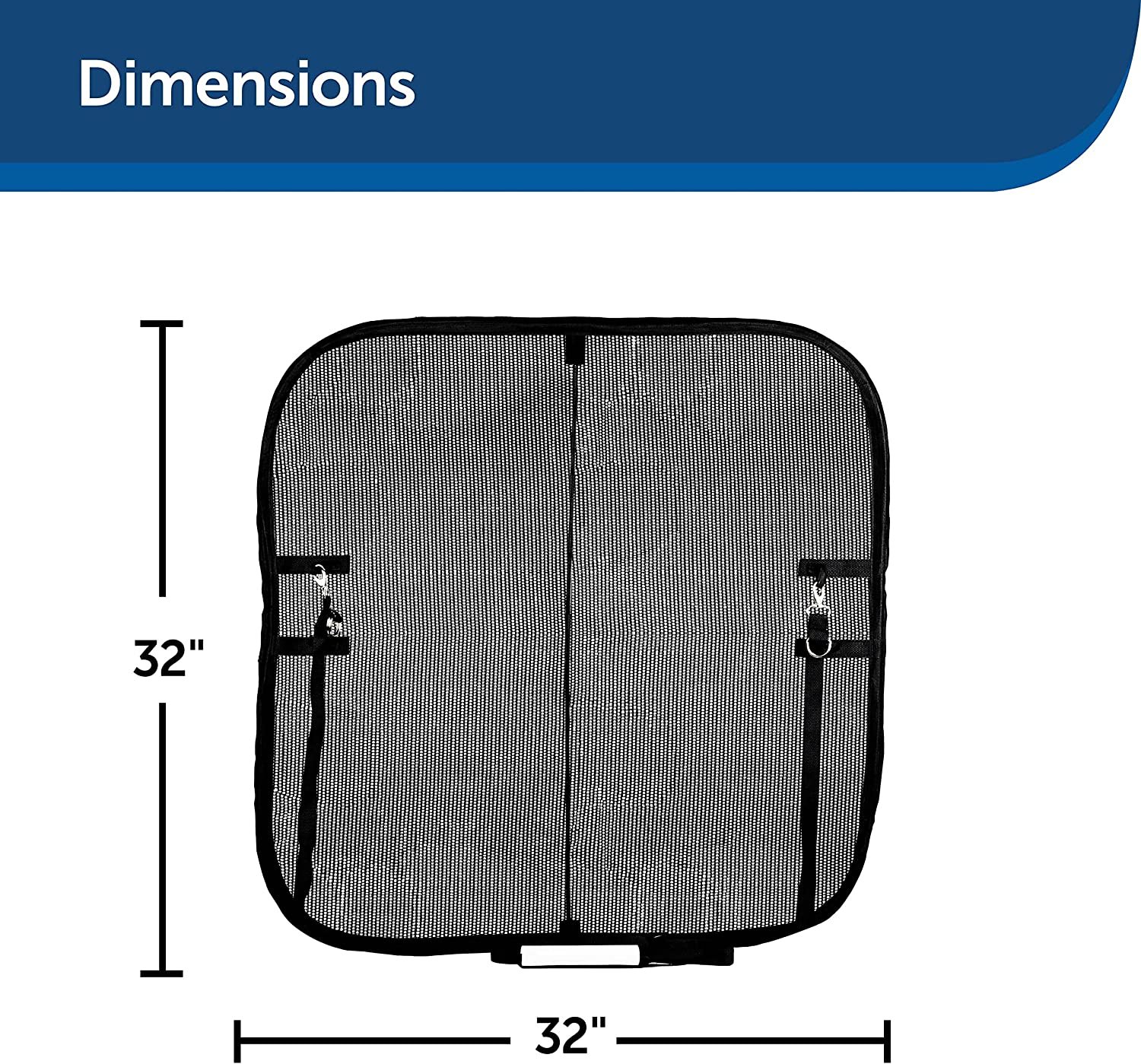
PetSafe’s Happy Ride barrier is the default recommendation for a reason: it’s a durable mesh panel that mounts to your front headrests with adjustable straps and a flexible wire frame for stability, works across cars, trucks, and SUVs, and folds flat into an included storage pouch when you’re done. The mesh keeps airflow and visibility between the seats — you can see the dog, the dog can see you, and the AC still reaches the back. PetSafe has been in the pet-travel business for decades, which shows in the details like the cinch straps that actually hold tension.
The honest complaints: this is the classic mesh-barrier bargain. Determined dogs push the mesh down or nose under the bottom edge, especially if the straps aren’t cinched tight. Straps loosen over time and need periodic retightening — owners who install it once and forget it come back to a sagging barrier. And it’s a deterrent, not a wall: a dog that really wants the front seat will find the edges.
Specs: durable mesh panel · adjustable headrest straps + flexible wire frame · fits cars, trucks, SUVs · folds into storage pouch.
Pros: trusted brand; airflow and visibility; packs flat; easy install and removal.
Cons: determined dogs push under or past it; straps need periodic retightening; a deterrent, not a wall.
Verdict: The safest default for calm to moderately pushy dogs. Check the price on Amazon.
2. High Road Back Seat Barrier — Best Framed Barrier

High Road’s barrier answers the main weakness of plain mesh: it has a rigid steel top frame with foam bumpers that stays upright and won’t bend, stretch, or fold down, plus a chew-resistant coated net panel for full top-to-bottom coverage. Four adjustable straps (including a bottom cord to the seat base) keep it stable, and the tapered, narrower profile fits most compact cars and sedans without butting into the doors or blocking back-seat passenger entry. Height is adjustable so you can keep your rearview mirror view clear.
The honest complaints, partly from High Road’s own description: it does not cover the gap between the front seat and the doors, so small, agile dogs can slip around the sides — the brand explicitly says it’s not recommended for small dogs that fit those gaps. Determined chewers can work on the coated net over time. And like all barriers, it needs your headrests to mount to.
Specs: steel top frame with foam bumpers · chew-resistant coated mesh net · 4 adjustable straps · tapered universal fit · adjustable height.
Pros: rigid frame won’t sag or collapse; full coverage for medium/large dogs; sedan-friendly narrow profile; rearview stays clear.
Cons: side gaps near the doors — small dogs can slip through; chewers can damage the net; needs headrests.
Verdict: The best pick for sedans and pushy medium-to-large dogs — just not for small escape artists. Check the price on Amazon.
3. Wellbro Dog Car Backseat Barrier — Budget Pick
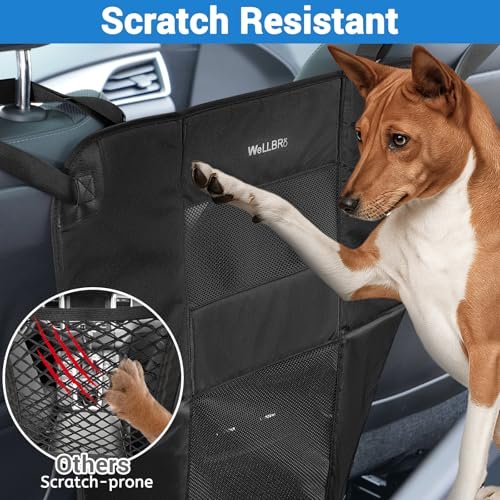
Wellbro’s barrier is the cheapest way into the category that still works: a padded nylon net with two mesh windows (one upper for visibility, one lower for airflow), EVA interlayer padding so it won’t sag, and four hooks that fit around headrests and seat bottoms. At roughly 23.6″ x 22.4″ it targets the gap between the front seats — the classic “dog launching over the center console” zone.
Be honest about the coverage: this is a between-the-seats barrier, not a full-width wall. A dog can still go around the sides past the front seats in many cars. It’s a great cheap fix for the console-jumper, not a containment system. Owner-reported complaints for this style center on the hooks slipping off headrest posts and the net being too narrow for wide vehicles — measure your front-seat gap first.
Specs: padded nylon net + EVA interlayer · 2 mesh windows · 4-hook install · ~23.6″ x 22.4″ coverage.
Pros: very affordable; padded so it won’t sag; mesh windows keep visibility and airflow; machine-washable.
Cons: only covers the between-seats gap; hooks can slip; too narrow for some vehicles.
Verdict: The cheap fix for the console-jumper — know its limits. Check the price on Amazon.
4. Zookeeper Vehicle Pet Barrier — Best Metal Barrier
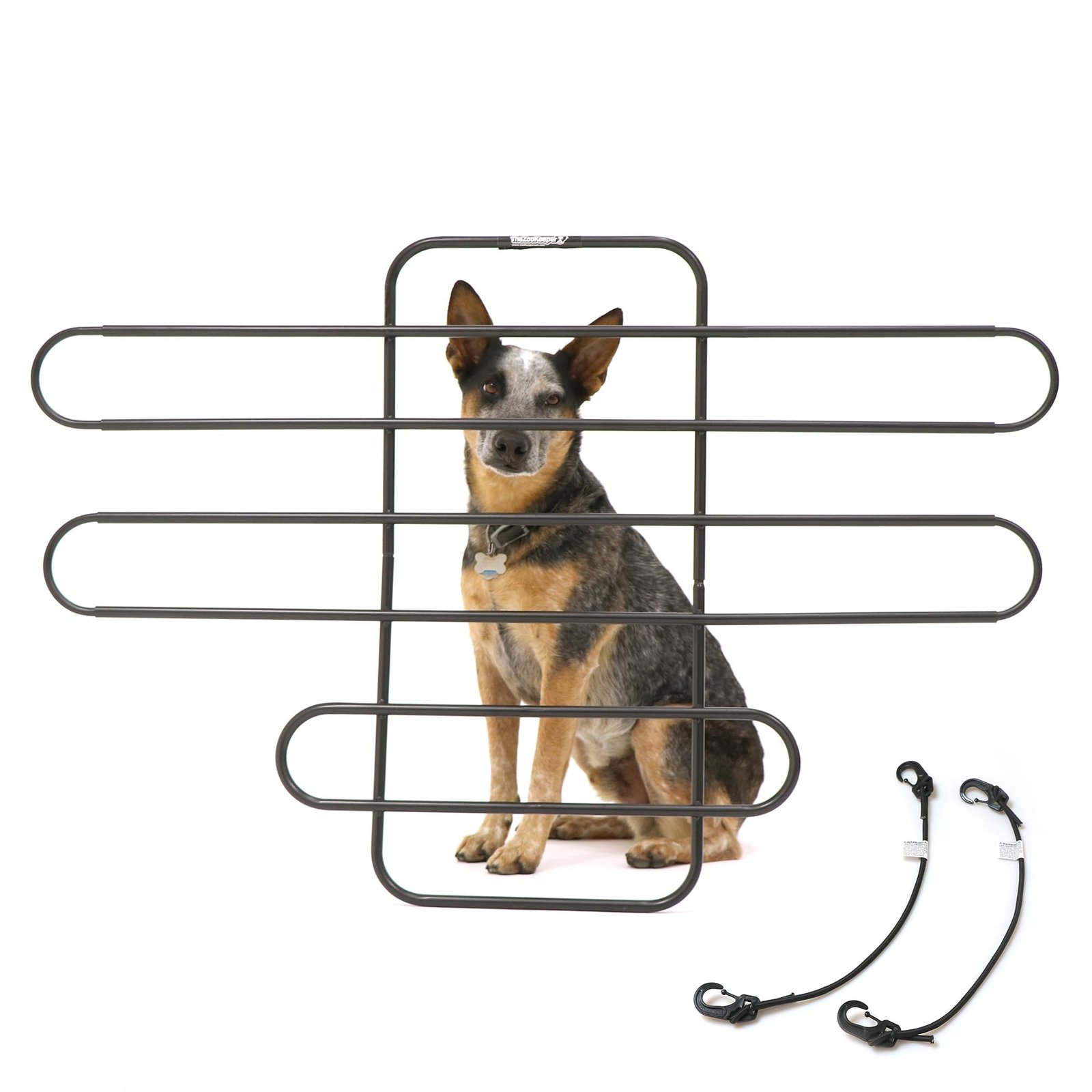
The Zookeeper is the premium metal-tube option: 28.75″ tall, adjusting from 42″ to 61″ wide, with strong metal tubing that no dog is chewing through. Its signature trick is that it moves with your seats — it tilts, slides, and reclines as you adjust the seatbacks, mounting with flexible cords around the headrest posts. No tools, no holes, nothing permanent. Visibility through the tubes is excellent, which drivers love.
The honest complaints: at under 29″ tall, athletic dogs can jump it — height is the eternal trade-off with tube barriers. There are gaps at the sides in some vehicles where a small or determined dog can squeeze past. And it’s the most expensive option here by a clear margin; you’re paying for the seat-moving mechanism and the metal build. The flexible cords also need occasional re-tensioning.
Specs: strong metal tubing · 28.75″ high · 42–61″ wide · tilts/slides/reclines with seats · headrest-cord install, no tools.
Pros: chew-proof metal; moves with seat adjustments; excellent visibility; no-tools install.
Cons: jumpable by athletic dogs; side gaps in some cars; premium price; cords need re-tensioning.
Verdict: The best metal barrier for dogs that respect boundaries — overkill for some, perfect for chewers. Check the price on Amazon.
5. Amazon Basics Adjustable Dog Car Barrier — Best Budget Metal

Amazon Basics’ barrier brings metal-mesh construction down to a budget price: a steel-and-plastic mesh panel that adjusts up to 48″ wide on top and 57″ on the bottom, with hook-and-screw mounts to your headrests and a 1-year Amazon warranty. It was ranked #3 in Dog Car Barriers on Amazon, and at 600+ bought in a month it’s clearly doing something right. The metal mesh stops chewers cold and there’s no sagging, ever.
The honest complaints: at 16″ tall it’s short — this is a cargo-area-height barrier, and a motivated dog can jump it if there’s a seat to launch from. Amazon’s own listing warns that sedans need a rear-seat mat or additional barrier for full coverage, and it only works with adjustable headrests that have metal support posts. The mounts are also less refined than premium options — check fit before a long trip.
Specs: steel mesh panel · adjusts to 48″ (top) / 57″ (bottom) wide · 16″ tall · headrest hook-and-screw mounts · 1-year warranty.
Pros: metal at a budget price; chew-proof; no sagging; strong sales track record; warranty included.
Cons: short — jumpable by motivated dogs; needs metal headrest posts; sedan use needs extra coverage; basic mounting hardware.
Verdict: The cheapest metal option that actually works — best for chewers on a budget. Check the price on Amazon.
6. URPOWER High Barrier Back Seat Extender — Best 2-in-1
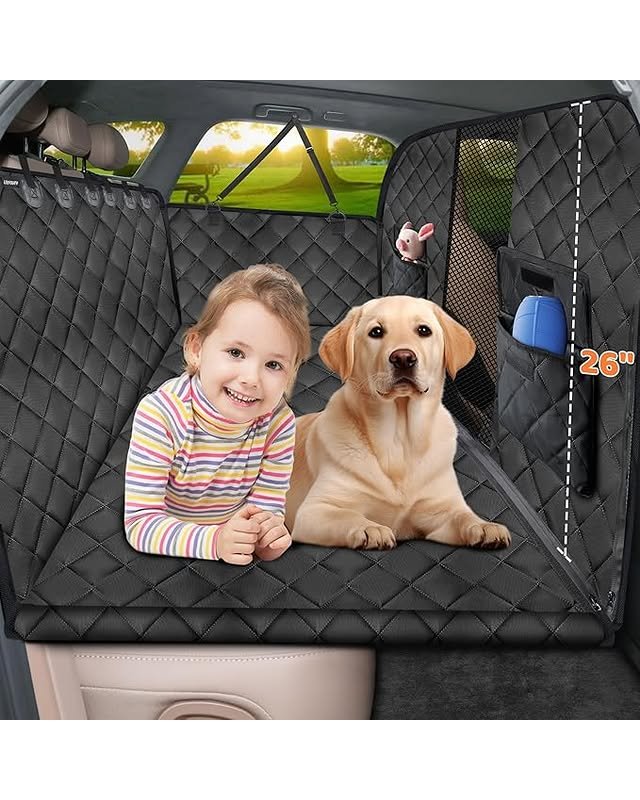
The URPOWER combines two products: a hard-bottom back-seat extender (a 550-lb-rated platform that turns the back seat into a flat dog bed) with a zippered high barrier panel that blocks the front seat. The 9-layer padded construction with a mesh window means your dog gets a comfortable platform, airflow, and a view of you — plus two storage pockets and an included seat belt tether. For long road trips with a big dog, the comfort upgrade is real.
The honest complaints: it’s heavy at over 9 lbs and bulky to store — this is not a toss-in-the-trunk item. It’s also the priciest pick here, and the “fold for passenger” feature is fiddlier in practice than in photos. The barrier panel zips, which is convenient for you and also convenient for a clever dog to nose at. Buy it for the platform; treat the barrier as a bonus.
Specs: hard-bottom extender, 550-lb rating · zippered high barrier panel with mesh window · 9-layer padded construction · ~9.3 lbs · includes seat belt tether.
Pros: back seat becomes a real bed; barrier included; mesh window reduces anxiety; storage pockets.
Cons: heavy and bulky; priciest pick; zipper is a weak point with clever dogs; fiddly to fold for passengers.
Verdict: The comfort king for long trips — buy it for the platform, enjoy the barrier. Check the price on Amazon.
Also worth knowing: Carhartt makes a Universal Nylon Duck Pet Barrier (heavy-duty duck canvas with mesh windows, sold at Tractor Supply and farm retailers) that we couldn’t verify on Amazon — worth a look if you want workwear-grade fabric.
How to Choose a Dog Barrier for Your Car
Mesh vs. metal is the fundamental choice. Mesh and net barriers are cheap, light, packable, and keep airflow — but they sag, and chewers defeat them. Metal tube and steel-mesh barriers are chew-proof and rigid but heavier, pricier, and leave gaps at the sides. Match the material to your dog: gentle dogs do fine with mesh; chewers and battering rams need metal.
Measure your car, not just your dog. Barriers mount to headrest posts (most need metal ones), and widths vary wildly — a compact sedan’s back seat is far narrower than a crew-cab truck’s. Check the barrier’s width range against your interior, and confirm your headrests are the post type, not the fixed kind.
Mind the side gaps. Almost no barrier seals the space between the front seats and the doors. Small, agile dogs exploit this; High Road explicitly warns against its barrier for small dogs for this reason. If your dog is a gap-finder, a full-width tube barrier or a hammock-style combo works better.
Height matters for jumpers. Short barriers (16″) stop climbers, not jumpers. If your dog can clear the seatback, you need a taller barrier — or accept that the barrier is a reminder, not a wall, and pair it with a seatbelt tether.
Don’t sacrifice your rearview. Barriers that block the mirror get removed — and then they protect nobody. Mesh, widely spaced tubes, and height-adjustable designs keep your view clear. If you can’t see through it comfortably on a test fit, return it.
A barrier is not crash protection. This is the big one: barriers keep dogs out of your lap, which prevents accidents. They do not protect the dog in an accident. For crash safety, pair the barrier with a crash-tested harness and seatbelt tether or a secured crate. Distraction prevention and crash protection are two different jobs.
Bottom line: the PetSafe Happy Ride Dog Barrier is the best all-rounder for typical cars and typical dogs — easy, packable, and from a brand that stands behind it. Go High Road if you want a rigid frame for a sedan, Zookeeper if your dog chews through everything, Amazon Basics for metal on a budget, and URPOWER if you want the back seat to double as a proper dog bed on long trips.
Frequently Asked Questions
Will a dog barrier fit my car?
Most barriers are universal-fit and mount to front headrest posts with straps or cords, covering compact cars through SUVs. The exceptions: fixed (non-post) headrests, very wide crew cabs, and some metal barriers that need specific headrest types. Measure your back-seat width and check the barrier’s range before buying.
Can a determined dog get past a barrier?
Yes — every barrier type has a defeat: mesh can be pushed under or chewed, tube barriers have side gaps, short barriers can be jumped. Barriers are deterrents that stop casual wandering, which covers most dogs most of the time. For true escape artists, combine a barrier with a seatbelt tether.
Mesh or metal dog barrier — which is better?
Mesh wins on price, weight, packability, and airflow; metal wins on chew-resistance and rigidity. For a gentle dog in a sedan, mesh is plenty. For a chewer, a powerful dog, or a barrier that lives in the car permanently, metal is worth it.
Will a barrier block my rearview mirror?
It shouldn’t if you choose well. Mesh panels, spaced metal tubes, and height-adjustable designs preserve rear visibility. Test-fit before a trip: sit in the driver’s seat and check the mirror. If the view is compromised, adjust the height or return it.
Do dog barriers work for small dogs?
With caveats. Small dogs slip through the side gaps that most barriers leave near the doors — High Road’s own product page warns about this. A full-width barrier, a hammock-style combo, or a barrier plus a tether works better for little escape artists.
Is a dog barrier enough to keep my dog safe in the car?
It keeps your dog out of the front seat, which keeps you focused — that’s real safety. But it doesn’t restrain your dog in a crash. For crash protection, add a crash-tested harness with a seatbelt tether or travel with your dog in a secured crate.
