

Picture the walk you actually want: your dog notices another dog across the street, tenses — and instead of your shoulder coming out of its socket, the harness turns her gently back toward you. That’s what a no-pull harness does at its best. What it doesn’t do is train your dog while you scroll your phone. Every honest trainer will tell you the same thing: the harness is a tool, and tools need a user.
The honest note most roundups skip: “no-pull” is a mechanism, not a promise. Front-clip harnesses redirect pulling; martingale-loop harnesses add gentle tightening; and none of them work if the fit is sloppy — a loose no-pull harness is just an expensive regular harness. This guide compares six no-pull designs with genuinely different mechanisms, plus the complaints owners actually report: straps that loosen mid-walk, armpit chafing, confusing fits, and pulling that the harness merely relocates instead of reducing.
Pet Travel Items is reader-supported. When you buy through links on this page, we may earn a commission at no extra cost to you. Our picks are driven by documented owner feedback, never by commission rates.
Best No-Pull Dog Harnesses at a Glance
| # | Product | Mechanism | Best For | |
|---|---|---|---|---|
| 1 | 2 Hounds Design Freedom No-Pull (1″) | Martingale loop + front ring | Best overall | Check Price |
| 2 | PetSafe Easy Walk (L) | Front martingale loop | Best classic starter | Check Price |
| 3 | Blue-9 Balance (M/L) | Front + back D-rings, Y-front | Best for training | Check the price on Amazon |
| 4 | Ruffwear Front Range (L/XL) | Front webbing loop + back V-ring | Best for active dogs | Check the price on Amazon |
| 5 | rabbitgoo No-Pull (L) | Front + back D-rings, padded vest | Best budget padded | Check Price |
| 6 | PoyPet No-Pull (M, new version) | Front + back clips, 3 buckles | Best value pick | Check the price on Amazon |
Prices shift constantly — check before you buy. Sizes are manufacturer figures.
1. 2 Hounds Design Freedom No-Pull (1″) — Best Overall
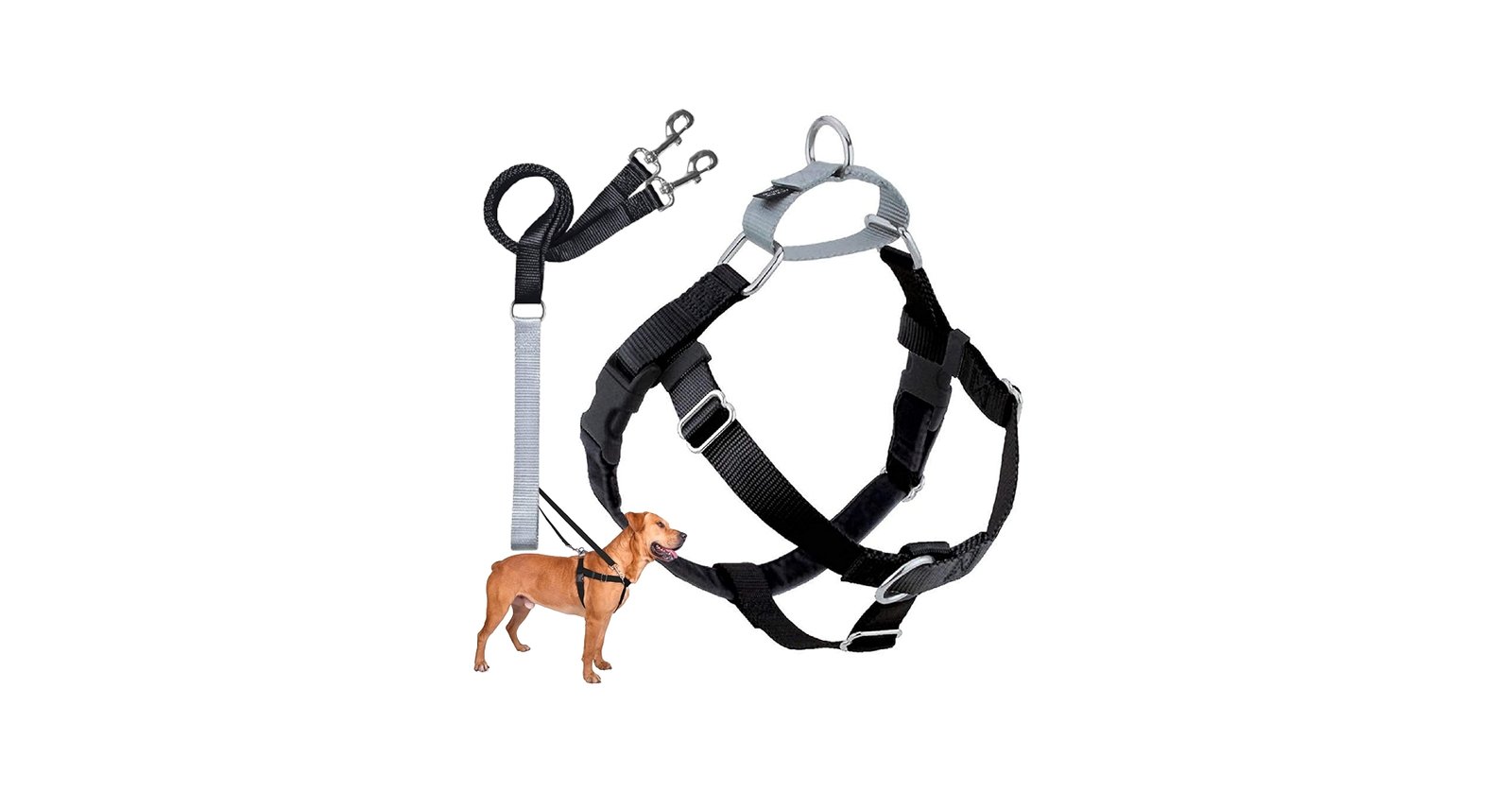
The Freedom is the no-pull harness other harnesses get compared to, and the one a veterinary reviewer (Dr. Jennifer Coates, DVM, via puppygrowthcalculator.com) chose as best overall with a 4.5/5 rating. Its mechanism is different from the front-clip crowd: a patented martingale loop on the back tightens gently around the chest when the dog pulls, while a structural ring on the front lets you attach a second leash point and steer like reins. The chest strap is lined with Swiss Velvet specifically to prevent armpit chafing, the hardware is stainless steel, it’s made in the USA, and it carries a chew-replacement warranty.
The honest part: there’s no padding — it’s webbing against your dog — which the vet review lists as its con. And the double-ended leash that makes the two-point steering work is sold separately, so the out-of-the-box experience is a single-clip harness. Fit takes one careful session to learn, and it’s worth doing: a sloppy Freedom fit defeats the martingale loop entirely.
Specs: patented rear martingale loop + front structural ring · stainless steel hardware · Swiss Velvet chest-strap lining · 4 adjustment points · sizes from 14 lbs to 250+ lbs · made in USA · chew warranty.
Pros: the most effective pull-reduction mechanism here; vet’s top pick; anti-chafe lining; bombproof hardware.
Cons: no padding; double leash sold separately; fitting has a learning curve.
Verdict: If you buy one no-pull harness, make it this one — then actually learn the fit. Check the price on Amazon.
2. PetSafe Easy Walk (L) — Best Classic Starter
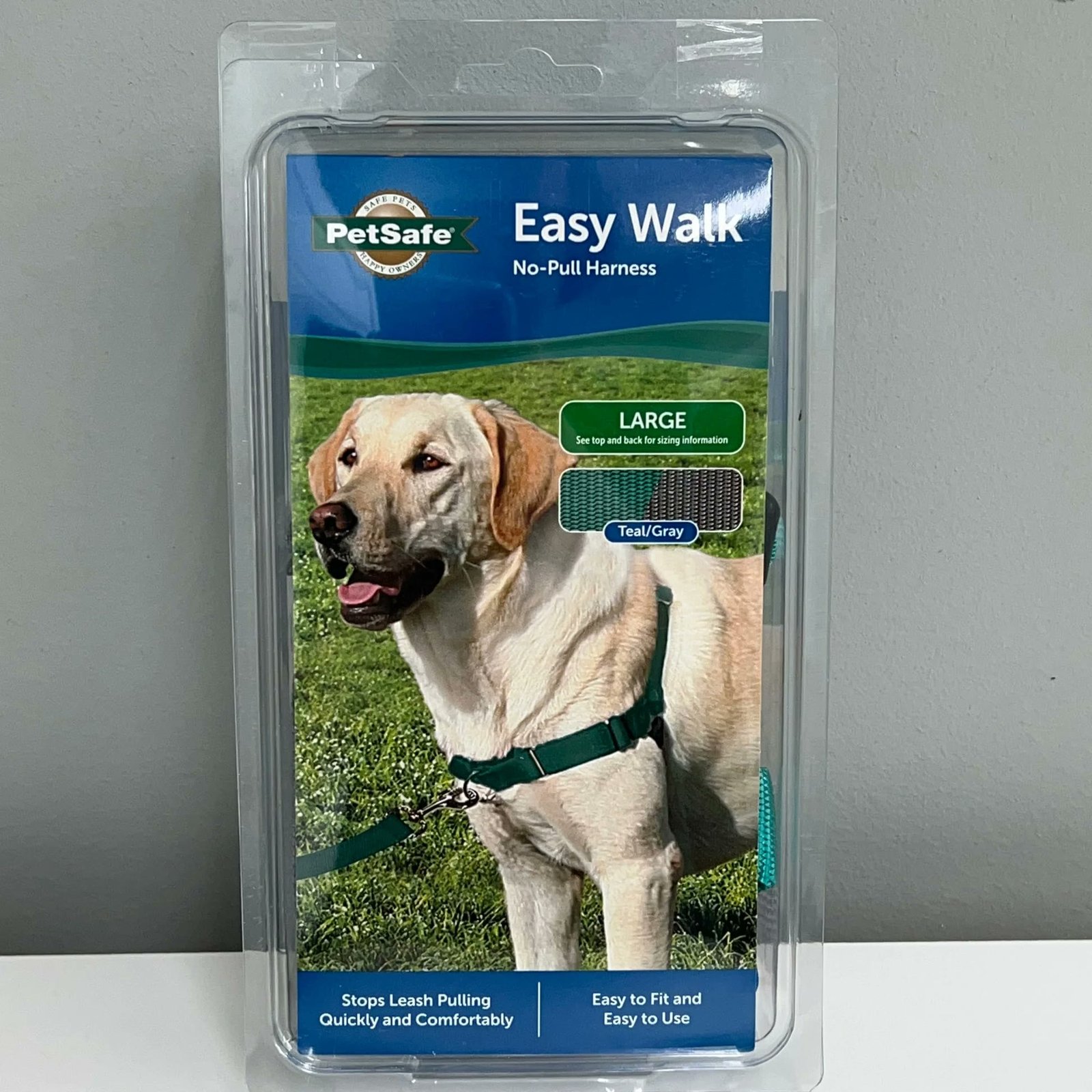
Designed by a veterinary behaviorist in 2004, the Easy Walk is the harness most trainers hand to first-time puller owners — and a tested 2026 roundup (whoismcafee.com) still ranks it for its patented front martingale loop, which tightens gently across the chest and steers the dog back toward you with zero throat pressure. It’s light, breathable, minimal — on a hot walk it’s the coolest-wearing pick here — and it costs a fraction of the premium options (roundups list it around $20–30). Chewy shows it at 4.3 stars across several thousand ratings.
The honest part is well documented: the straps can loosen mid-walk and need periodic re-tightening (whoismcafee.com lists exactly this as its con), and the chest strap sits low enough that a poor fit causes armpit rubbing — one long-form reviewer (bigdogmom.com) calls proper fit “easy to get wrong” and notes it can restrict front-leg movement on some builds. Deep-chested breeds are the worst fit. It also has no back leash attachment on the classic version and no padding. Check the straps every walk, not every month.
Specs: L fits ~50–100 lbs · patented front martingale loop · front chest leash attachment only · lightweight minimal straps · color-coded belly strap · 8 sizes.
Pros: the proven starter design; cheapest effective option; coolest-wearing; vet-behaviorist heritage.
Cons: straps loosen and need re-tightening; armpit chafing when misfitted; poor fit on deep-chested dogs; no padding or back clip.
Verdict: The gateway no-pull harness — cheap, effective, but demands fitting discipline. Check the price on Amazon.
3. Blue-9 Balance (M/L) — Best for Training
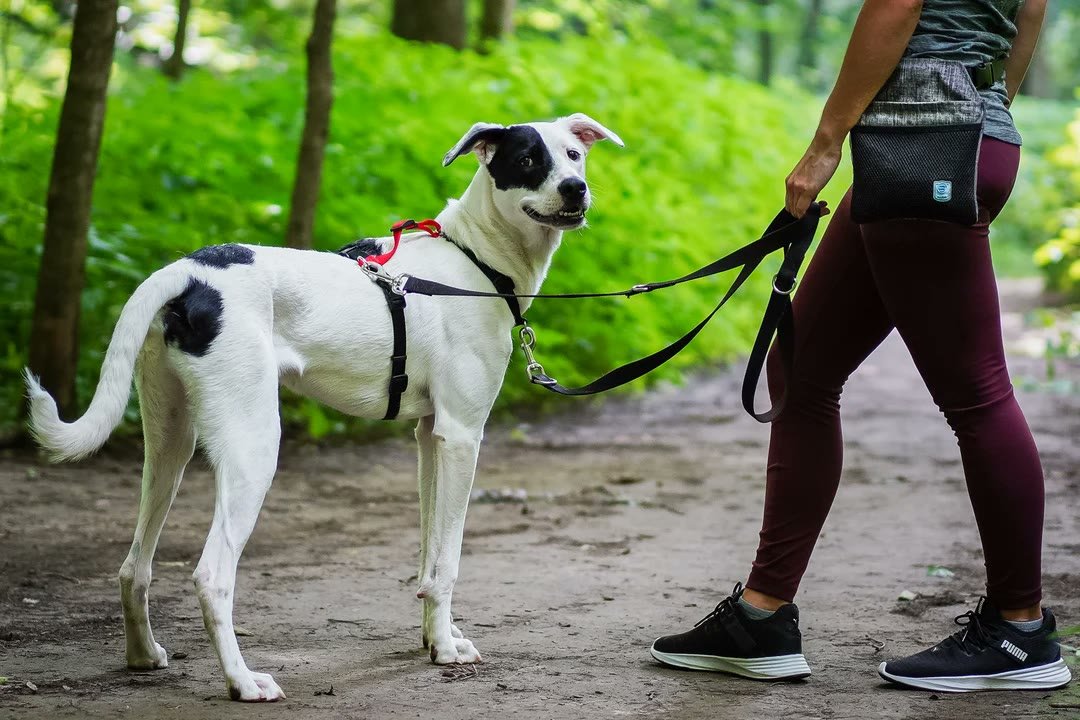
Trainers recommend the Blue-9 for a specific reason: its Y-shaped front doesn’t restrict shoulder movement, so the dog can move and learn naturally instead of fighting the gear. Six adjustment points fit neck, chest, and girth independently — ideal for odd proportions — and the buckle neck means nothing goes over the head, which matters for head-shy rescues in training. Front and back D-rings give you both no-pull and casual-walk options, and it’s made in the USA. Chewy ratings run 4.3–4.4 stars.
The honest part: this is the fiddliest harness here. Chewy reviewers describe putting it on as solving a puzzle — straps tangle, and choosing front vs. back orientation takes practice. Multiple owners report it runs large and can slide or cinch behind the armpit, and the soft nylon one owner praised for comfort let another owner’s dog chew straight through it in minutes. Premium-priced too (roundups list around $55–75). This is a trainer’s tool, not a grab-and-go harness.
Specs: M/L fits 24–35.5″ ribcage · 6 adjustment points · Y-front for free shoulders · buckle neck (doubles as safety release) · front + back D-rings · made in USA.
Cons: genuinely complicated to fit and put on; runs large; soft nylon vs. chewers; premium price.
Verdict: The thinking owner’s harness — superb for training, terrible for anyone who wants simple. Check the price on Amazon.
4. Ruffwear Front Range (L/XL) — Best for Active Dogs
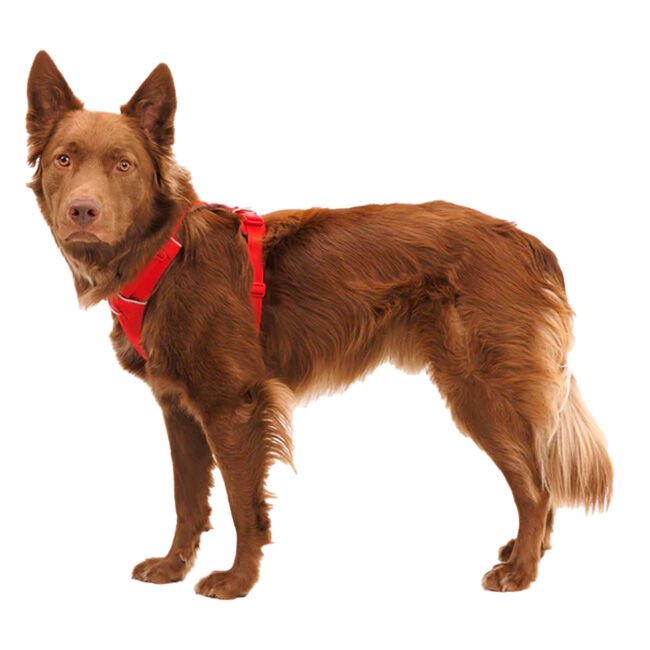
For dogs whose pulling happens on trails, hikes, and travel days rather than the sidewalk, the Front Range is the no-pull harness built like outdoor gear. Foam-padded chest and belly panels protect against lunging, the aluminum back V-ring handles the main leash, and the reinforced front webbing loop gives you the no-pull option. Four adjustment points, reflective trim, an ID pocket, and sizing up to ~42-inch chests. The vet review rated it 4.7/5 — the highest score it gave any harness.
The honest part: that front no-pull point is a fabric loop, not a metal ring — the reviewer’s stated con, and a real durability question for heavy, sustained pullers. It’s also the priciest pick here (roundups list around $50–70) and the padded vest runs warm. If your dog’s pulling is a city-sidewalk problem rather than a trail problem, you’re paying for ruggedness you won’t use.
Specs: L/XL fits chests up to ~42″ · foam-padded panels · aluminum back V-ring + front webbing loop · 4 adjustment points · reflective trim · ID pocket.
Pros: highest vet-review score; padded and trail-tough; dual clips; true large-dog sizing.
Cons: front clip is fabric, not metal; premium price; warm in summer.
Verdict: The adventure no-pull harness — buy it for the hiking dog, not the couch dog. Check the price on Amazon.
5. rabbitgoo No-Pull (L) — Best Budget Padded
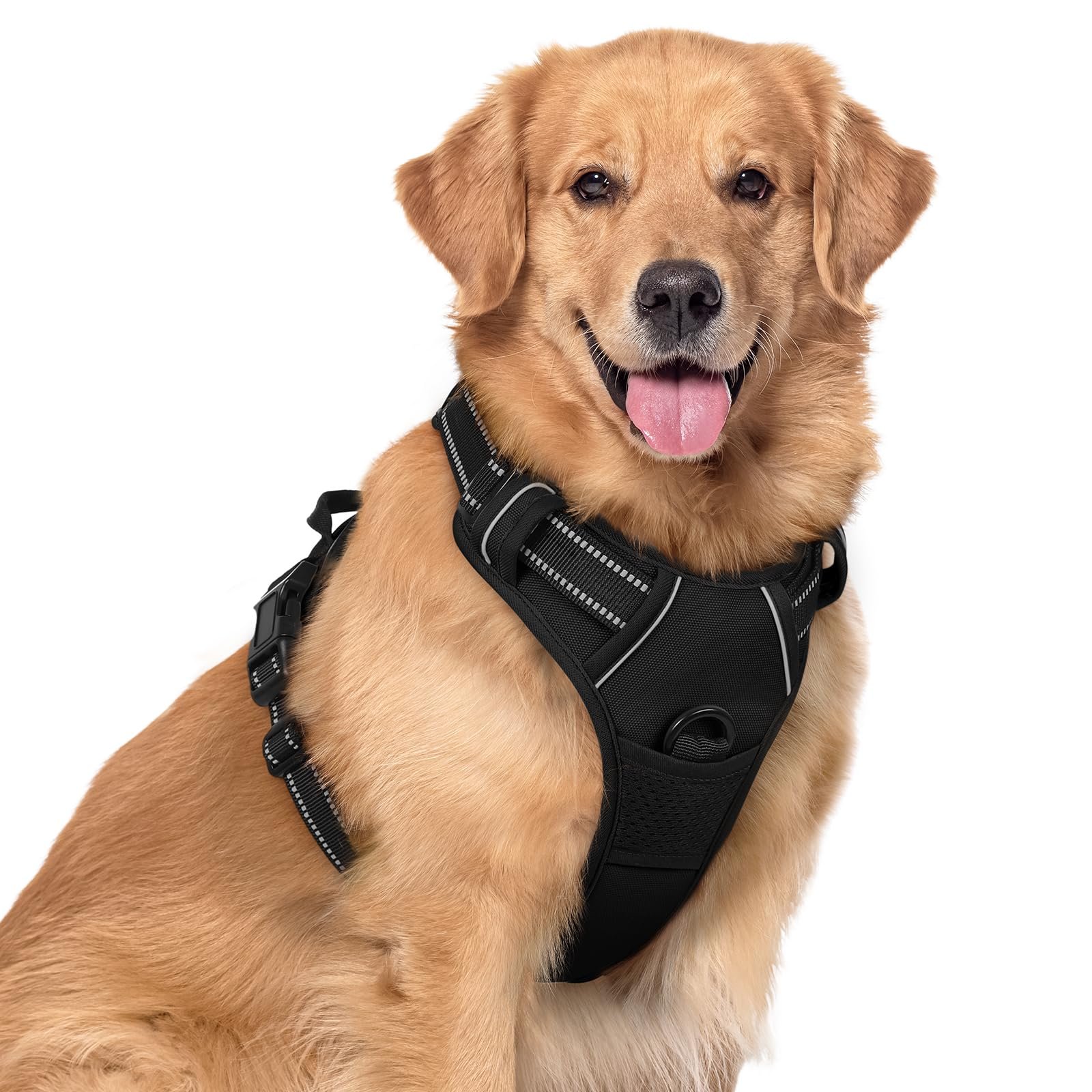
The rabbitgoo is what you buy when you want padding and dual clips without the premium price (roundups list it around $25–35). Metal D-rings front and back, thickly padded and breathable vest panels, four adjustment straps, a padded top grab handle, and reflective strips. The vet review gave it 4.5/5 as its best padded pick.
The honest part: the review’s cons were that it can be bulky on some dogs and isn’t sized for all breeds, and one gear-testing outlet found the back runs short on longer-bodied dogs, pushing straps toward the armpits. Budget construction also means straps stretch and loosen over time — plan to re-tighten regularly. It’s the most harness for the money, not the most harness, period.
Specs: L for medium–large breeds (~13–38″ chests across the size range) · padded vest panels · front + back metal D-rings · top control handle · reflective strips · 4 adjustment points.
Pros: padded comfort at half the premium price; metal hardware both ends; grab handle; tons of colors.
Cons: bulky on some builds; short back on long dogs; straps stretch and loosen.
Verdict: Maximum features per dollar — just stay on top of the fit. Check the price on Amazon.
6. PoyPet No-Pull (M, New Version) — Best Value Pick
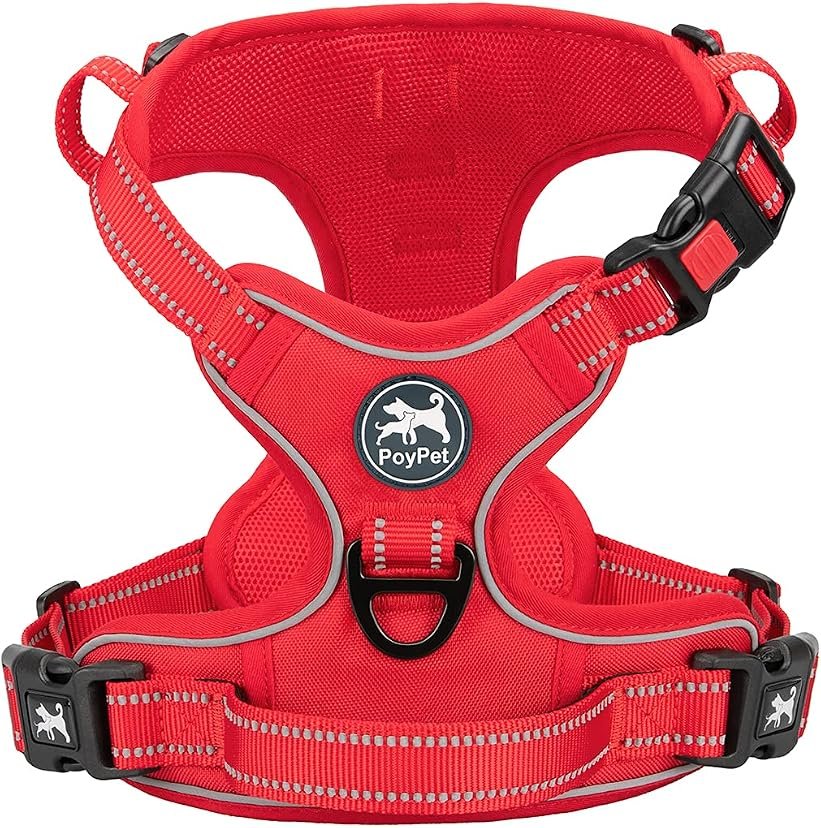
The PoyPet is the vet review’s best budget no-pull pick (4.5/5), and the updated version fixes the original’s biggest annoyance: three snap buckles — two on the belly, one locking buckle at the neck — mean you never have to wrestle it over your dog’s head. Two metal leash attachments (front for no-pull, back for casual walks), padded breathable mesh, reflective stitching, a padded top handle that doubles as a seatbelt loop, and four adjustment points. The belly straps have some elastic give to absorb jerks.
The honest part: the vet review’s con is “not suitable for all dogs” — budget harnesses fit average builds best, and deep-chested or oddly proportioned dogs may defeat it. The buckles are plastic rather than the metal hardware on premium picks, so inspect them periodically if your dog is a hard lunger. And the brand itself stresses measuring carefully before buying — take that seriously, because returns are the hidden cost of budget gear.
Specs: M fits ~14–20″ neck, 16–28″ chest (5 sizes, ~10–39″ chests) · 3 snap buckles incl. locking neck buckle · front + back metal attachments · padded mesh · reflective stitching · padded handle/seatbelt loop.
Pros: vet’s budget pick; no-overhead-head buckles; padded and reflective; handle doubles for car use.
Cons: plastic buckles vs. metal on premium picks; average builds fit best; measure carefully.
Verdict: The smart cheap pick — genuinely well-designed, with budget-hardware caveats. Check the price on Amazon.
How to Choose a No-Pull Harness
Pick the mechanism, not the marketing. Front-clip (chest) attachments redirect the dog sideways — the core no-pull mechanism on the Easy Walk, Front Range, rabbitgoo, and PoyPet. The Freedom’s rear martingale loop tightens gently around the chest instead. Both work; the martingale style tends to suit stronger, more committed pullers, while front-clips suit everyday training.
Fit is the mechanism. Every one of these harnesses has documented failures that trace back to fit, not design: loosened straps (Easy Walk, rabbitgoo), sliding and armpit cinch (Blue-9), defeated martingale loops (Freedom). Two fingers under every strap, chest strap on the breastbone — not the throat — and a home escape test before the first real walk.
Front clip for training, back clip for graduation. Start on the front attachment while you’re actively training loose-leash walking; move to the back clip once the dog walks well. Harnesses with both (everything here except the classic Easy Walk) grow with your progress.
Padding vs. minimalism is a climate and coat decision. Padded vests (Front Range, rabbitgoo, PoyPet) protect against lunging and suit short-coated dogs; minimal strap designs (Freedom, Blue-9, Easy Walk) run cooler and suit heavy coats and hot weather. There’s no universally better option.
Don’t buy hardware your dog doesn’t need. A 20-lb casual walker doesn’t need stainless martingale hardware and a tactical build; a 100-lb dedicated puller will destroy plastic buckles and stretch budget straps. Match the control level to the actual dog, and re-check straps monthly — they all loosen with use.
The harness is half the system. No-pull gear works best paired with actual loose-leash training — rewarding the dog for staying near you, not just managing the pulling mechanically. Several reviewers note owners who skip training and blame the harness when the dog still pulls. The harness buys you leverage; training buys you the walk.
Bottom line: the 2 Hounds Design Freedom is the best no-pull harness for most dogs — the most effective mechanism with a vet’s top rating. New puller owners on a budget should start with the PetSafe Easy Walk (and respect the fitting discipline it demands), serious trainers will prefer the Blue-9 Balance, and the PoyPet is the value pick that embarrasses harnesses twice its price.
Frequently Asked Questions
Do no-pull harnesses actually work?
They reduce pulling — they don’t eliminate it. Front-clip designs physically redirect the dog when it pulls, and martingale-loop designs add gentle tightening feedback; most dogs improve within a few walks. But a harness is a management tool, not training. Dogs with zero loose-leash training will still pull against any harness, just with you holding better leverage.
Is a front-clip or back-clip harness better for pulling?
Front-clip, definitively. Attaching at the chest turns the dog sideways when it lunges, breaking forward momentum; a back clip gives a puller comfortable leverage to keep pulling — it’s essentially a sled-dog setup. Use the back clip once your dog walks nicely, not while it’s still learning.
Can a no-pull harness hurt my dog?
A properly fitted one, no — that’s the point of distributing pressure across the chest instead of the throat. But poor fit causes real problems: armpit chafing (documented on the Easy Walk and rabbitgoo), restricted shoulder movement on some designs, and altered gait if a chest strap sits wrong. Fit carefully and watch for rubbing in the first weeks.
Why does my dog still pull with a no-pull harness on?
Three usual reasons: the fit loosened (check the straps — they all stretch), you’re clipped to the back ring instead of the front, or the dog has never been trained and the harness is doing 100% of the work. Tighten, switch to the front clip, and train loose-leash walking in low-distraction environments first.
Are no-pull harnesses good for puppies?
They can be useful training tools for adolescent pullers, but fit matters more with growing bodies — check the fit weekly, not monthly. Avoid heavy, restrictive designs on young large-breed puppies whose joints are still developing, and keep training sessions short and positive.
How long until my dog stops pulling?
With consistent training plus the harness, many owners see real improvement within 2–4 weeks of daily practice. Without training — just the harness — most dogs plateau: better than a collar, but still pulling. The harness buys you the leverage to train comfortably; the training is what finishes the job.
