

Here’s the scene that sells a bed ramp: it’s 11 p.m., your senior Lab is standing at the foot of the bed, and you can see her doing the math — jump, and her hips pay for it; whine, and you lift 75 pounds of dog for the third time tonight. A bed ramp ends that negotiation. But here’s what most roundups skip: the ramp market is full of products designed for cars, couches, or dogs half the size of yours, and a surprising number of dogs simply refuse to use the wrong one.
The honest note: a ramp is only as good as its incline, its traction, and your dog’s willingness to climb it. Carpeted ramps can be slicker than they look — that’s the single most common complaint across every brand. Long ramps mean gentler slopes but eat bedroom floor space. And nearly every owner reports a training period: treats, patience, and a few days of coaxing before the dog trusts the thing. This guide compares six ramps and ramp-stair combos built for bedside use, with the complaints owners actually report — slippery carpet, wobble on hardwood, ramps too steep for arthritic dogs — so you buy once.
Pet Travel Items is reader-supported. When you buy through links on this page, we may earn a commission at no extra cost to you. Our picks are driven by documented owner feedback, never by commission rates.
Best Dog Ramps for Bed at a Glance
| # | Product | Key Spec | Best For | |
|---|---|---|---|---|
| 1 | PetSafe CozyUp Bed Ramp | 70″ L x 16″ W x 25″ H · up to 120 lbs | Best overall | Check Price |
| 2 | DoggoRamps Small Bed Ramp | 64″ L · adjustable 12″–37″ · up to 50 lbs | Best for small dogs | Check Price |
| 3 | Tsukiko 64″ Foldable Bed Ramp | 64″ x 17″ · 6 heights 24″–30″ · up to 220 lbs | Best adjustable / high beds | Check Price |
| 4 | PawHut Dog Ramp for Bed | 74″ x 16″ x 25″ H · up to 77 lbs | Best long low-slope | Check Price |
| 5 | PetSafe CozyUp Steps & Ramp Combo | Adjustable 16″–20″ · up to 200 lbs | Best 2-in-1 stairs + ramp | Check Price |
| 6 | Pet Gear Stramp Stair & Ramp Combo | 22″ x 20″ x 10″ H · up to 175 lbs | Best for low beds / tight spaces | Check Price |
Prices shift constantly — check before you buy. Dimensions and capacities are manufacturer figures.
1. PetSafe CozyUp Bed Ramp — Best Overall
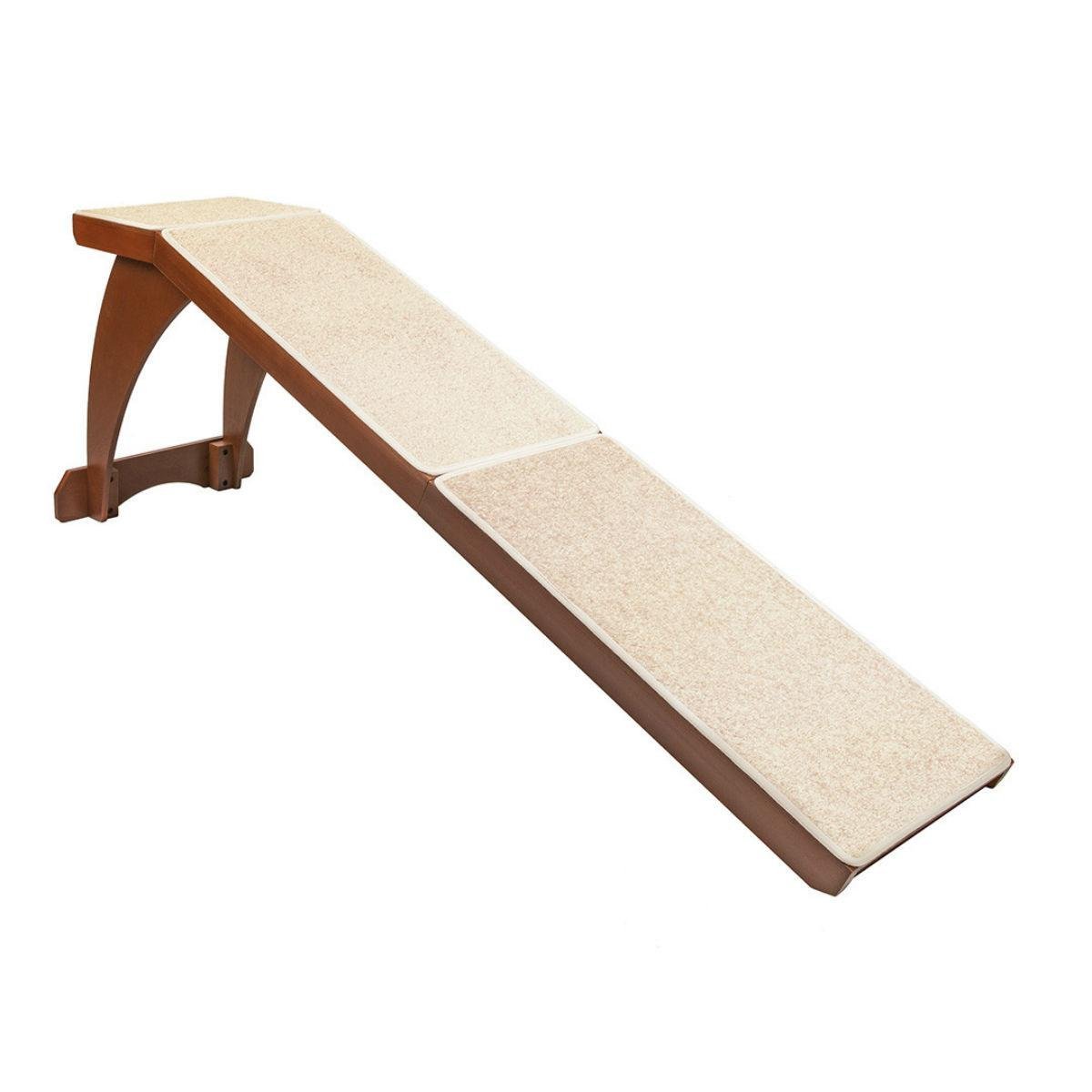
The CozyUp Bed Ramp is the default recommendation for a reason: it’s one of the few ramps designed specifically for beds rather than adapted from a car ramp. At 70″ long, 16″ wide, and 25″ high, with solid wood construction in cherry or white finishes, it looks like furniture instead of equipment. It supports pets up to 120 lbs — enough for most large breeds — and the heavy-duty carpet cover is marketed as high-traction.
The honest part, from hundreds of owner reviews: the carpet is the most divisive thing about it. Multiple owners describe it as slick — one compared going up it to a sheet of ice — and several report their dogs sliding on the descent, especially older dogs with weak rear legs. The base can also slide on hardwood floors; owners fix this with rubber pads or a bath mat underneath. It doesn’t fold, so the 70″ length dominates a small bedroom, and a few owners report fiddly assembly. Plan on training time — most dogs take several days to trust it — and consider adding a traction runner if your dog is heavy or unsteady.
Specs: 70″ L x 16″ W x 25″ H · solid wood · carpet cover · supports up to 120 lbs · cherry or white finish · does not fold.
Pros: purpose-built for beds; furniture-grade look; wide, stable, high weight capacity; strong brand support.
Cons: carpet widely reported as slippery — traction upgrades may be needed; base can slide on hard floors; doesn’t fold; very long in small rooms.
Verdict: The safest default bed ramp — buy it, then budget for rubber floor pads. Check the price on Amazon.
2. DoggoRamps Small Bed Ramp — Best for Small Dogs
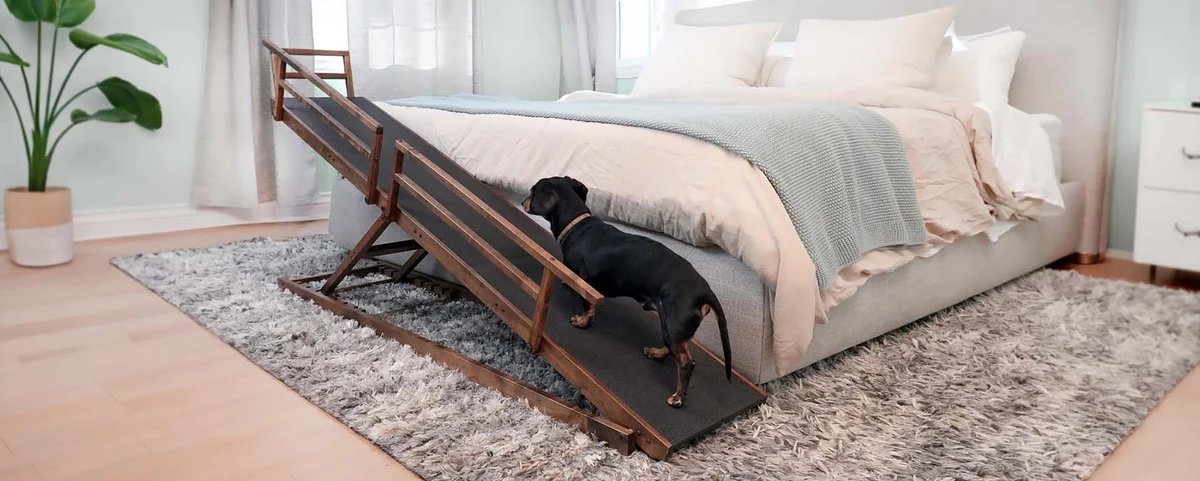
DoggoRamps is the specialist brand here: they make ramps only for beds and couches, originally designed with dachshunds in mind. The small bed ramp is 64″ long with a 13″-wide walking platform (15″ base), adjusts to fit beds from 12″ to 37″ tall, and supports dogs up to 50 lbs. It’s built from solid maple hardwood, arrives fully assembled, and includes two-tier safety rails plus an anchor rope that ties the ramp to the bed frame so it can’t shift. The PAWGRIP rubberized surface is a genuine differentiator — owners consistently say it outperforms carpet for traction.
The trade-offs: it’s expensive for what it is (premium hardwood, North American-made), the small version caps at 50 lbs so it’s not for big dogs, and at 30 lbs product weight it’s the heaviest ramp here — moving it for cleaning is a chore. Some owners also report their dogs needed a week or two of treat-based training before using it willingly. But for dachshunds, corgis, and other small breeds with back issues, this is the ramp owners keep recommending after cheaper ones fail.
Specs: 64″ L x 15″ W (13″ walking platform) · adjustable height 12″–37″ · solid maple · PAWGRIP rubber surface · up to 50 lbs · 30 lbs product weight · anchor rope + two-tier rails included.
Pros: best-in-class traction surface; adjustable to nearly any bed; rails and anchor rope for safety; fully assembled.
Cons: premium price; 50-lb limit on this size; heavy to move; dogs may need training to accept it.
Verdict: The small-dog specialist — worth it if you have a dachshund or back-sensitive breed. Check the price on Amazon.
3. Tsukiko 64″ Foldable Bed Ramp — Best Adjustable for High Beds
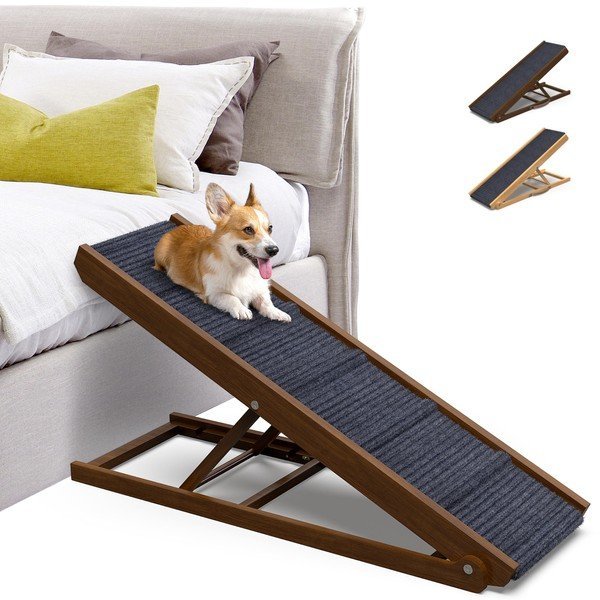
The Tsukiko is the generic-brand standout: a 64″-long wooden ramp with six adjustable heights from 24″ to 30″, rated to 220 lbs, with a landing platform at the top and a carpeted surface with raised traction strips. It folds down for storage and stands independently without leaning on the bed. For tall beds — 28″+ mattresses are common now — the height range is the best on this list.
The honest framing: Tsukiko is a newer marketplace brand without the long-term track record of PetSafe or DoggoRamps, so there’s less data on how the hinges and fasteners hold up after years of nightly use. Inspect all screws and joints on arrival and periodically afterward. Some owners of similar adjustable ramps report the carpet strips wearing with heavy use. For the price, though, the adjustability and 220-lb rating are hard to match — just buy from a seller with easy returns.
Specs: 64″ L x 17″ W · 6 adjustable heights 24″–30″ · up to 220 lbs · wood frame · carpeted surface with raised strips · foldable · landing platform.
Pros: tallest height range here; high weight capacity; folds for storage; independent standing design.
Cons: newer brand with thinner long-term track record — inspect hardware on arrival; carpet wear under heavy use.
Verdict: The high-bed value pick — best adjustability per dollar. Check the price on Amazon.
4. PawHut Dog Ramp for Bed — Best Long Low-Slope
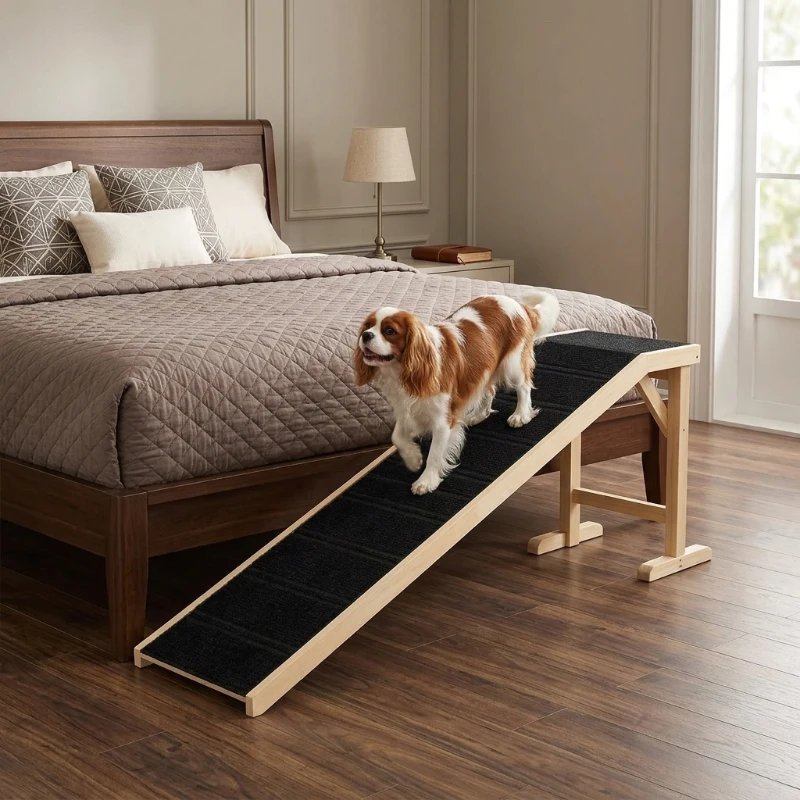
PawHut’s bed ramp takes the gentlest approach: 74″ long with a landing platform at the top, giving dogs a flat pause before stepping onto the mattress. The low, gradual slope is exactly what arthritic dogs and nervous first-timers need. It’s pine wood with a polyester carpet surface, in black, natural, or white finishes, and holds pets up to 77 lbs.
Know the limits before you buy: 77 lbs rules out large breeds. Assembly is required — budget real time for it. And it does not fold, so you’re committing 74″ of bedroom floor permanently. The polyester carpet won’t grip like rubber, so the same traction caveats as the PetSafe apply for unsteady dogs. But if your dog is under 77 lbs and the steepness of shorter ramps is the problem, the extra length here is the fix.
Specs: 74″ L x 16″ W x 25″ H · pine wood · carpet surface · up to 77 lbs · top landing platform · assembly required · does not fold.
Pros: longest, gentlest slope on this list; landing platform reduces the step onto the bed; budget-friendly.
Cons: 77-lb limit excludes large dogs; assembly required; doesn’t fold; carpet traction is average.
Verdict: The gentle-slope option for small and medium dogs that balk at steeper ramps. Check the price on Amazon.
5. PetSafe CozyUp Steps & Ramp Combo — Best 2-in-1
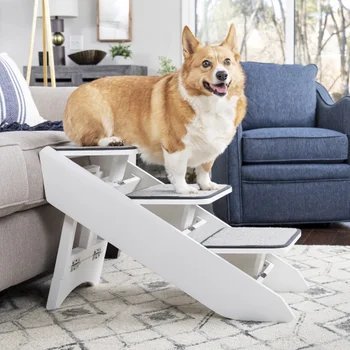
Can’t decide between stairs and a ramp? This PetSafe unit converts between the two in seconds. It adjusts from 16″ to 20″ high, supports up to 200 lbs — the highest capacity PetSafe offers in this line — and folds flat for storage. The non-slip carpet tread and side rails aim at nervous dogs, and the stairs mode suits dogs that climb confidently but can’t jump.
Owner feedback is genuinely split by mode: the stairs get high marks for sturdiness, but multiple owners report the carpet is too slippery to use the ramp configuration — the same traction complaint that haunts the bed ramp. A few owners note the rubber feet fall off quickly and that the unit is heavy to move. And the 20″ maximum height is too short for tall beds; this is a couch-height and low-bed solution. If your bed is under 20″ and your dog prefers steps, it’s excellent. If you need the ramp mode for a tall bed, look at options 1–3.
Specs: adjustable height 16″–20″ · steps-to-ramp convertible · up to 200 lbs · non-slip carpet tread · side rails · folds flat.
Pros: two products in one; highest PetSafe weight capacity; folds flat; sturdy in stair mode.
Cons: ramp mode hampered by slippery carpet per owners; rubber feet can detach; heavy; max 20″ height too short for tall beds.
Verdict: The convertible pick — great stairs, mediocre ramp, best for low beds. Check the price on Amazon.
6. Pet Gear Stramp Stair & Ramp Combo — Best for Low Beds and Tight Spaces
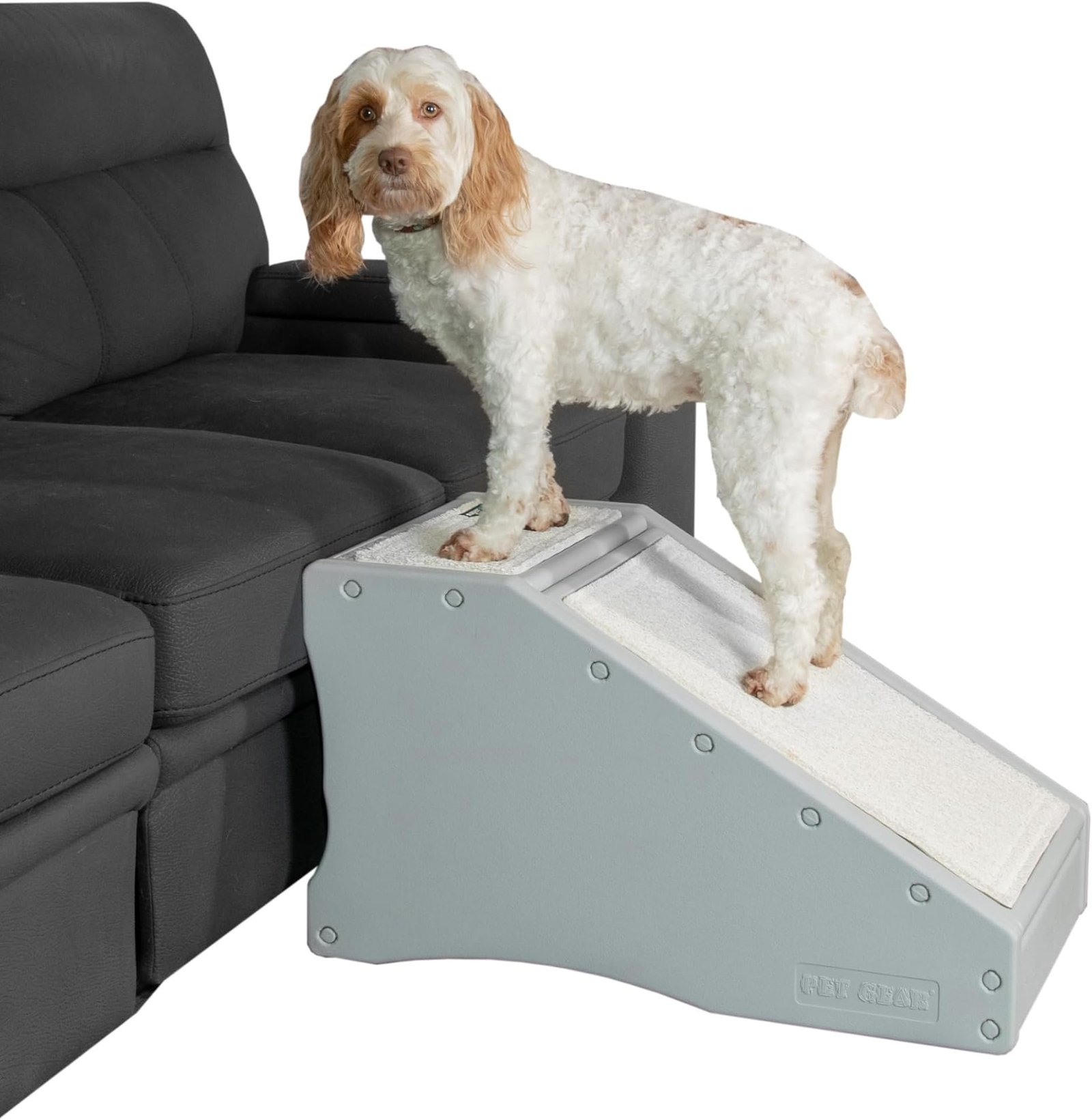
The Stramp is a different animal: a single wide step that doubles as a short ramp, just 22″ long, 20″ wide, and 10″ tall, rated to 175 lbs. It snaps together in minutes with no tools, has a removable machine-washable carpet tread, and rubber grippers underneath. For low platform beds, futons, or tight bedrooms where a 70″ ramp is absurd, this is the practical answer.
Be clear-eyed about it: owner ratings are the weakest on this list (around 2.9 on Petco, with only a fifth of reviewers recommending it). Common complaints are that the incline is too steep for larger or very arthritic dogs, some dogs refuse it outright, and the carpet tread can shred or curl with use — with no replacement tread sold separately. At 10″ tall it can’t serve a standard bed. But for low beds and small spaces, where the alternative is nothing, owners of small dogs report it works fine with training.
Specs: 22″ L x 20″ W x 10″ H · stair/ramp combo · up to 175 lbs · removable washable carpet tread · rubber grippers · tool-free assembly.
Pros: tiny footprint; cheap; fast assembly; washable tread; fits low beds nothing else can.
Cons: weak owner ratings; too steep for larger or very arthritic dogs; tread wears with no replacements sold; max 10″ height.
Verdict: The small-space compromise — measure your bed first; it only works for low ones. Check the price on Amazon.
How to Choose a Dog Ramp for Bed
Measure your bed height first — everything follows from it. Measure from the floor to the top of the mattress. Tall beds (28″+) need long adjustable ramps like the Tsukiko or DoggoRamps; standard beds (~25″) suit the PetSafe; low platform beds can use the Stramp. A ramp that doesn’t reach the mattress is furniture, not a solution.
Longer means gentler — and that’s the whole game for arthritic dogs. A 70″+ ramp at 25″ height gives a far kinder incline than a 40″ ramp at the same height. If your dog has arthritis, hip dysplasia, or IVDD, prioritize length over everything else. The PawHut’s 74″ length and the DoggoRamps’ 64″ low-incline design exist for exactly this reason.
Traction is where ramps fail. Carpet sounds grippy and often isn’t — slick carpet is the #1 complaint in this category. Rubberized surfaces (DoggoRamps’ PAWGRIP) genuinely outperform carpet. If you buy carpeted, plan to add a rubber runner or traction strips if your dog slides, and keep nails trimmed — long nails skate on carpet.
Buy weight capacity with margin. A 60-lb dog bouncing down a ramp stresses it more than a 60-lb dog standing still. The 120-lb PetSafe and 200-lb combo ratings give comfortable margin for large breeds; the 50-lb DoggoRamps small is strictly for small dogs; the 77-lb PawHut excludes big Labs.
Width matters for big and nervous dogs. 16″ is the standard that works for most dogs; 13″ (DoggoRamps small platform) is fine for dachshunds but tight for a wobbly senior Lab. Side rails help nervous dogs enormously — they’re worth prioritizing for first-time ramp users.
Plan for the footprint. A 70″ ramp needs 70″ of clear bedroom floor. If space is tight, a folding ramp (Tsukiko, PetSafe combo) or the compact Stramp beats a fixed ramp that becomes a permanent obstacle you trip over at 2 a.m.
Bottom line: the PetSafe CozyUp Bed Ramp is the best all-rounder for most beds and most dogs — just add floor pads for traction. Small-dog owners should get the DoggoRamps Small Bed Ramp for its superior grip and safety rails, and tall-bed owners on a budget should look at the Tsukiko 64″. If your dog won’t touch a ramp at all, the PetSafe Steps & Ramp Combo in stair mode is the fallback.
Frequently Asked Questions
Ramp or stairs — which is better for my dog?
Ramps are generally better for dogs with serious joint issues, arthritis, or back problems (like dachshunds with IVDD risk), because there’s no step-up impact. Stairs work for small dogs with mild mobility issues and take up less floor space. Nervous dogs often accept stairs more readily than ramps — but a ramp with rails and a rubber surface is the kindest option for a truly arthritic dog.
How do I get my dog to actually use the ramp?
Almost no dog uses a ramp on first sight. The method that works: lay the ramp flat on the floor first and let the dog walk across it for treats, then raise it to a low height, then to the bed. Most owners report 3–14 days of short training sessions. Luring with high-value treats at each stage beats pushing or carrying the dog up — forced dogs learn to fear the ramp.
What incline is safe for a senior dog?
Lower is always better. As a rule of thumb, a ramp at least 3x as long as the bed is tall gives a manageable slope for seniors (e.g., 72″ of ramp for a 24″ bed). Short steep ramps defeat the purpose — if the dog has to scramble, the joints take the same pounding as jumping.
Carpet or rubber surface — which grips better?
Rubber or rubberized surfaces (like PAWGRIP) consistently outperform carpet in owner reports. Carpet’s grip depends on pile: short, slick carpet — the most common complaint on PetSafe ramps — can be worse than expected, and claws can snag in looped carpet. If your ramp’s carpet proves slick, adhesive traction strips or a rubber runner are cheap fixes.
Will a ramp damage my floors or bed frame?
The ramp itself can slide on hardwood — rubber pads, a non-slip mat under the base, or an anchor rope (included with DoggoRamps) solves it. Against the bed, most ramps rest on the mattress edge or frame; a towel or felt pad at the contact point prevents scuffs on wood frames.
Can I use a bed ramp for the car too?
You can, but car ramps are usually shorter, steeper, lighter, and foldable for trunk storage — bed ramps are long and bulky by design. If you travel with a senior dog, a dedicated folding car ramp plus a bedside ramp is the better setup than one ramp doing both jobs badly.
Check prices on the six picks above before you buy — sales move fast in this category.
