

Most cats don’t travel — they endure. The carrier door closes, the engine starts, and a creature built around routine suddenly faces the three things cats hate most: confinement, noise, and unfamiliar motion. That shows up as yowling, panting, trembling, or the statue-still freeze that owners mistake for calm.
Calming treats can’t sedate a cat (and you shouldn’t want one that does), but a familiar-tasting chew given 30–60 minutes before departure can be part of a broader travel plan — carrier training, Feliway on the bedding, a vet check for genuinely anxious travelers. The science behind L-theanine, chamomile, valerian root, and colostrum-based blends is real but modest: documented owner feedback reports mild settling, not transformation. Talk to your vet before travel if your cat panics, self-harms, or soils the carrier — some cats need prescription-level help, and a treat isn’t it.
Pet Travel Items is reader-supported. When you buy through links on this page, we may earn a commission at no extra cost to you. Our picks are driven by documented owner feedback, never by commission rates.
Top 5 Calming Treats for Cat Travel at a Glance
| # | Product | Key spec | Best For | |
|---|---|---|---|---|
| 1 | VetriScience Calm & Confident Chews, Chicken, 30ct | L-theanine + chamomile blend · 30 chews | Best vet-trusted pick | Check Price |
| 2 | Pet Naturals Calming Chews for Cats, 30ct | Vet-formulated · 30 chews | Best vet-formulated | Check Price |
| 3 | Zesty Paws Calming Chews for Cats, 60ct | 60 soft chews · well-known brand | Best known brand | Check Price |
| 4 | VetriScience Calm & Confident Liquid, 8oz | Liquid format · 8 fl oz | Best liquid format | Check Price |
| 5 | Zesty Paws Calming Mousse for Cats, 14ct | Lickable mousse · 14 tubes | Best lickable format | Check Price |
Prices shift constantly — check before you buy. Dosing is per the product label; evidence for calming effects is mixed and modest.
1. VetriScience Calm & Confident Chews, Chicken, 30ct — Best Vet-Trusted Pick
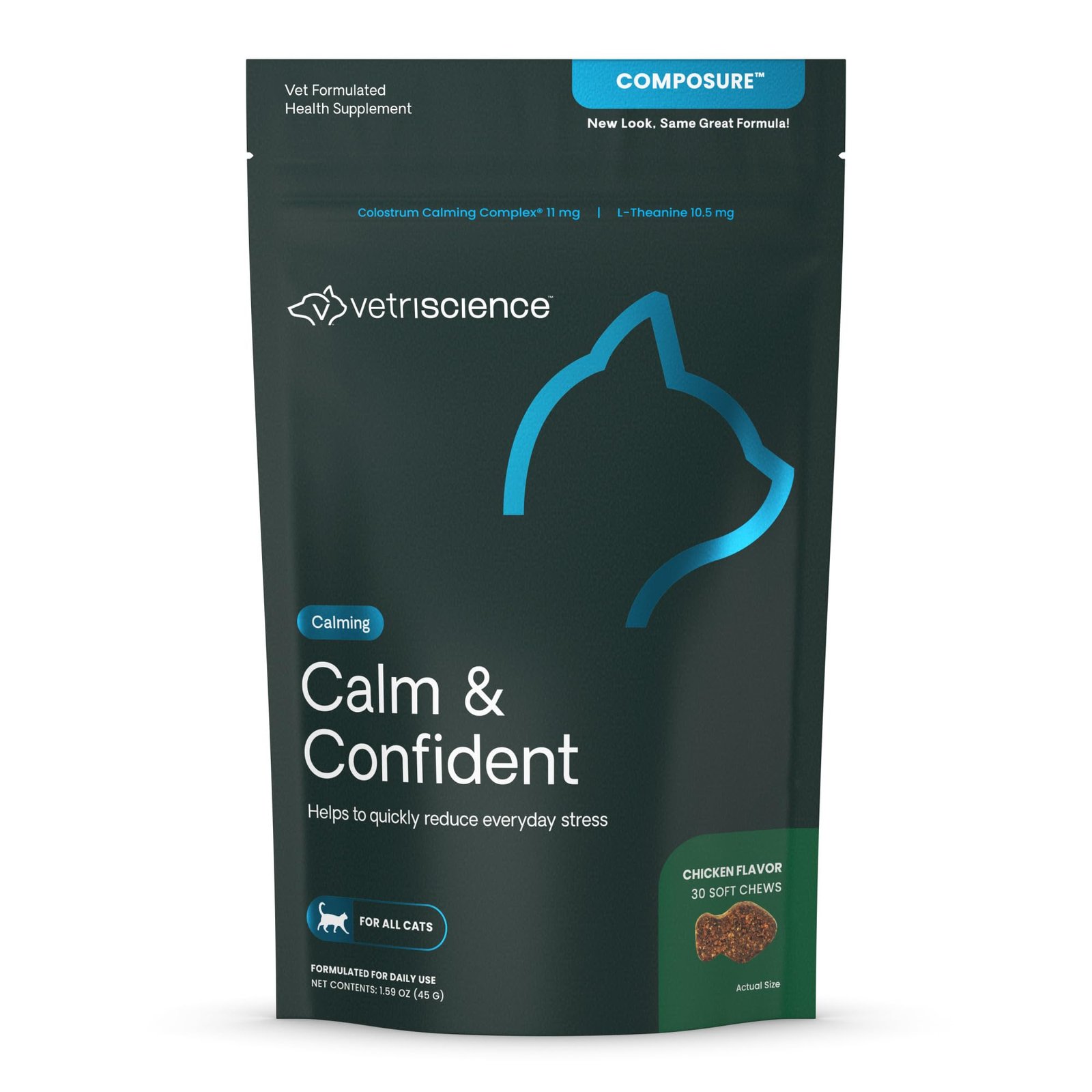
VetriScience has been the vet-office name in calming supplements for years, and this chicken-flavored chew is the flagship: a blend built around L-theanine with chamomile and other botanicals, portioned as 30 soft chews. Owners report the chicken flavor gets eaten without a fight — which matters, because a calming chew that sits untouched in the carrier helps nobody.
The honest part: “vet-trusted” means vets carry it, not that it works on every cat. Owner feedback clusters around mild settling — less pacing, earlier crate acceptance — and a solid minority of cats show zero change. Give it 30–60 minutes before departure, and keep expectations moderate.
Specs: L-theanine + chamomile botanical blend · chicken flavor · 30 soft chews · per-label dosing.
Pros: widely vet-stocked brand; palatable chicken flavor; portable pouch for the travel bag.
Cons: modest effects for some cats; 30 chews run out fast on frequent trips.
Verdict: The safest first try for a nervous traveler. Check the price on Amazon.
2. Pet Naturals Calming Chews for Cats, 30ct — Best Vet-Formulated
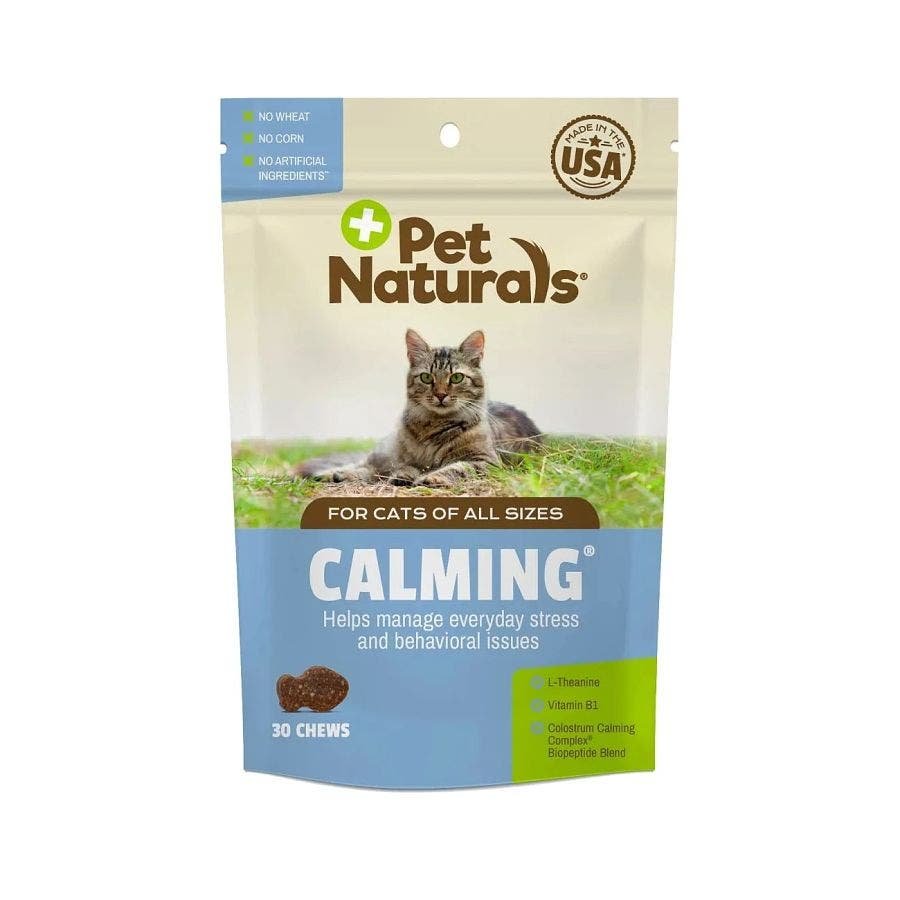
Pet Naturals leans into the “formulated with veterinary input” positioning with a chew built on the classic L-theanine/valerian-style botanical stack. The 30-count is a trial-friendly size — enough for a few practice car rides before the real trip.
The honest part: pre-trip practice runs are where this product earns its keep. Feed it during a short, low-stakes drive and watch your specific cat’s response before depending on it for a long haul. No supplement should debut on moving day.
Specs: vet-formulated botanical blend · 30 chews · per-label dosing.
Pros: trial-size 30ct good for practice runs; widely available; gentle formula.
Cons: effects vary cat to cat; not a substitute for vet guidance on severe anxiety.
Verdict: The practice-run pick before the big travel day. Check the price on Amazon.
3. Zesty Paws Calming Chews for Cats, 60ct — Best Known Brand
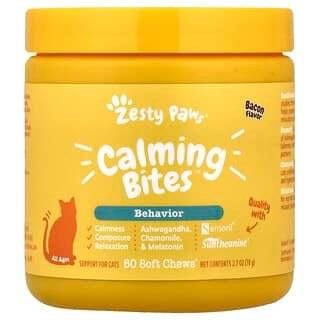
Zesty Paws is one of the most recognized pet-supplement names in the US, and their 60-count calming chews for cats are the mainstream pick: familiar brand, middle-of-the-road count, the standard L-theanine-based approach. For owners who’d rather buy the brand they’ve seen everywhere, this is the no-research-required option.
The honest part: brand recognition is about trust, not superiority — the active approach here is the same general category as picks 1–3. What you’re buying is consistency and availability, which genuinely matters when you need a refill the night before a flight.
Specs: 60 soft chews · L-theanine-based calming blend · per-label dosing.
Pros: well-known brand; 60ct lasts a while; easy to find.
Cons: premium-brand pricing; effects still modest and variable.
Verdict: The familiar-name default. Check the price on Amazon.
4. VetriScience Calm & Confident Liquid, 8oz — Best Liquid Format
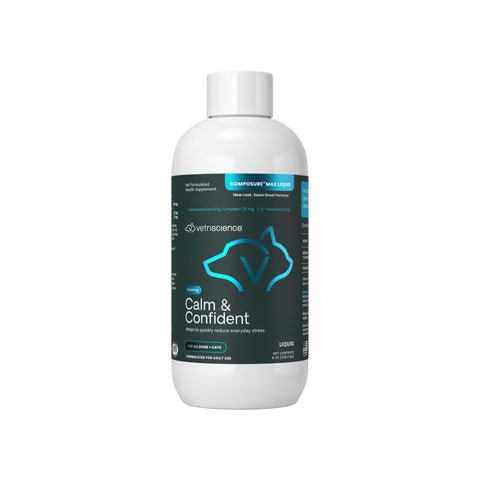
For the cat that refuses chews entirely, VetriScience also makes this as a liquid: an 8-ounce bottle you can drizzle on food or administer per label directions. Liquids also allow finer dose adjustments than fixed chews — useful for very small cats or for scaling up slightly before a long drive.
The honest part: liquid on food only works if the cat eats before travel, and stressed cats often don’t. Test at home on a calm day first. And keep the bottle upright in your travel bag — an 8oz spill of calming liquid is a mess you don’t want at a rest stop.
Specs: liquid format · 8 fl oz bottle · per-label dosing (drizzle or direct).
Pros: alternative for chew-refusers; adjustable dosing; same trusted brand.
Cons: only works if the cat eats; spill risk in transit.
Verdict: When your cat won’t touch a chew. Check the price on Amazon.
5. Zesty Paws Calming Mousse for Cats, 14ct — Best Lickable Format
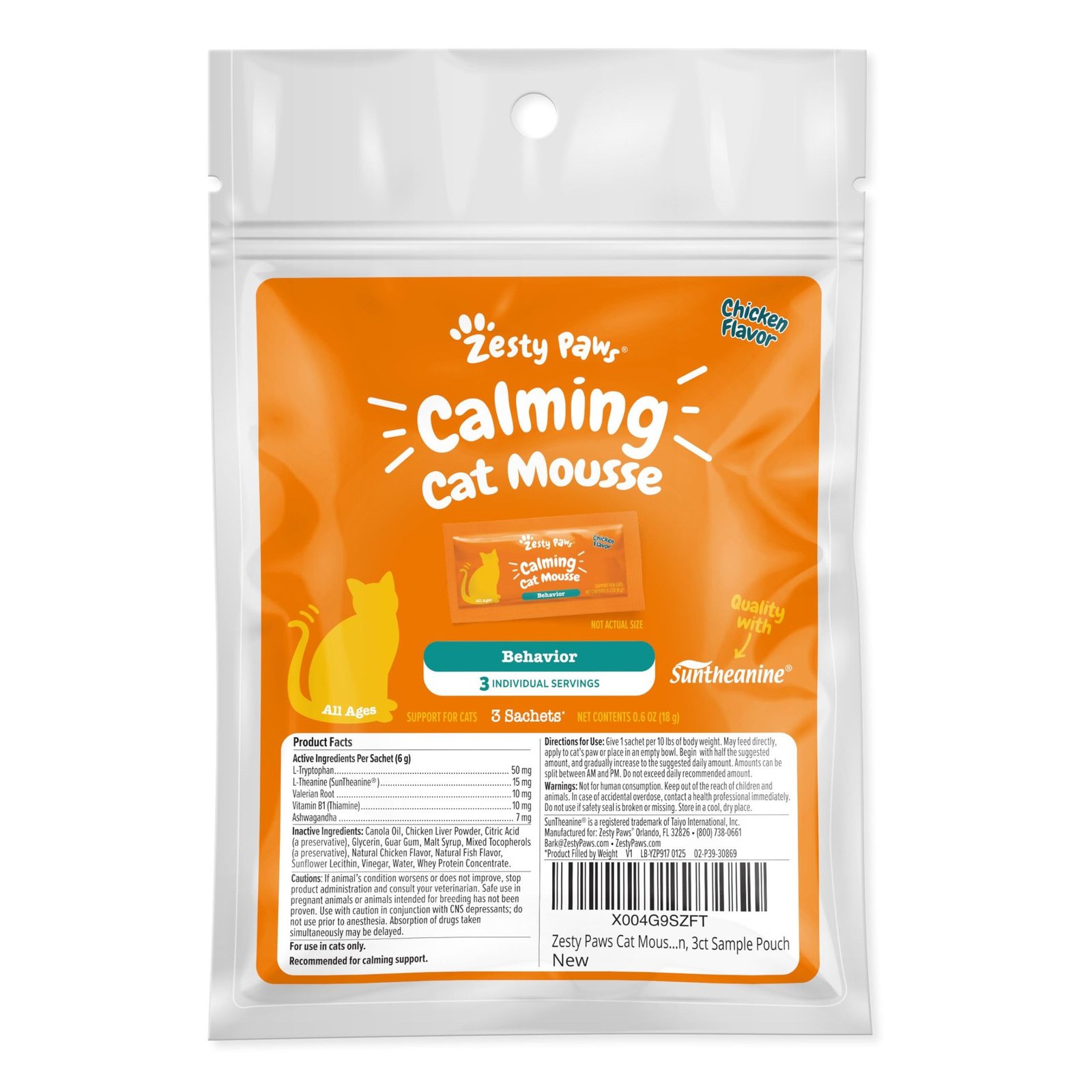
The lickable outlier: Zesty Paws’ calming mousse comes in 14 individual tubes — a lick mat in a tube, essentially. Licking is a self-soothing behavior for cats, so the format itself does double duty: the calming blend plus the rhythmic licking that many cats find settling. Tubes are also the easiest format to use inside a carrier mid-trip.
The honest part: 14 tubes won’t last long, and this is the priciest per-dose format here — best as a travel-day supplement to whatever chew you’ve been training with, not as your only plan. And as always: modest effects, vet guidance for serious anxiety.
Specs: lickable mousse · 14 individual tubes · per-label dosing.
Pros: licking adds self-soothing behavior; easiest mid-carrier use; no chewing required.
Cons: priciest per dose; 14 tubes run out quickly.
Verdict: The mid-trip top-up for carrier use. Check the price on Amazon.
How to Choose Calming Treats for Cat Travel
Start with your cat’s eating habits, not the ingredient list: chews for willing chewers, liquid for food-driven cats, mousse tubes for lick-obsessed ones. The best formula in the world fails if the cat won’t eat it — and a stressed cat in the car is the worst possible audience for a new flavor.
Then build the routine, not the dose: give the treat 30–60 minutes before departure, pair it with carrier training (short practice drives, treats in the parked carrier), and use it consistently across training runs. Talk to your vet before travel about anything beyond mild nervousness — panting, self-harm, elimination in the carrier, or total shutdown are signs to get professional guidance rather than hoping a chew will fix it. No treat in this list sedates, treats anxiety disorders, or replaces desensitization work.
FAQ
When should I give my cat a calming treat before travel?
About 30–60 minutes before departure is the common guidance on most labels — the point is giving the ingredients time to be digested, not a last-second toss into the carrier. Do a dry run on a calm day first to see how your cat responds.
Do calming treats actually work for cats?
Evidence is mixed and modest: ingredients like L-theanine, chamomile, and valerian have some documented calming signals, but owner feedback ranges from “noticeably settled” to “no change at all.” Treat them as one tool alongside carrier training, familiar bedding, and pheromone sprays — never as a guaranteed fix.
Can I give my cat calming treats every day?
Follow the product label, and talk to your vet before daily use — especially if your cat takes other medications or has liver or kidney issues. Daily use during a desensitization program is common, but it’s a conversation to have with your vet.
What if my cat is too stressed to eat treats during travel?
That’s common and important information: a cat that won’t eat is past the “mildly nervous” stage. Focus on carrier desensitization at home, pheromone sprays, and a vet visit — prescription options exist for genuinely panicked travelers, and they work better than any over-the-counter treat.
Are hemp calming chews safe for cats?
Hemp-ingredient pet products are widely sold, but regulation varies by state and country — check rules for any destination you’re flying or driving to, and discuss with your vet if your cat is on other medication. Don’t confuse hemp ingredients with anything stronger; they don’t sedate.
Talk to your vet before travel if your cat shows more than mild nervousness — the right plan beats the right treat every time.
The Bottom Line
Calming treats are a reasonable supporting player for mild travel nerves — VetriScience’s chicken chews are the safest first try, the liquid covers chew-refusers, and the mousse tubes earn their keep mid-carrier. Just keep the honesty front and center: effects are modest and variable, no treat sedates or treats anxiety disorders, and a vet visit beats any chew for a genuinely panicked cat.
