

This article may contain affiliate links. If you buy through them, we may earn a commission at no extra cost to you. Learn more in our affiliate disclosure.
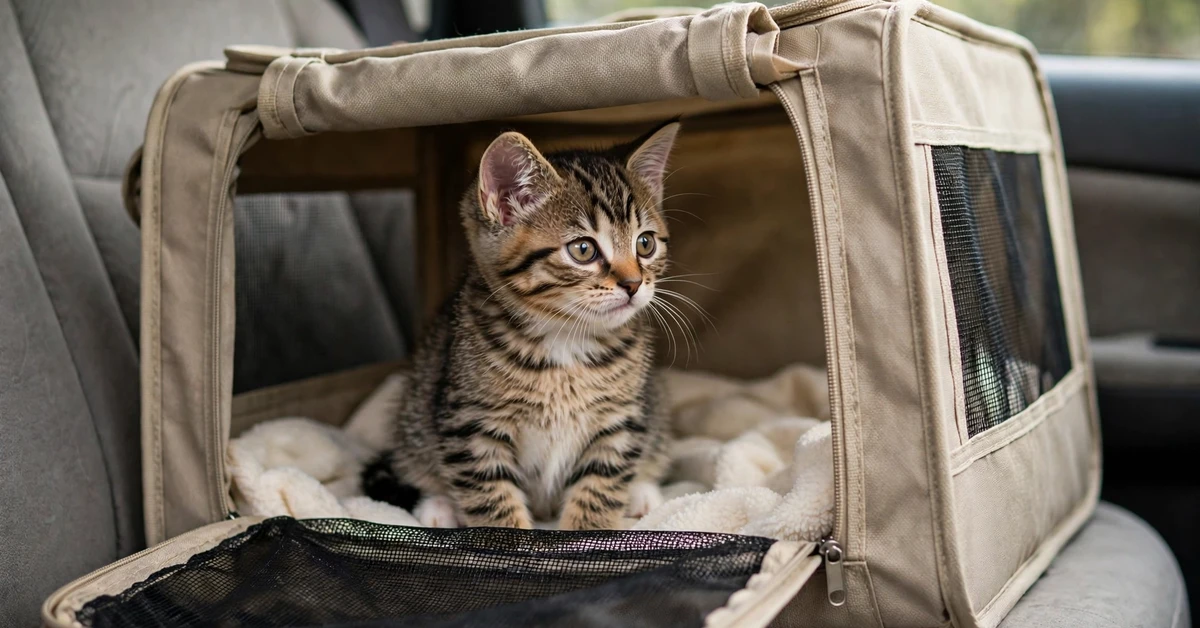
Kitten crates are a different purchase than dog crates, even though most listings say “dog crate” on the box. A puppy chews. A kitten escapes. That single difference should drive your choice: for a kitten, the crate question is containment versus escape. Mesh durability and zipper security matter more than anything else on the feature list.
There are two lanes here. Soft-sided folding crates are the travel-comfort lane: light, collapsible, easy to carry to the vet. They fold flat and most set up in seconds. But the mesh is chewable and the zippers are the weak point — a bored kitten will test both. Folding wire crates are the containment lane: nothing to shred, divider panels that grow with the kitten, and leak-proof trays. They’re bulkier and noisier, and they’re home crates, not car carriers. “Foldable” just means it folds flat for storage. It does not mean airline-approved. None of the six below are stated as airline-approved, so check with your airline before you book anything.
| # | Product | Why it made the list | Check Price |
|---|---|---|---|
| 1 | Amazon Basics 4-Door Soft Crate | Only pick explicitly marketed for cats; zipper lock clips for escape artists | Check Price |
| 2 | EliteField 3-Door Soft Crate | True kitten-size 24″ footprint with a 2-year warranty | Check Price |
| 3 | Amazon Basics Soft Crate (26″) | Budget pick with room for a kitten plus storage pockets | Check Price |
| 4 | 2PET Foldable Crate (Small) | Smallest footprint here; a genuinely kitten-sized travel crate | Check Price |
| 5 | MidWest iCrate 22″ Double Door | The chew-proof pick; wire beats mesh when containment matters | Check Price |
| 6 | MidWest LifeStages 22″ Double Door | Heavier-gauge wire upgrade in the same 22″ footprint | Check Price |
1. Amazon Basics 4-Door Portable Soft-Sided Folding Travel Crate Kennel (Grey, M 30″ x 21″ x 21″)
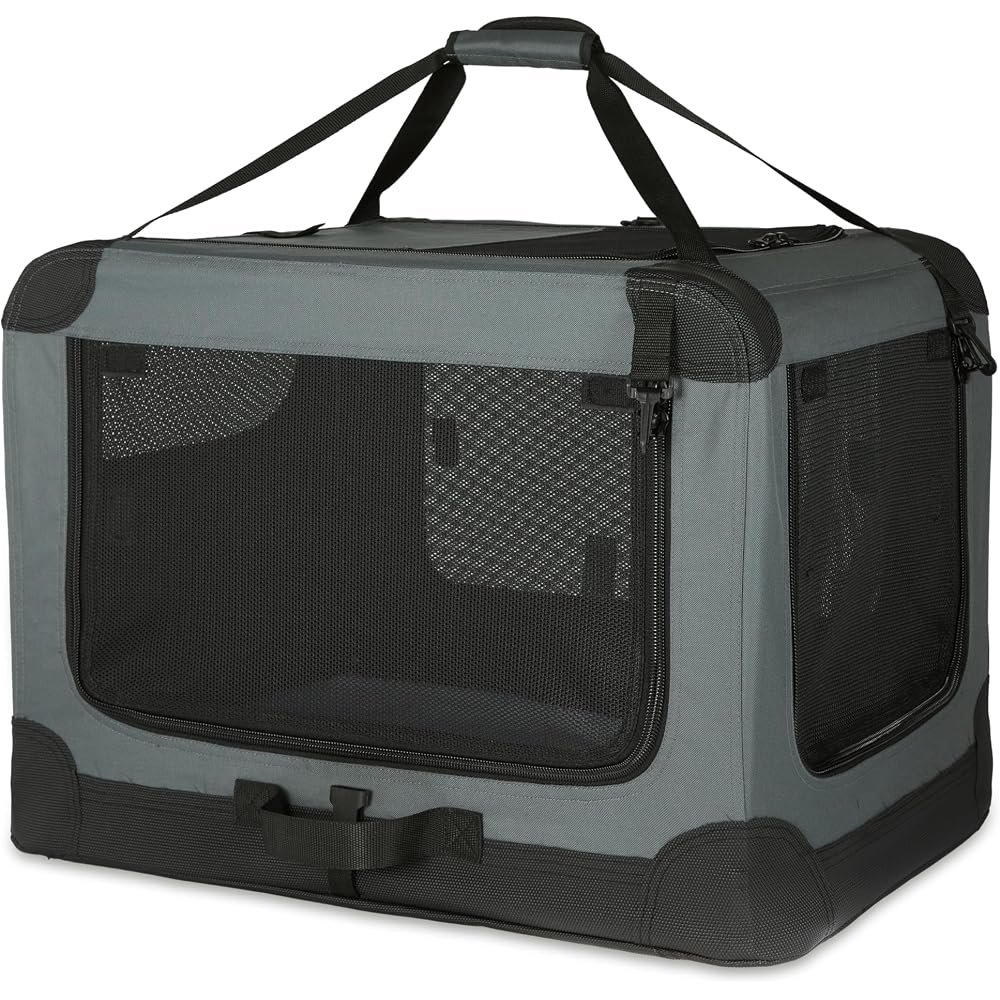
This is the only crate on this list whose listing actually names cats in the title, and it shows in the design. Four doors (top, front, and both sides) mean you can reach a hiding kitten without dragging it out by force, and the zipper lock clips are a genuinely thoughtful touch — most soft crates at this price leave zippers completely unguarded.
The 30-inch medium size is generous for a kitten, roomy enough for a small bed and a litter corner on short trips. It pops up in seconds, folds flat, and ships with a carry bag. At this size it works as a hotel-room home base, not a carry-on. No complaint pattern surfaced for this specific listing in my research, which is honest reassurance rather than hype: it’s a newer design (late 2024), so long-term mesh durability with clawed kittens is still an open question.
Key specs: 30″ x 21″ x 21″; fabric/PVC; 4 zippered doors with lock clips; removable fleece pad; water-resistant base; carrying handle and padded shoulder strap; carry bag included; 1-year limited warranty.
Pros:
- Zipper lock clips — the standout feature for escape-artist kittens
- Four doors make access and training much easier
- Pops up with no tools; folds flat with its own carry bag
- Water-resistant base for accidents
Cons:
- Mesh panels are still mesh — a determined scratcher can damage them over time
- Not stated as airline-approved
- Newest listing here, so long-term durability is unproven
Verdict: The best soft-sided pick for kittens, full stop. The zipper locks and cat-facing design put it ahead of everything else in the soft lane.
2. EliteField 3-Door Folding Soft Dog Crate with Carrying Bag and Fleece Bed (Blue Gray, 24″ L x 18″ W x 21″ H)
EliteField built its name on soft crates, and the 24-inch version hits the kitten sweet spot: big enough to feel like a room, small enough to stay portable. Three doors keep access easy, it folds flat with its own carrying bag, and the fleece bed is included rather than sold separately. A 2-year warranty is unusual in this category and worth noting.
Here’s the honest part. Soft crates from this brand line have a documented escape problem with determined cats. Real owner reviews report cats pushing their heads through the top zipper hard enough to rip it from the fabric, and nylon zippers that open under light pressure. These were sibling models, not this exact listing, but the design is the same family — and this 3-door version has no stated zipper locks. If your kitten is calm and just needs a cozy travel den, this is a lovely pick. If your kitten is an escape artist, the Amazon Basics 4-door above is the safer soft-sided choice.
Key specs: 24″ L x 18″ W x 21″ H; steel frame with fabric cover; 3 doors; carrying bag and fleece bed included; 2-year manufacturer warranty.
Pros:
- Perfect kitten-size footprint with easy 3-door access
- 2-year warranty — rare for soft crates
- Lightweight, folds flat, carry bag included
- Fleece bed included
Cons:
- Owner complaints of cats escaping through zippers in this product line
- No stated zipper locks on this 3-door model
- Mesh is clawable — suited to calm pets, not scratchers
- Not stated as airline-approved
Verdict: Great for calm kittens; risky for determined escapers. The warranty and build are strong, but the zipper issue is real and documented.
3. Amazon Basics Folding Portable Soft Pet Dog Crate Carrier Kennel (Blue, 26.2″ L x 17.8″ W x 18.1″ H)
The budget play in the soft lane. The 26-inch size suits a kitten with room to stretch, and the top and front openings give you two ways to reach in. Screened panels on multiple sides keep airflow strong, and the top and side pockets are genuinely useful on travel days — treats, waste bags, and a spare collar all fit.
What you give up at this price is any pretense of escape-proofing. The zippers have no stated lock feature, so a kitten that learns the paw-pull trick will get out. It’s also rated for pets up to 25 pounds, which means the frame is built for a small dog’s weight — more than enough structurally for any kitten, but the extra headroom is overkill until the kitten grows. No specific complaint pattern surfaced for this listing; like all soft crates here, mesh durability with claws is the open question.
Key specs: 26.2″ L x 17.8″ W x 18.1″ H; polyester/PVC; top and front openings; machine-washable fleece pad; top and side storage pockets; shoulder strap and top handle; for pets up to 25 lb.
Pros:
- Low price for the size
- Storage pockets on top and sides — handy for travel
- Machine-washable fleece pad included
- Good ventilation from multiple screened panels
Cons:
- No stated zipper locks — escape artists can paw zippers open
- Mesh panels vulnerable to claws over time
- 26″ is roomier than a young kitten needs; oversized for travel
- Not stated as airline-approved
Verdict: The value pick if your kitten is mellow and you want the most space for the least money. For known escapers, spend up for a locking crate.
4. 2PET Foldable Dog Crate — Soft, Easy to Fold & Carry (Small 20″ L x 14″ W x 13″ H, Biscuit Beige)
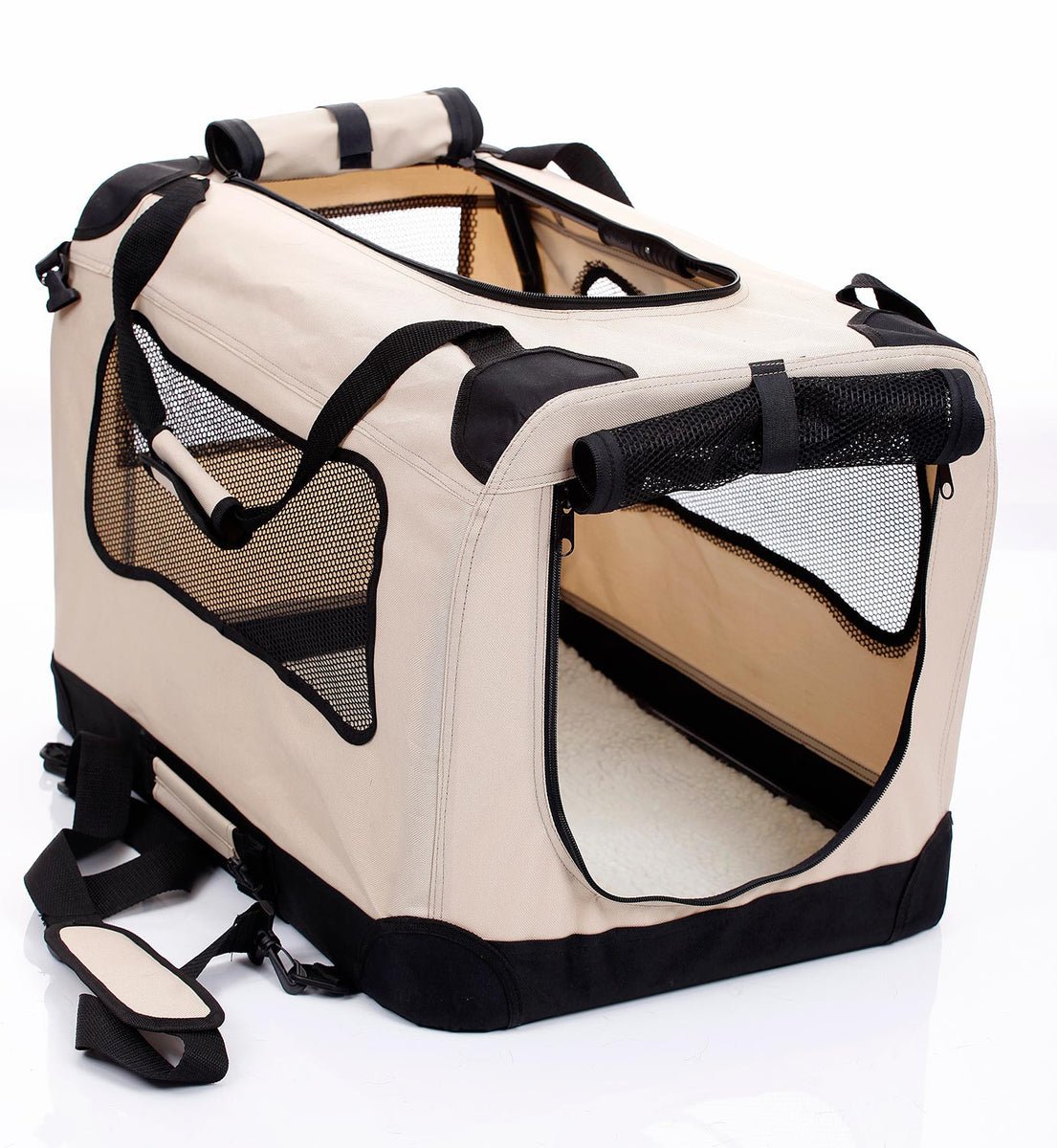
This is the smallest crate on the list, and that’s the point. At 20 inches long it’s a genuinely kitten-sized travel crate rather than a dog crate pressed into kitten service. The steel frame gives it more backbone than pop-up-only designs, the bone-shaped mesh window is charming, and the fabric cover is washable. It carries a 4.4-star average across more than 5,200 reviews, which is real social proof at this scale.
The catch is setup. Multiple reviewers on 2PET’s own product page report the steel frame tubes being difficult — in some cases impossible without a fight — to connect on first assembly. Once it’s together owners are happy, but expect a frustrating ten minutes with the instruction sheet. It’s also light at 6.3 pounds, which is great for carrying and less great if you’re picturing a sturdy permanent fixture. Think travel den, not furniture.
Key specs: 20″ L x 14″ W x 13″ H (Small); polyester with steel frame; frontal zipper door; bone-shaped mesh window; washable fabric cover; carry straps; 4.4/5 from 5,200+ reviews (retailer data).
Pros:
- Truly kitten-sized — no wasted space
- Steel frame adds structure most pop-ups lack
- 4.4 stars across 5,200+ reviews
- Light at 6.3 lb; easy to carry
Cons:
- Real complaints: steel frame tubes hard to connect during first setup
- Mesh windows are clawable, not scratch-proof
- Too light to serve as a rugged permanent kennel
- Not stated as airline-approved
Verdict: The best compact travel pick for kittens, as long as you survive the first assembly. Small, light, and proven by thousands of owners.
5. MidWest Homes for Pets iCrate 22″ Double Door Folding Dog Crate (Black)
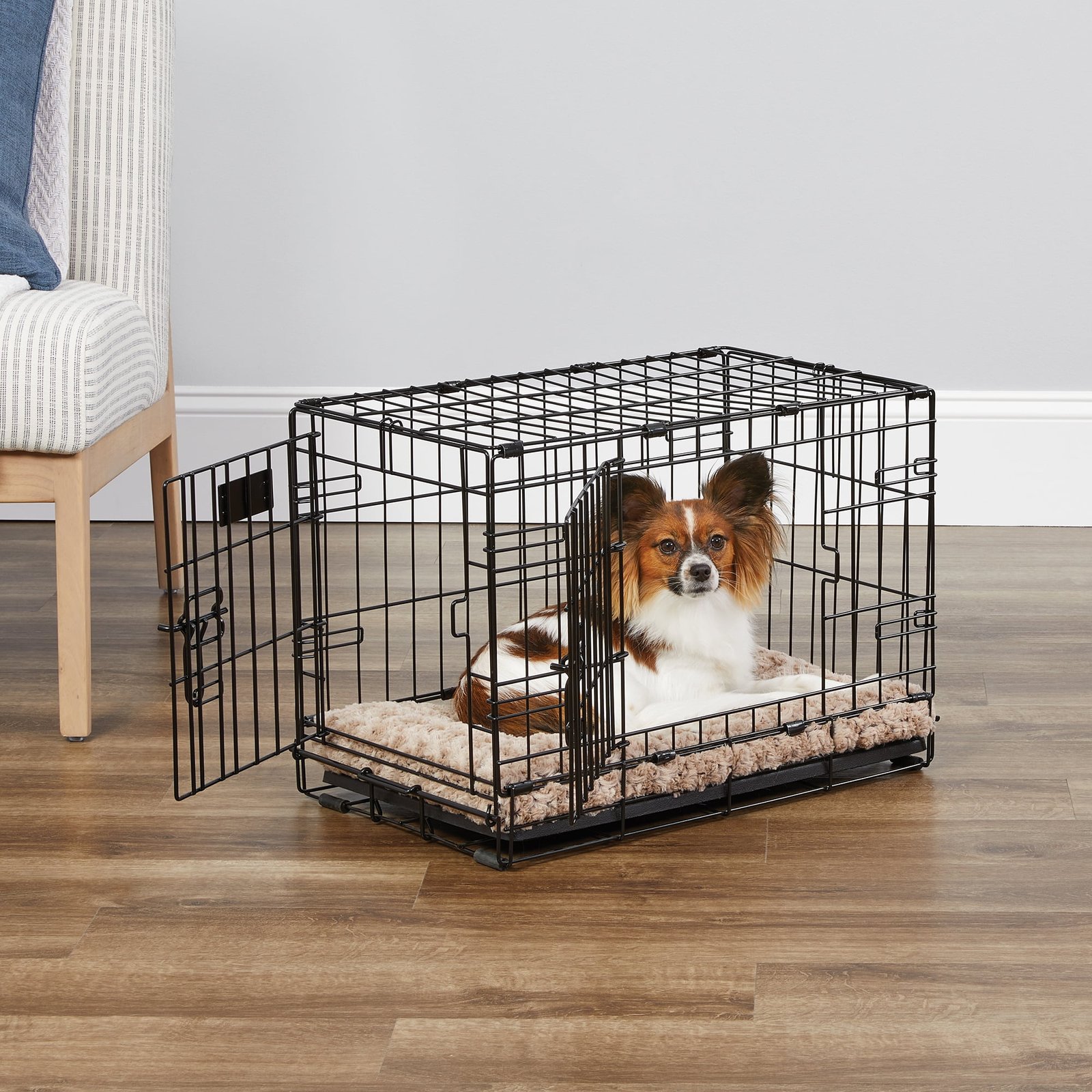
When mesh has failed you, wire is the answer. The iCrate 22 is the best-selling wire crate on Amazon for a reason: it folds flat with no tools, sets up in seconds, and the double doors (front and side) make placement flexible. The divider panel is the killer feature for kittens — it shrinks the living space while they’re small and expands it as they grow, so you’re not buying a second crate in six months. The leak-proof tray pulls out for cleaning.
The bar-spacing warning matters here and I won’t bury it: the 22-inch iCrate’s bars sit 1.5″ x 4.125″ apart (confirmed in a Chewy Q&A), which is wide enough that a very young or very small kitten’s head is a genuine squeeze risk. Supervise early use, and don’t house neonatal kittens in it. Also, kittens watch and learn latches — always engage the slide-bolt latches and the Paw Block safety feature, which exists precisely because pets figure locks out. This is a home crate, not a car carrier: 22 inches of rattling steel is miserable in a vehicle.
Key specs: 22″ L x 13″ W x 16″ H; metal wire; double door; divider panel; removable leak-proof tray; slide-bolt latches with locking tips and Paw Block; carry handle; rubber feet; best seller in Basic Dog Crates.
Pros:
- Chew-proof and claw-proof — nothing to shred
- Divider panel grows with the kitten
- Double doors for flexible placement
- Leak-proof tray pulls out for easy cleaning
- Paw Block latch security against latch-learning pets
Cons:
- 1.5″ x 4.125″ bar spacing — squeeze risk for very small kittens
- Metal rattles; noisy if the kitten throws itself around
- Too bulky and loud for car travel
- Latches must be fully engaged — cats learn to work them
Verdict: The containment-first pick. If your kitten has shredded or escaped from a soft crate, this is where you land.
6. MidWest Homes for Pets LifeStages 22″ Double Door Folding Dog Crate (Black)
The LifeStages is MidWest’s step-up wire crate: same 22-inch footprint as the iCrate above, but built with heavier-gauge wire. It carries the same double doors, divider panel, and leak-proof pan, and owners rate it 4.7 out of 5 across roughly 14,600 reviews. Think of it as the iCrate’s sturdier sibling rather than a different concept.
Why pick this over the iCrate? If the crate will be a daily-use fixture — the kitten’s bedroom, essentially — the heavier wire holds up better to years of rattling and climbing. It weighs more (8.6 lb), which is the price of that sturdiness, and it’s still a home crate, not a travel carrier. The same bar-spacing caution applies as with any 22-inch wire crate: verify a tiny kitten can’t squeeze through before leaving it unsupervised. No specific complaint pattern surfaced for this listing in my research.
Key specs: 22″ L x 13″ W x 16″ H; heavier-gauge metal wire; double door; divider panel; leak-proof pan; floor-protecting feet; 1-year manufacturer warranty; 4.7/5 from ~14,600 reviews (retailer data).
Pros:
- Heavier-gauge wire than the iCrate — built for daily use
- Divider panel grows with the kitten
- Double doors and leak-proof pan
- 4.7 stars across ~14,600 reviews
Cons:
- Same bar-spacing caution for very small kittens as any wire crate
- 8.6 lb — heavier than the iCrate, still not a travel carrier
- Costs more than the iCrate for a similar feature set
Verdict: Buy the iCrate if this is a temporary training crate; buy the LifeStages if it’s going to be a daily-use fixture for years.
How to size a crate for a growing kitten
Measure your kitten now, then buy for six months from now. The rule that works: the kitten should be able to stand, turn around, and stretch out fully. For most kittens under 4 months, a 20–24 inch crate is plenty. The trap is buying a crate the kitten fits perfectly today and outgrows in eight weeks.
That’s why the divider panel on both MidWest crates matters so much. Give a young kitten a small space (small spaces feel safe; huge empty crates feel exposed), then move the divider as it grows. With soft crates you don’t get dividers, so pick a size the kitten will grow into but not swim in — the 24-inch EliteField and the 20-inch 2PET both hit that band for young kittens.
Mesh vs wire: the honest trade-off for clawed kittens
Soft crates win on portability and lose on durability. Every mesh panel is a future scratching post. Some kittens never touch the mesh; others treat it as a personal challenge. You cannot know which kitten you have until it’s too late, so decide based on history: if your kitten has ever shredded a screen door, a laundry bag, or a couch corner, buy wire.
Wire wins on containment and loses on everything else. It’s loud, it’s heavy, and it looks like a cage because it is one. But a kitten cannot chew through it, and that settles the question for destructive kittens. One more wire-crate note: bar spacing. The iCrate 22 measures 1.5″ x 4.125″, and for very small kittens that’s wide enough to be a squeeze risk. If your kitten is under about 8 weeks or unusually small, either supervise closely or wait until it’s bigger before using a wire crate unsupervised.
Zipper security: the detail that decides soft crates
Kittens learn zippers. Not all of them, but enough of them that it should be a buying criterion. A soft crate’s zipper is a pull tab that begs to be pawed, and several EliteField owners report exactly that outcome — cats opening zippers or pushing through them with enough force to rip the seam.
What to look for: zipper lock clips (the Amazon Basics 4-door has them), zippers that meet and can be clipped together, or at minimum a carabiner you add yourself. A five-cent carabiner through two zipper pulls defeats most kitten escapes. Whatever you buy, test it before the first trip: put the kitten in, step back, and watch for ten minutes. You’ll learn more from that than from any review.
FAQs
Are foldable crates airline-approved?
Not automatically. None of the six crates in this roundup are stated as airline-approved. Airline approval depends on the specific carrier meeting the airline’s size and construction rules, and these crates are sized for home and car use, not under-seat dimensions. Always check your airline’s pet policy before booking.
Can a kitten chew through a soft-sided crate?
Yes, and that’s the main honest caveat of the soft lane. The mesh panels and fabric walls on soft crates are chewable and scratchable. Calm kittens do fine, but determined chewers and scratchers can work through mesh over time. If your kitten destroys fabric items at home, choose one of the wire crates instead.
What size crate does a kitten need?
Most kittens do well in a 20–24 inch crate. The kitten should be able to stand, turn around, and stretch out. Because kittens grow fast, a crate with a divider panel (both MidWest picks) lets you start small and expand the space as the kitten grows instead of buying twice.
Will a kitten escape from a soft crate’s zippers?
Some will. Kittens learn to paw at zipper pulls, and owners report cats pushing through zippers with enough force to damage the seam. Look for zipper lock clips — the Amazon Basics 4-door has them built in — or add a small carabiner through the zipper pulls yourself.
Is a wire crate safe for a very small kitten?
Usually, with one check: bar spacing. The MidWest iCrate 22 has bars 1.5″ x 4.125″ apart, which is wide enough that a very young or small kitten could potentially squeeze its head through. Supervise early use, and don’t leave neonatal kittens in a wire crate unsupervised.
How do I get a kitten used to a crate?
Leave it open in the room for a few days with treats and a blanket inside so the kitten explores it on its own terms. Feed a meal or two inside it. Only close the door for short periods at first, and never use the crate as punishment. A kitten that walks in voluntarily travels far better than one that’s forced.
