

Here’s the trail scenario dog shoes exist for: mile six of a rocky descent, the sun is hammering the granite, and your dog starts that telltale high-step — pads burning, or a thorn worked into a toe. You can carry a 60-lb dog off a mountain (briefly, painfully), or you can have boots in the pack. Dog shoes aren’t fashion on a hiking trail; they’re the difference between finishing the hike and turning around.
The honest note most roundups skip: no dog boot stays on perfectly. Every brand — including the $50-a-pair ones — has owners reporting lost boots on the trail. Fit is everything, sizing charts are optimistic, and the boots only work if you measure your dog’s actual paws (standing, weight-bearing) instead of guessing by breed. This guide compares the hiking boots owners actually buy — from the Vibram-soled premium pick to the budget 4-packs — with the complaints owners actually report: boots that fly off, soles that wear through, and waterproofing claims that don’t survive a creek crossing.
Pet Travel Items is reader-supported. When you buy through links on this page, we may earn a commission at no extra cost to you. Our picks are driven by documented owner feedback, never by commission rates.
Best Dog Shoes for Hiking at a Glance
| # | Product | Key Spec | Best For | |
|---|---|---|---|---|
| 1 | Ruffwear Grip Trex (Pair) | Vibram sole · breathable mesh | Best overall | Check Price |
| 2 | Muttluks Original Fleece-Lined | Leather sole · fleece-lined | Best for winter | Check Price |
| 3 | QUMY Dog Boots (4-Pack) | Rugged anti-slip sole | Best value | Check Price |
| 4 | XSY&G Dog Boots (4-Pack) | Waterproof fabric · 2 straps | Budget alternative | Check Price |
| 5 | QUMY Mesh Breathable Booties (4-Pack) | Mesh upper · rubber sole | Best for hot pavement | Check Price |
| 6 | Hcpet Dog Boots (4-Pack) | Waterproof · reflective straps | Cheapest 4-pack | Check Price |
Prices shift constantly — check before you buy. Boots are sold in pairs (Ruffwear, Muttluks) or 4-packs (the rest); sizes are manufacturer figures.
1. Ruffwear Grip Trex — Best Overall
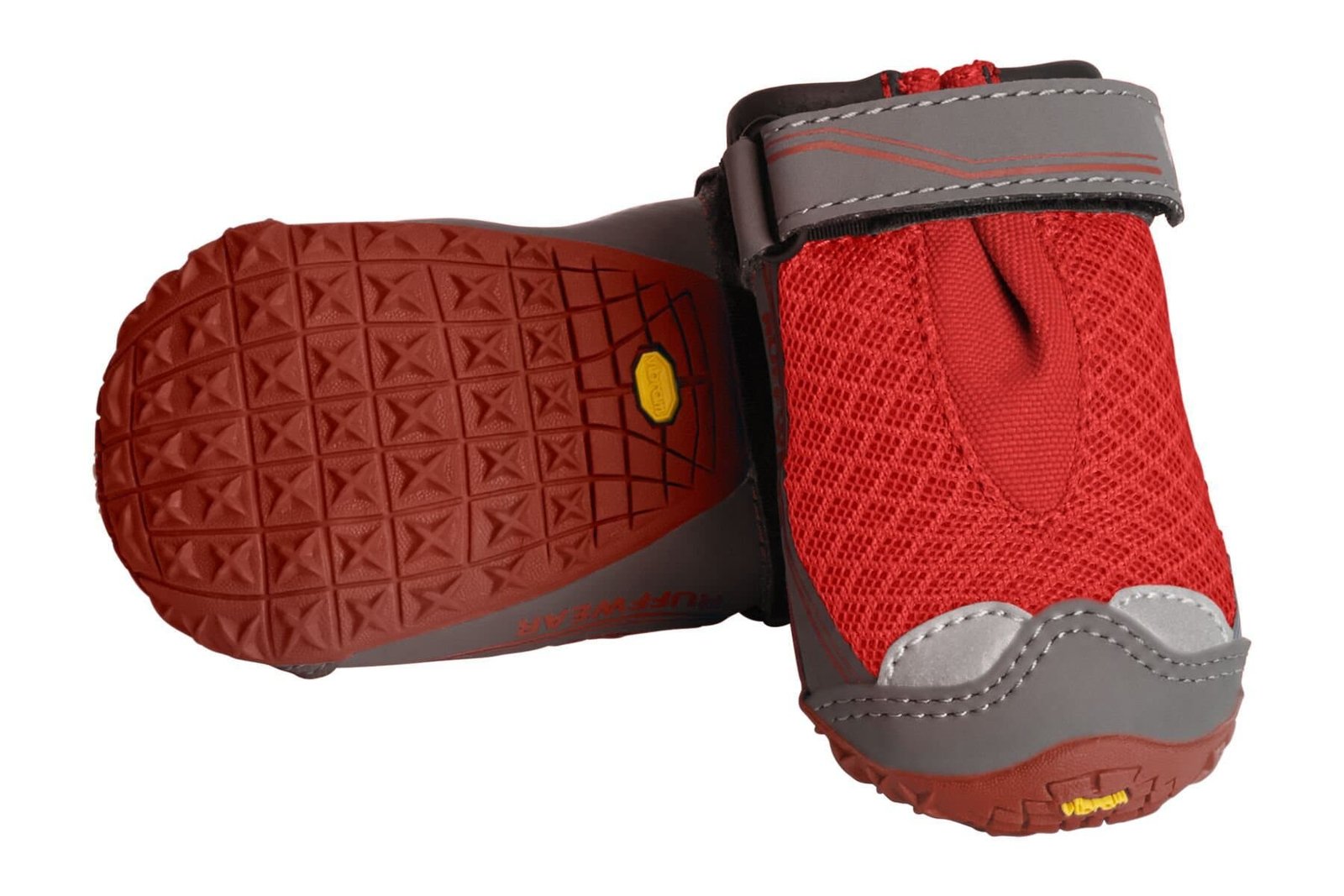
The Grip Trex is the boot serious hiking-dog owners graduate to: a Vibram non-marking rubber sole with real tread, a breathable 100%-polyester mesh upper, and Ruffwear’s closure system that actually cinches around the ankle instead of relying on a single strap. They’re designed for exactly this use case — hiking, running, rough terrain — and the Vibram sole is the difference-maker on granite and scree, where cheap rubber soles shred.
The honest part: they’re sold in pairs, so outfitting four paws costs double the sticker price. Sizing is the #1 owner complaint — the charts run optimistic, and a boot that’s even slightly loose will launch off a galloping dog (the classic one-boot-on-the-trail review). Measure paws standing with weight on them, and when between sizes, size down. The Vibram sole is also stiff for the first few hikes — there’s a break-in period for the boots and the dog.
Specs: Vibram non-marking rubber outsole · breathable polyester mesh upper · secure ankle closure · sizes 1.5″–3.25″+ paw width · sold in pairs (2 boots).
Pros: Vibram grip is the real thing; breathable for warm-weather hiking; best closure system in the category; proven on rough terrain.
Cons: sold in pairs — 4 boots cost double; sizing runs tricky — measure carefully; boots can fly off if fit isn’t perfect; stiff until broken in.
Verdict: The hiker’s boot — worth it if your dog hikes real trails. Check the price on Amazon.
2. Muttluks Original Fleece-Lined — Best for Winter
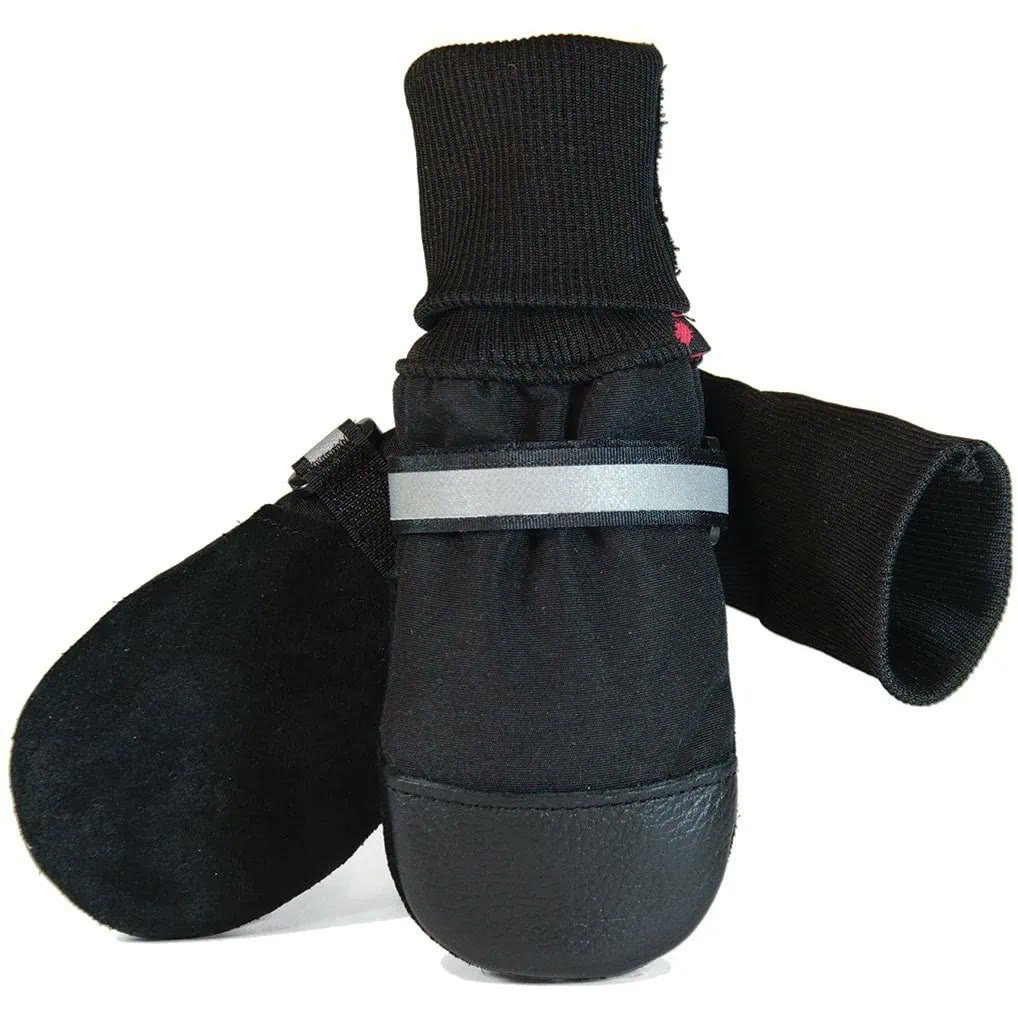
Muttluks has been making dog boots in Canada since 1994 — the original dog boot, and still the winter standard. The Original Fleece-Lined version pairs a windproof, water-resistant softshell outer with a fleece lining and a specially treated flexible leather sole that molds to the paw — “barefoot comfort” in the brand’s words, and owners of winter hiking dogs largely agree. Reflective accents help on dark winter trails, and the stretchy cuff keeps snow out.
The honest part: these are winter boots, not all-terrain hiking boots. The leather sole is flexible and comfortable but wears faster than rubber on rocky summer trails — this is a cold-weather pick. Owner complaints center on sizing (their chart is its own system — measure, don’t guess), boots working loose on long hikes, and the price. They’re also hand-wash and the leather needs occasional care. For winter hiking, though, nothing in this list keeps paws warmer.
Specs: fleece-lined · water-resistant windproof softshell outer · flexible treated-leather sole · stretchy snow-proof cuff · reflective accents · made in Canada · sold in sets of 4.
Pros: warmest option here; leather sole flexes naturally; proven since 1994; great for snow, ice, and salt.
Cons: not for rocky summer hiking — leather wears; sizing chart is idiosyncratic; premium price; boots can loosen on long hikes.
Verdict: The winter hiking boot — unbeatable in cold, wrong tool for summer rock. Check the price on Amazon.
3. QUMY Dog Boots (4-Pack) — Best Value

QUMY is the value king of dog boots — a full set of four for roughly the price of one Ruffwear pair. The upgraded version adds pig-leather anti-slip pads inside the boot to keep them on, a taller cuff to keep out sand and snow, two adjustable reflective straps, and a rugged anti-slip rubber sole. Sizes run from small dogs up to size 8 (for dogs 74–88 lbs), and the wide split-seam opening makes them genuinely easy to put on — the #1 usability complaint about boots generally.
The honest part: “waterproof” here means splash-resistant — QUMY’s own listing says they can’t be immersed. Owner complaints focus on soles wearing down on asphalt faster than premium boots, straps loosening over a long walk, and the sizing chart needing careful attention (measure the paw, ignore the breed suggestions). At this price, though, they’re the boots you can afford to lose one of — and on real trails, everyone loses one eventually.
Specs: 4-pack · rugged anti-slip rubber sole · pig-leather anti-slip inner pads · 2 adjustable reflective straps · tall cuff · sizes 1–8 (up to ~88-lb dogs) · splash-resistant (not submersible).
Pros: full set for the price of one premium pair; easy on/off; good size range up to large dogs; reflective straps.
Cons: splash-resistant, not truly waterproof; soles wear on asphalt; straps can loosen; sizing needs care.
Verdict: The smart money pick — 90% of the function at a fraction of the price. Check the price on Amazon.
4. XSY&G Dog Boots (4-Pack) — Budget Alternative
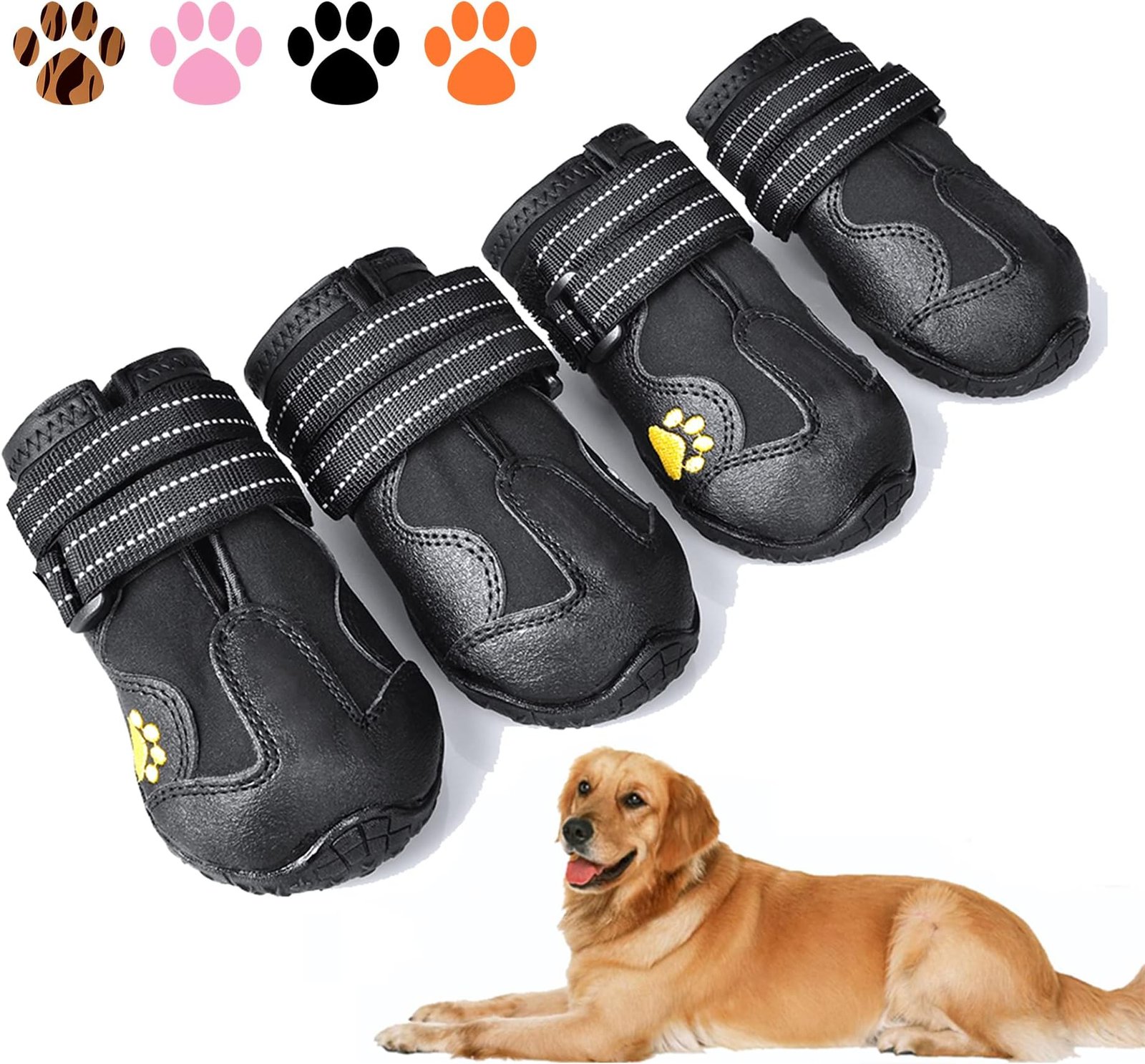
XSY&G is QUMY’s closest competitor in the budget 4-pack space: waterproof fabric upper, rugged anti-slip rubber sole, two long adjustable straps with reflective strips, paw-embroidery styling, and sizes 1–8 covering dogs from ~15 lbs to ~95 lbs. The brand’s own listing is admirably specific about sizing by paw measurement rather than breed — the right way to fit boots.
The honest part: read the fine print in their own listing — the boots “can not be applied in deep water or in sands, because there may be water or fine sand seepage through sewing needle holes.” That’s honest, and it tells you the waterproof claim has limits. Owner complaints mirror the category: boots slipping off despite tightened straps, and size inconsistency between batches. Treat them as fair-weather trail boots, carry a spare, and they’ll earn their keep.
Specs: 4-pack · waterproof fabric upper (sealed seams not claimed — needle-hole seepage possible) · rugged anti-slip sole · 2 adjustable reflective straps · sizes 1–8 (~15–95-lb dogs).
Pros: cheapest credible 4-pack; honest sizing guidance; reflective night visibility; easy on/off.
Cons: waterproofing fails at seams in water/sand; slippage complaints; batch-to-batch size variance.
Verdict: The cheapest way to try boots on your dog — buy, measure, carry spares. Check the price on Amazon.
5. QUMY Mesh Breathable Booties (4-Pack) — Best for Hot Pavement

Hot pavement and summer trails need a different boot: maximum airflow, minimum insulation. QUMY’s mesh version uses a tightly woven air-mesh upper that keeps debris out while ventilating, with the same tough rubber sole and two-strap closure as their standard boot. They’re the lightest boots in this list and the best answer to the “my dog’s pads burn on summer sidewalks” problem — plus they double as indoor booties for dogs that scratch hardwood floors.
The honest part: mesh is a trade-off. Owners report the mesh upper wears faster than fabric on rough terrain, and these are not thorn-proof — sharp trail debris that a leather or heavy-fabric boot shrugs off can work through mesh. Think of them as hot-weather and urban-trail boots, not backcountry armor. Sizing care applies here too.
Specs: 4-pack · breathable air-mesh upper · tough non-slip rubber sole · wide split-seam opening · 2 adjustable reflective straps · sizes for small through large dogs.
Pros: coolest-wearing boots here; great for hot pavement; lightweight; reflective straps; indoor-floor friendly.
Cons: mesh wears faster on rough terrain; not thorn-proof; summer/urban use, not backcountry armor.
Verdict: The summer boot — for hot pavement and warm trails, nothing breathes better. Check the price on Amazon.
6. Hcpet Dog Boots (4-Pack) — Cheapest 4-Pack
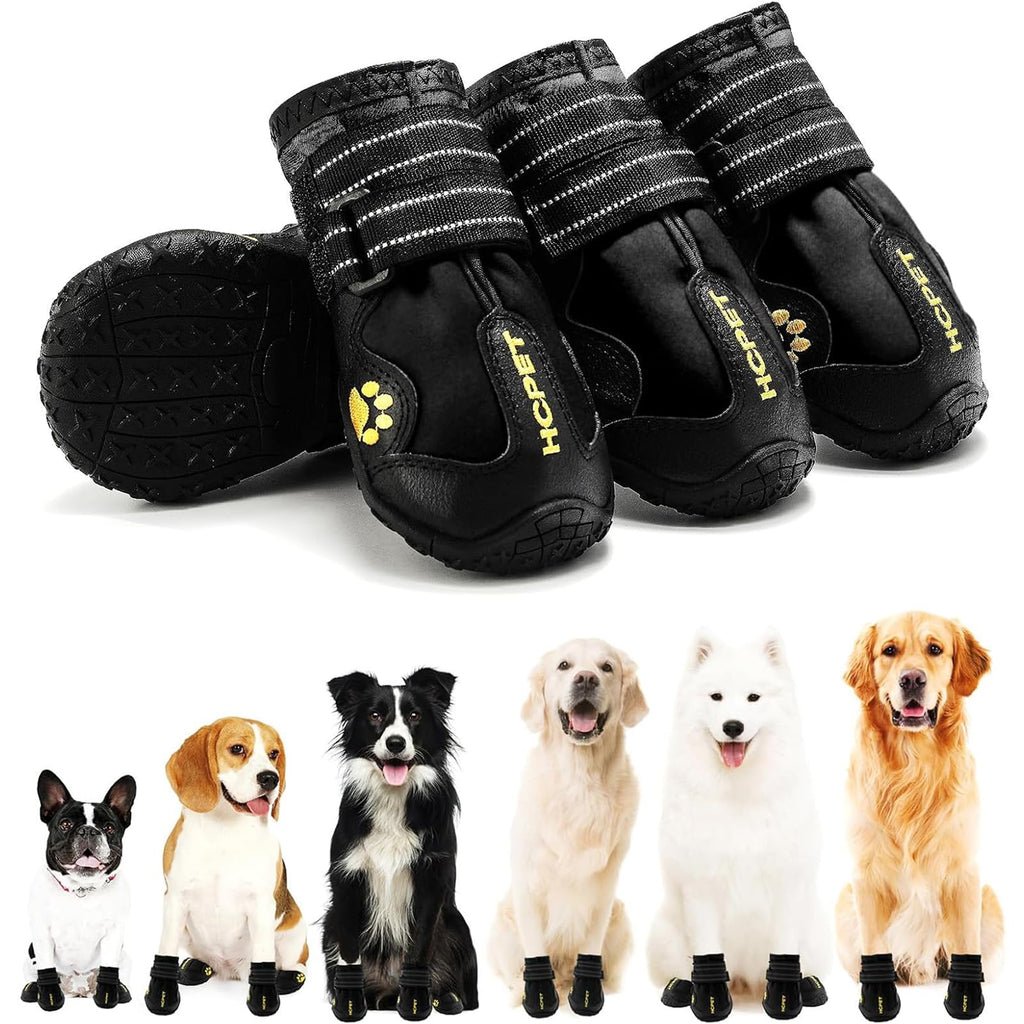
Hcpet rounds out the list as the rock-bottom 4-pack: waterproof booties with anti-slip soles and reflective straps, sized for small through large dogs, marketed for hot pavement, winter snow, and hiking. For owners who want to test whether their dog will tolerate boots at all — many won’t — this is the lowest-stakes experiment: if the dog stages a sit-down protest and refuses to walk, you’re out the price of a pizza.
The honest part: you get what you pay for. Owner feedback patterns show more sizing complaints and more slippage than the QUMY/XSY&G tier, and durability on real trails is the weak point — these are starter boots, not expedition gear. But as a “will my dog even wear these” trial, or as emergency spares in the pack, they have a legitimate job.
Specs: 4-pack · waterproof upper · anti-slip sole · reflective straps · sizes for small/medium/large dogs.
Pros: cheapest entry point; fine for tolerance-testing; usable as emergency spares.
Cons: more sizing and slippage complaints than mid-tier; weakest trail durability; starter boots, not hiking boots.
Verdict: The trial pair — buy these to find out if your dog does boots at all. Check the price on Amazon.
How to Choose Dog Shoes for Hiking
Measure the paw, ignore the breed chart. This is the whole game. Stand the dog on paper, mark the paw’s length and width with weight on it, and use the manufacturer’s measurement chart — not the “Labrador = size 6” column. Every “boots flew off on the trail” complaint starts with a guessed size. When between sizes, size down.
Match the boot to the season. Summer hiking wants breathable mesh (QUMY Mesh) or ventilated boots (Grip Trex) — insulation cooks paws. Winter wants fleece lining and snow-proof cuffs (Muttluks). One pair of boots does not cover both seasons well.
Sole matters more than upper on real trails. Granite, scree, and hot rock punish cheap soles. Vibram (Grip Trex) and thick rubber (QUMY) survive; thin fabric soles and mesh are for pavement and mild trails. If your trails are genuinely rocky, the sole is where your money should go.
Expect to lose one — carry a spare. No boot stays on perfectly, on any dog, at any price. Pack one spare boot (or a roll of vet wrap as a field expedient), and check the straps at every water break. Straps loosen with miles; a 30-second re-tighten saves a lost boot.
Train at home first. The universal comedy of a dog high-stepping in new boots is also a training necessity — let the dog wear them indoors with treats for a few sessions before the trail. A dog fighting its boots on mile one is a dog with blisters by mile six.
Boots don’t replace pad conditioning and judgment. Tough terrain still demands rest stops, water, and watching for limping. Boots protect against heat, thorns, and sharp rock — they don’t make a 15-mile day okay for an unconditioned dog. Build mileage gradually, boots or not.
Bottom line: the Ruffwear Grip Trex is the best hiking boot for dogs that hike real trails — Vibram soles and the best closure system justify the price. For winter, get the Muttluks Original Fleece-Lined. On a budget, the QUMY 4-pack is the value king, the QUMY Mesh covers summer heat, and the Hcpet set is your low-stakes trial pair. Whatever you buy: measure the paws, train at home, and pack a spare.
Frequently Asked Questions
Do dogs really need shoes for hiking?
On mild trails, usually not — healthy paw pads handle dirt and grass fine. On hot rock, sharp scree, thorn-covered trails, snow with ice-melt salt, or multi-day mileage, boots prevent the pad burns, cuts, and cracking that end hikes early. Think of them as trail-specific gear, not everyday wear.
How do I measure my dog’s paws for boots?
Stand the dog on a piece of paper, press down gently so the paw spreads the way it does under weight, and mark the length and width. Measure all four paws — front and back often differ. Use the brand’s measurement chart, not the breed column, and size down if between sizes.
Why do dog boots keep falling off?
Almost always fit: too large, straps not tight enough, or the wrong shape for the dog’s paw. Tighten straps snugly (you should barely fit a finger under), re-tighten after the first 15 minutes of walking as the boot settles, and consider boots with ankle-cinching closures like the Grip Trex if slippage persists.
Are dog boots waterproof?
Most “waterproof” dog boots are really water-resistant — they’ll handle rain, wet grass, and puddles, but creek crossings and deep mud find the seams (XSY&G’s own listing admits seepage through stitching holes). For truly wet hikes, accept damp boots and bring spares, or look at dedicated rain boots.
Can dogs hike in boots all day?
Most dogs can, with conditioning — but build up to it. Start with short walks, check paws and straps at breaks, and watch for rubbing on the dewclaw area (a common hot spot). Take the boots off at camp so paws can air out.
How long do dog hiking boots last?
It depends on terrain and mileage: premium rubber soles (Vibram) can last a full hiking season or more of regular use; budget boots may wear through in weeks of daily pavement walking. Rotate pairs, rinse off grit after hikes, and inspect soles — worn smooth means worn out.
