

The travel scenario covered boxes exist for: you’re living out of a camper with a cat, the litter box has to go in the main cabin, and every bump in the road threatens to scatter litter across the floor you’ll be sleeping on. A covered box keeps the mess contained, the smell pointed in one direction, and — with a top-entry design — the litter inside the box when the road gets rough.
The honest note most roundups skip: covered boxes are a compromise, and the cat doesn’t always agree to it. Behaviorists and owner forums consistently report the same two problems — hoods trap odor inside the box, so a box that smells fine to you can smell awful to the cat, and some cats simply refuse covered boxes or feel ambushed with only one exit. Covered boxes also demand more diligent scooping, not less. This guide compares six covered boxes that earn their keep — with the complaints owners actually report: smell trapping, cramped interiors, flimsy doors, and cats that vote with their feet.
Pet Travel Items is reader-supported. When you buy through links on this page, we may earn a commission at no extra cost to you. Our picks are driven by documented owner feedback, never by commission rates.
Best Covered Cat Litter Boxes at a Glance
| # | Product | Size / Entry | Best For | |
|---|---|---|---|---|
| 1 | Catit Airsift Jumbo Hooded Litter Pan | 22.4″ x 19.7″ x 18.3″ · front door | Best overall | Check Price |
| 2 | IRIS USA Large Top Entry Cat Litter Box | 20.75″ x 16.12″ x 14.62″ · top entry | Best top-entry / dog-proof | Check Price |
| 3 | Petmate Booda Dome Cleanstep Litter Box | ~21″ x 21″ · step entry | Best step-entry design | Check Price |
| 4 | Amazon Basics No-Mess Hooded Litter Box, Large | 24″ x 18″ x 17″ · swinging door | Best budget large | Check Price |
| 5 | Petmate Basic Hooded Cat Litter Pan, Jumbo | Jumbo · removable door | Best classic hooded | Check Price |
| 6 | Amazon Basics No-Mess Hooded Litter Box, Standard | 21″ x 16″ x 15″ · swinging door | Best for small spaces | Check Price |
Prices shift constantly — check before you buy. Dimensions are manufacturer figures.
1. Catit Airsift Jumbo Hooded Litter Pan — Best Overall
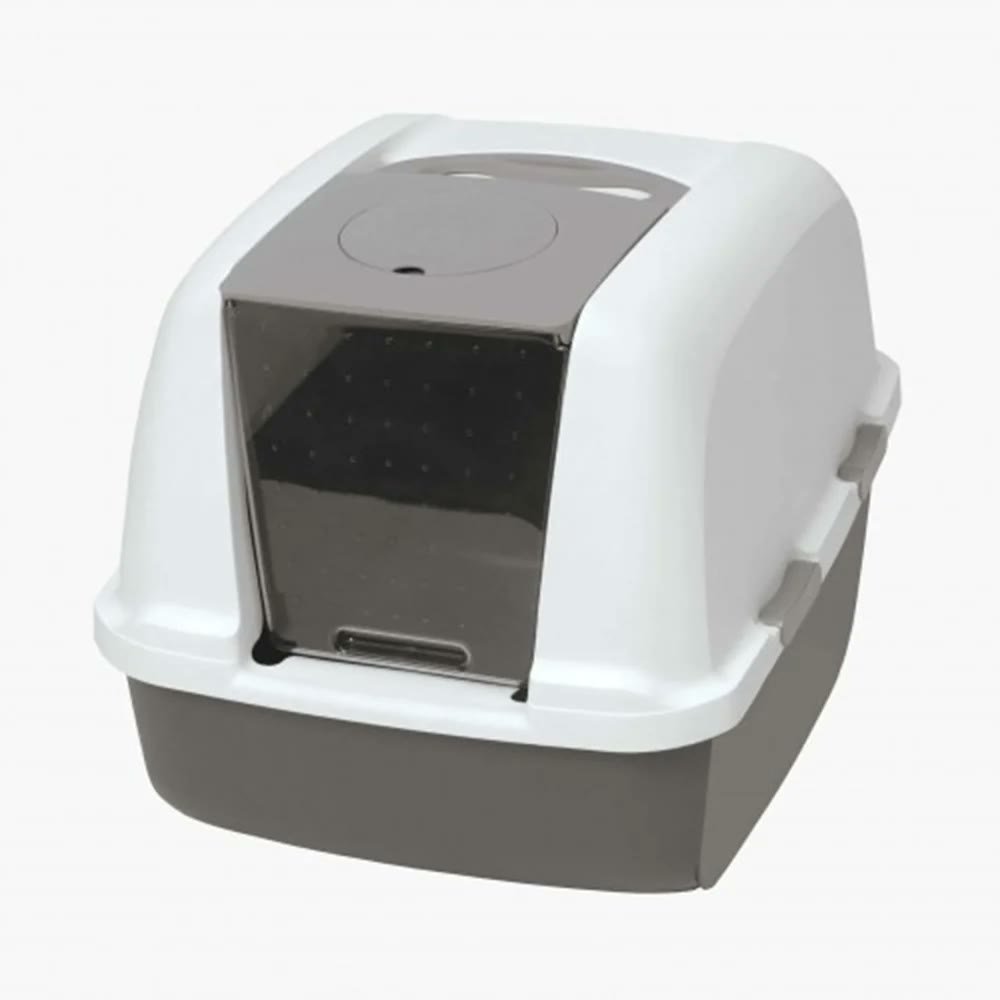
The Catit Jumbo is the covered box that takes the category’s weaknesses most seriously. At 22.4″ L x 19.7″ W x 18.3″ H with a 10.4″ x 9.6″ door, it’s genuinely jumbo — big cats can turn around inside. The hood lifts up for full-access scooping, a built-in bag anchor holds liners open, and the raised back plus overlapping base-to-hood construction is specifically designed to stop leaks when cats urinate high against the sides. Odor control is dual-action: a carbon filter up top plus compatibility with Catit Ammonia Buster pads.
Complaints to know: the carbon filters are an ongoing cost and need regular replacing or odor control fades; the swing door annoys some cats (it’s removable — many owners just take it off); and at this footprint it’s a commitment of floor space. The plastic can also retain odor over time if you’re not washing it periodically — a covered-box universal, not a Catit-specific flaw.
Specs: 22.4″ L x 19.7″ W x 18.3″ H · door 10.4″ x 9.6″ · BPA-free plastic · carbon filter + Ammonia Buster compatible · raised back, leak-proof overlap · bag anchor · removable door.
Pros: truly jumbo interior; hood lifts for easy scooping; thoughtful anti-leak design; real odor filtration.
Cons: replacement filters are an ongoing cost; swing door irritates some cats (removable); large footprint; plastic can hold odor long-term.
Verdict: The best-engineered covered box — big, cleanable, and honest about odor. Check the price on Amazon.
2. IRIS USA Large Top Entry Cat Litter Box — Best Top-Entry / Dog-Proof
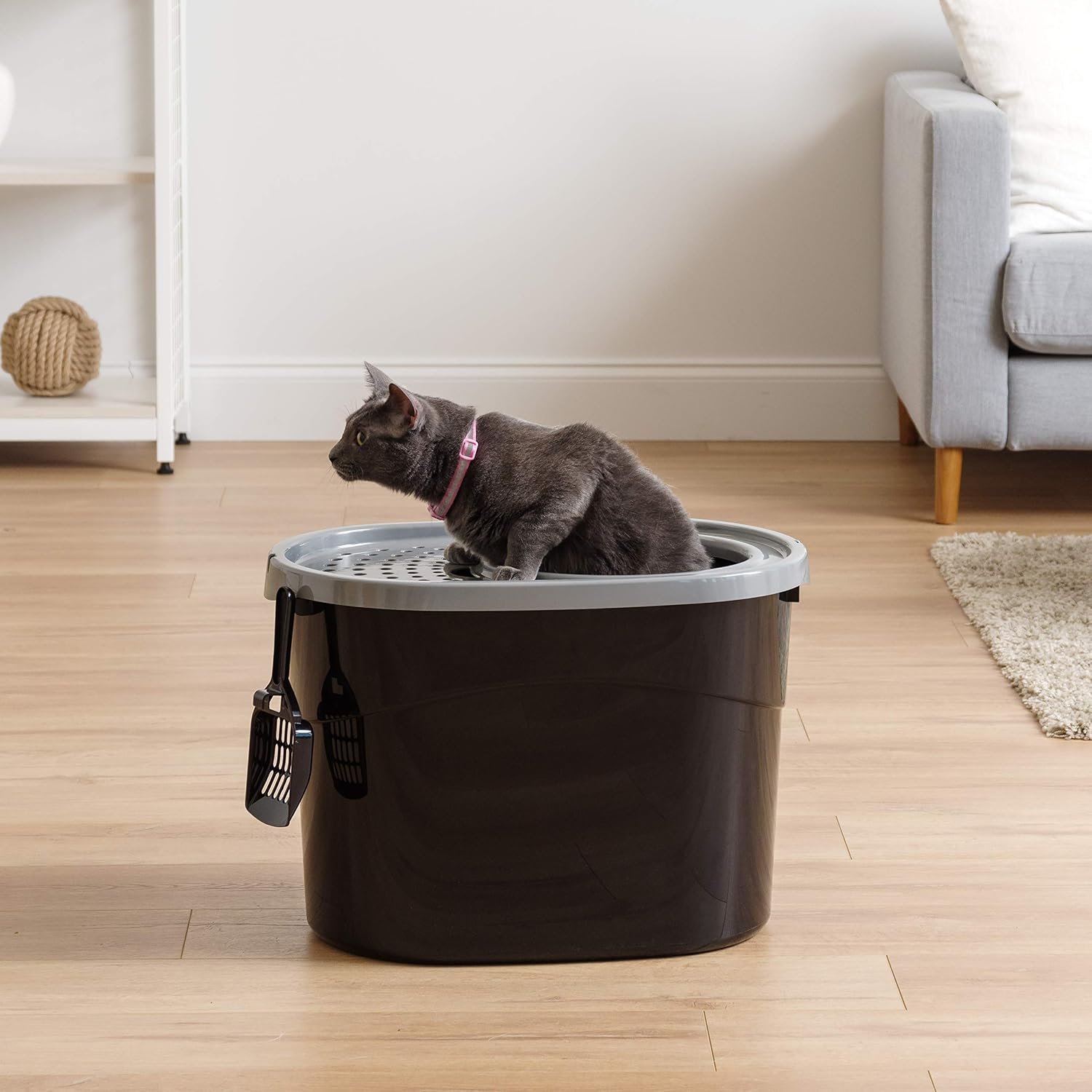
Top-entry boxes solve two problems at once: litter stays in the box even with enthusiastic diggers, and dogs can’t get their noses in. The IRIS Large measures 20.75″ x 16.12″ x 14.62″ with a 9″ x 10.5″ top opening; the grooved lid doubles as a litter-catching mat so granules fall back through instead of onto your floor. It comes with a scoop that hooks onto the body, it’s made in the USA, and the rounded interior is easy to wipe down.
The honest trade-offs: some cats won’t use a top-entry box — kittens, seniors, and arthritic cats especially struggle with the jump, and nervous cats dislike the single exit. Owners also note the box is snug for very large cats despite the “Large” name, and the lid grooves need occasional cleaning themselves. For travel, though, this is the pick: nothing spills out of a top-entry box on a bumpy road.
Specs: 20.75″ x 16.12″ x 14.62″ · top opening 9″ x 10.5″ · grooved litter-catching lid · included scoop with hook · made in USA · 4.6 lb.
Pros: best spill containment of any design — ideal for vehicles; dog-proof; lid catches tracked litter; made in USA.
Cons: not for kittens, seniors, or arthritic cats; some cats refuse top entry; snug for very large cats.
Verdict: The travel pick — if your cat will jump in, nothing contains litter better on the road. Check the price on Amazon.
3. Petmate Booda Dome Cleanstep Litter Box — Best Step-Entry Design
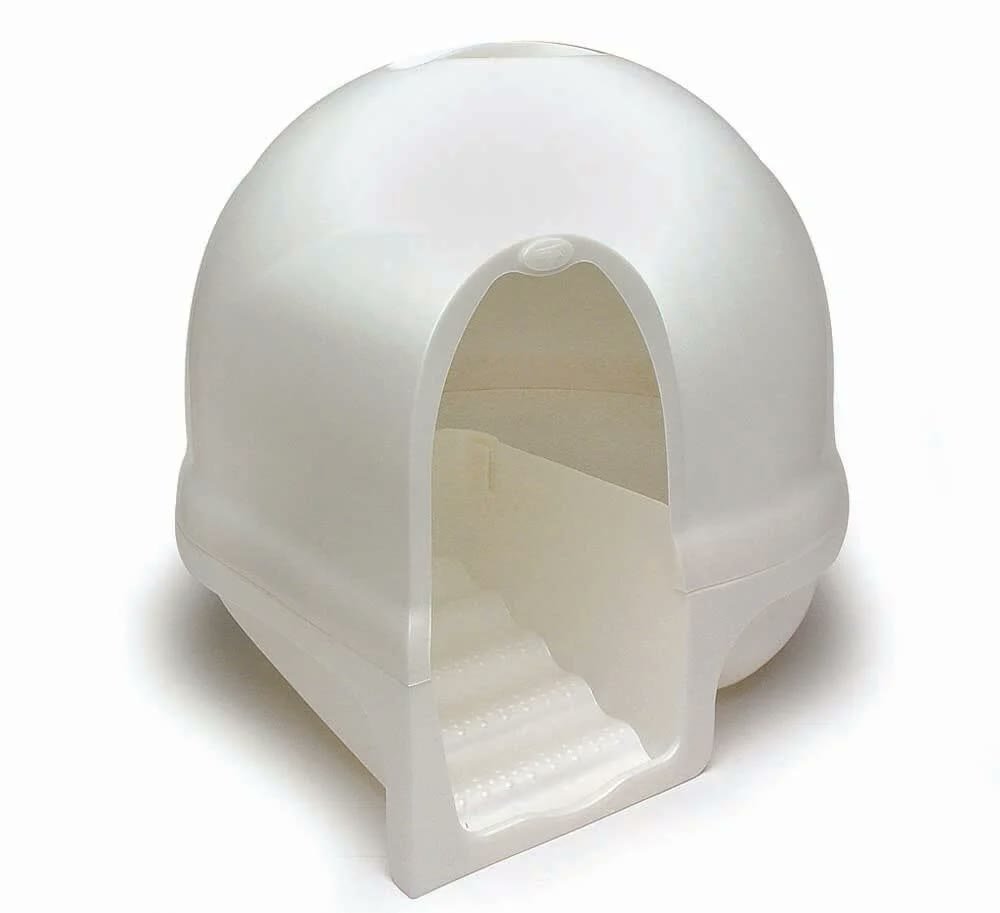
The Booda Dome has been around for decades because the design works: a dome that encloses the pan on all sides, with a stepped entrance whose grooves wipe litter off paws as the cat exits. The charcoal filter in the dome absorbs rising odors, the rounded non-stick pan cleans easily, and a built-in handle makes the whole thing portable. It’s made in the USA from 95% recycled materials — a genuine sustainability plus.
Complaints reflect the design’s age and shape. The round footprint wastes corner space and the interior is tighter than rectangular boxes of similar dimensions — large cats can feel cramped. Cleaning under the dome’s curves is more awkward than a lift-off hood, and the charcoal filter needs replacing to keep doing its job. Some owners also find the stepped entry collects litter that then needs sweeping.
Specs: ~21″ x 21″ footprint · dome enclosure · grooved clean-step entrance · charcoal filter included · carry handle · non-stick rounded pan · made in USA (95% recycled).
Pros: iconic contained design; step entry reduces tracking; portable with handle; recycled materials.
Cons: round shape wastes space; tight for large cats; awkward to deep-clean; filter replacements needed.
Verdict: The classic dome — great for average-size cats, less so for big ones. Check the price on Amazon.
4. Amazon Basics No-Mess Hooded Litter Box, Large — Best Budget Large
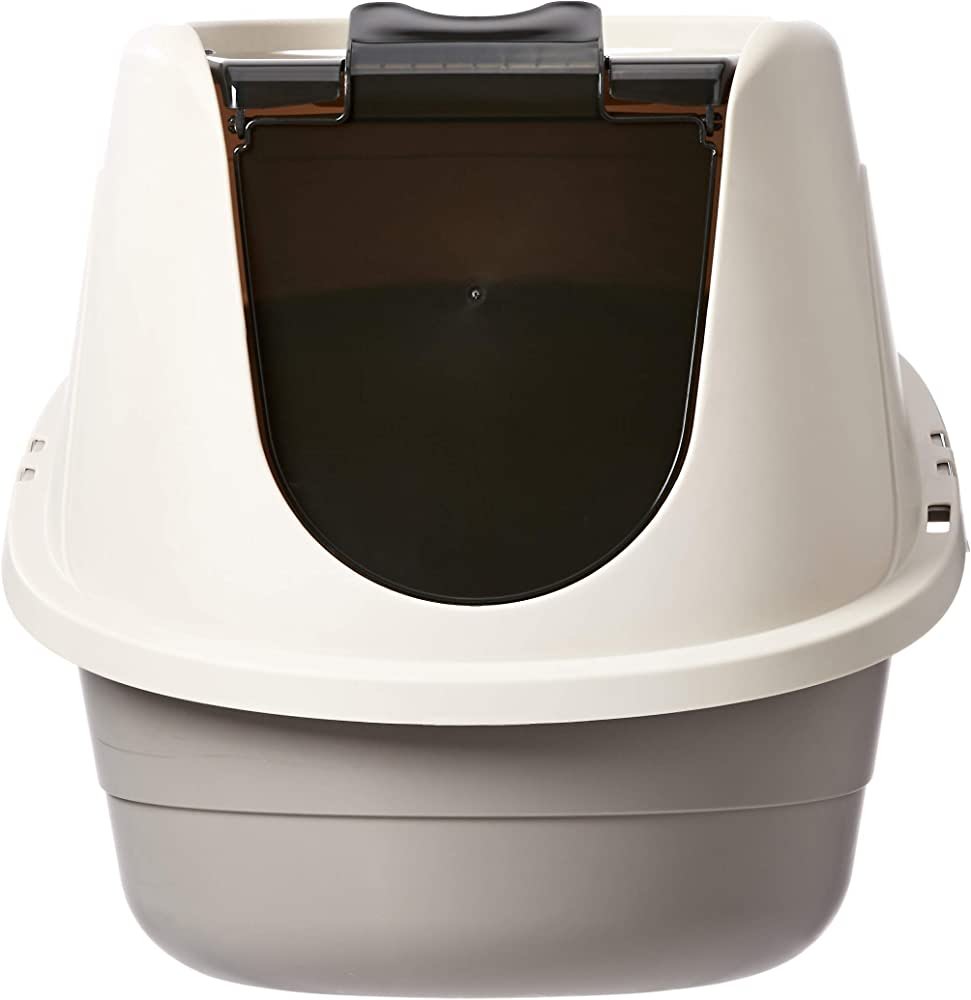
The value play: a 24″ x 18″ x 17″ hooded box with a swinging door, pre-installed replaceable carbon filter, stain- and odor-resistant plastic, and a carry handle on the cover — at a price well under the name brands. For a large covered box on a budget, or a second box for the camper, it’s hard to argue with the math.
Be honest about what the price buys: the plastic is thinner than premium boxes, and owner feedback on budget hooded boxes consistently flags flimsier swing doors and latches, plus plastic that absorbs odor faster over time. The swinging door is removable if the cat objects. At this price, treat it as a replaceable item — when the plastic starts holding smell despite washing, replace rather than fight it.
Specs: 24″ x 18″ x 17″ · swinging door (removable) · pre-installed carbon filter · carry handle · stain/odor-resistant plastic · 1-year warranty.
Pros: cheapest large covered box here; full feature set (door, filter, handle); good second-box or travel-box price.
Cons: thinner plastic than premium rivals; flimsier door and latches; plastic retains odor sooner — plan to replace.
Verdict: The budget large — buy it for the price, replace it when the plastic tells you to. Check the price on Amazon.
5. Petmate Basic Hooded Cat Litter Pan, Jumbo — Best Classic Hooded
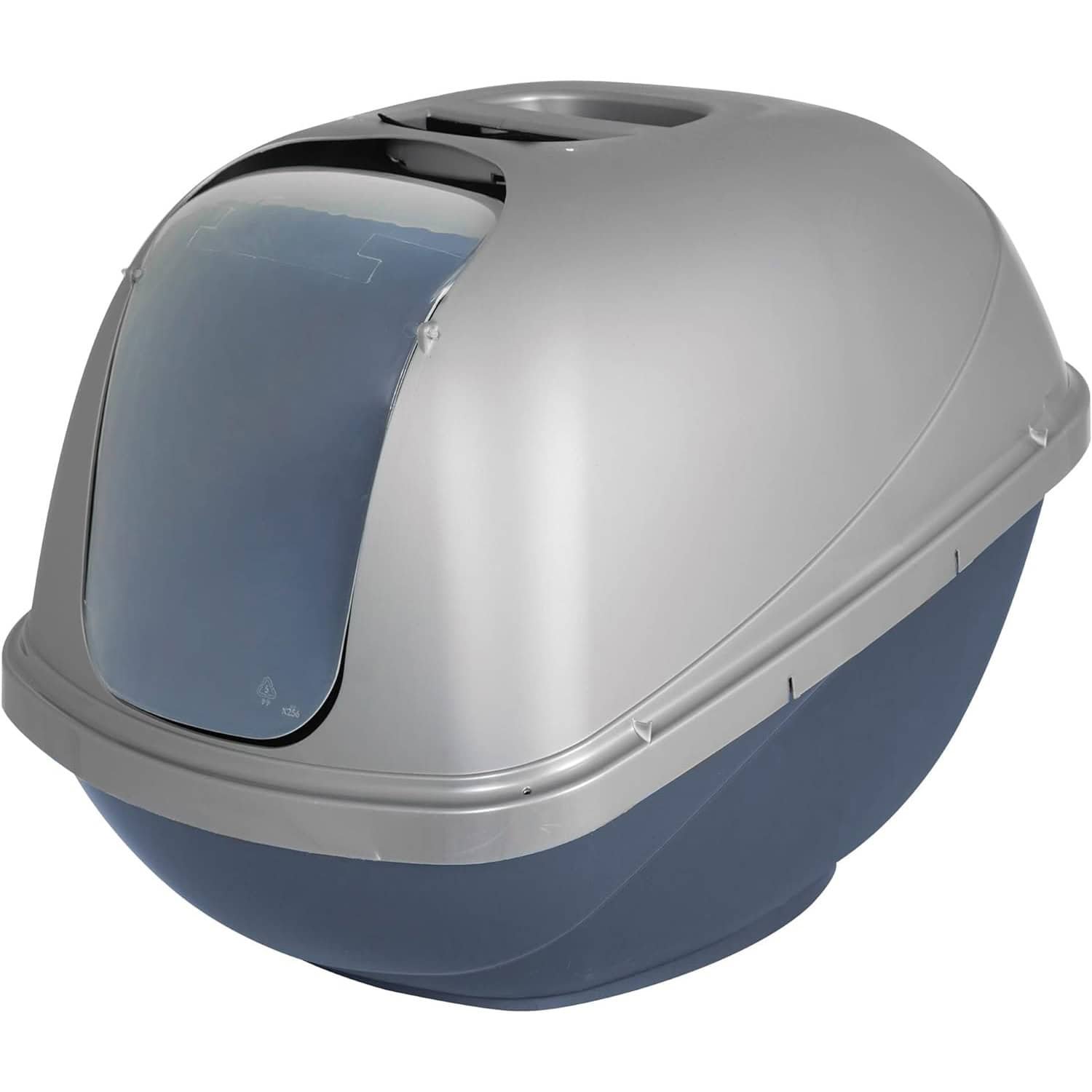
Petmate’s Basic Hooded Jumbo is the traditional hooded box done right: high walls and hood to keep litter in, a removable privacy door, a lowered entry point that’s kinder to older cats than most hooded designs, and a molded handle plus replaceable carbon filter in the hood. Reinforced bottom, made in the USA, and decades of production behind it.
The complaints are the category’s classics: hoods trap odor inside, so this box needs more frequent scooping than an open pan — “out of sight, out of mind” is how covered boxes get foul. The door is removable for a reason — plenty of cats prefer it gone. And while “jumbo,” very large cats can still find it snug; measure your cat against the interior, not the marketing name.
Specs: jumbo hooded pan · removable door · lowered entry · replaceable carbon filter · molded carry handle · reinforced bottom · made in USA.
Pros: classic proven design; lowered entry suits seniors; removable door; sturdy reinforced base.
Cons: hood traps odor — scoop more often, not less; many cats prefer the door removed; snug for very large cats.
Verdict: The reliable classic — if you want a normal hooded box, this is the one. Check the price on Amazon.
6. Amazon Basics No-Mess Hooded Litter Box, Standard — Best for Small Spaces
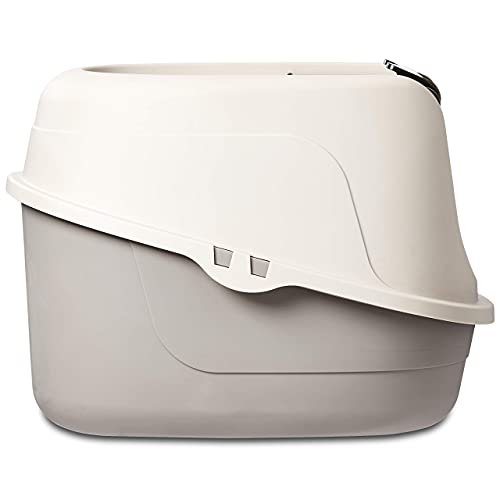
The compact version of #4: 21″ x 16″ x 15″ with the same swinging door, pre-installed carbon filter, and carry handle, sized for apartments, closets, and — relevant here — campers and cars where every inch matters. Same budget price logic.
The size is both the point and the problem. For a small cat in a small space, it’s ideal. For an average or large cat, 21 inches of interior length is tight — cats need roughly 1.5x their body length to use a box comfortably, and cramped boxes cause avoidance. The thin-plastic and flimsy-door caveats from the Large apply here too. Buy the size for the cat you have, not the space you wish you had.
Specs: 21″ x 16″ x 15″ · swinging door (removable) · pre-installed carbon filter · carry handle · stain/odor-resistant plastic.
Pros: compact for tight spaces and travel; cheapest covered option; full features despite the size.
Cons: too small for large cats — measure first; thinner plastic; door can annoy cats (removable).
Verdict: The small-space pick — perfect for kittens and petite cats, not for big ones. Check the price on Amazon.
How to Choose a Covered Cat Litter Box
Size it to 1.5x your cat. The rule of thumb: the box interior should be at least one and a half times your cat’s body length (nose to tail base). “Jumbo” and “Large” are marketing terms — check the actual interior dimensions against your cat, especially for big breeds. A cramped box is the fastest route to a cat peeing next to it.
Assume you’ll remove the door. Swinging doors bother a meaningful share of cats — they’re noisy, they touch whiskers and backs, and nervous cats hate pushing through them. Every box here has a removable door; try it with the door first, and don’t hesitate to take it off. A doorless covered box still contains litter far better than an open pan.
Plan to scoop more, not less. The hood traps odor inside the box — that’s the central trade-off of covered designs. A covered box that’s scooped daily smells better than an open one; a covered box that’s neglected smells worse. If you won’t scoop daily, buy an open box.
Pick the entry for the cat’s age. Top-entry is the best spill containment for travel but the worst choice for kittens, seniors, and arthritic cats. Lowered front entries (Petmate Basic) suit older cats. When in doubt, front entry is the universal safe choice.
Budget for filters — or skip them. Carbon filters help, but they’re a subscription: once saturated, they do nothing. If you won’t replace them every few weeks, don’t pay extra for the feature — frequent scooping and periodic washing matter more.
For travel, containment beats everything. In a moving vehicle or small camper, a top-entry box (IRIS) or a dome keeps litter where it belongs over bumps. Pair it with a lightweight litter and a mat, wedge the box so it can’t slide, and you’ve solved the road-litter problem.
Bottom line: the Catit Airsift Jumbo is the best covered box for most homes — big, well-designed, and genuinely cleanable. For the road, the IRIS USA Top Entry contains spills better than anything else here. On a budget, the Amazon Basics Large does the job cheaply, and the Petmate Basic Hooded Jumbo is the classic that never really goes wrong.
Frequently Asked Questions
Do cats like covered litter boxes?
Some do, some don’t — and behaviorists note that cats “almost always prefer” open boxes. The documented objections: trapped odor (the hood concentrates smell where the cat’s nose is), feeling cornered with one exit, and dislike of swinging doors. Always keep the old open box available during transition, and take the door off at the first sign of reluctance.
Do covered litter boxes trap odor?
Inside the box, yes — that’s the physics of a hood. Whether your room smells better depends entirely on scooping frequency and the litter. A covered box scooped daily with a carbon filter smells better than an open box; a neglected covered box smells worse. The hood doesn’t eliminate odor work — it relocates it.
What size covered litter box do I need?
Interior length at least 1.5x your cat’s body length (nose to base of tail). For a 18-inch cat, that’s 27 inches of box — which is why genuinely large cats need the biggest boxes made. When a box is too small, cats perch on the edge or go elsewhere.
Are covered litter boxes good for travel?
They’re the best option for travel. A hood or top entry keeps litter contained over bumps and in small spaces, which is exactly the RV/camper problem. Top-entry designs (IRIS) are the most spill-proof for moving vehicles. Wedge the box so it can’t slide, and pair it with a lightweight litter.
Top-entry vs. front-entry — which is better?
Top-entry contains litter and excludes dogs better; front-entry suits every cat including kittens, seniors, and arthritic cats. If your cat is young, healthy, and a vigorous digger, top-entry is excellent. If there’s any mobility question at all, front-entry is the safe choice.
How often should I clean a covered litter box?
Scoop daily — non-negotiable with a hood, since trapped odor builds fast. Wash the box itself with mild soap monthly (more often if the plastic starts holding smell), and replace carbon filters every few weeks if your box uses them. Old, scratched plastic absorbs odor permanently — when washing stops working, replace the box.
