

Here’s the scenario litter attractants exist for: you just moved cross-country, the cat took one look at the brand-new litter box in the unfamiliar apartment, and has decided the rug behind the couch is the bathroom now. Or the new kitten keeps “missing.” An attractant — a sprinkle of herbs blended into the litter — is the cheapest intervention you can try before the vet visits, the enzyme cleaners, and the new carpet.
The honest note most roundups skip: attractants are not magic dust. They work on curiosity and scent, which means they help some cats enormously and do literally nothing for others. They also have fine print — Dr. Elsey’s formula, the category leader, is specifically designed to be mixed into unscented clumping clay, and owners who pair it with pine, paper, or scented litter routinely report it does nothing. This guide compares the standalone additives and the litters with attractants built in, with the complaints owners actually report: cats who ignore it, clay that cements to the box bottom, and sticker shock.
Pet Travel Items is reader-supported. When you buy through links on this page, we may earn a commission at no extra cost to you. Our picks are driven by documented owner feedback, never by commission rates.
Best Cat Attract Litter Additives at a Glance
| # | Product | Type | Best For | |
|---|---|---|---|---|
| 1 | Dr. Elsey’s Cat Attract Litter Additive (20 oz) | Standalone herb additive | Best overall | Check Price |
| 2 | World’s Best Boosters Good Habits (18 oz) | Standalone plant-based additive | Works with any litter | Check Price |
| 3 | Dr. Elsey’s Cat Attract Clumping Litter (40 lb) | Litter with attractant built in | Best value | Check Price |
| 4 | Dr. Elsey’s Cat Attract Clumping Litter (18 lb) | Litter with attractant built in | Best trial size | Check Price |
| 5 | Dr. Elsey’s Kitten Attract Litter (20 lb) | Kitten training litter | New kittens | Check Price |
| 6 | Better Way Eco Fresh Clumping Litter (12 lb) | Litter with Sanel attractant | Natural/zeolite option | Check Price |
Prices shift constantly — check before you buy. Usage directions are manufacturer figures.
1. Dr. Elsey’s Cat Attract Litter Additive (20 oz) — Best Overall
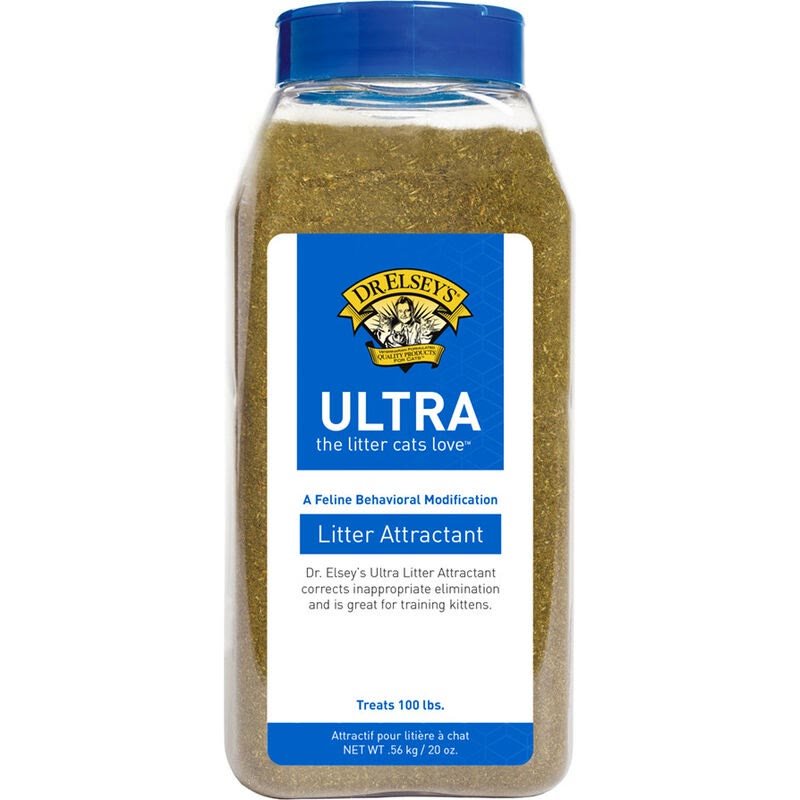
This is the category-defining product: an all-natural proprietary blend of herbs that emits a scent meant to draw cats and kittens to the litter box. The 20 oz pouch treats up to 100 lb of litter — roughly three months for a single cat. Directions are specific: mix 1/4 cup into 20–25 lbs of unscented clumping clay in a fresh box, then add 1/8 cup whenever you top up the litter. It’s the only attractant the brand describes as clinically tested, and it ships with a booklet of behavior advice.
The honest part is the fine print, and owners are loud about it: it does nothing for some cats. One-star reviews on Chewy include owners who tried it exactly as directed and report their cats ignored it entirely — with one caveat, several admitted they hadn’t paired it with the recommended unscented clay. The directions explicitly say not to use it with paper, wheat, corn, pine, perfumed, cedar, or baking-soda litters, since those mask the attractant’s scent. Follow the pairing instructions or don’t bother.
Specs: 20 oz (1.25 lb) pouch · all-natural herbal blend · treats ~100 lb of litter / ~3 months per cat · mix 1/4 cup per 20–25 lb of unscented clumping clay · for use with unscented clay only.
Pros: the original, most-reviewed attractant; one pouch lasts months; clinically tested claim; includes training booklet.
Cons: no effect on some cats; only works with unscented clumping clay — the pairing matters more than the product.
Verdict: The default first try — buy the pouch, pair it with plain unscented clay, and give it a full box cycle. Check the price on Amazon.
2. World’s Best Cat Litter Boosters Good Habits (18 oz) — Works With Any Litter
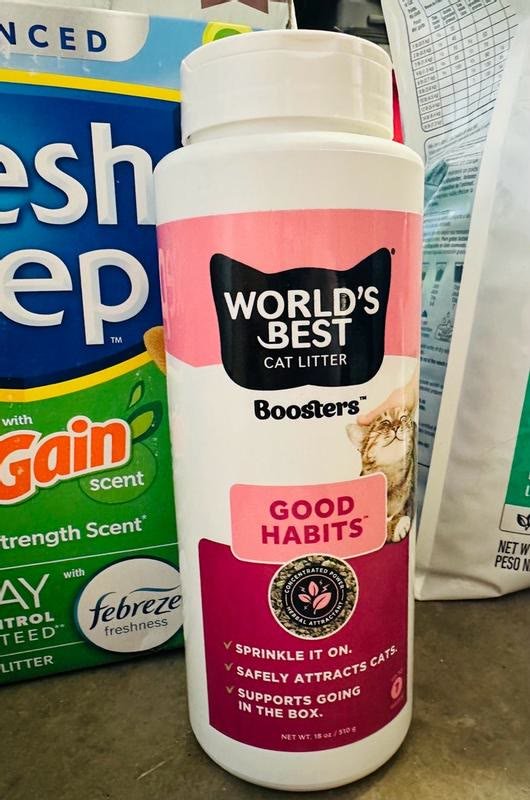
World’s Best’s answer to the attractant problem is the only major standalone additive designed to work with whatever litter you already use — clumping, non-clumping, crystal, or natural. The attractant is a patented plant-based material blended into whole-kernel corn granules; you sprinkle 1/2 cup evenly over the existing litter weekly and as needed. No clay requirement, no litter swap.
The trade-off is age and evidence: this is a 2025 product (first listed March 2025), so it has a fraction of the owner track record of Dr. Elsey’s decades-old formula. The 18 oz canister is smaller than it looks — at 1/2 cup per week it’s a shorter runway than the 20 oz Elsey’s pouch. And as an odor-adjacent additive in a scented-cat household, the corn base has its own smell some owners notice. Still, for cats already settled on a non-clay litter you don’t want to change, this is the only plug-and-play option.
Specs: 18 oz canister · whole-kernel corn + patented plant-based attractant · sprinkle 1/2 cup weekly · compatible with most litter types · no clay, dust, or artificial perfume.
Pros: works with your current litter — no swap required; plant-based and simple to use.
Cons: newer product, thinner review history; smaller canister per application than the Elsey’s pouch.
Verdict: The flexible pick — the right choice when the cat already has a litter it likes and you’re adding an attractant, not replacing a routine. Check the price on Amazon.
3. Dr. Elsey’s Cat Attract Clumping Litter (40 lb) — Best Value
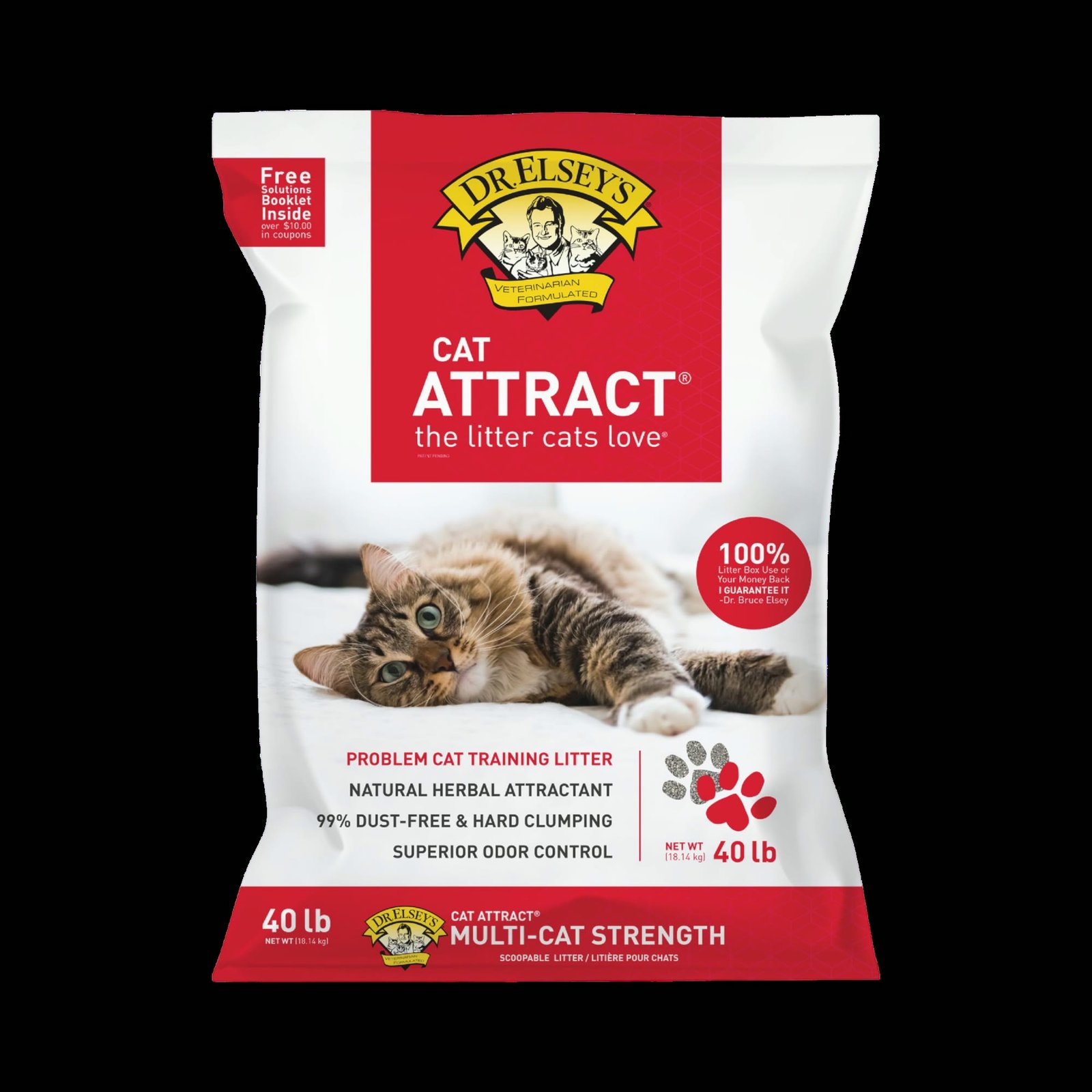
If you’d rather skip the mixing step, this is the same herbal attractant pre-blended into Dr. Elsey’s hard-clumping bentonite clay. The 40 lb bag is the value play: medium-grain clay, 99% dust-free and hypoallergenic per the manufacturer, with the herbal attractant distributed through the whole bag so every scoop carries it. The Amazon listing we pulled showed around 4.5 stars from roughly 9,500 ratings — the largest review base of anything here — though live pages couldn’t be re-verified, so confirm before buying.
Owner complaints cluster around the clay, not the attractant. The most common: clumps can weld themselves to the bottom of the box like cement, with owners reporting they needed a metal scoop and serious scraping — fill the box 3–4″ deep to prevent it. Second: dust. Longtime Elsey’s loyalists report noticeably more dust in recent bags than the 99% dust-free claim suggests, bad enough that some gave their cats baths. And it’s heavy — 40 lbs of clay is a genuine workout.
Specs: 40 lb bag · bentonite clay + natural herbal attractant · 99% dust-free (manufacturer claim) · hard clumping, multi-cat · fill 3–4″ deep.
Pros: attractant built in — no mixing; huge review base; best per-pound value of the Elsey’s options.
Cons: clumps can cement to the box bottom if filled shallow; recent dust complaints; 40 lbs is heavy to haul.
Verdict: The set-and-forget option — buy the big bag, fill deep, and skip the additive pouch entirely. Check the price on Amazon.
4. Dr. Elsey’s Cat Attract Clumping Litter (18 lb) — Best Trial Size
Same litter, same built-in herbal attractant, in an 18 lb bag — and the honest use case is right there in a top Amazon UK reviewer’s tip: buy the smaller bag as a test trial before committing to the big one. Because attractants don’t work for every cat, a two-week trial with the 18-pounder tells you whether your cat is a responder before you’ve committed to 40 lbs of clay.
The trade-offs are the 40-pounder’s, scaled down: same cement-to-the-bottom risk if you skimp on depth, same recent dust complaints, and a worse price per pound than the big bag. But as a diagnostic purchase — “does the attractant concept work on my cat?” — the smaller bag is the rational buy.
Specs: 18 lb bag · same bentonite + herbal attractant formula as the 40 lb · 99% dust-free (manufacturer claim).
Pros: right size for a 2–3 week trial; cheaper way to test the attractant concept.
Cons: worse per-pound value; same clumping-to-the-bottom and dust complaints as the big bag.
Verdict: The trial size — buy this first if you’ve never used an attractant; graduate to the 40 lb only if the cat responds. Check the price on Amazon.
5. Dr. Elsey’s Kitten Attract Litter (20 lb) — Best for New Kittens
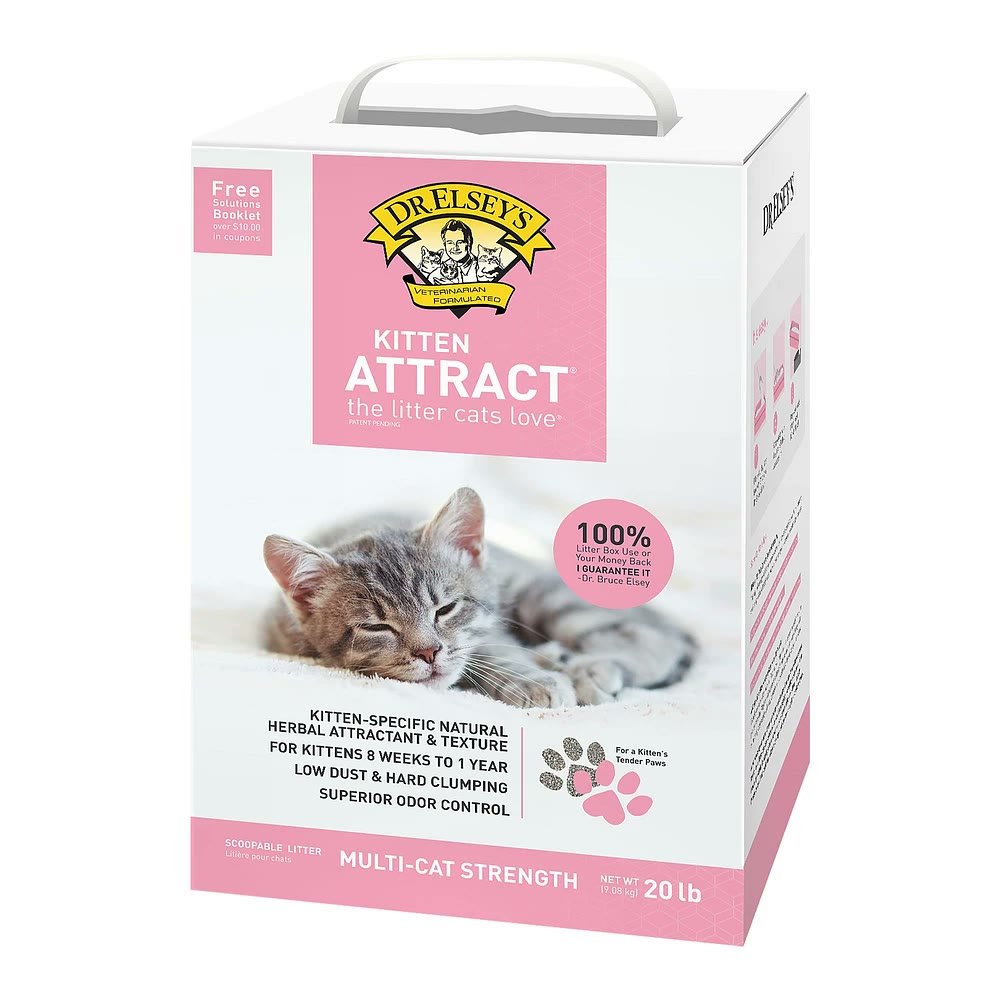
Kitten Attract is Dr. Elsey’s training-specific formula: a kitten-targeted herbal attractant blended into a finer, softer granule sized for tender paws, with the same 99% dust-free, hard-clumping, multi-cat-capable base. Chewy reviews skew toward the use case that matters — new-kitten litter training and multi-kitten households — with multiple owners reporting full litters trained without a miss.
The complaint file here is almost entirely about dust and texture, not the attractant. Multiple owners report the finer granule pours dustier than advertised — one with asthma said it triggered symptoms, another described the kitten emerging “wrapped in dust.” The finer texture also tracks more. And several owners note the obvious: once the kitten is trained, there’s no reason to keep paying the premium — transition to a standard litter.
Specs: 20 lb bag · finer, softer granule · kitten-specific herbal attractant · 99% dust-free, hard clumping (manufacturer claims).
Pros: purpose-built for kitten training; softer on small paws; strong training-success reports.
Cons: finer granule = dustier pour and more tracking than claimed; a temporary purchase, not a forever litter.
Verdict: The training-wheels litter — worth it for the first bag or two with a new kitten, then switch to something cheaper. Check the price on Amazon.
6. Better Way Eco Fresh Clumping Litter (12 lb) — Best Natural Option
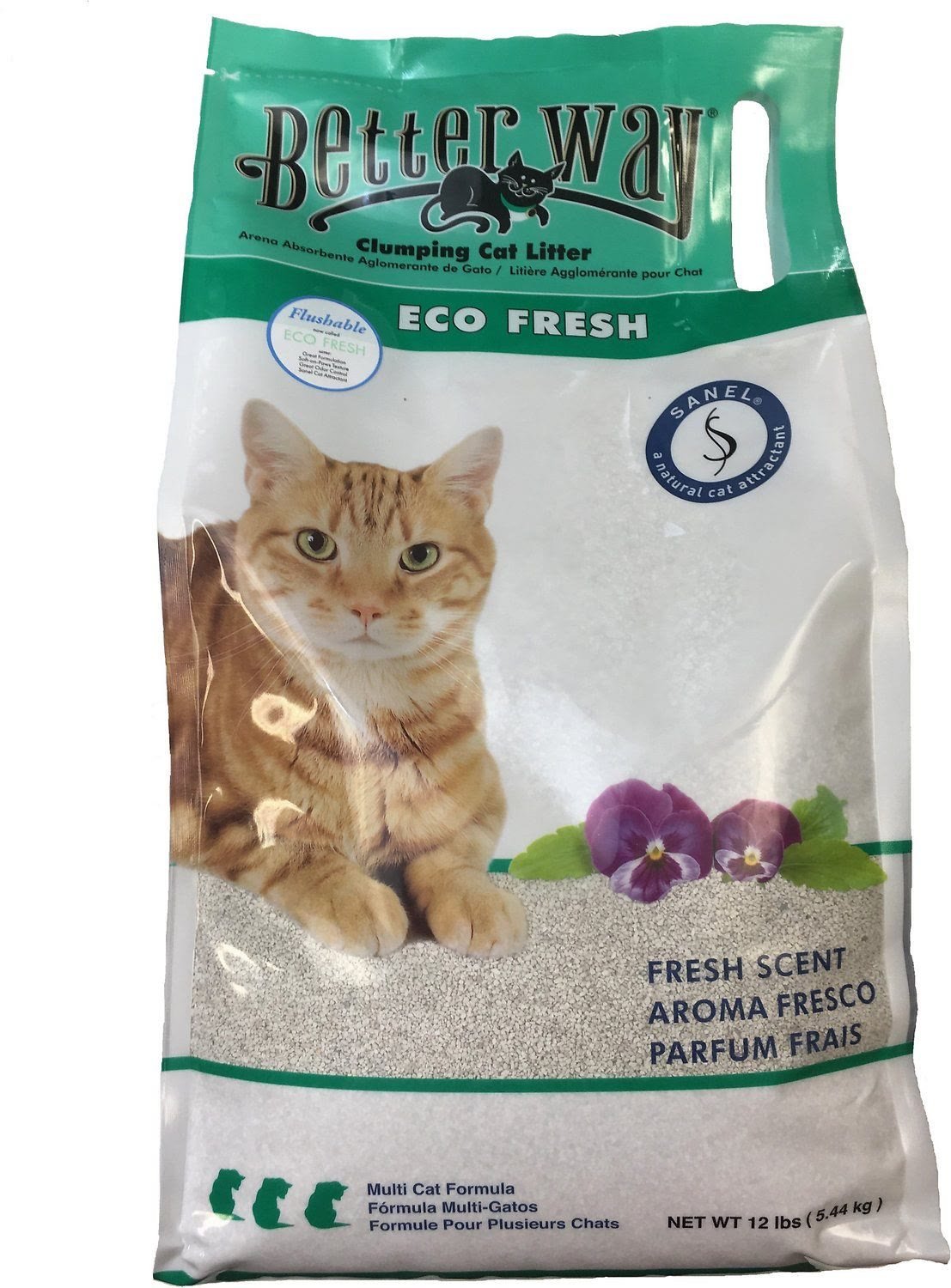
This is the Ultra Pet entry — and worth a note: Ultra Pet doesn’t sell a standalone attractant on Amazon; its attractant, Sanel (a tree-resin-derived natural attractant), is built into the Better Way Eco Fresh line. The litter itself is 100% natural zeolite — a mineral, not clay — marketed as soft on paws with strong odor control, and it comes in a 12 lb bag with a carry handle.
The honest framing: this is a niche-within-a-niche product with a much thinner owner record than Dr. Elsey’s. The chamomile scent variant won’t suit every household, and zeolite litter has its own texture learning curve for cats used to clay. But if you want an attractant-adjacent litter that isn’t clay at all — lighter bags, mineral rather than bentonite — this is the real, verifiable option.
Specs: 12 lb bag · 100% natural zeolite · built-in Sanel tree-resin attractant · clumping, chamomile scent · carry-handle bag.
Pros: non-clay mineral alternative; attractant built in; lighter bags than clay.
Cons: thinner review history; scented (chamomile) — not ideal for scent-sensitive cats; texture transition for clay-raised cats.
Verdict: The non-clay path — for households that want an attractant litter without bentonite. Check the price on Amazon.
How to Choose a Cat Attract Litter Additive
Decide: additive or built-in? A standalone additive (picks 1–2) makes sense when the cat already uses a litter you like — you’re adding a training aid, not changing routines. A built-in litter (picks 3–6) is simpler: one product, no mixing, but you’re switching litters, which is itself a variable. For a stressed cat in a new place, fewer variables win.
Respect the clay rule. Dr. Elsey’s additive is formulated for unscented clumping clay, full stop. Pine, paper, wheat, corn, scented, and baking-soda litters mask the herbal scent, and owners who ignore this report the product “does nothing.” If your cat uses a non-clay litter, pick the World’s Best additive instead of forcing a clay switch.
Give it a full box cycle. Attractants work over days to weeks, not hours. Fill a fresh box, mix per directions, scoop daily, and judge after 2–3 weeks — not after one accident. Most negative reviews come from owners who expected overnight results.
Rule out medical causes first. A cat avoiding the box can be a urinary issue, arthritis (box sides too high), or stress — no herb fixes a UTI. If avoidance is sudden, vet first, attractant second. Attractants are training aids, not diagnostics.
For travel and moves, pair it with a familiar box. The highest-leverage travel use: when you move or travel with the cat, bring the old litter box (or the same litter brand) and add the attractant to the new setup. Familiar substrate + attractant beats attractant alone in a strange-smelling box.
Price it per month, not per bag. The 20 oz additive pouch treats ~100 lb of litter (about three months for one cat), so compare its price against three months of the built-in litter’s premium before deciding which route is cheaper for your household.
Bottom line: the Dr. Elsey’s 20 oz additive pouch is the best first try — longest track record, cheapest per month — provided you pair it with unscented clumping clay exactly as directed. If your cat won’t leave its current litter, the World’s Best Good Habits additive is the flexible alternative. For set-and-forget, the Cat Attract 40 lb litter skips the mixing step, and new-kitten households should start with Kitten Attract for the first bag or two.
Frequently Asked Questions
Do cat attract litter additives actually work?
For many cats, yes — and for some, not at all. The mechanism is scent-based curiosity, not chemistry, so individual response varies. The most consistent owner reports of success involve kittens being trained and cats being retrained after a move or medical episode. The most consistent failure reports involve owners who mixed the additive into the wrong litter type (scented, pine, or paper), which masks the attractant. Follow the pairing directions and judge over 2–3 weeks.
How do you use Dr. Elsey’s Cat Attract additive?
Mix 1/4 cup into 20–25 lbs of fresh unscented clumping clay litter in a clean box, then add 1/8 cup each time you top up the litter. One 20 oz pouch treats about 100 lbs of litter — roughly three months for a single cat. Don’t use it with pine, paper, wheat, corn, scented, or baking-soda litters.
Can I use a litter attractant when traveling or moving with my cat?
Yes — this is one of the best use cases. Cats often avoid the box in unfamiliar places, so when you travel, set up the travel litter box with the cat’s usual litter plus the attractant, ideally in a quiet corner. Pairing a familiar substrate with the attractant gives a stressed cat the strongest “this is the bathroom” signal you can offer.
Is Cat Attract litter just the additive mixed into regular litter?
Essentially, yes: Dr. Elsey’s Cat Attract litter is their clumping clay pre-blended with the natural herbal attractant, so you skip the mixing step. The trade-off is that you’re committing to their clay. If your cat already loves its current litter, the standalone pouch is the cheaper, less disruptive experiment.
Why didn’t the attractant work for my cat?
The three usual reasons: wrong litter pairing (the additive needs unscented clumping clay), an underlying medical or stress issue (UTI, arthritis, new-pet anxiety), or simply a cat that doesn’t respond to the scent. Also check the basics — box cleanliness, box location, and one box per cat plus one. If you’ve ruled those out and given it three weeks, your cat is probably a non-responder.
Is litter attractant safe for kittens?
The major products are marketed as all-natural herbal or plant-based blends and are labeled safe for kittens, and Kitten Attract exists specifically for training young cats. As with any litter product, keep the usual precautions: scoop daily, and note the toxoplasmosis guidance on packaging — pregnant people and immunocompromised individuals should avoid handling used litter.
