

Here’s the litter-aisle scenario that creates this question: you’re staring at a wall of bags — clay, crystals, pine, paper, walnut, something made of grass — and they all claim to be the best. Picking a “brand” before picking a material is backwards. The material determines everything about your daily routine: whether you scoop or dump, how much dust you breathe, how far it tracks, and what it costs you per month.
The honest note most roundups skip: there is no single best type of cat litter. Clay clumps hardest and costs least, but it’s heavy, dusty-adjacent, and strip-mined. Plant litters are lighter and more sustainable, but they track more, cost more, and some cats reject the texture. The right type is the one that fits your cat’s paws, your nose, your back, and your budget — in that order. This guide compares the six major litter materials head to head, with one representative real product for each so you can see exactly what buying that type looks like.
Pet Travel Items is reader-supported. When you buy through links on this page, we may earn a commission at no extra cost to you. Our picks are driven by documented owner feedback, never by commission rates.
Cat Litter Types at a Glance
| # | Litter Type | Representative Product | Best For | |
|---|---|---|---|---|
| 1 | Clay (clumping) | Arm & Hammer Clump & Seal Multi-Cat | Best overall — hardest clumps, lowest cost | Check Price |
| 2 | Crystal (silica gel) | Fresh Step Crystals (Unscented) | Longest-lasting odor control, lowest dust | Check Price |
| 3 | Pine / wood | Feline Pine Platinum | Natural odor control on a budget | Check Price |
| 4 | Paper | Yesterday’s News (Unscented) | Post-surgery, kittens, allergy homes | Check Price |
| 5 | Walnut shell | Naturally Fresh Multi-Cat | Eco pick that still clumps | Check Price |
| 6 | Grass seed | SmartCat All Natural Clumping | Lightweight clumping without clay | Check Price |
Prices shift constantly — check before you buy. Sizes are manufacturer figures.
1. Clay Clumping Litter — Best Overall Type
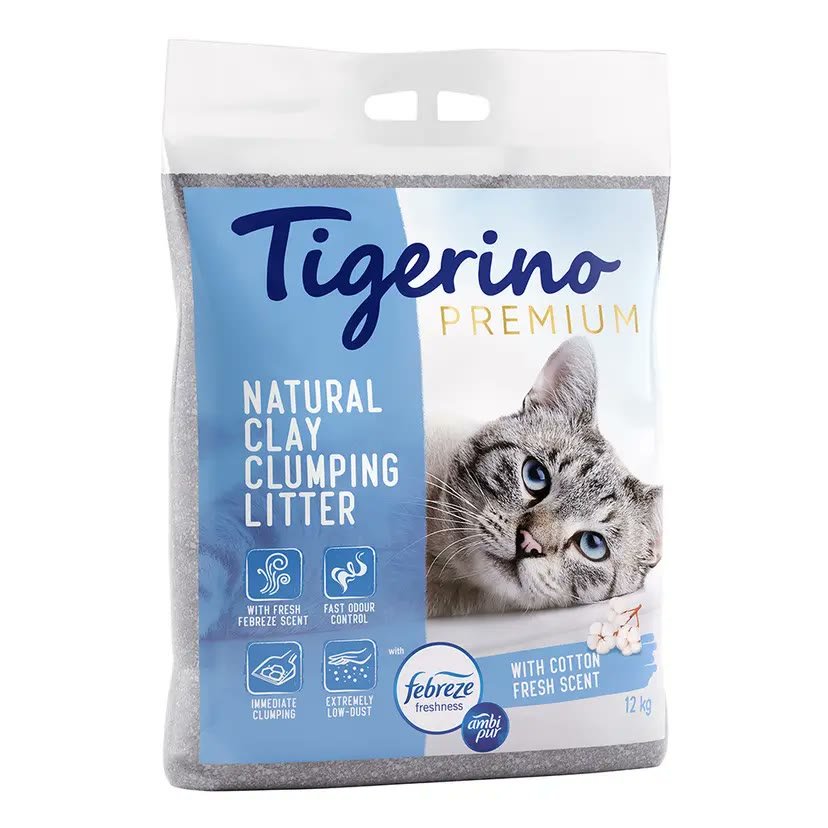
Sodium bentonite clay is the default for a reason: it’s the hardest-clumping, cheapest, most widely available litter material on earth, and most cats accept it instantly because the fine grain feels like the dirt their instincts expect. Arm & Hammer’s Clump & Seal is the mainstream flagship — moisture-activated granules plus baking soda form rock-hard clumps with a 7-day odor-free-home guarantee, and the 100%-dust-free claim is about as good as clay gets.
The honest part: clay is heavy (a 28-lb box is a workout), it’s strip-mined rather than renewable, and it can’t be flushed or composted. Dust is better than it used to be but never zero, and scented clay formulas can put off sensitive cats — if your cat sneezes or avoids the box, unscented is the fix, not a different brand of the same scented stuff.
Specs: 28-lb box (other sizes available) · sodium bentonite clay + baking soda · clumping · 7-day odor guarantee per manufacturer · 100% dust-free claim.
Pros: hardest clumps of any type; cheapest per month; cats accept it readily; available everywhere.
Cons: heavy to carry and pour; not renewable, not flushable; scented versions can bother sensitive cats.
Verdict: The default answer to “what type should I get?” — start here unless you have a specific reason not to. Check the price on Amazon.
2. Crystal / Silica Gel Litter — Longest-Lasting Odor Control
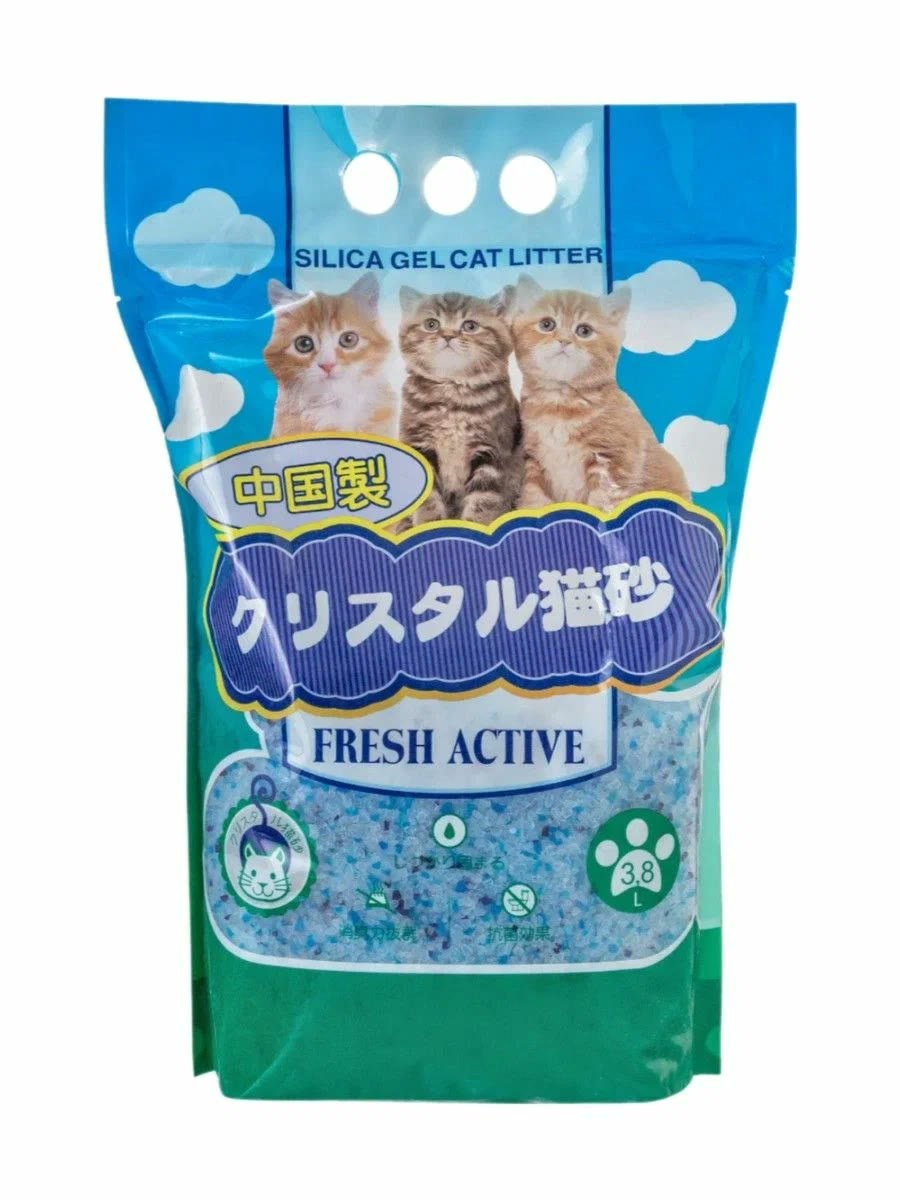
Crystal litter is made of silica gel beads — the same desiccant material as those little “do not eat” packets — that absorb urine on contact instead of clumping it. Fresh Step’s unscented Crystals are the category leader: the brand claims up to 30 days of odor control per change, the beads are 99.9% dust-free, and an 8-lb bag does the work of a much heavier clay jug, so your back will notice the difference immediately.
The honest part: crystals don’t clump, so there’s no scooping urine — you stir the beads and scoop only solids, then dump the whole box when the crystals saturate. That means a higher monthly cost and a full-box change ritual instead of quick scoops. Some owners report the beads tracking on hard floors like tiny marbles, and once saturated, odor control falls off a cliff rather than fading gradually.
Specs: 16 lbs (2 x 8-lb bags) · silica gel crystals · non-clumping, absorbent · up to 30-day odor control claim · 99.9% dust-free.
Pros: least dust of any type; very light to carry; excellent odor control between full changes; low maintenance day to day.
Cons: no clumping — full box dumps required; costs more per month than clay; beads can track like marbles; odor control drops sharply at saturation.
Verdict: The low-effort pick — great for single-cat homes and anyone with dust allergies, if you accept the dump-and-replace routine. Check the price on Amazon.
3. Pine / Wood Litter — Best Natural Budget Pick
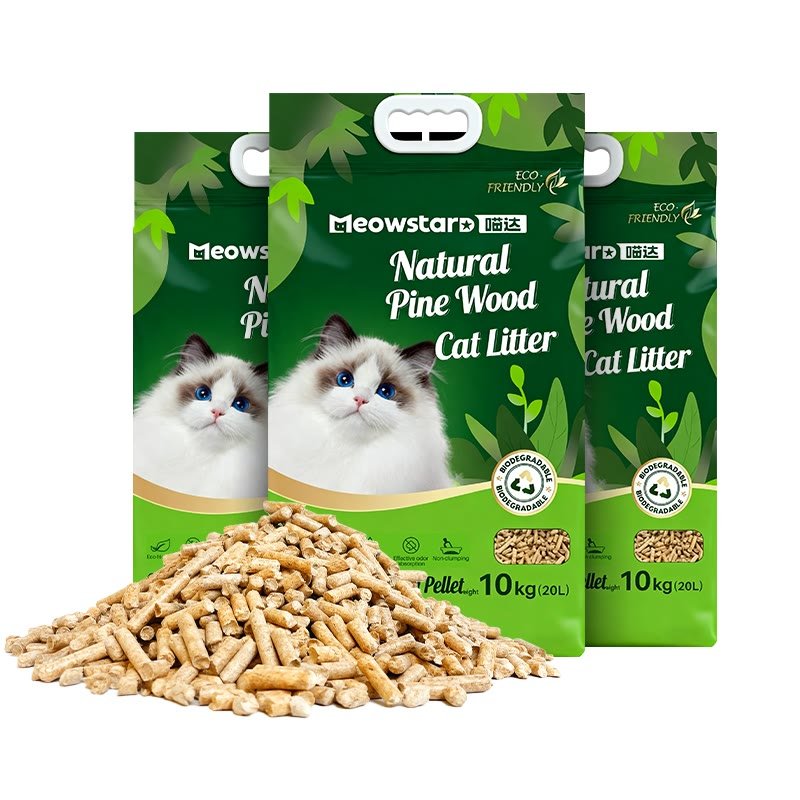
Pine litter is made from kiln-dried pine shavings or pellets reclaimed from lumber production — no new trees cut, per the manufacturer. Feline Pine Platinum (from Arm & Hammer) uses pine fibers that absorb liquid like tiny sponges and neutralize ammonia odor on contact, with no added perfumes. It’s unscented, low-dust, low-tracking because the pellets are large, and the brand claims a bag lasts 2–3x longer than clay.
The honest part: pine pellets don’t clump — wet pellets disintegrate into sawdust, which is why the brand recommends a sifting litter box so the sawdust falls through for easy removal. Without a sifting box, maintenance is scooping solids plus periodically sifting or dumping. Some cats reject the large pellet texture underfoot, so transition gradually by mixing with the old litter.
Specs: 18-lb bag · kiln-dried pine fibers/shavings · non-clumping · unscented, no perfumes · works best with sifting box.
Pros: genuinely cheap for a natural litter; good ammonia odor control without fragrance; low tracking; eco-friendly sourcing.
Cons: doesn’t clump — sawdust management needed; best with a sifting box (extra gear); some cats reject pellets.
Verdict: The natural pick for budget shoppers — pair it with a sifting box and it’s one of the cheapest months you’ll have. Check the price on Amazon.
4. Paper Litter — Best for Recovery and Sensitive Cats
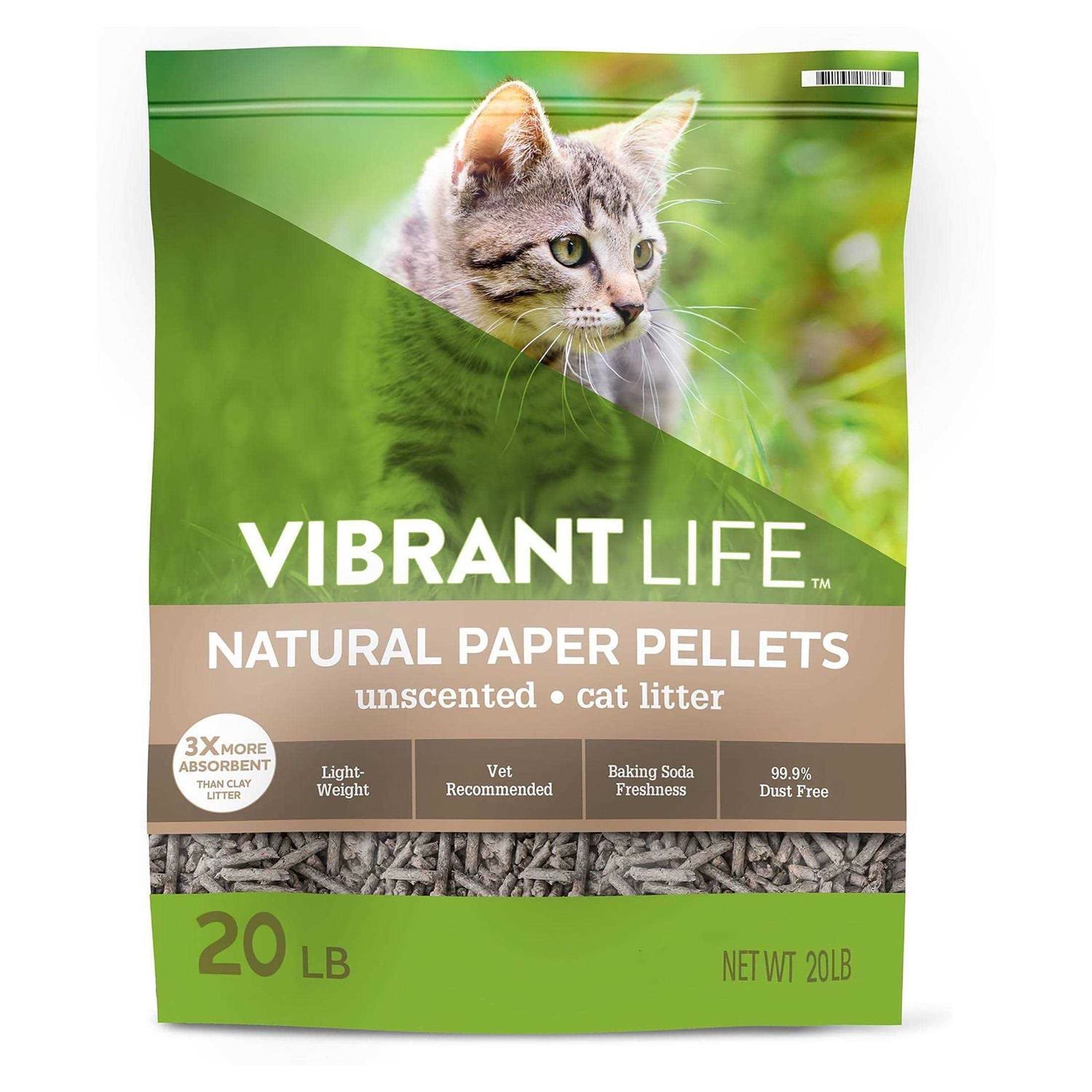
Paper litter is made from recycled newspaper formed into pellets — 99.9% dust-free, non-toxic, and soft underfoot. Yesterday’s News is the original and still the vet-recommended standby: Purina claims it absorbs three times the moisture by volume as clay, and because it’s virtually dust-free and chemical-free, it’s the standard recommendation for kittens, post-surgery cats, and homes with respiratory issues.
The honest part: paper doesn’t clump (there’s a clumping version, but the classic doesn’t), and odor control is its weak suit — review roundups consistently note it needs frequent full changes to stay effective. The pellets are light and some cats kick them out, and for multi-cat homes the change-out frequency can make it one of the more labor-intensive types despite the low price per bag.
Specs: 30-lb bag · recycled paper pellets · non-clumping · unscented · 99.9% dust-free · absorbs ~3x moisture vs. clay by volume (manufacturer claim).
Pros: near-zero dust; vet-recommended for kittens and post-surgery; soft on paws; recycled and biodegradable.
Cons: weakest odor control of the six — needs frequent full changes; doesn’t clump; light pellets can scatter.
Verdict: A specialty tool, not an everyday default — essential for recovery and kittens, less compelling as a permanent choice. Check the price on Amazon.
5. Walnut Shell Litter — The Eco Pick That Still Clumps
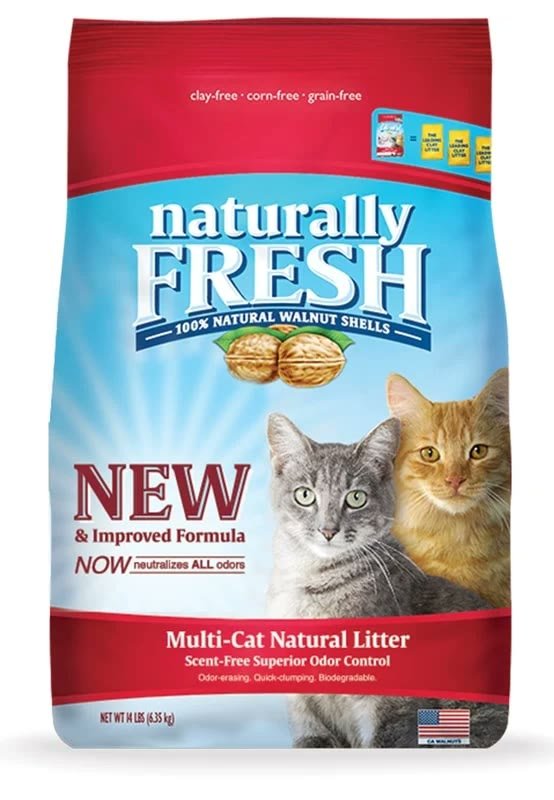
Walnut litter is made from crushed walnut shells — a food-industry byproduct — so it’s upcycled rather than mined or farmed for the purpose. Naturally Fresh is the name in this niche: the fibrous shells absorb well and the brand claims superior ammonia odor control, with hard clumps forming in about 15 minutes. It’s unscented, low-dust, and produced in solar-powered facilities, which makes it the sustainability story clay can’t tell.
The honest part: the dark brown color makes it genuinely harder to spot clumps and monitor what’s in the box — a real complaint from owners. It’s pricier than clay per pound, availability in local stores is spottier (mostly an online buy), and like all plant litters it can track fine particles. Anyone with a tree-nut allergy in the household should think twice, even though the shells are processed.
Specs: 26-lb bag · crushed walnut shells · clumping (hard clumps ~15 min per manufacturer) · unscented · low dust.
Pros: clumps like clay without the mining; strong ammonia odor control; upcycled, sustainably produced; unscented.
Cons: dark color hides clumps and waste; costs more than clay; harder to find locally; possible concern for nut-allergy households.
Verdict: The best “have it both ways” type — clay-like clumping with a genuinely smaller footprint. Check the price on Amazon.
6. Grass Seed Litter — Lightweight Clumping Without Clay
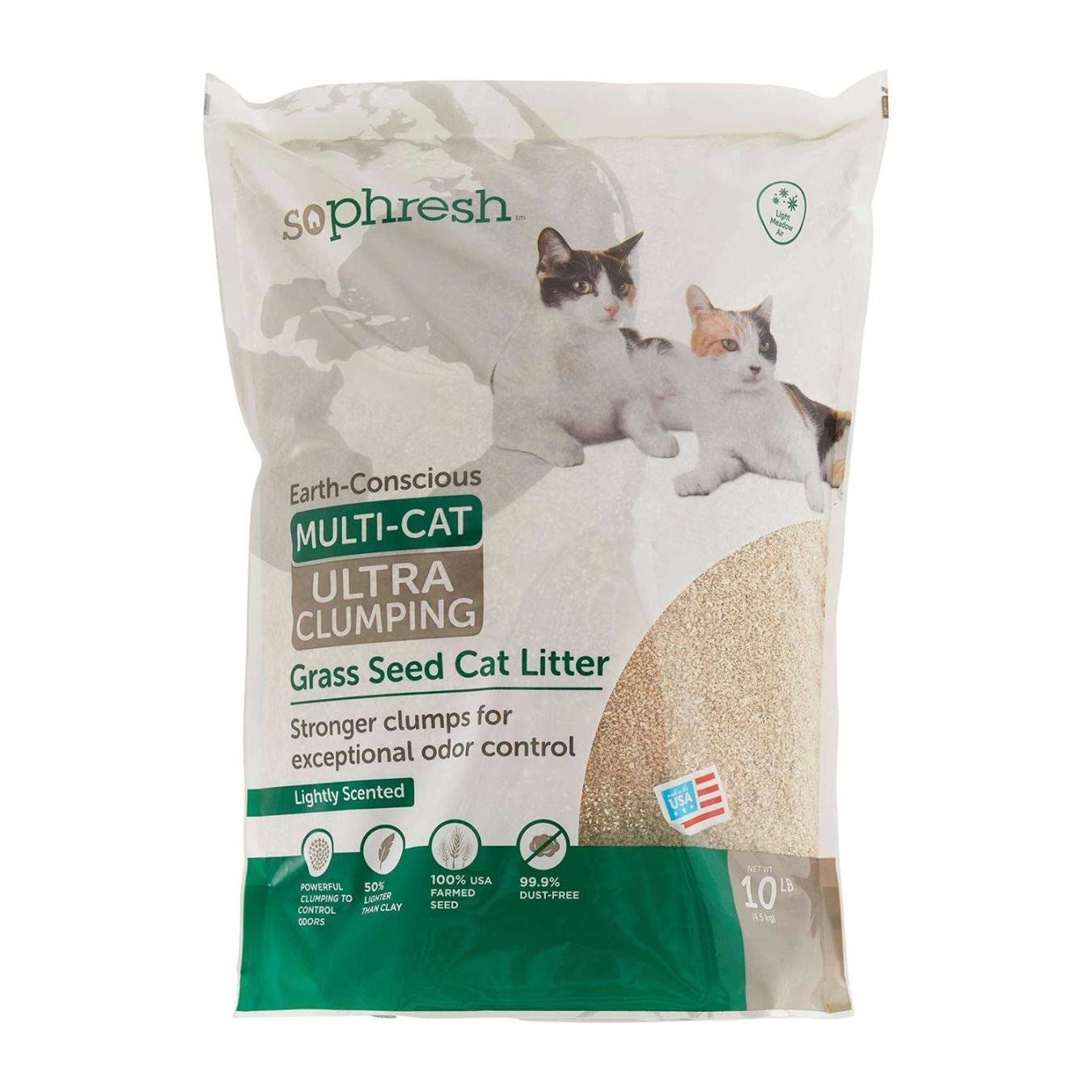
Grass seed litter is the newcomer: SmartCat’s formula is 100% USA-grown grass seed, ground to a sand-like texture that cats accept readily and that clumps on contact without any clay. It’s 99% dust-free per the manufacturer, unscented, biodegradable, and dramatically lighter than clay — a full litter box you can actually lift and move.
The honest part: lightweight cuts both ways — the fine, light grains track more than clay, and the manufacturer itself recommends a litter mat. It costs notably more per pound than clay, the bags are small (you’ll buy more often), and as a plant product it shares the category’s thinner long-term track record versus decades of clay data.
Specs: 10-lb bag (5/10/20-lb sizes) · 100% grass seed · clumping · 99% dust-free · unscented · biodegradable.
Pros: real clumping without clay; very light to carry and pour; sand-like texture cats accept; renewable and biodegradable.
Cons: tracks more than clay (use a mat); premium price per pound; small bags mean frequent repurchasing.
Verdict: The modern alternative for clay-skeptics who still want to scoop — best paired with a good litter mat. Check the price on Amazon.
How to Choose Your Cat Litter Type
Start with clumping vs. non-clumping, not brand. This one decision shapes your daily routine more than anything else. Clumping (clay, walnut, grass) means scoop-and-go with occasional top-ups. Non-clumping (crystal, pine, paper) means stirring or sifting plus periodic full-box dumps. If you scoop daily, clumping wins on convenience; if you want minimal daily contact, crystals or pine with a sifting box is the lazier system.
Match the texture to your cat, not to yourself. Cats evolved to dig in fine, sand-like substrate. Fine-grained litters (clay, grass) get the fewest rejections; large pellets (pine, paper, some tofu) get the most. Switching types? Mix 25% new with 75% old and phase over 1–2 weeks — most “my cat hates it” stories are really “I switched overnight” stories.
Weigh dust if anyone in the home has lungs. For asthma, allergies, or kittens, dust matters more than marketing claims. Crystals and paper are the lowest-dust types; grass and walnut are low; clay varies by brand but is never zero. Pour close to the box and ventilate the area regardless of type.
Do the monthly math, not the bag math. A $12 bag that lasts 3 weeks costs more than a $20 bag that lasts 6. Clay is cheapest per month for most homes; crystals and grass cost more but buy you less daily labor or less weight. Multi-cat homes amplify every cost difference — size your choice to the number of boxes, not the number of cats.
Check your disposal constraints. Clay goes in the trash, never the toilet or garden. Plant litters (pine, paper, walnut, grass) are biodegradable and some are marketed flushable — but “flushable” depends on your plumbing and local rules, and vets generally advise trashing cat waste regardless because of toxoplasmosis risk to waterways. Don’t pick a type for flushability alone.
Sustainability is real but secondary. Walnut (upcycled byproduct), pine (lumber reclaim), grass (renewable crop), and paper (recycled) all beat strip-mined clay on footprint. That’s a genuine tiebreaker between two types your cat likes — not a reason to force a type your cat rejects. The greenest litter is the one the cat actually uses.
Bottom line: clumping clay remains the best default type — hardest clumps, lowest cost, easiest cat acceptance. Choose crystals for minimum dust and daily effort, pine for natural odor control on a budget (with a sifting box), paper for kittens and post-surgery recovery, walnut for eco-friendly clumping, and grass seed for lightweight clay-free scooping.
Frequently Asked Questions
What is the best type of cat litter overall?
Clumping clay (sodium bentonite) is the best default for most homes: it clumps hardest, costs least per month, and cats accept the fine texture most readily. If dust, weight, or sustainability matter more to you, crystals, walnut, or grass seed are the strongest alternatives — each trades some clumping power or cost for those benefits.
Is clumping or non-clumping litter better?
Clumping is better for daily convenience — you scoop waste and the rest stays fresh. Non-clumping (pine, paper, most crystals) can be cheaper per bag and lower-dust, but requires full box changes more often. For multi-cat homes, clumping almost always wins on labor.
What type of litter is best for kittens?
Paper litter (like Yesterday’s News) is the standard vet recommendation for kittens: it’s virtually dust-free, non-toxic if tasted, and won’t clump inside tiny digestive tracts the way clay can if ingested. Switch to your long-term type once the kitten is reliably not eating litter.
Is crystal litter better than clay?
It’s different, not strictly better. Crystals win on dust (near zero), weight, and days between full changes. Clay wins on clumping, monthly cost, and cat acceptance. Homes with allergy sufferers or owners who hate scooping tend to prefer crystals; everyone else usually sticks with clay.
Are natural litters (pine, walnut, grass) as good at odor control?
They control odor differently — pine and walnut neutralize ammonia well without fragrance, and charcoal-infused options help. But unscented clay with baking soda generally still leads on raw odor control per dollar. Natural litters compete best when you scoop daily; they fall behind faster than clay when you skip days.
Can you flush cat litter?
Some plant-based litters are marketed as flushable, but most vets and municipalities advise against flushing any cat waste: cat feces can carry toxoplasmosis, which wastewater treatment doesn’t reliably neutralize and which harms marine life. Bag it and trash it — “flushable” describes the litter’s dissolvability, not its safety for waterways.
