

Pet Travel Items is reader-supported. When you buy through links on this page, we may earn a commission at no extra cost to you. Our picks are driven by documented listing facts and honest caveats, never by commission rates. Read our affiliate disclosure.
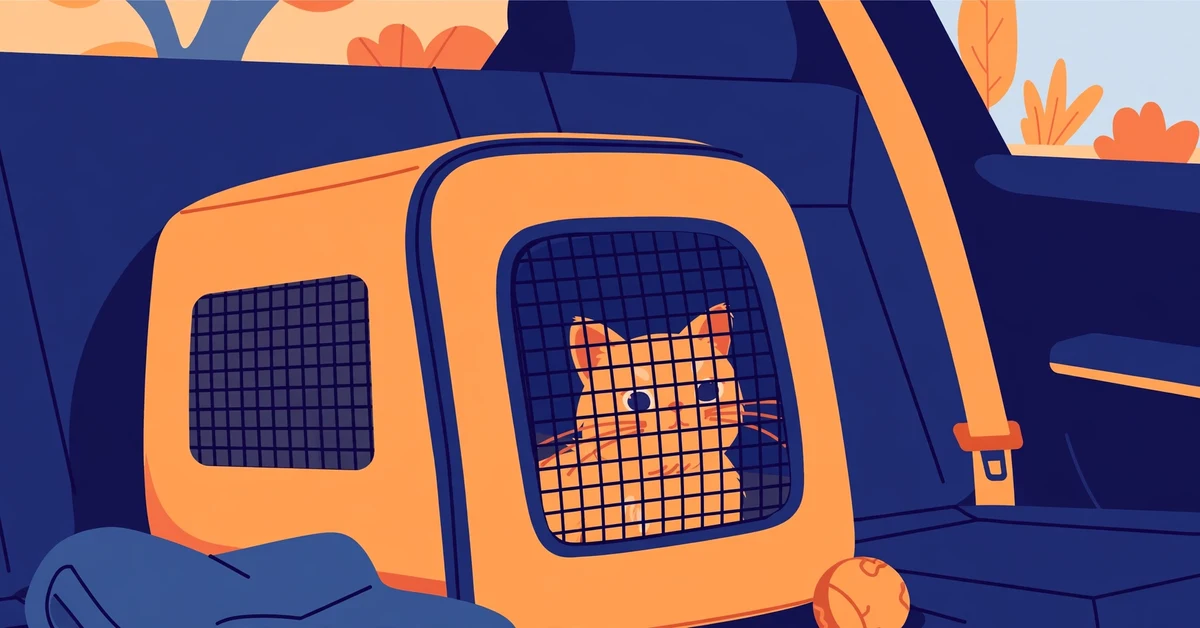
A soft crate is not a carrier in the airline-under-the-seat sense, and it is not a hard-sided crash box either. It sits in the middle: a fabric box with mesh windows that pops or folds open, gives a small cat a defined patch of territory, and packs flat when the trip is over. For car travel, that is exactly the right middle ground. A cat loose in the cabin is a distraction and a danger. A cat rattling in a plastic airline crate gets no daylight and nowhere to shift position. A soft crate on the back seat, held steady, with mesh all around, is how most cat owners actually road-trip, and it is how most show, vet, and hotel-visit people manage the same problem.
But here is the first honest thing you need to hear. None of the products below is a crash-tested restraint. No soft fabric crate survives the word “restraint” in a physics sense. What it does is containment: it keeps a contained, calm cat from wandering into the footwell while you drive. Read every pick on this page through that lens, and read the seat-belt caveats the same way. We flag every brand claim we could not verify, mark every spec gap we could not fill, and we never invent numbers the listings do not show. What follows is a 2026 roundup of six soft-sided crates sized for small cats, each measured against the same practical tests: does it pop up or fold flat without a fight, can the cat see and breathe through real mesh, does the listing say anything believable about car use, and can you clean it when travel gets messy.
The six products split into three styles. Two are classic pop-open crates, the twist-and-release fabric tents you have probably seen at cat shows. Two are soft-sided carriers built more like tote bags, with structured frames and shoulder straps. Two are expandable designs that ride compact and unzip into more space at rest stops and hotels. All six collapse flat, all six carry cats in the 15-pound range or smaller, and every one of them has mesh ventilation on multiple sides. Prices and star ratings move too often to print honestly here, so we leave them out. What you get instead are the facts the listings actually document, plus the warnings the listings leave out.
Soft Crates for Small Cats at a Glance
| # | Product | Why it made the list | Check Price |
|---|---|---|---|
| 1 | SportPet Designs Pop Open Cat Carrier | Cat-specific 20-inch pop-open with O-ring secured zippers and removable support wires; designed for cats only | Check Price |
| 2 | Beatrice Home Fashions Portable Pop Up Kennel | 24-inch fabric pop-up that folds flat to a 9-inch disc and ships with its own storage pouch; true backpack portability | Check Price |
| 3 | LEHNI Soft-Sided Pet Carrier | Steel-frame tote with mesh windows on all four sides, four entrances, and a stated seat-belt fastening option for the car | Check Price |
| 4 | SWUVVI Soft Sided Cat Carrier | 600D Oxford shell over a firm steel frame with a wooden support board; washable four-layer wool mat included | Check Price |
| 5 | bytaoqipet 4-Way Expandable Cat Carrier | All four sides zip open for extra room at rest stops; claw-resistant mesh and reflective night strips on the spec sheet | Check Price |
| 6 | PAWZIDEA Large Expandable Pet Carrier | 24-inch soft crate that expands to 30 inches wide and threads the car seatbelt through dedicated rear straps | Check Price |
Two quick notes before the reviews. First, “soft crate” covers two different products on Amazon: the pop-up fabric tent and the framed soft-sided carrier. Both work for a small cat in the car, so both made the cut. Second, when a listing says “airline approved” or “explosion-proof zipper,” that is marketing language from the brand, not a certification we can check. We label those claims in every Key Specs block so you can weigh them properly.
1. SportPet Designs Pop Open Cat Carrier – The Cat-Specific Classic
SportPet has been selling a cat-only version of the pop-open kennel since 2018, and the lineage shows in the details. This is the 20-inch carrier, 20 by 15 by 14 inches, built for cats up to 15 pounds. The selling points are not size or extras. They are the two things nervous-cat owners actually ask about: the zippers and the cleanup. The zip system closes with an O-ring, which means a paw hooked over the slider cannot drag it open the way a determined cat works a standard carrier zip. It will not stop a truly committed escape artist with claws, and no mesh door will, but it raises the bar past the cheap unsecured sliders on budget totes.
The second detail is the removable internal support wires. Pop-open crates get their spring from tension in the frame, and the wire channels are where grime collects. Here the wires come out, which lets you actually wash the fabric shell instead of spot-wiping around fixed framing. The shell is nylon with mesh panels on multiple sides, and at 13.12 ounces the whole thing is lighter than most paperback novels. For a small cat, 20 inches of length is the sweet spot. It is long enough to stand, turn, and settle without cramping, and short enough to sit on a car seat without overhanging the edges.
What the listing does not tell you matters too. There is no stated seat-belt loop or strap route for the car, which is a gap, not a deal-breaker, because the size seats well in a buckled seat position with the belt run around the crate. The “designed for cats” positioning is real: the manufacturer note on the listing says cats only, supervise during use, and retire the carrier if it gets damaged. That is the kind of plainspoken warning that reads like a company that has seen what cats do to mesh. It is also listed in Amazon’s Cat Soft-Sided Carriers best-seller rankings at #42 at our last crawl, which at least signals steady buyer demand rather than a dead listing.
Key specs: Dimensions 20 in L x 15 in W x 14 in H (listing); item weight 13.12 oz (listing); nylon shell with mesh panels on multiple sides (listing); cats up to 15 lbs (listing); zipper system with O-ring closure to resist accidental opening (listing); internal support wires removable for easier cleaning (listing); machine-wash method for the shell, unknown (listing gap); seat-belt routing for car use, not stated (listing gap).
- Pros: Built specifically for cats, not adapted from a dog product; O-ring zipper security against casual escapes; removable wires make real cleaning possible; extremely light at 13.12 oz; pops open and folds flat in seconds.
- Cons: No stated seat-belt attachment, so car security depends on your own setup; only three zip entrances and no top-load opening; full wash instructions not documented; a 15-pound cat fills it, so large-breed cats will feel cramped.
Verdict: The straightforward pick for a small cat owner who wants the classic pop-open form factor from a brand that has been in the cat-carrier lane for years. It does not pretend to be crash equipment. It is a lightweight, mesh-ventilated, cat-shaped room that folds flat, and the O-ring zipper and removable wires are the two details that justify choosing it over the anonymous alternatives.
2. Beatrice Home Fashions Portable Pop Up Kennel – The Pocket-Sized Pop-Up
If the SportPet is the everyday driver, the Beatrice Home Fashions kennel is the ultralight. It measures 24 by 16.6 by 16 inches in use, with a 12.5 by 12 inch door opening, and it folds down to a flat 9-inch disc that fits a storage pouch you can throw in a backpack or a suitcase. That flat-pack size is the reason it earns a spot here. For hotel rooms, family visits, or a spare crate you keep in the trunk permanently, nothing else on this list stores this small.
The fabric is polyester with mesh screen windows, and the listing targets extra-small to small dogs plus cats. The door opening is generous for a small cat, which matters when loading a reluctant passenger. A 12-inch square doorway means you can guide a cat in without compressing its shoulders, and it gives a carrier-shy cat a better sightline out, which some cats find calming and some find overstimulating. Know your cat. If yours goes still when it can watch the room, this helps. If yours escalates when it can see the vet’s office, you will want the fabric shade approach of a different pick.
Care instructions say hand wash cold, which is standard for thin polyester pop-ups and honest as far as it goes. The listed item weight is about four ounces, which seems optimistic for a 24-inch crate and is worth treating with skepticism; it likely reflects a data-entry quirk rather than physics. The listing gives no max pet weight, only a small-to-medium breed recommendation, so measure your cat against the 24-inch footprint and assume a typical domestic shorthair fits comfortably while a big tomcat will be tight. There is no mention of seat-belt routing, so this one rides on the seat wedged by luggage or belted around the outside, same as most pop-ups.
Key specs: Dimensions 24 in L x 16.6 in W x 16 in H (listing); door opening 12.5 in W x 12 in H (listing); polyester soft-sided body with mesh screen windows (listing); folds flat to a 9-inch round disc with included storage pouch (listing); hand wash cold (listing); breed recommendation small/medium, includes cats (listing); max pet weight, not stated (listing gap); seat-belt routing, not stated (listing gap); item weight listed as ~4.2 oz, treated as suspect (listing anomaly).
- Pros: Folds to a 9-inch disc, the most compact pack-down on this list; included storage pouch makes it a true trunk-and-backpack spare; generous door opening for easy loading; 24-inch footprint gives a small cat real room.
- Cons: No stated weight limit, so sizing relies on measuring your cat; no seat-belt attachment mentioned; thin polyester will not outlast a dedicated scratcher; the suspiciously low listed weight raises questions about listing accuracy.
Verdict: Buy this as your second crate, not your only one, or as your primary if portability outranks everything else. It is the one you toss in the trunk and forget about until the hotel trip, the vet emergency, or the family visit where the guest room needs a contained cat. Just measure the cat first and belt it in the car by your own method.
3. LEHNI Soft-Sided Pet Carrier – The Four-Sided Ventilation Pick
The LEHNI is the most conventionally carrier-shaped product on this list, and that is a compliment. At 17 by 11 by 11 inches and 2.67 pounds, it is built around a steel cage structure with a wooden support board underneath, which means it holds its shape instead of sagging the way cheap fabric carriers do. Four zip entrances give you front, side, and top loading, and the mesh windows sit on all four sides, which is the ventilation standard we want to see. A small cat gets cross-breeze airflow instead of one vent and three walls.
The feature that earns this its rank is the car instruction on the listing: it states the carrier can be fastened to the car seat with a safety belt or shoulder strap. Now, read that carefully. It is a brand statement about routing a belt, not a crash-test certification. But among the six products here, an explicit seat-belt instruction is rare, and it gives you a documented starting point for a stable back-seat setup instead of guesswork. The non-slip feet on the bottom are a small detail that earns its keep on a leather or vinyl seat, stopping the slow slide that happens on every highway curve.
Cleaning is handled by a removable, washable interior mat over a hard base board, with the outer fabric wiping down with a soft cloth. That two-layer approach is what you want in a car product, because the base board catches the accident and the mat carries it to the washer. The listing’s TSA and airline-approved wording is a brand claim, as it always is in this category; airlines decide at the gate, not on the product page. What we can verify from the listing is steady commercial demand: LEHNI’s carrier sat at #4 in Cat Soft-Sided Carriers and #1,010 in all of Pet Supplies at our last crawl. That is not proof of quality, but a dead listing would not hold that rank.
Key specs: Dimensions 17 in L x 11 in W x 11 in H (listing); item weight 2.67 lbs (listing); steel cage structure with wooden support board under a tear-resistant fabric shell (listing); mesh windows on four sides (listing); four easy entrances (listing); pets up to 16 lbs (listing); seat-belt fastening to the car seat stated by the brand (brand claim); interior mat removable and washable, shell wipes clean (listing); airline approval wording is brand marketing, not a certification (brand claim).
- Pros: Mesh on all four sides gives the best airflow on this list; rigid steel-and-board structure keeps its shape; documented seat-belt fastening instruction for car use; four entrances make loading and vet access easy; non-slip feet help on smooth car seats.
- Cons: 17-inch length is snug for longer cats; only the mat is machine-washable, the shell is wipe-only; the airline wording is a marketing claim to verify with your airline; the structured build weighs 2.67 lbs, the heaviest tote-style option here.
Verdict: The pick for buyers who want a soft crate that behaves like luggage: structured, ventilated from every direction, and with a stated way to belt it to the car seat. It trades the airy sprawl of the pop-ups for containment you can trust, and for nervous travelers that structure is a feature, not a limitation.
4. SWUVVI Soft Sided Cat Carrier – The Steel-Frame Tote
The SWUVVI and the LEHNI above share the 17 by 11 by 11 inch footprint and the same basic idea: a fabric tote that keeps its shape through a steel frame. Where the SWUVVI differentiates is the spec sheet. The listing calls out 600D Oxford fabric, a firm steel frame cage construction, and a wooden support board, plus a four-layer wool mat made of flannelette, pearl cotton, board, and oxford cloth. Layered mats matter more than they sound. A single thin pad turns every bump into a felt event. A laminated stack absorbs it.
Mesh sits on three sides rather than four, which is one window short of the LEHNI, and in practice you will notice it on warm days when the car has been sitting. The three entrances, top and front sides, include a top-load option, which is the loading method vets and vet techs keep asking for because it lets a cat drop in and a carrier-phobic cat come out without being dragged through a front door. The non-slip adjustable shoulder strap has a shoulder pad, and the front pocket holds treats, wipes, and the leash.
On car use, the listing mirrors the LEHNI: it states the carrier can be fastened to the car seat with a safety belt or shoulder strap. Same caveat applies. It is a belt-routing instruction, not a crash rating, and we say that because some buyers read “fastened” as “tested.” It is not tested. What it is, documented, is a structured small-cat container where the washable layer is the outermost mat fabric, which machine-washes, while the rest of the shell wipes down. One honesty note: the listing’s title says up to 17 lbs while the description says 16 lbs / 7.3 kg. Treat the capacity as roughly 16 pounds and measure the cat regardless.
Key specs: Dimensions 17 in L x 11 in W x 11 in H (listing); 600D Oxford fabric, steel frame cage construction, wooden support board (brand claims); breathable mesh windows on three sides (listing); three entrances on top and front sides (listing); pet weight ~16 lbs, with a 17-lb title versus 16-lb description discrepancy (listing, with noted conflict); seat-belt fastening stated by the brand (brand claim); four-layer mat with machine-washable outer layer, shell wipes clean (listing); airline approval wording is marketing, not a certification (brand claim).
- Pros: Heaviest-spec fabric and frame construction on the tote-style picks; four-layer mat should ride better than thin single pads; top-load entrance helps with difficult loaders; padded non-slip shoulder strap for carrying; front pocket for travel essentials.
- Cons: Mesh on three sides only, less airflow than the four-sided LEHNI; the 16-vs-17-pound weight discrepancy suggests a loose listing; wipe-only shell; same footprint as the LEHNI, so a long cat gets the same snug fit.
Verdict: Choose the SWUVVI if the build spec matters to you: 600D fabric, steel frame, laminated mat. Choose the LEHNI if ventilation matters more. Both are honest, structured, car-ready soft crates for small cats, and the real difference is mesh coverage versus material thickness.
5. bytaoqipet 4-Way Expandable Cat Carrier – The Expands-on-Command Option
The bytaoqipet is for the cat that rides fine but lives large. Folded, it measures 18 by 11 by 11.5 inches and carries small pets up to 18 pounds. Unzipped, each of the four sides expands outward, turning a compact travel carrier into a roomy base camp at the hotel, the campsite, or a long rest stop. That is the whole pitch, and for multi-hour road trips it is a genuinely better pitch than raw square inches. Cats de-stress by stretching out and repositioning. A carrier that grows at the destination gives them that without you lugging a crate the size of a microwave through a parking lot.
The spec sheet leans hard into marketing language, so let us sort it. Four mesh windows for ventilation is straightforward and good. A removable plush pad is straightforward and good. The “explosion-proof zipper” is brand language for a wide, presumably escape-resistant zip; it is a claim, not a standard. The “odor-free, claw-resistant mesh” is a claim about mesh durability that we cannot verify, and mesh durability against determined claws is exactly the failure point this whole category shares, so treat that one as aspirational. The 360-degree reflective strips for night visibility are a real, checkable feature and a nice one for evening rest stops. The FAA-compliant and airline-approved wording is, as always, a brand claim; airlines decide at the gate.
For car use the listing states it secures with built-in straps, plus front and side pockets for toys and treats. The expansion panels are the main operational consideration: they are wonderful when deployed and a zipping exercise every time you pack up. If your trip pattern is drive-drive-drive with no stops, the expansion buys you nothing and the LEHNI or SWUVVI are simpler. If your pattern is drive-to-a-place, this is the best destination crate of the six. One more practical note from the listing’s own guidance: it asks buyers to consider the pet’s length and height, not just weight, which is the right advice and the advice we repeat in the sizing section below.
Key specs: Dimensions 18 in L x 11 in W x 11.5 in H (listing); all four sides zip open for expansion (listing); Oxford cloth body with four breathable mesh windows (listing); small pets up to 18 lbs (listing); “explosion-proof” zipper, claw-resistant mesh, and odor-free fabric are unverified marketing claims (brand claims); 360-degree reflective strips (listing); removable plush pad (listing); front and side storage pockets (listing); car-securing via built-in straps stated by the brand (brand claim); airline/FAA approval wording is marketing, not a certification (brand claim).
- Pros: Four-way expansion is the best space-per-packed-inch ratio here; reflective strips are a genuinely useful night feature; highest stated weight capacity of the compact picks at 18 lbs; removable plush pad; pockets for treats and travel gear.
- Cons: Heavy marketing language (explosion-proof, claw-resistant) that we cannot verify; expansion panels mean more zippers to manage every setup; no documented wash method for the shell beyond the removable pad; same airline-claim caveat as every expandable in this price tier.
Verdict: The road-tripper’s pick. If your trips end at hotels, campsites, or family houses where the cat needs a real room for the night, the four-way expansion earns its keep. If you never stop, save the complexity and take a fixed-frame carrier instead.
6. PAWZIDEA Large Expandable Pet Carrier – The Seatbelt-Threaded Travel Crate
The PAWZIDEA is the biggest product on this list and the most car-specific. At 24 by 16 by 16 inches, with the front expanding out to 30 inches wide, and a stated capacity of up to 55 pounds, it is sized for multiple cats, one large cat, or a cat that wants a litter area separated from its sleeping area on a long trip. For a single small cat, that is a lot of crate. For two small cats traveling together, it starts to make real sense, because two cats in one 24-inch footprint fight less and settle faster than two cats in two separate 17-inch totes.
The car feature is the one no other pick states this concretely: the listing says to thread the vehicle seatbelt through the carrier’s rear straps, locking the crate to the seat. That is a positioning method, not a crash rating, and we repeat that because the wording tempts buyers into reading more than it says. Still, among soft crates for cats, a dedicated belt path is the closest thing to a designed car attachment, and it deserves the top car-use ranking of the six. The rest of the feature list reads like a travel checklist: roll-up mesh top-load door, side entries, 360-degree airflow, leak-proof PP board base, removable washable double-sided pad, dual leash clips, self-locking zippers, a big side pocket, and even a pet ID card.
Two caveats to carry. First, the mesh is described as chew-proof and scratch-resistant, which are brand claims we cannot verify; no mesh in this category survives a truly determined cat indefinitely, and honest expectation-setting matters more here than on any other pick. Second, this crate folds flat to four inches high, which is excellent, but at 24 inches long and fully expanded it dominates a back seat. Measure the seat. The base board and washable pad combination is the best cleanup system on this list for the simple reason that accidents on road trips are a when, not an if, and a leak-proof layer between the cat and the seat is worth more than any fabric spec.
Key specs: Dimensions 24 in L x 16 in W x 16 in H, expanding to 30 in wide (listing); stated capacity up to 55 lbs, suited to multiple small cats or one large cat (listing); steel frames with thick Oxford fabric (listing); roll-up mesh top-load door, dual side mesh doors, rear mesh panels for 360-degree airflow (listing); seatbelt threaded through rear straps to fix the carrier to the car seat (brand claim); leak-proof PP board base with removable washable double-sided pad (listing); dual leash clips and self-locking zippers (listing); large side pocket and pet ID card (listing); chew-proof and scratch-resistant mesh are unverified marketing claims (brand claims); folds flat to 4 in high (listing).
- Pros: Most explicit car attachment method of the six, with a dedicated seatbelt path; largest interior, ideal for two small cats or a cat plus litter space; best cleanup system with a leak-proof base and washable double-sided pad; folds flat to 4 inches; leash clips and self-locking zippers add security layers.
- Cons: Oversized for a single small cat, and it eats a back seat; chew-proof and scratch-resistant claims are marketing we cannot verify; no documented weight for the crate itself; the expanded 30-inch width will not fit every vehicle’s seat.
Verdict: The pick for two-cat households and long-haul trips. It is too much crate for a solo small cat on a vet run, but it is the only product here that treats the car as the primary use case, with a belt path, a leak-proof base, and room to actually live in.
Sizing: Measure the Cat, Not Just the Weight
Every listing on this page gives you a weight limit. Almost none gives you the number that actually decides fit: the cat’s length. A 12-pound long-bodied cat can be miserable in a 17-inch carrier while a stocky 14-pounder fits fine, and the 15-to-18-pound limits on these products describe load, not comfort. Get a tape measure. Measure the cat from nose to base of tail while it is lying in its normal loaf. Add four to six inches. That total is the minimum interior length that lets the animal stand, turn around, and lie stretched without pressing the mesh.
Then measure height at the shoulder and add three inches for head clearance when sitting. Small cats vary more than buyers expect. A petite 7-pound female and a rangy 11-pound male are both “small cats” and they are not the same passenger. The 24-inch products on this list, the Beatrice pop-up and the PAWZIDEA, fit the rangy end of small. The 17-inch totes fit the petite-to-average end. When a listing like the SWUVVI’s disagrees with itself on weight, 16 versus 17 pounds, that is your signal that the number was marketing-rounded and the tape measure is the only honest spec left.
One more sizing trap: expandable carriers tempt buyers to size down, on the logic that the expansion covers the deficit. It does not. The expansion helps at rest stops. In motion, the cat rides in the folded footprint, so size for the folded dimensions and treat the expansion as a destination bonus. If the folded crate is too small for the cat to turn around in, the product is too small, no matter how many sides unzip later.
Ventilation: Count the Mesh Sides
Ventilation in a soft crate is not a vibe. It is countable. Four-sided mesh, like the LEHNI’s, gives cross-flow. Three-sided, like the SWUVVI’s, gives good flow with one blind side. Pop-ups with window panels give directional airflow that depends on which way the windows face. When you compare products, count the mesh sides first and read the marketing second. “Breathable” appears on every listing in this category. It means nothing until you see where the mesh actually is.
Mesh density is the second variable, and it is the one listings almost never quantify. Fine mesh keeps claws in and bugs out but cuts airflow and visibility. Coarse mesh flows air but invites determined scratching. The bytaoqipet listing claims claw-resistant mesh, which would be the best of both worlds if it were verifiable, and that “if” is doing real work. Assume all mesh is vulnerable to a cat that has decided to leave. The honest ventilation strategy is not tougher mesh. It is a calmer cat: familiar bedding, a settled routine, and a crate that does not smell like the factory. Air the product out before the first trip.
Car Use: Belts Position, They Do Not Protect
Let us be precise about what a seat-belt strap on a soft crate actually does. Threading the belt through the PAWZIDEA’s rear straps, or around the LEHNI or SWUVVI per their listings, keeps the crate from sliding across the seat in a turn or a hard stop. That is positioning. It is not crash protection. In a real collision, a fabric crate restrained by a lap belt is not a tested safety device, and no product on this page claims to be one. The brands that mention seat belts are describing stability, and you should read them that way.
The practical setup: back seat, never the front, because of airbag deployment zones. Crate on the seat with the mesh door facing you so you can monitor the cat. Belt routed through the manufacturer’s strap path where one exists, or around the body of the crate where it does not, snug but not crushing the frame. Wedge the remaining space with a rolled towel or luggage so the crate cannot walk sideways. And the non-negotiable rule for every product here: never leave a cat in a parked car. A closed car in sun becomes lethal in minutes, mesh windows or not. Cracked windows do not fix it. Shade does not fix it. Take the cat with you or do not make the stop.
Cleaning: Plan for the Accident, Not the Ideal Trip
Cats travel badly often enough that the washability spec deserves the same attention as dimensions. Rank the six on cleanup and a pattern emerges. The PAWZIDEA’s leak-proof base board with a washable double-sided pad is the best system here because it separates the waterproof layer from the comfort layer. The SWUVVI’s four-layer mat with a machine-washable outer face is second. The LEHNI’s removable washable mat over a base board is the same idea with fewer layers. The SportPet’s removable support wires let you wash the shell instead of spot-cleaning around fixed framing, which is the best shell-cleaning story on the list.
What “hand wash cold” on the Beatrice listing really means is that the crate goes in the bathtub with mild soap, not in the machine. That is fine once or twice a year. It is not fine after every trip, which is why the removable-mat products win for frequent travelers. Two habits extend any soft crate’s life. First, put a washable pad or old towel inside over the included mat; the sacrificial layer takes the accident and the crate stays clean. Second, dry everything completely before folding it flat for storage. A folded damp crate grows mildew in the seams, and mildew in mesh is the end of the product.
Frequently Asked Questions
Is a soft crate safe for car travel with a cat?
A soft crate is containment, not a crash-tested restraint, and no product on this page is rated for collision protection. What it does well is keep a calm cat contained and positioned on the back seat, especially when the crate is stabilized with a seat belt routed through the manufacturer’s strap path or around the crate body. Place the crate on the back seat, never the front, face the mesh door toward you for monitoring, and wedge gaps so the crate cannot slide. For positioning, the PAWZIDEA’s dedicated rear seatbelt straps are the most explicit car attachment of the six. For actual crash protection, no soft fabric product qualifies, and any brand that implied otherwise would be lying.
What size soft crate does a small cat need?
Measure the cat from nose to base of tail, add four to six inches, and that is your minimum interior length. Add three inches to the shoulder height for sitting clearance. In practice, a 17-inch carrier like the LEHNI or SWUVVI suits a petite-to-average small cat, a 20-inch pop-open like the SportPet suits the average range, and the 24-inch Beatrice or PAWZIDEA suits rangy cats or two-cat travel. Weight limits describe load capacity, not comfort, so a long 12-pound cat can be cramped where a stocky 14-pounder fits fine. When a listing contradicts itself on weight, as one here does, trust the tape measure over the marketing.
Can a cat scratch through the mesh?
Assume yes. Every mesh in this category is vulnerable to a determined cat with time and motivation, including the ones whose listings claim claw-resistant or scratch-resistant fabric. Those are brand claims we could not verify, and there is no mesh standard behind them. The honest defenses are a calmer cat, which means familiar bedding, pre-trip crate conditioning, and a product aired out before first use, plus zipper security like the SportPet’s O-ring or the self-locking zippers on the LEHNI and PAWZIDEA. For known escape artists, a soft crate is the wrong product class entirely; use a hard-sided carrier for the car and reserve the soft crate for calm, crate-conditioned cats.
How do you clean a soft-sided cat crate?
It depends on the construction. Products with removable mats, the LEHNI, SWUVVI, bytaoqipet, and PAWZIDEA, let you machine-wash or hand-wash the mat while the shell wipes down with a soft cloth. The SportPet’s removable support wires let you wash the shell itself. The Beatrice pop-up is hand-wash cold only, which means the bathtub, mild soap, and full air-drying. Whatever the method, dry every layer completely before folding the crate flat for storage, because a damp fold grows mildew in the seams. A washable sacrificial pad inside the crate takes most accidents and spares the included mat.
Can a soft crate go on an airplane?
Several listings on this page use “airline approved” wording, and you should treat all of it as marketing, not certification. Airlines decide at the gate based on their own under-seat dimensions, and those dimensions vary by aircraft, not just by airline. The 17-inch totes here are in the right size neighborhood for many under-seat spaces, but the only approval that counts is the one from the specific airline on the specific aircraft, confirmed before you fly. Never book a flight on the strength of a product page’s airline claim.
Can two small cats share one soft crate?
Only in the largest product here. The PAWZIDEA at 24 by 16 by 16 inches, expanding to 30 inches wide, is the one pick with a realistic two-small-cat footprint, and even then it depends on the cats getting along. The 17-inch totes and the 20-inch pop-open are single-cat products; doubling up in them creates the kind of cramped stress that ends with scratched mesh and a miserable trip. Two cats that travel well together also need the combined weight under the product’s stated limit, and the PAWZIDEA’s 55-pound listing capacity is the only one with real headroom. When in doubt, two crates beat one crowded one.
The throughline of all six picks is this: a soft crate is a well-ventilated room, not a safety device, and the right one is the one that fits the measured cat, folds into your actual car, and cleans up after the inevitable bad trip. Pop-open for simplicity, structured tote for shape and stability, expandable for destination space. Pick the style that matches your trip pattern, measure before you buy, and belt the crate to the back seat every single time.
