

Here’s the scene: you’re packing for a long weekend at a cabin, and your Lab inhales two cups of kibble in 14 seconds flat — then spends the drive burping, bloating, and occasionally throwing up on the back seat. A slow feeder bowl turns that 14-second vacuum job into a five-to-ten-minute puzzle. The trip gets quieter, the digestion gets healthier, and the back seat stays clean.
The honest note most roundups skip: slow feeders aren’t magic. A determined dog can learn to tip a light bowl and eat off the floor, some picky dogs refuse the maze entirely, and deep grooves that slow kibble will also trap wet food into a scrubbing chore. This guide picks six bowls with genuinely different strengths — the mainstream favorite, a non-plastic option, a ceramic upgrade, a budget spiral, a stainless pick, and one for small dogs — with the complaints owners actually report.
Pet Travel Items is reader-supported. When you buy through links on this page, we may earn a commission at no extra cost to you. Our picks are driven by documented owner feedback, never by commission rates.
Best Slow Feeder Dog Bowls at a Glance
| # | Product | Key Spec | Best For | |
|---|---|---|---|---|
| 1 | Outward Hound Fun Feeder Slo Bowl (Large) | 4-cup capacity · plastic maze | Best overall | Check Price |
| 2 | SodaPup Honeycomb eBowl | 8″ × 8″ · rubber enrichment bowl | Best non-plastic | Check Price |
| 3 | LE TAUCI Ceramic Slow Feeder (3-Cup) | 9.5″ × 9.5″ · ceramic | Best ceramic | Check Price |
| 4 | JASGOOD Spiral Slow Feeder (Large) | 9.8″ dia · 4 cups · spiral maze | Budget pick | Check Price |
| 5 | AIPERRO Stainless Steel Slow Feeder (4-Cup) | 9.5″ dia · 304 stainless | Best stainless | Check Price |
| 6 | SuperDesign Gobble-Stop (Small) | 1/2 cup · melamine | Best for small dogs | Check Price |
Prices shift constantly — check before you buy. Sizes are manufacturer figures.
1. Outward Hound Fun Feeder Slo Bowl (Large) — Best Overall
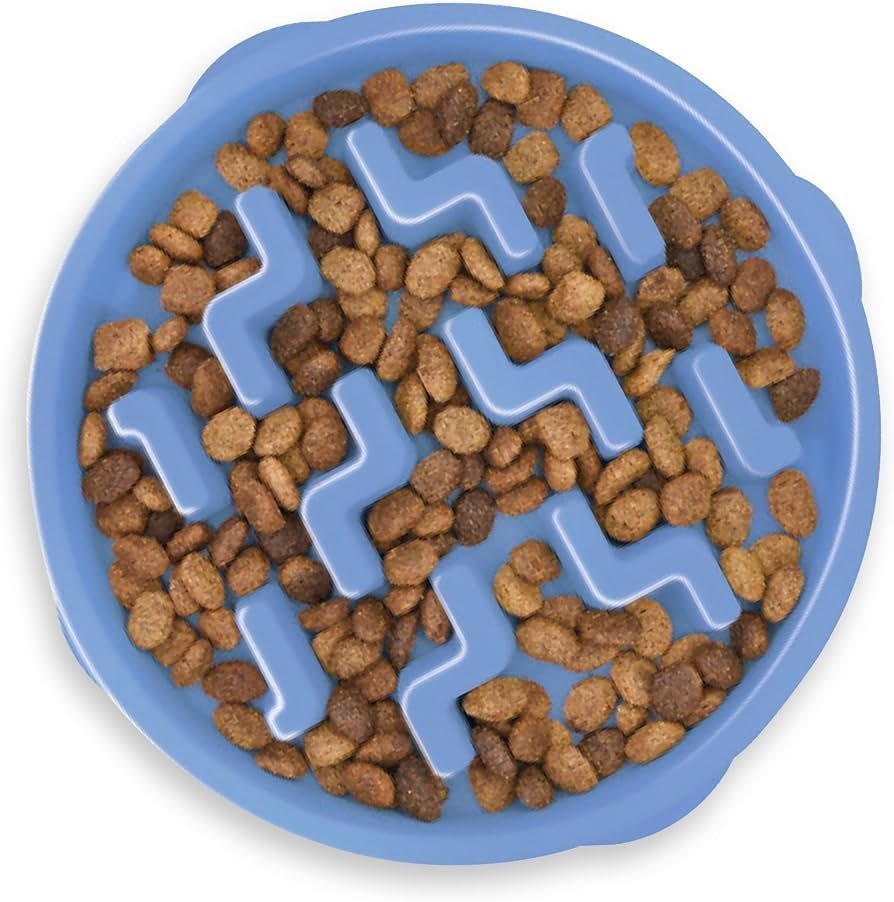
This is the category’s default recommendation for a reason: Outward Hound invented the modern slow feeder, the Large holds a full 4 cups of dry or wet food (11.75″ × 11.75″ × 2″), and the brand claims it slows eating up to 10×. It comes in three slow levels — Slow, Slower, Slowest — plus multiple maze patterns, so you can step up the difficulty as your dog learns the puzzle. It’s BPA, PVC, lead, and phthalate free, top-rack dishwasher safe, and has a non-slip base. One independent roundup put its verified review count north of 135,000, and it’s priced around $10–11 — hard to beat.
The honest part: it’s light. Reviewers report determined dogs flipping it or sliding it across the floor to eat off the ground, which defeats the purpose. Deep-groove maze patterns trap wet food and demand real scrubbing, and some dogs simply refuse to eat from it at all — one roundup flagged picky-dog refusal as a known category downside. Start with the shallow “Slow” pattern for first-timers.
Specs: Large 11.75″ × 11.75″ × 2″ · 4-cup capacity · plastic (BPA/PVC/lead/phthalate free) · 3 slow levels · non-slip base · top-rack dishwasher safe.
Pros: proven slowdown for most dogs; full-meal capacity for large breeds; cheap; huge pattern selection.
Cons: light — flippers can knock it over; deep grooves are a chore to clean with wet food; some picky dogs refuse it.
Verdict: The safest first buy — most dogs, most budgets, most kitchens. Check the price on Amazon.
2. SodaPup Honeycomb eBowl — Best Non-Plastic
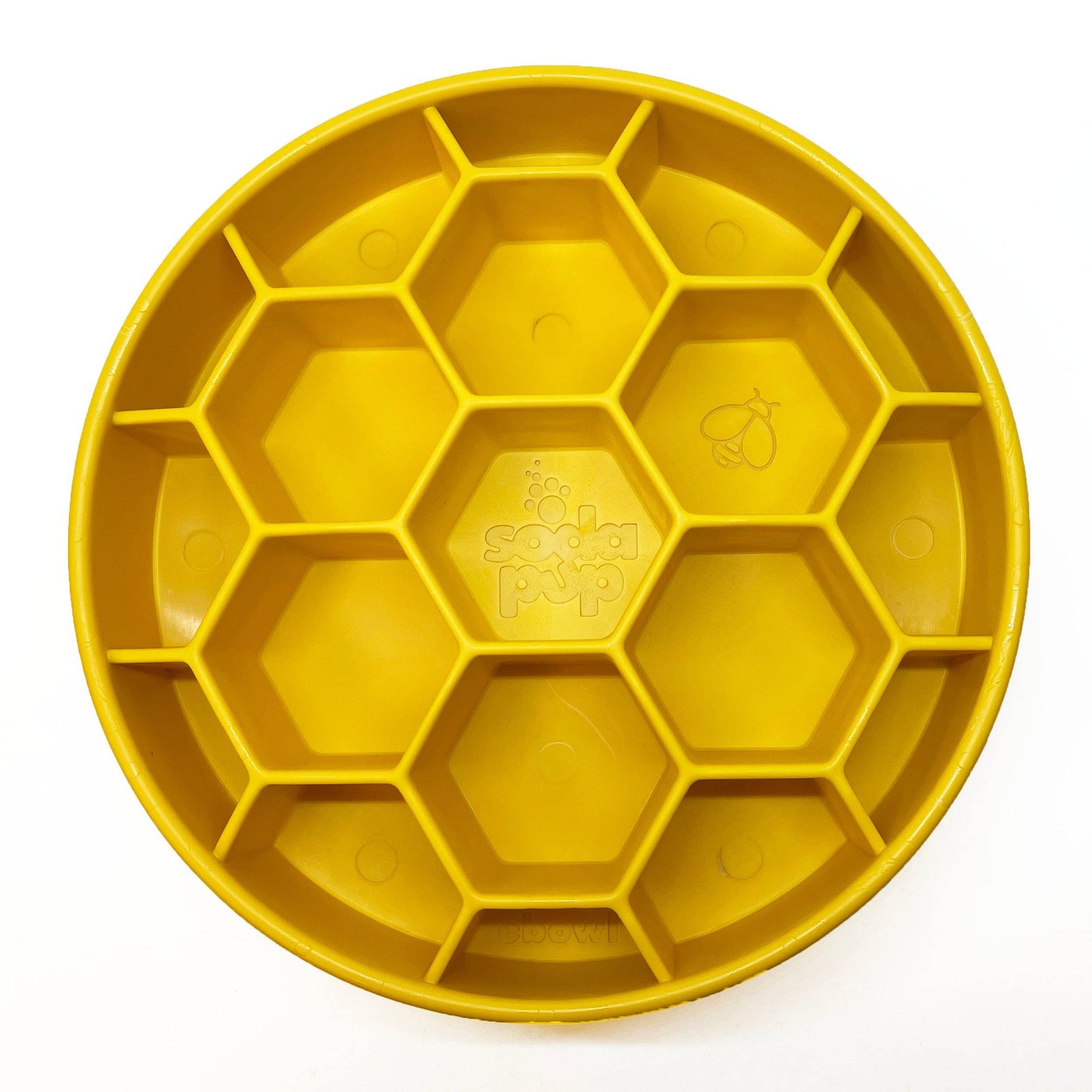
If the thought of feeding from plastic every day bothers you, the SodaPup Honeycomb is the non-plastic alternative with the strongest track record. It’s an 8″ × 8″ enrichment bowl made from the brand’s proprietary material blend (10% TPE, 90% polypropylene), made in the USA by a veteran-owned company, and it’s top-rack dishwasher safe. The honeycomb pattern doubles as a lick mat for wet food — freeze broth or pumpkin in it and you get a calming enrichment session, which is genuinely useful on anxious travel days.
Real Chewy reviews tell the story: one owner’s Lab went from bolting-then-vomiting to eating calmly, and another’s senior dog worked a hydrated 2-cup meal out of it happily. But the complaints are real too: multiple owners say it’s not the easiest to clean, one shepherd owner found their dog still emptied it in “a decent time,” and one owner donated theirs after their dog got frustrated with the deep compartments. And the manufacturer’s own warning matters: this is not a chew toy — it won’t survive determined chewing.
Specs: 8″ × 8″ · TPE/polypropylene blend · made in USA · dishwasher safe · doubles as lick mat/enrichment bowl.
Pros: non-plastic; doubles as enrichment/lick mat; US-made; freezer-friendly for calming frozen treats.
Cons: harder to clean than shallow bowls; some dogs power through it or get frustrated; not chew-proof — supervise.
Verdict: The best pick for owners who want out of plastic — and a travel-day multitasker. Check the price on Amazon.
3. LE TAUCI Ceramic Slow Feeder (3-Cup) — Best Ceramic
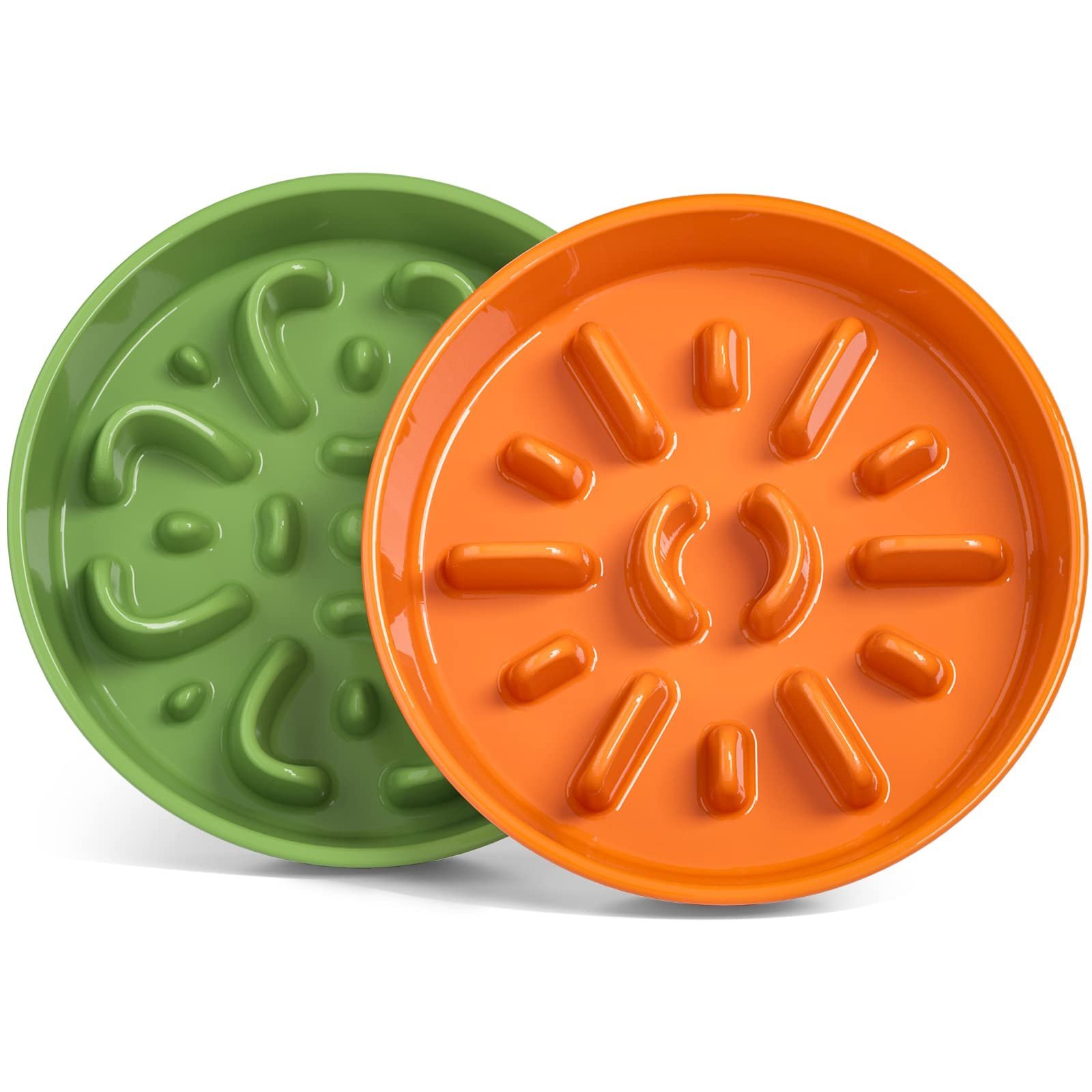
Ceramic is what vets tend to recommend for dogs with plastic sensitivities: no micro-scratches harboring bacteria, no chemical leaching worries, and real heft. The LE TAUCI 3-cup (9.5″ × 9.5″ × 2.1″) weighs roughly 3 lbs, so aggressive eaters can’t shove it across the kitchen — that stability alone justifies the upgrade for many owners. It’s microwave and dishwasher safe, lead and cadmium free, and comes in colors that look intentional on a counter rather than like pet clutter.
The trade-offs are ceramic’s eternal ones: it’s heavy and it breaks if dropped — one reviewer cracked theirs in the dishwasher and noted the care instructions are inconsistent (hand-wash to be safe). A few owners of enthusiastic eaters report dogs clunking their teeth on the hard ridges, and the included anti-slip rubber grips can come off in the dishwasher. For a travel blog’s honesty: this is a home-base bowl, not something you toss in a duffel.
Specs: 9.5″ × 9.5″ × 2.1″ · 3-cup capacity · ceramic (lead/cadmium free) · ~3 lbs · dishwasher and microwave safe per manufacturer.
Pros: heaviest, most stable bowl here; no plastic; hygienic — no micro-scratches; looks good.
Cons: breaks if dropped — hand-wash to be safe; dogs can clunk teeth on ridges; rubber feet can detach in dishwasher.
Verdict: The home-base upgrade for plastic-sensitive dogs — leave it at home, not in the travel bag. Check the price on Amazon.
4. JASGOOD Spiral Slow Feeder (Large) — Budget Pick
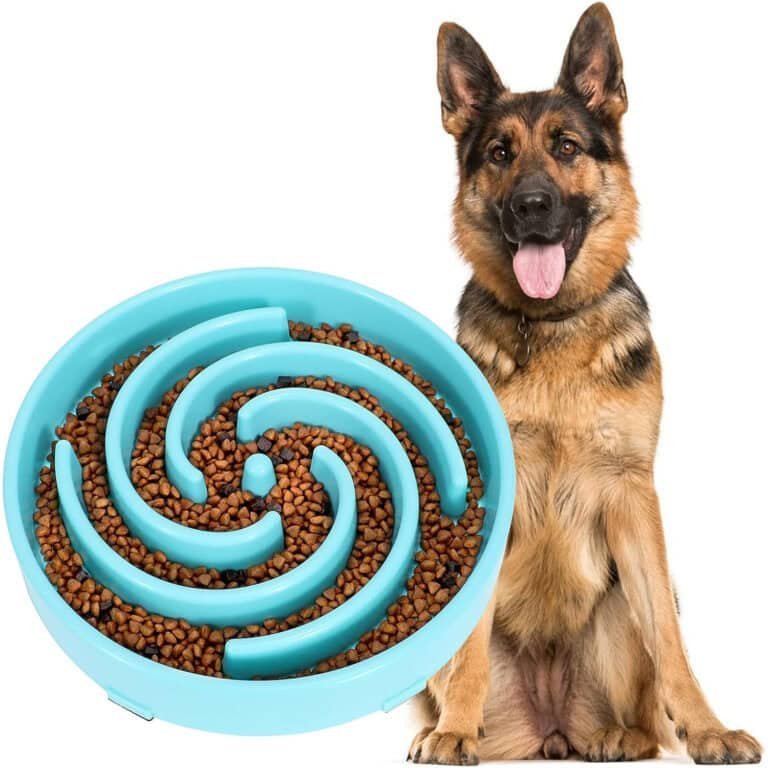
The JASGOOD is the budget spiral that keeps showing up in “best for the money” conversations: a 9.8″-diameter bowl holding about 4 cups of dry food, with a smooth spiral maze that owners say slowed everything from Great Dane pups to 75-lb Labs. The curves are rounded so they won’t hurt mouths, it handles wet and dry food, and it’s top-rack dishwasher safe.
The complaints are specific and consistent: the six stick-on rubber feet fall off — one detailed reviewer lost four of six in two weeks and feared their dog might eat one off the floor. On hard floors the bowl still slides (“the rubber feet are garbage” is a recurring verdict), so owners recommend using it on a rug or mat. And for clever dogs, the spiral may be too easy — buy the more intricate maze pattern if your dog is a puzzle veteran.
Specs: 9.8″ diameter × 1.77″ · ~4-cup capacity · food-grade PP · spiral maze · 6 stick-on rubber feet · dishwasher safe.
Pros: cheapest route to a real slowdown; smooth, mouth-safe curves; works for wet and dry.
Cons: rubber feet fall off (choking hazard — check regularly); slides on hard floors; may be too easy for smart dogs.
Verdict: The budget buy that works — just put it on a rug and check the feet. Check the price on Amazon.
5. AIPERRO Stainless Steel Slow Feeder (4-Cup) — Best Stainless
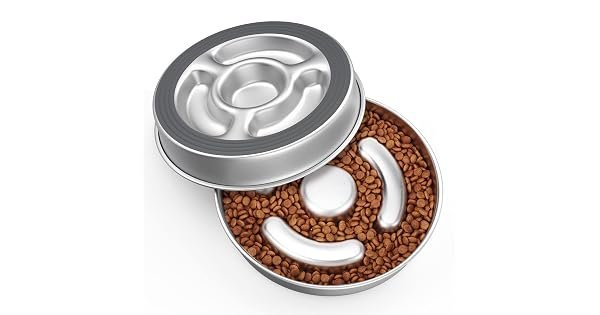
Stainless slow feeders are rare — most are plastic — and the AIPERRO is the one with the reviews to back it up (4.5 stars across ~1,800 ratings per listing data). It’s a one-piece 304 stainless bowl, 9.5″ × 9.5″ × 2″, with a non-slip base, polished rust-resistant finish, and a 1-year warranty. One tested roundup named it the best pick for flat-faced breeds: the ridges are shallow and wide-set, so Pugs, Frenchies, and Bulldogs can actually reach the food instead of face-planting into a deep maze. For raw feeders, the one-piece mold (no seams, no crevices) is a genuine hygiene win.
The documented downsides: the grooves aren’t deep enough for the most extreme gulpers — one tester called that out directly. And the manufacturer’s own tip reveals a real limitation: fill past ~2 cups and the food covers the internal barriers, so the “4-cup” capacity is really a 2-cup effective slowdown (the lower half still slows, but weakly). Stainless is also noisier than plastic on hard floors.
Specs: 9.5″ × 9.5″ × 2″ · 4-cup max (effective ~2 cups) · 304 stainless steel · non-slip base · one-piece mold · 1-year warranty · ~4.5 stars / 1,800 reviews.
Pros: only serious stainless option; great for flat-faced breeds; seamless, hygienic; warranty included.
Cons: grooves too shallow for extreme gulpers; effective capacity is ~2 cups, not 4; metal is noisy on hard floors.
Verdict: The pick for stainless loyalists and flat-faced breeds — just don’t overfill it. Check the price on Amazon.
6. SuperDesign Gobble-Stop (Small) — Best for Small Dogs
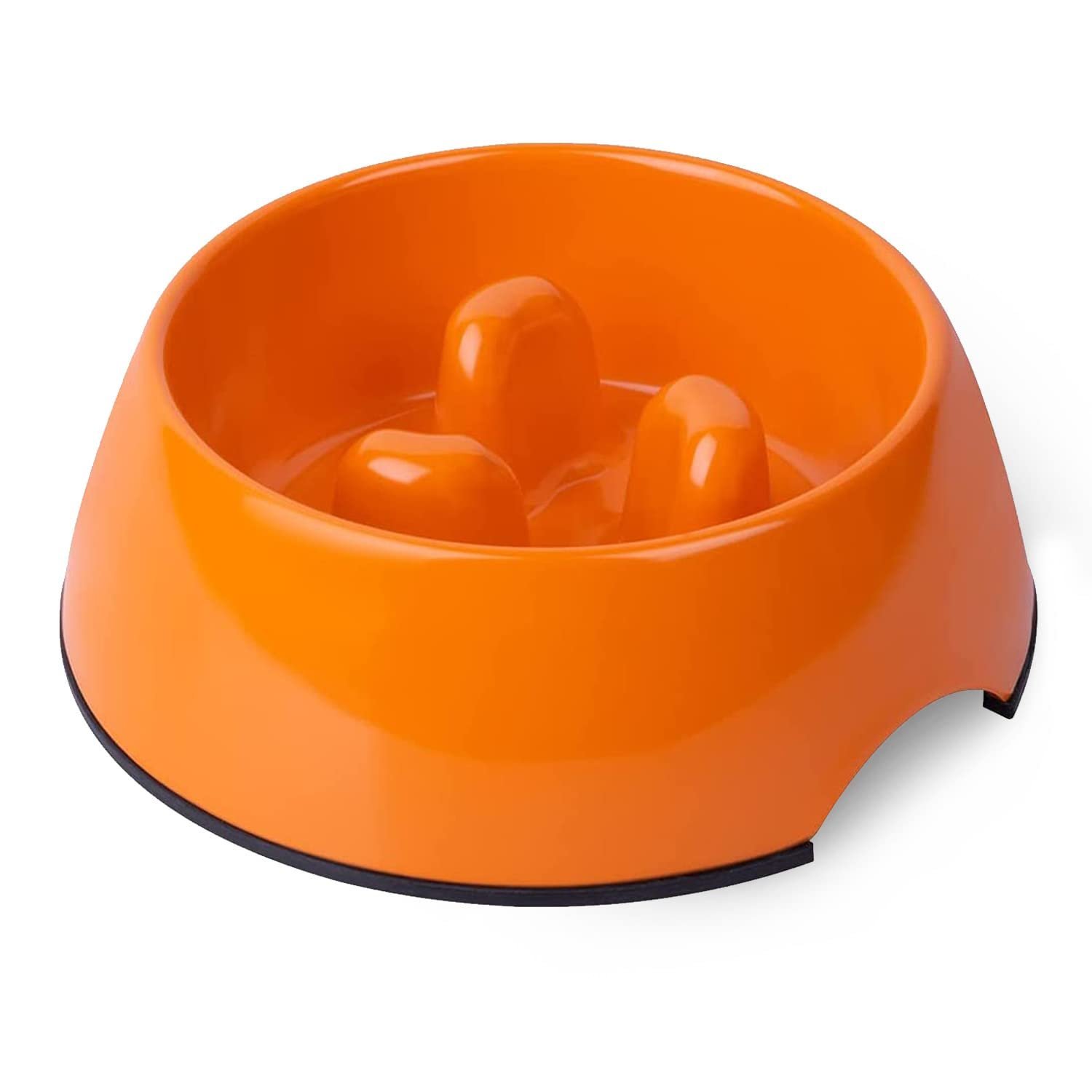
Big-dog slow feeders are everywhere; small-dog ones are an afterthought. The SuperDesign Gobble-Stop fills the gap: a 1/2-cup melamine bowl with a raised-column maze, non-slip base, and heat-resistant, dishwasher-safe construction. Melamine is sturdier and more scratch-resistant than standard plastic — a meaningful upgrade for a bowl that lives on tile — and the wide weighted base resists flipping by determined small dogs.
Be realistic about the sizing: 1/2 cup is a meal for a Chihuahua or Yorkie, not a Beagle. And the category warning applies double here — one review roundup noted the Gobble-Stop design can frustrate some pets at first, so introduce it gradually rather than swapping bowls overnight. It’s a niche pick, but for tiny fast eaters there are few alternatives this well made.
Specs: Small · 1/2-cup capacity · melamine (BPA free) · raised-column maze · non-slip, weighted base · dishwasher safe.
Pros: built for small breeds; sturdier melamine; tip-resistant base; dishwasher safe.
Cons: only 1/2 cup — too small for medium+ dogs; can frustrate dogs at first — introduce gradually.
Verdict: The rare slow feeder actually sized for small dogs. Check the price on Amazon.
How to Choose a Slow Feeder Dog Bowl
Match the slowdown to the dog, not the marketing. “Up to 10× slower” is a best case. A mild gulper does fine with a shallow ridge pattern (Outward Hound “Slow” level); a true vacuum-cleaner Lab needs the deepest maze or the SodaPup honeycomb. When in doubt, buy one difficulty level harder than you think — most dogs solve the easy ones within a week.
Pick the material for your hygiene tolerance. Plastic is cheap and light but develops micro-scratches that harbor bacteria — replace plastic bowls every 6–12 months. Ceramic and 304 stainless don’t have this problem and last years, but ceramic breaks and stainless is noisy. Rubber/enrichment bowls sit in the middle: no plastic, but not chew-proof.
Size it to the meal, not the dog. A 4-cup bowl with 1 cup of food in it barely slows anything — the food sits below the maze. Fill the bowl to the level the maze was designed for (AIPERRO’s own tip: ~1.5–2 cups). For big dogs eating 2+ cups per meal, get the large sizes or split the meal across two bowls.
Stability matters more than you’d think. The #1 workaround dogs invent is pushing the bowl across the floor and eating off the ground. Heavy bowls (LE TAUCI’s 3 lbs), non-slip bases, and feeding on a rug or mat all beat the “rubber feet glued to plastic” approach, which owners consistently report failing.
Plan for cleaning. Deep grooves + wet food = scrubbing. If you feed wet or raw, favor smooth shallow patterns, silicone, or dishwasher-safe one-piece designs (AIPERRO’s seamless mold, SodaPup’s dishwasher-safe rubber). Keep a bottle brush by the sink.
Travel note: slow feeders earn their spot on road trips. A dog that bolts dinner then gets carsick is a miserable passenger. Pack the bowl you already use at home — a familiar maze is calming in a strange place, and a frozen lick-mat style bowl (SodaPup) doubles as crate-time enrichment at rest stops.
Frequently Asked Questions
Do slow feeder bowls really prevent bloat?
They reduce a key risk factor: rapid eating, which causes dogs to swallow excess air. Bloat (gastric dilatation-volvulus, GDV) is a life-threatening emergency, especially in deep-chested breeds, and slowing meals is one of the few at-home steps vets consistently recommend. But no bowl prevents bloat on its own — avoid vigorous exercise right after meals and talk to your vet about breed-specific risk.
Can puppies use slow feeder bowls?
Yes — puppies 12 weeks and older can use slow feeders, and starting early builds good habits. Begin with a shallow, simple pattern (not a deep maze) so the puppy doesn’t get frustrated, and always supervise. The JASGOOD and small Outward Hound are good starter options; several owners report success with Frenchie and Lab puppies.
Are plastic slow feeder bowls safe?
Food-grade, BPA-free plastic is generally considered safe for daily use, but it does develop micro-scratches over time that can harbor bacteria — which is why trainers and vets often suggest replacing plastic bowls every 6–12 months. If that bothers you, ceramic (LE TAUCI) and 304 stainless (AIPERRO) avoid the issue entirely.
My dog flips the slow feeder over. What do I do?
Switch to a heavier bowl (ceramic is the fix here), feed on a non-slip mat or rug, and don’t overfill — a half-empty bowl is easier to flip and the maze barely works anyway. Some owners also split meals into two smaller bowls, which doubles the puzzle and halves the payoff of flipping one.
Why won’t my dog eat from a slow feeder?
Some dogs refuse unfamiliar textures or get frustrated by deep mazes — this is documented across the category. Introduce it gradually: put a few high-value treats in the maze alongside the regular food for a few days, and start with the easiest pattern. If the dog still refuses after a week, try a different maze style rather than a deeper one.
Can I use a slow feeder for wet food?
Yes, but choose accordingly. Deep plastic mazes trap wet food and are a pain to clean. Better wet-food options: smooth shallow patterns, silicone or rubber bowls (SodaPup works as a lick mat), seamless stainless (AIPERRO), or ceramic — all of which rinse or wipe clean far more easily.
The bottom line: the Outward Hound Fun Feeder Slo Bowl (Large) remains the best default for most dogs and budgets, with the SodaPup Honeycomb eBowl as the non-plastic upgrade and the LE TAUCI ceramic as the home-base luxury. Budget shoppers should grab the JASGOOD, stainless loyalists the AIPERRO, and small-dog owners the SuperDesign Gobble-Stop. Whichever you choose, size it to the meal and put it on a mat — and your road trips will get quieter.
