

Here’s the scenario these machines exist for: you’re coming home from a long weekend trip, your cat-sitter flaked, and the litter box looks like a hazmat site. A self-cleaning box would have been quietly sifting every few hours while you were gone — that’s the promise, and for many multi-cat homes, it’s real.
The honest note most roundups skip: these are 30+ lb wall-powered home fixtures, not travel gear. You are not taking a Litter-Robot to an Airbnb. They’re also not the set-and-forget appliances the ads imply — every machine here needs regular emptying, periodic deep cleaning, and (for most) ongoing purchases of proprietary liners, trays, or odor cartridges. This guide compares six boxes across the full spectrum, from the $700 rotating globe to a $40 roll-it-yourself box, and leads with the complaints owners actually report: sensor failures, cycling jams, weak odor sealing, fiddly apps, and the consumables lock-in nobody mentions at checkout.
Pet Travel Items is reader-supported. When you buy through links on this page, we may earn a commission at no extra cost to you. Our picks are driven by documented owner feedback, never by commission rates.
Best Self-Cleaning Cat Litter Boxes at a Glance
| # | Product | Key Spec | Best For | Check Price |
|---|---|---|---|---|
| 1 | Litter-Robot 4 by Whisker | 27″ x 24.25″ x 29.5″ · 24 lbs · Wi-Fi app | Best overall | Check Price |
| 2 | Neakasa M1 Open-Top | 23.23″ x 20.67″ x 20.2″ · app control | Best open-top | Check Price |
| 3 | PETKIT Purobot Ultra | 32.2″ x 24″ x 20.94″ · 46 lbs · AI camera | Best tech pick | Check Price |
| 4 | PetSafe ScoopFree Crystal Pro | 28.2″ x 20.4″ x 16″ · 18 lbs · crystal trays | Easiest upkeep | Check Price |
| 5 | Purina Tidy Cats Breeze XL | 27.5″ x 18.5″ x 13.7″ · pellet + pad system | Best budget | Check Price |
| 6 | Omega Paw Roll’n Clean (Large) | 18.5″ x 21.5″ x 20″ · 6.5 lbs · no power | No-electricity pick | Check Price |
Dimensions are manufacturer figures. Prices shift constantly — check before you buy.
1. Litter-Robot 4 by Whisker — Best Overall
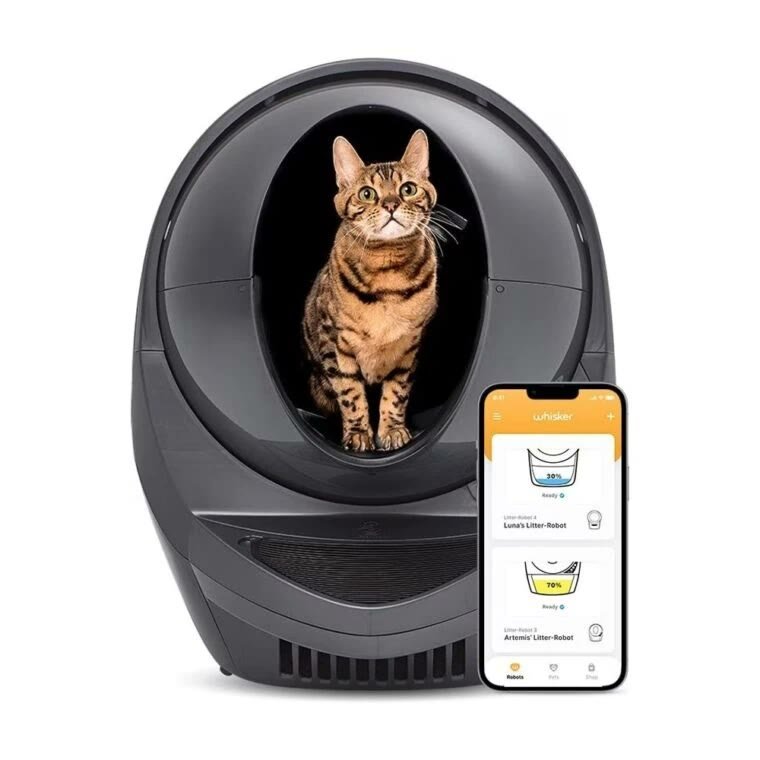
The Litter-Robot 4 is the reference point for the whole category: a rotating globe that sifts clumps into a sealed waste drawer after each use, with a Wi-Fi app tracking litter level, drawer status, and even your cat’s weight. It’s the box every competitor is measured against — years of firmware updates have made it the most refined automatic system, and it works with any fine-grained clumping litter rather than proprietary refills.
The honest part: it’s a premium-priced machine that still needs you. Owners report cycling errors and sensor quirks that aren’t always easy to diagnose, the globe is cramped for genuinely large cats, and the soft rubber liner inside is a known wear point — cat claws eventually tear it, and replacements aren’t cheap. The globe also needs a real deep clean every month or so, which is awkward in an apartment without a hose. It’s the best machine, not a miracle.
Specs: 27″ x 24.25″ x 29.5″ · 24 lbs · Wi-Fi + Whisker app · OdorTrap refills + carbon filters · works with fine-grained clumping litter · cats over ~3 lbs.
Pros: most refined automatic system; works with regular clumping litter (no proprietary litter lock-in); covered waste drawer; weight tracking in app.
Cons: premium price; cycling errors and sensor quirks are well documented; tight fit for large cats; globe deep-cleaning is awkward; rubber liner tears from claws.
Verdict: The category benchmark — buy it if you want the machine most likely to still be running in five years. Check the price on Amazon.
2. Neakasa M1 — Best Open-Top
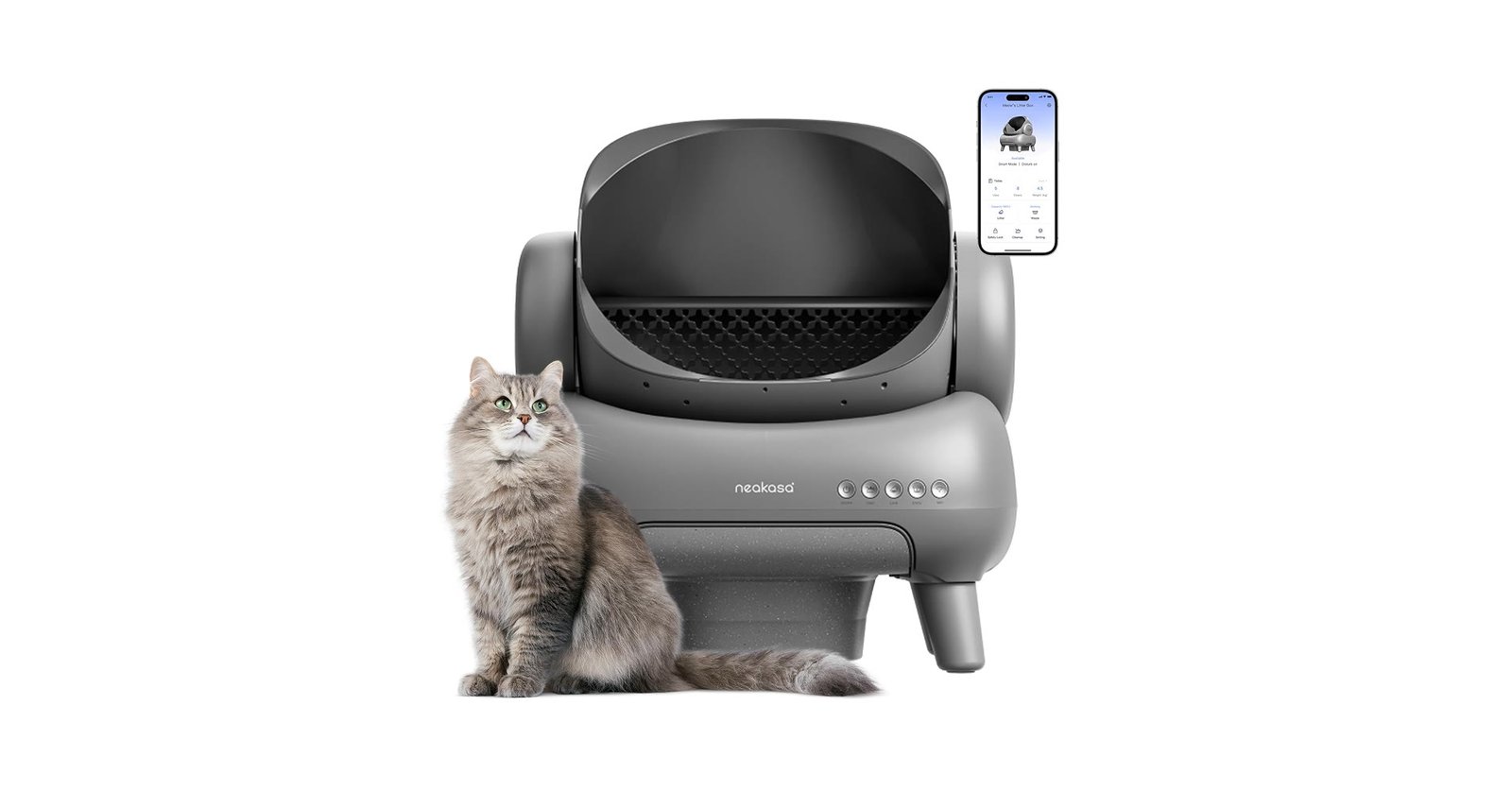
The Neakasa M1 is the pick for cats that hate enclosed spaces. Its open-top tray design means nervous cats step in rather than crawl in, and the app still tracks up to three cats (3.3–33 lbs) with litter-level and usage monitoring. Independent testers rate it among the top Litter-Robot alternatives, with a sealed waste bin and quiet operation.
The complaints to know: the open design trades enclosure for scatter — litter kicks out more than in a globe. Owners also report the usual automated-box gremlins: sensors that pause or misread, and app connectivity that’s fussier than the marketing suggests. And while it’s lighter than the big globes, it’s still a heavy appliance that lives where you put it. Not a travel item.
Specs: 23.23″ x 20.67″ x 20.2″ · ~32 lbs · open-top tray · app control · cats 3.3–33 lbs · sealed waste bin.
Pros: best option for cats that refuse enclosed boxes; strong feature set for the price; app usage tracking; quiet operation.
Cons: open design scatters litter; sensor and app-connectivity complaints; still heavy and stationary.
Verdict: The open-top answer — if your cat rejected a globe, this is the one to try. Check the price on Amazon.
3. PETKIT Purobot Ultra — Best Tech Pick

The Purobot Ultra is the category’s gadget flagship: an AI camera with facial recognition identifies which cat used it and photographs waste after each cycle, the machine auto-packs waste into sealed bags, and it runs at a quiet 35–45 dB per the manufacturer. Twenty high-precision sensors and 2.4/5GHz Wi-Fi round out a spec sheet nothing else matches. The 70L interior is roomy.
The trade-offs are real: at 46 lbs it’s the heaviest box here, the auto-packing system means buying PETKIT’s proprietary bags and odor eliminators (lock-in at its purest), and an AI camera pointed at your cat’s bathroom habits is a privacy decision you should make consciously. Owners also note app setup can be fiddly. This is the enthusiast’s machine — spectacular when dialed in, demanding when it isn’t.
Specs: 32.2″ x 24″ x 20.94″ · 46 lbs · AI camera + facial recognition · auto-packs waste · 35–45 dB per manufacturer · cats 3.3–22 lbs · 1-year warranty.
Pros: most advanced automation (auto-packing, waste photos); quiet; roomy interior; excellent safety sensor array.
Cons: proprietary bag/eliminator lock-in; 46 lbs — a two-person move; camera privacy considerations; fussy app setup.
Verdict: The gadget pick — unmatched automation if you accept the consumables treadmill. Check the price on Amazon.
4. PetSafe ScoopFree Crystal Pro — Easiest Upkeep
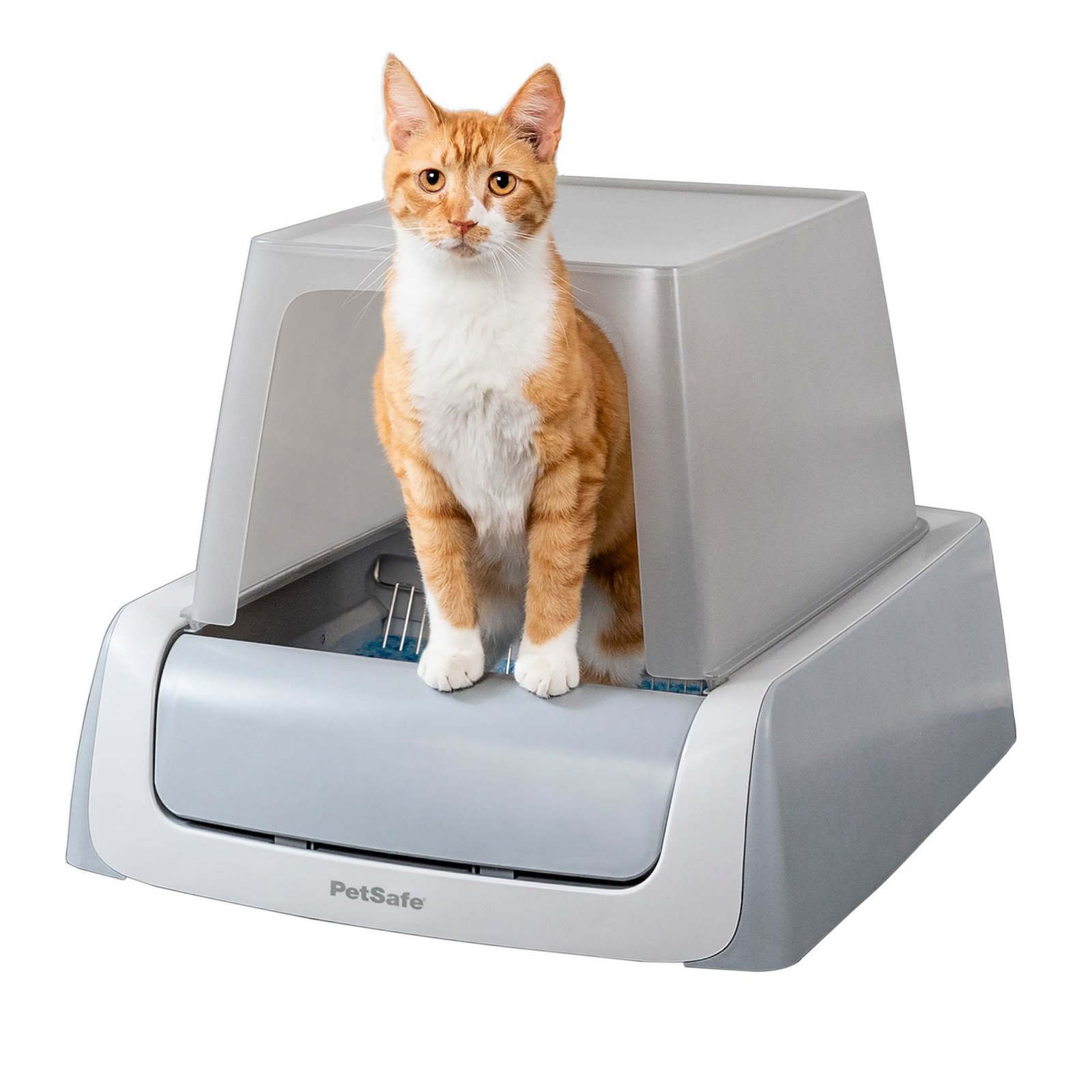
The ScoopFree Crystal Pro takes the opposite approach to the globes: no rotating parts, just a motion sensor, a rake, and a disposable tray of crystal litter that absorbs urine and dehydrates solids. You don’t scoop for weeks — you toss the tray and slide in a new one. The front-entry hooded design keeps odors in, an LED health counter tracks visits, and at 18 lbs it’s the lightest powered box here.
The honest math: those disposable crystal trays are a proprietary subscription in disguise — each one is good for one cat for up to ~30 days per the manufacturer, and multi-cat homes burn through them faster. The rake can jam on large stools or if a cat tracks litter into the mechanism, and the crystal approach means no clumping litter at all. It’s wonderfully low-effort, but the long-term cost adds up fast.
Specs: 28.2″ x 20.4″ x 16″ · 18 lbs · hooded front-entry · crystal litter trays · health counter · 1-year warranty.
Pros: genuinely hands-off for weeks; no scooping at all; excellent odor control with crystals; lightest powered option.
Cons: proprietary tray lock-in is the ongoing cost story; rake jams reported; no clumping litter allowed; trays go faster in multi-cat homes.
Verdict: The low-effort pick — pay per tray for near-zero daily involvement. Check the price on Amazon.
5. Purina Tidy Cats Breeze XL — Best Budget
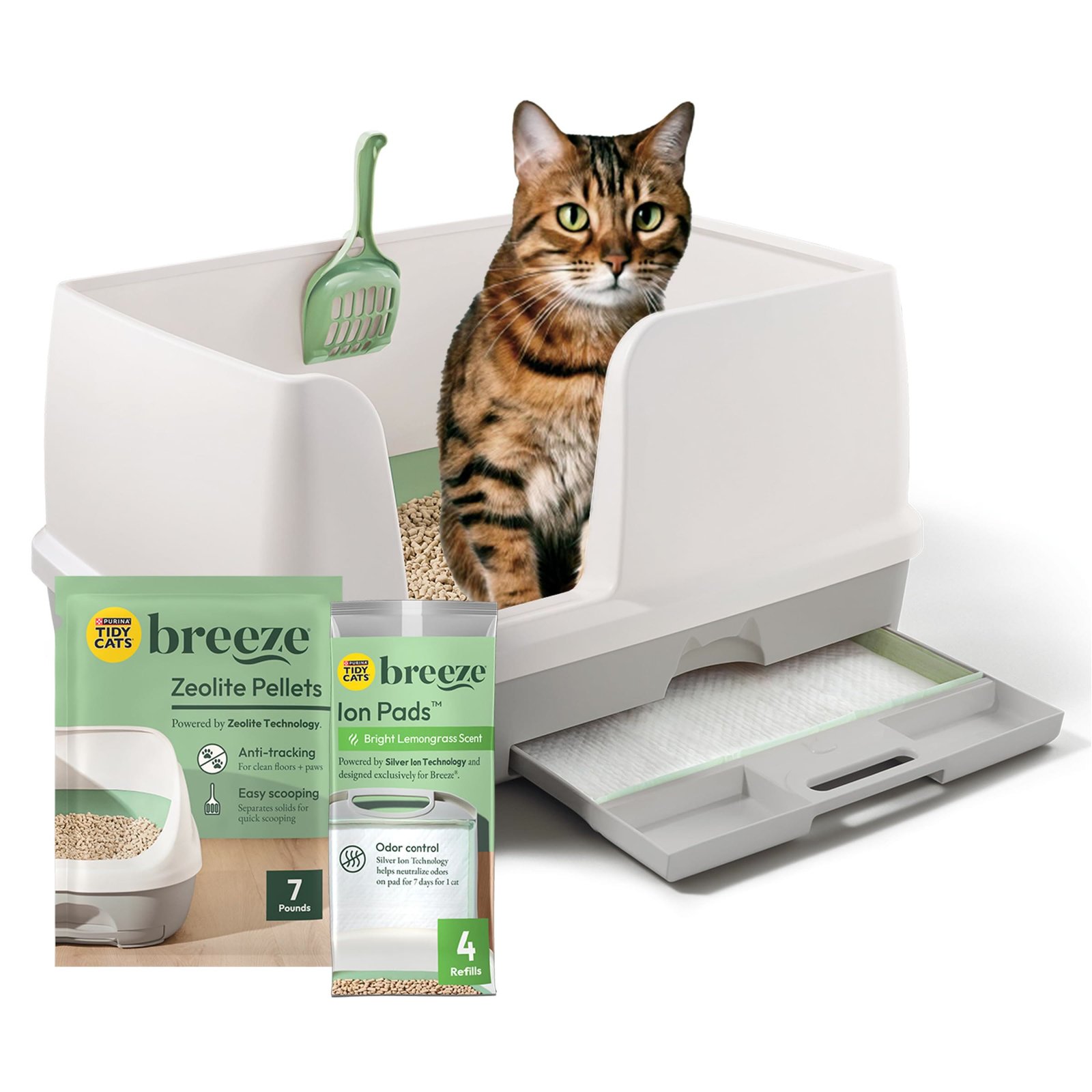
The Breeze isn’t fully automatic — let’s be upfront about that. It’s a two-part system: zeolite pellets that dehydrate solids on top, and a urine pad in a pull-out drawer below. You still scoop solids, but urine disappears into the pad (good for ~7 days per cat per the manufacturer), so there’s no clumping, no dust, and no smell from wet clay. It’s the cheapest entry on this list and the simplest.
The complaints are the honest ones for a semi-manual system: you’re still scooping solids daily, the pads are a proprietary ongoing purchase, and some cats refuse pellets — a cat that won’t dig in pellets will hold it or go elsewhere, and no amount of odor control fixes that. The drawer can also overflow if you push a pad past its limit. Think of it as a better manual box, not a robot.
Specs: 27.5″ x 18.5″ x 13.7″ · zeolite pellets + absorbent pads · pull-out pad drawer · 99.9% dust-free pellets per manufacturer.
Pros: cheapest way into low-odor litter care; virtually no dust; no clumping mess; simple and reliable — nothing to jam.
Cons: still requires daily solid scooping; proprietary pad costs; some cats reject pellets; pad drawer overflows if neglected.
Verdict: The honest budget option — a smarter manual box, not a robot. Check the price on Amazon.
6. Omega Paw Roll’n Clean (Large) — Best No-Electricity Pick
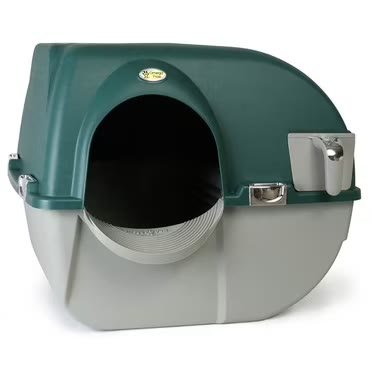
The Omega Paw is the odd one out and deserves its spot: no motor, no sensors, no app, no power cord. You roll the enclosed box onto its top and back again, and an internal sifting grate deposits clumps into a pull-out tray. At 6.5 lbs it’s the only box here you can realistically move — and the only one that works during a power outage or, say, at a campsite with an RV litter station.
Be honest about the trade: “self-cleaning” means you physically roll a box full of litter, which is more workout than ritual with heavy clay. Owners report litter dust puffing out of the seams during the roll, and the enclosed design can concentrate odor if you don’t empty the tray promptly. The door is also smallish for large cats. But there is nothing to break, nothing to subscribe to, and nothing to plug in.
Specs: 18.5″ x 21.5″ x 20″ · 6.5 lbs · roll-to-sift grate + pull-out tray · no electricity · works with clumping litter.
Pros: no power, no sensors, no consumables; light enough to move; cheapest real “self-cleaning” option; outage-proof.
Cons: rolling heavy litter is physical work; dust escapes from seams; enclosed top can smell if the tray sits; small entry for big cats.
Verdict: The unplugged pick — and the only one remotely travel-friendly. Check the price on Amazon.
How to Choose a Self-Cleaning Litter Box
Be honest about the “self” part. Every powered box still needs waste drawers emptied, globes deep-cleaned monthly, and sensors wiped. If you hate maintenance, the ScoopFree’s disposable-tray model or the Breeze’s pad-swap model ask less of you than any globe does.
Measure your cat against the interior, not the box. The headline dimensions are the outside; the globe or drum inside is smaller. Large cats (15+ lbs) report feeling cramped in the Litter-Robot 4 — the Neakasa M1’s open tray or the Purobot Ultra’s 70L interior fit big cats better.
Count the consumables before you buy. This is where the real cost lives: Litter-Robot sells you liners and OdorTrap packs, PETKIT sells packing bags and eliminators, PetSafe sells crystal trays, Tidy Cats sells pads. Only the Omega Paw and (for litter itself) the Litter-Robot have zero proprietary consumables. Estimate a year’s worth before checkout.
Match litter to the machine. Globe sifters need fine-grained clumping litter — heavy or large-granule clay jams them. ScoopFree takes only crystal trays. Breeze takes only pellets and pads. The Omega Paw takes any clumping litter. Buying the wrong litter is the #1 cause of “my robot is broken” posts.
Expect sensor quirks. Automated-box forums are full of cycling errors, misread weight sensors, and app connectivity hiccups — across every brand. Keep the unit on a flat, hard surface (carpets confuse weight sensors), keep sensor windows clean, and assume you’ll troubleshoot occasionally.
Don’t trust it unsupervised on day one. Cats can fear new machines — keep the old box next to the new one during transition, and don’t leave a brand-new robot running while you’re away until you’re sure the cat uses it calmly.
Bottom line: the Litter-Robot 4 remains the best overall self-cleaning box — the most refined system with no litter lock-in. The Neakasa M1 is the runner-up for cats that reject enclosed globes, and the PetSafe ScoopFree Crystal Pro is the pick for people who’d rather toss a tray than deep-clean a globe. On a budget, the Tidy Cats Breeze XL is the honest low-cost upgrade — and the Omega Paw Roll’n Clean is the only one you can unplug, lift, and take anywhere.
Frequently Asked Questions
Do self-cleaning litter boxes really eliminate scooping?
Mostly, not entirely. Powered boxes handle daily waste removal, but you still empty the waste drawer or tray (every few days to weeks depending on cats), top up litter, wipe sensors, and deep-clean the machine monthly. The ScoopFree comes closest to true hands-off — you swap a tray every few weeks — at the cost of proprietary trays.
Are automatic litter boxes safe for cats?
Modern machines (Litter-Robot 4, Neakasa M1, Purobot Ultra) have multi-sensor safety systems that halt the cycle when a cat enters. Minimum-weight requirements exist (typically around 3–5 lbs), so they’re not for very young kittens. That said, no machine is foolproof — monitor the first weeks and keep firmware updated.
Why does my self-cleaning box keep jamming or throwing errors?
The usual suspects: wrong litter type (too heavy or too coarse for globe sifters), overfilled litter past the fill line, dirty sensor windows, a unit sitting on carpet (weight sensors need hard, flat floors), or a full waste drawer. Check those four before assuming hardware failure.
How often do I need to deep-clean an automatic litter box?
Roughly monthly for globes — the liner and interior build up residue that no sifting cycle removes. ScoopFree trays get tossed rather than cleaned. Skipping deep cleans is the most common reason a working machine starts smelling.
Can I use any litter in an automatic box?
No. Litter-Robot works with fine-grained clumping litter. Neakasa and PETKIT models also need compatible clumping litter. ScoopFree requires crystal trays, and the Breeze requires pellets plus pads. The Omega Paw accepts any clumping litter. Using the wrong litter is the fastest way to jam a sifter.
Can I travel with a self-cleaning litter box?
Honestly, no — these are heavy, wall-powered home fixtures (the Purobot Ultra is 46 lbs). For trips, the realistic options are the Omega Paw Roll’n Clean (6.5 lbs, no power) as a portable sifting box, or just a regular travel litter tray with a bag of your cat’s usual litter. Nobody is checking a Litter-Robot into an Airbnb.
