

Pet Travel Items is reader-supported. As an Amazon Associate, we earn from qualifying purchases. Read our full affiliate disclosure.
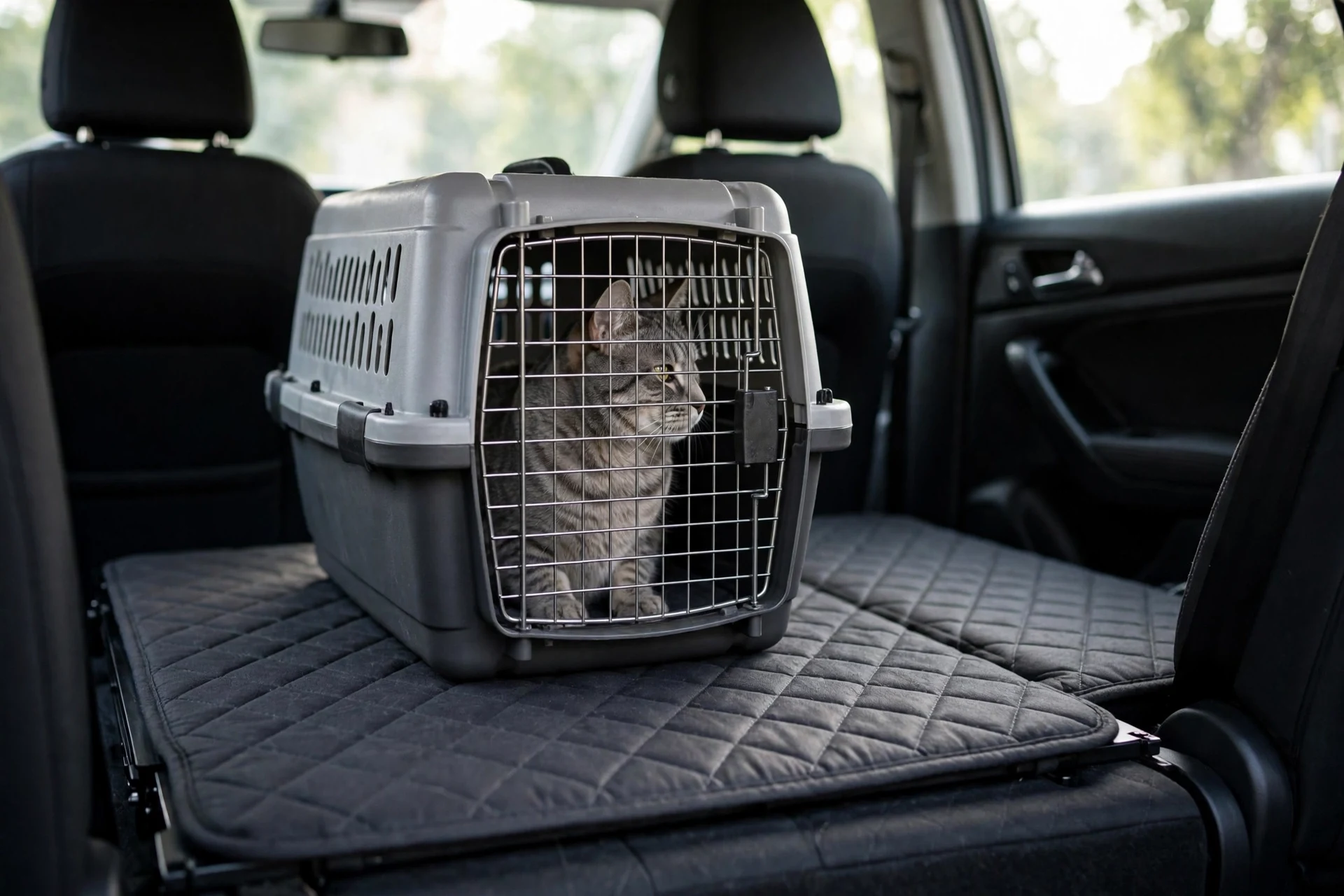
Let’s be honest about what you’re actually buying. There is no major “seat extender for cats” product line. Nobody makes the cat equivalent of the dog seat-extender market. Every device below was built for dogs (or for kids and pets generally), and cat owners are repurposing them. That’s fine, because the job is the same: bridge the footwell gap in your back seat so your cat’s carrier sits level instead of tipping into the void between the seats.
One more truth before we start. A seat extender does not restrain your cat. It is a platform, not a safety device. An unrestrained cat loose in a moving car is a genuine hazard: it can slide under the brake pedal, bolt the moment a door opens, or become a projectile in a hard stop. Whatever extender you buy, your cat still travels in a secured carrier or a crash-tested harness. The extender just makes the carrier sit flat.
| # | Product | Why It Made the List | Check Price |
|---|---|---|---|
| 1 | Kurgo Dog Backseat Bridge Car Extender | The veteran pick. Simple padded platform, reversible, water-resistant, from a brand that has sold pet travel gear for years. | Check Price on Amazon |
| 2 | BarkBridge+ Backseat Extender (Roaming Bone) | The firmest platform here. Three hard boards under quilted fabric means your carrier truly sits level, not just less tilted. | Check Price on Amazon |
| 3 | Fyzeoty Back Seat Extender | Thick, reversible, no-inflation budget pick. Soft side is cat-friendly; the unknown brand is the gamble. | Check Price on Amazon |
| 4 | BORKIN Back Seat Extender | Rigid-base platform with a carry bag. Decent design from an obscure brand with a thin sales history. | Check Price on Amazon |
| 5 | PAMPERED ROADIE Heavy-Duty Back Seat Extender | Hard-bottom platform with a plush top. The 400-lb claim is marketing, but the platform itself is real. | Check Price on Amazon |
| 6 | xixikiss Inflatable Back Seat Gap Filler | Cheapest way to fill the gap. PVC plus cat claws is a bad combination, so this is a last resort only. | Check Price on Amazon |
1. Kurgo Dog Backseat Bridge Car Extender
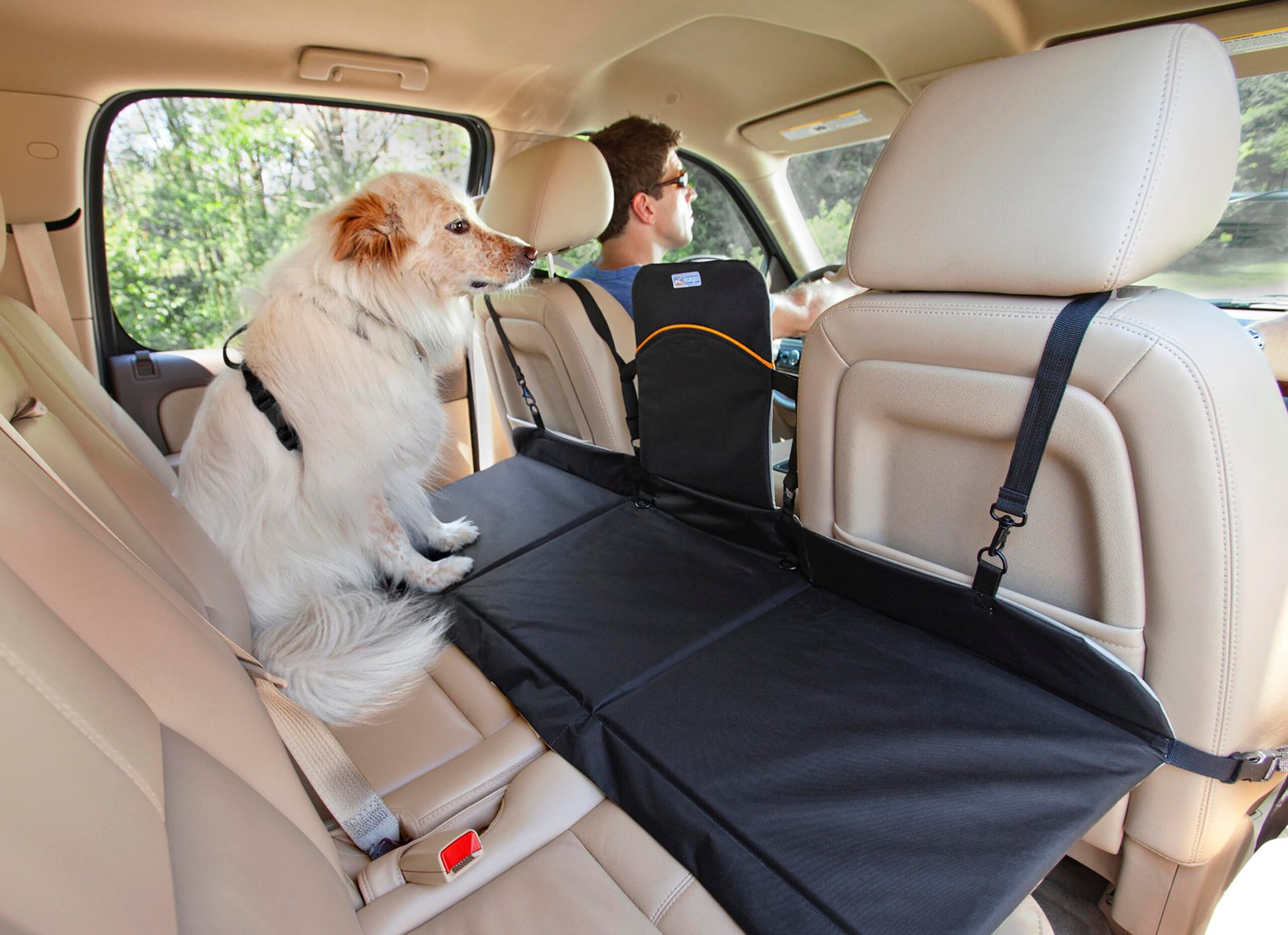
Kurgo has been making pet travel gear since before most of these companies existed, and the Backseat Bridge is the product everyone else copied. It is a padded platform, 16 inches deep by 52 inches wide, that spans the gap between your front and back seats. Reversible black to Hampton Sand khaki, water-resistant, rated to 100 pounds. For a cat carrier, 100 pounds is overkill in the best way: there is no cat alive that will stress this thing.
What you actually get for the cat use case: a level, padded base that stops the carrier from tipping forward into the footwell, plus a non-slip surface the carrier won’t slide on. The fold-up center barrier is meant to keep dogs off the armrest. Your cat will walk straight over it. Ignore it.
Pros: established brand with real warranty support; light and simple to install; reversible colors match most interiors; the 100-lb rating means a loaded carrier is no strain at all; water-resistant fabric handles the occasional hairball.
Cons: padded-only, no rigid board, so a heavy carrier can make it dip slightly over time. “Universal fit” is optimistic: one owner returned it because it simply didn’t fit their car, and it is explicitly not for captain’s or bucket seats. Kurgo warns against gaps wider than 13 inches, so measure first.
Verdict: the safe default. If you want the one product on this list least likely to disappoint you, buy the Kurgo. It won’t be the firmest platform, but it will work.
2. BarkBridge+ Backseat Extender (Roaming Bone Pet Company)
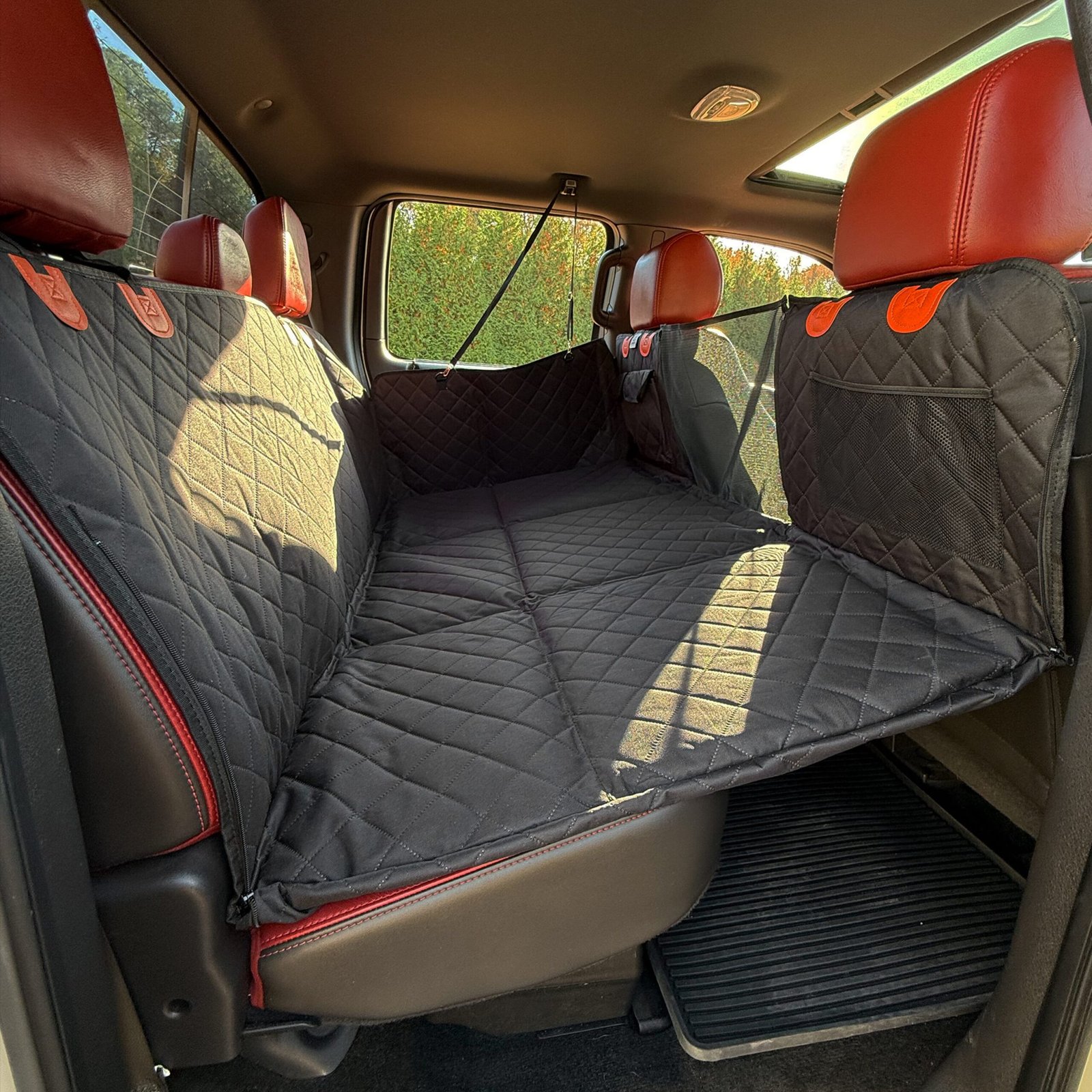
This is the pick if your priority is a genuinely flat surface. Three solid platforms sit under foam padding and heavy-duty oxford cloth, rated to 270 lbs. Quilted, waterproof, machine washable, with a mesh window, door covers, and storage pockets. Four headrest straps and two seat anchors hold it in place, and there are seat belt openings you can thread a strap through to secure the carrier itself.
Roaming Bone is a small, young brand (the product launched in late 2023), and their Amazon presence is weak, which is why this sits at number two despite arguably being the better platform. They back it with a warranty they call lifetime, but the fine print defines it as manufacturing defects for up to three years, and you pay shipping on replacements.
Pros: the hard bottom is the firmest leveling surface on this list; seat belt openings are genuinely useful for strapping a carrier down; waterproof and machine washable; mesh window helps a nervous cat see you.
Cons: very few independent third-party reviews, so you are trusting the brand’s own site; small brand with a short track record; the mesh window and door covers are dog-oriented extras you may never touch.
Verdict: the best engineering for the job, with the thinnest independent evidence behind it. If a rock-solid platform matters more to you than brand pedigree, this is your pick.
3. Fyzeoty Back Seat Extender
A 53-by-29-inch no-inflation bridge that is basically a thick padded mat with straps. No pump, no air leaks, no rigid boards. It is reversible: a chenille plush side and a tech-fabric side that resists scratches. Two detachable storage pockets, seat belt accessible, one-year guarantee from the seller.
Of the six products here, this has the softest surface, which actually matters for cats. If your cat sometimes rides outside the carrier on a leash and harness, the plush side is the most inviting seat in this roundup. The scratch-resistant side is the one you want if claws come out.
Pros: thick and comfortable; no inflation or assembly fuss; reversible fabrics let you pick soft or scratch-resistant; storage pockets for treats and toys.
Cons: Fyzeoty is an unknown brand that launched this product in 2025, so there is zero long-term durability history. Padded-only construction can compress under a loaded carrier. “Universal fit” is an unproven claim on a young listing.
Verdict: a solid budget option if you accept the brand gamble. Buy it for comfort and simplicity, not for proven longevity.
4. BORKIN Back Seat Extender
BORKIN takes the middle path: a rigid base that spans the back seat (54 x 26.5 inches) to create a stable platform, wrapped in coated polyester that is water-resistant and removable for washing. It doubles as a travel barrier, ships with a carry bag, and has been on the market since 2021.
The rigid base is the whole point. Unlike the padded mats above, a hard base does not compress under your carrier’s weight. It will genuinely level the platform. The problem is everything around the design: the brand is obscure, the sales rank is very weak, and the listing makes fit claims (“ideal for trucks, SUVs, and full sized sedans”) without giving you the measurements to verify them.
Pros: rigid base means a truly level surface; washable and water-resistant; includes a carry bag; been around since 2021, which is longer than the newer white-label competition.
Cons: weak sales history and sparse reviews; fit claims without fit data; obscure brand means support is an unknown; we could not verify an official product photo, which tells you something about the brand’s presence.
Verdict: good concept, thin track record. If the BarkBridge+ is out of stock, this is the fallback hard-platform option, with eyes open.
5. PAMPERED ROADIE Heavy-Duty Back Seat Extender
This one leads with a number: 400 pounds of capacity, on a hard-bottom platform with a detachable microfiber bed that velcros on top. Waterproof, scratch-resistant, foldable, with seat belt openings and a travel bag. For a cat, 400 pounds is a meaningless number. Your cat weighs 12 pounds. What matters is whether the platform is flat and stays put.
Be honest with yourself about what this is: a white-label product from a generic brand (Star 38 Products) with a capacity claim that is wildly out of line with what established brands rate their products at. Kurgo, a company that has been doing this for years, rates theirs at 100 lbs. So treat 400 lbs as marketing copy, not engineering.
Pros: hard bottom plus a plush top layer is a genuinely comfortable combination; foldable with a travel bag; seat belt openings for securing things.
Cons: unverified capacity claims from a generic brand with no track record; microfiber bed attaches with Velcro, and cat claws snag microfiber over time; double-check which color variant you are actually ordering.
Verdict: the platform itself is likely fine, but you are buying a brand with nothing to stand behind it. Acceptable if the price undercuts the established options. Do not pay a premium for it.
6. xixikiss Inflatable Back Seat Gap Filler
We include this one to be complete, not to recommend it. It is an inflatable PVC gap filler, roughly 51 by 15 inches, that you pump up to bridge the footwell. It comes with a pump, a carry bag, and a PVC repair kit. The presence of a repair kit in the box tells you what the manufacturer expects.
Here is the cat-specific problem: cat claws and PVC do not mix. Inflatable car beds carry manufacturer warnings to keep pets away because claws puncture the surface. A kneading cat can pop this. It also loses air over days of use, so you are re-inflating before every trip, and PVC has that new-plastic smell you will need to air out first.
Pros: the cheapest way to fill the gap; light (under 2 lbs); packs down small.
Cons: puncture risk from cat claws is the dealbreaker; needs re-inflation every few days; PVC odor on opening; one competitor’s listing flat-out warns that extenders like this are not suitable for pets.
Verdict: only if your budget is the deciding factor and you lay a thick blanket over it as claw protection. Even then, a hard platform is safer and cheaper in the long run.
Buying Guide: How to Pick a Seat Extender for Your Cat
Start with the carrier, not the extender
Your cat travels in a carrier. The extender’s job is to make that carrier sit level. So measure your carrier’s footprint first. Most hard-shell carriers are 19 to 24 inches long and 12 to 13 inches wide. Every extender on this list is wide enough. Depth is the constraint: the platform needs to reach from the back seat cushion to the front seatbacks without a gap the carrier can tip into.
Measure your car’s footwell gap
This is the step everyone skips and regrets. With the front seats in their normal position, measure the distance from the back of the front seat to the edge of the rear seat cushion. If it is more than 13 inches, the Kurgo will not bridge it properly, per the manufacturer’s own warning. Hard-bottom platforms tolerate a wider gap, but none of them fix a canyon. Measure, then buy.
Hard bottom vs. padded mat: which do you need?
If your carrier has a rigid plastic base, a padded mat is enough; the carrier itself is stiff and just needs the gap filled. If you use a soft-sided carrier, or if your cat rides on the platform on a harness and leash, a hard-bottom platform keeps everything genuinely flat. Hard boards do not compress. Pads do.
Forget the capacity ratings
You will see numbers from 75 to 400 pounds on these listings. They are unstandardized marketing figures with no shared testing method. For a cat, every single one of these is strong enough. Judge by design, not by the biggest number.
Claws are the real material question
A cat that kneads or scratches will shred a PVC inflatable (see our warning above) and will snag a microfiber top over time. Quilted oxford cloth and smooth polyester hold up best to claws. If your cat rides loose on the platform, wipe-down fabrics matter more than plush ones.
The safety rule that outranks everything else
An extender is not a restraint. In a sudden stop, a loose cat becomes a projectile, and a panicked cat under the pedals is how accidents happen. Keep the cat in a carrier, and wedge or strap the carrier so it cannot slide. Thread a seat belt through the carrier’s handle, or use the extender’s seat belt openings with a strap. Then the extender does its one job: a flat, stable floor.
Frequently Asked Questions
Do seat extenders actually restrain a cat?
No. A seat extender is a flat surface, nothing more. It stops a carrier from tipping into the footwell. It does not keep a cat in place, it does not absorb crash forces, and it does not stop a cat from climbing into the front seat. Restraint comes from a secured carrier or a crash-tested harness, always.
Can my cat ride directly on the seat extender without a carrier?
Technically yes, and practically it is a bad idea for most cats. Dogs settle; cats explore. A cat on an open platform can end up under the driver’s feet or out the door at a rest stop. If your cat is exceptionally calm and leash-trained, a harness tethered to a seat belt on the platform can work for short trips. For everyone else, use the carrier on top of the extender.
Will a seat extender fit my car?
Probably, but measure first. Check the distance from the back of your front seats to the edge of the rear cushion, and the width of your rear bench. The Kurgo needs gaps under 13 inches. Hard-bottom platforms are more forgiving but still have limits. Captain’s chairs and bucket seats are the main incompatibility: most extenders are designed for bench seats.
Are inflatable seat extenders safe for cats?
They are the weakest option for cat owners. The risk is puncture: cat claws pop PVC, and these inflatables carry manufacturer warnings to keep pets away from them for exactly that reason. They also lose air over days, so you re-inflate before every trip. If you go inflatable, cover it with a thick blanket and accept that a hard platform would have been safer.
How do I keep the carrier from sliding on the extender?
Start with a non-slip surface; the quilted tops on the hard-bottom models grip well. Then add a real anchor: thread the seat belt through the carrier’s top handle and buckle it, or run a strap through the extender’s seat belt openings and over the carrier. Wedging the carrier between the extender and the seatback helps too. If the carrier moves when you push it with one hand, it will move when you brake.
Why are there no cat-specific seat extenders?
Because the market never developed one. Dog owners drive the demand: dogs ride loose and need the gap bridged for their own footing. Cats ride in carriers, so the industry never saw a reason to make a feline version. The dog-marketed devices in this roundup are the honest answer to a cat keyword, and they work fine because the underlying job (bridge the gap, level the carrier) is identical.
