

Here’s the scenario every travel-with-pets owner dreads: the campsite gate left ajar, the hotel room door that didn’t latch, the rest stop where the leash slipped. In unfamiliar territory, a lost pet goes from stressful to terrifying in minutes — no familiar neighborhood, no known hiding spots, and a ticking clock. A GPS tracker is the difference between a search party and a pin on a map.
The honest note most roundups skip: almost every true GPS tracker requires a subscription — the device alone does nothing without a cellular plan behind it. Battery life in real use is almost always shorter than the marketing number, and coverage has hard limits (one major brand is US-only, which matters enormously for travelers). This guide compares six trackers with verified subscription facts, the complaints owners actually report, and a traveler’s eye on what matters on the road: escape alerts, live tracking, battery life, and where the coverage actually works.
Pet Travel Items is reader-supported. When you buy through links on this page, we may earn a commission at no extra cost to you. Our picks are driven by documented owner feedback, never by commission rates.
Best Pet GPS Trackers at a Glance
| # | Product | Subscription | Best For | |
|---|---|---|---|---|
| 1 | Fi Series 3+ Smart Dog Collar | Yes — 6 mo included, then ~$99/6 mo | Best overall for dogs | Check Price |
| 2 | Tractive Smart Dog GPS Tracker | Yes — ~$9/mo annual | Best live tracking / travel abroad | Check Price |
| 3 | Apple AirTag (2nd Gen) + collar holder | No — free Find My network | Best no-subscription pick | Check Price |
| 4 | Fi Mini GPS Tracker (Cats) | Yes — 6 mo included | Best for cats (LTE) | Check Price |
| 5 | Tractive GPS Tracker (Cats) | Yes — ~$9/mo annual | Budget cat pick | Check Price |
| 6 | Petcube GPS Tracker (Dogs) | Yes — from $5/mo | Best battery per dollar | Check the price on Amazon |
Prices shift constantly — check before you buy. Subscription prices are from 2026 pricing pages; verify current rates.
1. Fi Series 3+ Smart Dog Collar — Best Overall for Dogs
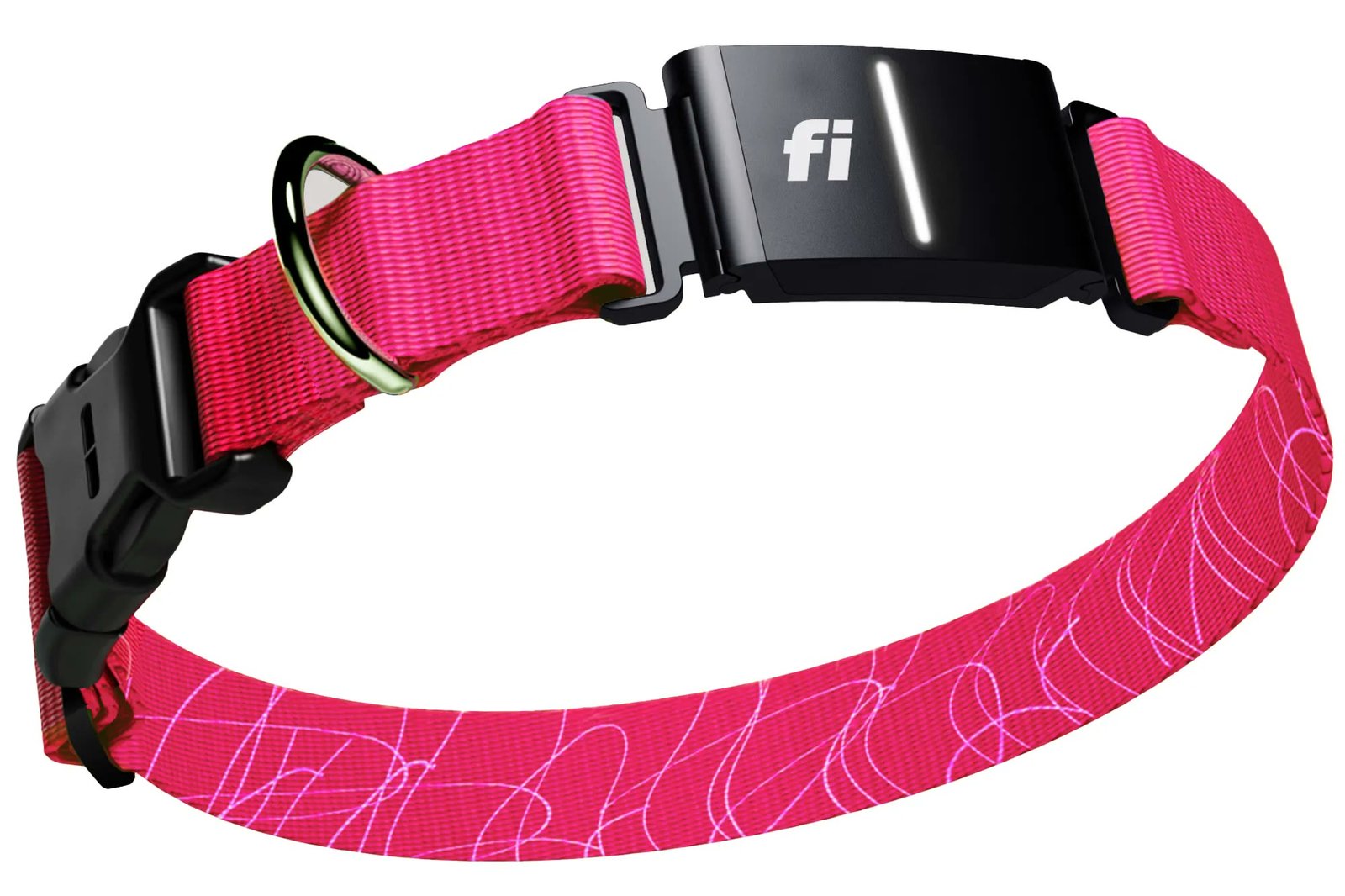
Fi’s Series 3+ is the most complete dog tracker in the category: the GPS module is built into the collar itself (no dangling tag), with escape alerts, Lost Dog Mode, AI-powered health and behavior tracking (activity, sleep, barking, licking, scratching), an LED for night visibility, and Apple Watch integration. Battery life is the headline — up to 3 months on a charge in low-activity mode, weeks with normal use — which no competitor touches. It’s IP68 waterproof and tough enough for real adventure.
The subscription reality: a Fi membership is required for any tracking. The collar ships with 6 months included; after that, Fi’s published US pricing is $99 per 6 months, $189 per year, or $339 for 2 years, plus a $20 activation fee — with a minimum 6-month commitment. And the big travel caveat: Fi only works in the US. It runs on US LTE networks, so cross-border trips to Canada or Mexico leave you with an expensive regular collar. Owners also report GPS accuracy wobbles (worse in rural areas and under tree cover), a cluttered app, and that Lost Dog Mode drains the battery in about 2 days.
Specs: Collar-integrated GPS + LTE-M · battery up to 3 months (low-activity) · IP68 waterproof · escape alerts + Lost Dog Mode · sizes XS–XL (min 11.5 inch neck) · 6-month membership included.
Pros: best battery life in the category; integrated collar design; strong escape-alert system; health/behavior tracking.
Cons: subscription required (plus activation fee); US-only coverage — no international travel use; GPS accuracy wobbles in rural areas; Lost Dog Mode drains battery fast.
Verdict: The best tracker for US-based dogs — just don’t take it across the border expecting it to work. Check the price on Amazon.
2. Tractive Smart Dog GPS Tracker — Best Live Tracking / Travel Abroad
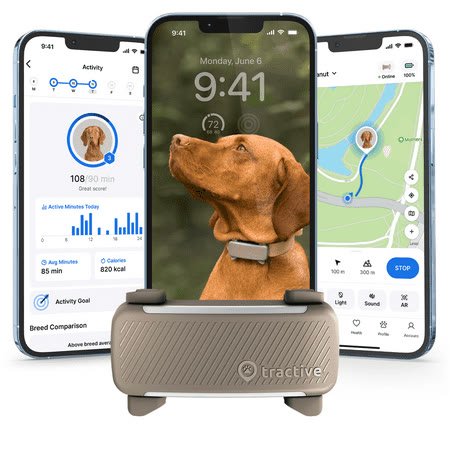
Tractive is the world’s most popular pet GPS brand by units sold, and it wins the travel round on two counts: coverage in 175+ countries (multi-network LTE) and genuinely live tracking — location updates every 2–3 seconds in LIVE mode, fast enough to follow a running dog. It clips onto your dog’s existing collar, monitors activity and sleep, supports virtual fences with escape alerts, and the newest models add vital-signs and bark monitoring. Device cost is low (typically around $50–$80).
The trade-offs are battery and subscription. Real-world battery runs 2–7 days depending on use — LIVE mode eats it in about 2 days — so this is a charge-weekly device, not a charge-seasonally one like Fi. A subscription is mandatory: 2026 pricing runs roughly $9/month on the annual Basic plan ($108/year) down to about $6/month on a 2-year prepaid plan. Owner complaints center on the rubber attachment clip popping off or tearing during rough play (buy spares), and the advertised monthly price being based on prepaid annual billing — you pay a chunk upfront.
Specs: Collar-clip GPS + LTE · 2.8 x 1.1 x 0.67 inches, 1.23 oz · LIVE mode 2–3 sec updates · virtual fence + escape alerts · waterproof · 175+ country coverage · subscription required.
Pros: live tracking is the fastest in the category; works internationally — the travel pick; low device cost; clips to any collar.
Cons: 2–7 day battery needs weekly charging; subscription mandatory; attachment clip can pop off; monthly price assumes annual prepay.
Verdict: The best choice for travelers — international coverage and true live tracking. Check the price on Amazon.
3. Apple AirTag (2nd Gen) + Collar Holder — No-Subscription Pick
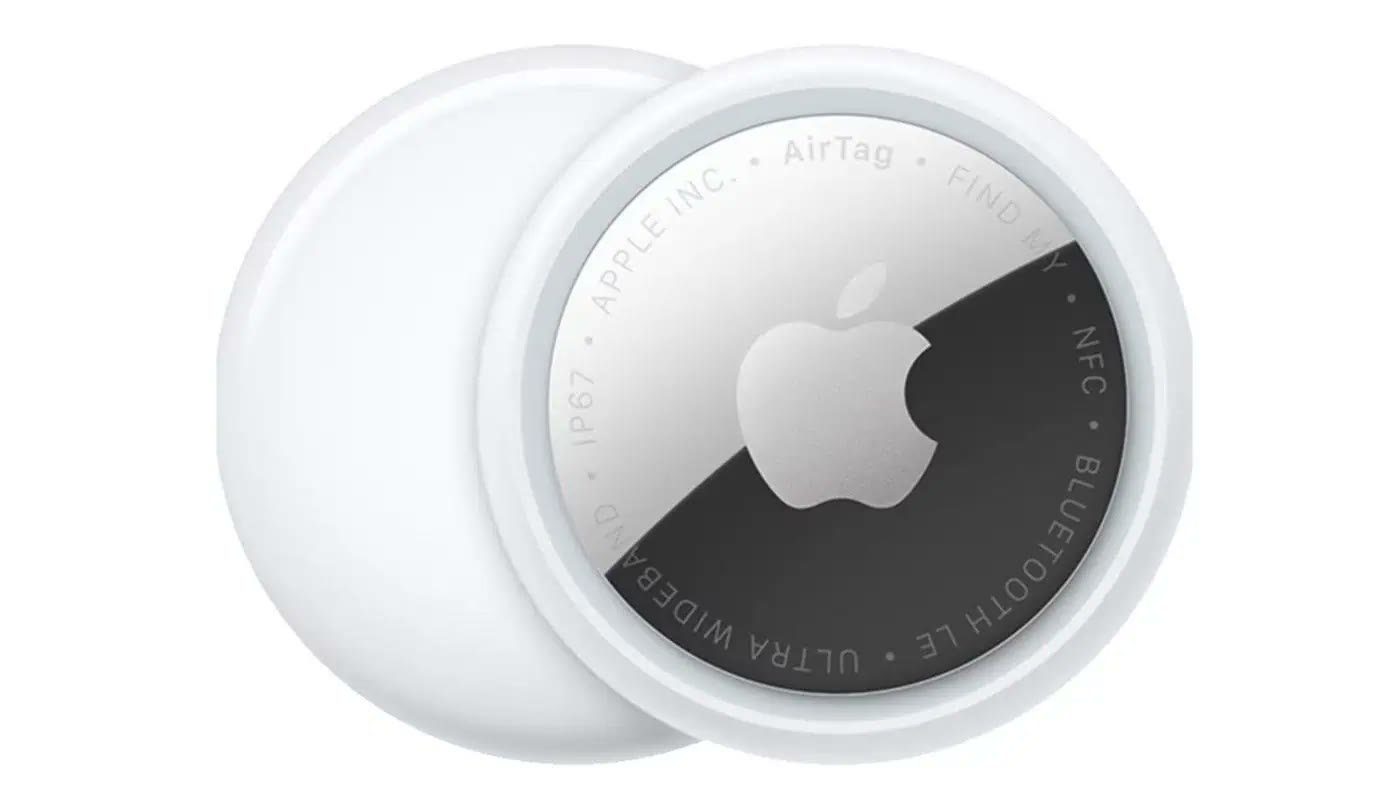
The AirTag is the only tracker here with zero subscription: it rides Apple’s Find My network — hundreds of millions of iPhones, iPads, and Macs anonymously relaying its location. The 2nd-gen model (current in 2026) adds a 50%-louder speaker, longer Precision Finding range, and location sharing with trusted contacts and 50+ airline partners — genuinely useful if a pet goes missing during air travel. Battery is a user-replaceable CR2032 lasting a year-plus. Pair it with a collar holder like the SANKALA waterproof silicone holder (fits all collar widths) since the AirTag has no collar mount of its own.
Be honest about what it isn’t: this is not real-time GPS. Location updates depend on nearby Apple devices, so in rural areas, backcountry, or anywhere iPhones are scarce, tracking goes stale. There’s no geofence or escape alert — you won’t get pinged the moment your dog leaves the campsite. It requires an iPhone, and Apple’s anti-stalking alerts can confuse the picture. But for urban and suburban travel with zero ongoing cost, it’s the cheapest peace of mind available.
Specs: Bluetooth + Ultra Wideband · Find My network (no subscription) · ~1 yr replaceable CR2032 · Precision Finding on iPhone · iOS only · collar holder sold separately.
Pros: no subscription, ever; tiny and light; year-plus battery; great in cities and airports; airline location sharing.
Cons: not real-time GPS; useless where iPhones are scarce; no escape alerts or geofence; iPhone required; needs a separate collar holder.
Verdict: The zero-cost backup — brilliant in cities, limited in the backcountry. Check the AirTag price on Amazon · Check the collar holder price.
4. Fi Mini GPS Tracker for Cats — Best for Cats (LTE)
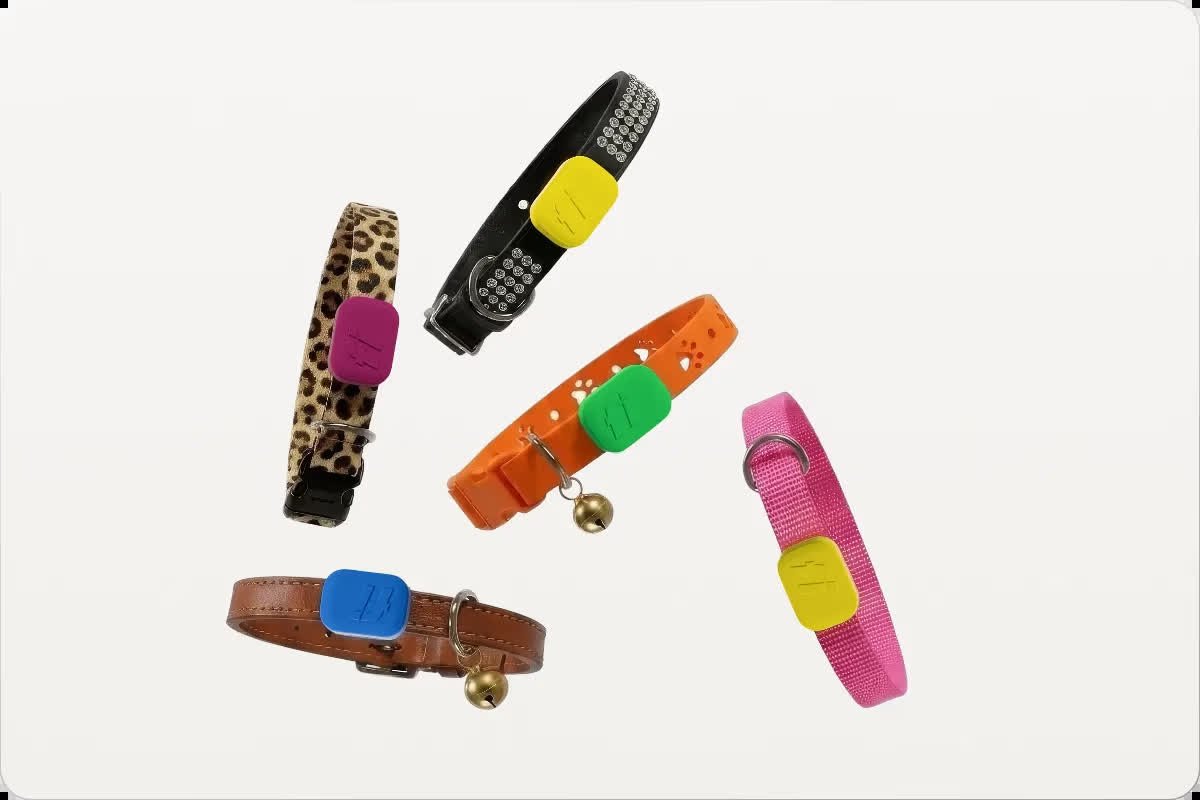
The Fi Mini brings real LTE-M GPS tracking to cats in a package 80% lighter than the full-size Fi — 1.5 x 1.0 x 0.5 inches, slipping onto collars up to 1.25 inches wide without replacing the collar. It offers escape alerts, virtual fences, step and health tracking, IP68 waterproofing, and USB-C charging, with a 6-month membership included. Real-world battery runs about two weeks of daily use (with an optional home base extending it further). For indoor-outdoor cats, it’s the most capable cat-specific tracker here.
The caveats: like the full-size Fi, it needs a paid membership after the included period (Fi plans start around $99/6 months) and it runs on Verizon LTE — US only, no Canada. Owners report occasional false geofence alarms (boundary-exit warnings while the cat naps on the couch) and GPS refresh delays. And it’s still a cellular device on a cat — some cats notice the weight at first, so introduce it gradually.
Specs: 1.5 x 1.0 x 0.5 inches · LTE-M GPS · fits collars up to 1.25 inches wide · IP68 waterproof · USB-C · ~2 weeks real-world battery · 6-month membership included · US only.
Pros: true LTE tracking sized for cats; escape alerts and virtual fences; light and low-profile; no collar replacement needed.
Cons: subscription required after included period; US-only coverage; occasional false geofence alarms; battery shorter than advertised in heavy use.
Verdict: The best real-GPS option for cats — if you’re in the US. Check the price on Amazon.
5. Tractive GPS Tracker for Cats — Budget Cat Pick
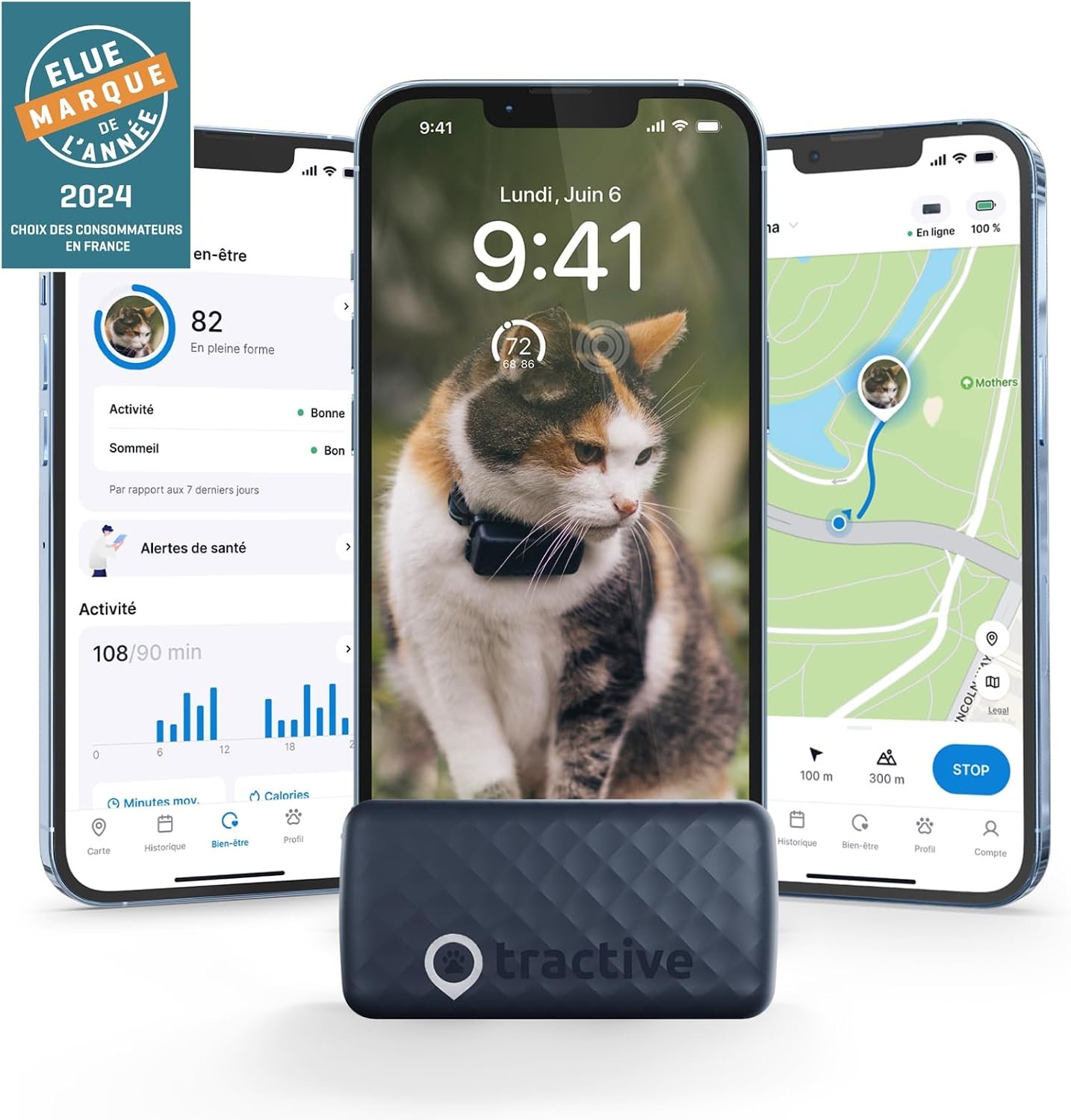
Tractive’s cat tracker brings the brand’s core strengths to felines: real-time GPS with territory heat-mapping (genuinely fascinating — you’ll learn exactly which gardens your cat patrols), escape alerts, activity and wellness monitoring, and a breakaway collar included in the box. At 1.1 x 0.6 x 2.1 inches and 35 grams it’s light for a cellular tracker, and the device cost is low.
The honest math: the subscription is the same Tractive plan (~$9/month annual), and the battery is the weak point — up to 5 days advertised, but owners commonly report 2–4 days with regular use, meaning near-weekly charging and a proprietary dock to keep track of. Some owners find it bulky for smaller cats, and live mode is what drains the battery fastest — exactly when you need it most. Still, for the price of the hardware, it’s the cheapest way into real GPS tracking for a cat, and unlike Fi it works internationally.
Specs: 1.1 x 0.6 x 2.1 inches, 35 g · GPS + LTE · breakaway collar included · territory heat maps · escape alerts · subscription required (~$9/mo annual).
Pros: cheapest real-GPS cat tracker; territory maps are excellent; breakaway collar included; international coverage.
Cons: 2–4 day real-world battery; subscription mandatory; bulky for small cats; proprietary charging dock.
Verdict: The budget cat GPS — great tracking, needy battery. Check the price on Amazon.
6. Petcube GPS Tracker for Dogs — Best Battery per Dollar
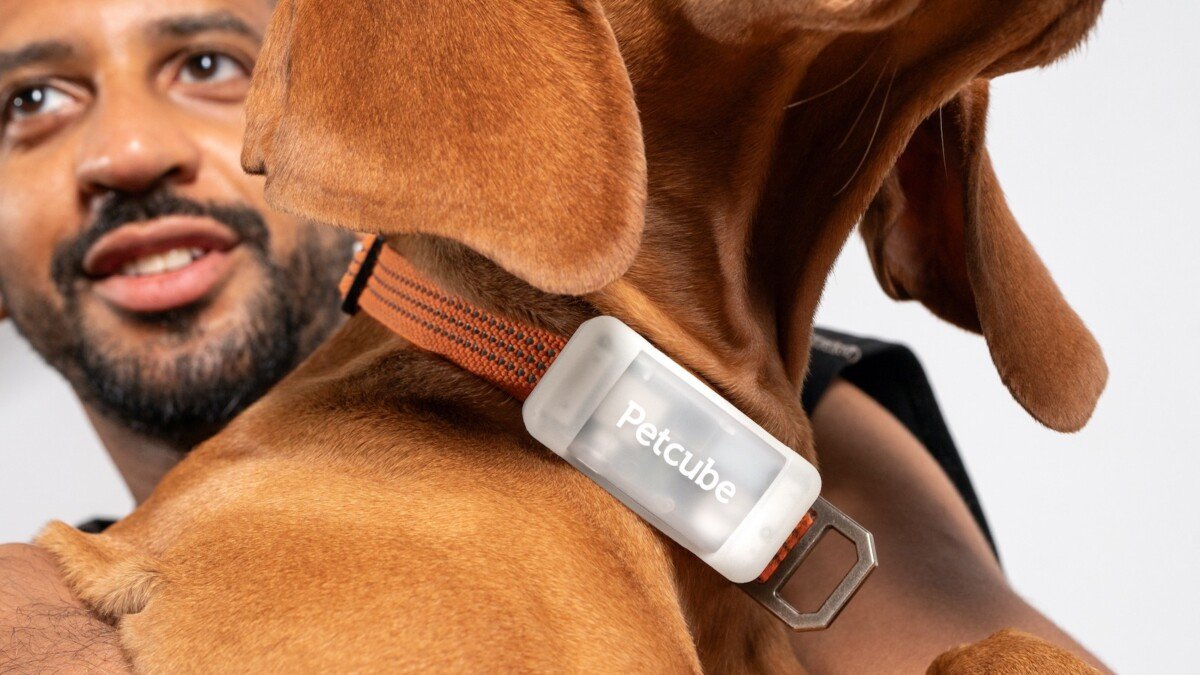
Petcube’s tracker is the dark horse: live GPS every 3–5 seconds with no range limit, escape alerts, activity/sleep/calorie tracking, and a glow-in-the-dark silicone sleeve that slides onto any collar — plus an LED light and buzzer for finding a dog at night, a genuinely useful travel feature. The standout is battery: up to 30 days in power-save mode on a single charge, with a ~1-hour recharge. The subscription starts at $5/month via the app — the lowest entry price here — with no annual contract.
The honest part: the subscription is still mandatory (the device is useless without it), and coverage is cellular LTE — rural dead zones freeze the map exactly when you need it. Owners report accuracy wobbles indoors (GPS drift showing the dog blocks away) and false escape alerts near thin walls; set generous geofence boundaries at first. At 2.3 x 0.9 x 0.7 inches and ~3 oz it’s chunky for small dogs, and the first GPS fix must happen outdoors — don’t try setup inside and assume it’s broken.
Specs: 2.3 x 0.9 x 0.7 inches, ~1.02 oz device · live GPS 3–5 sec updates · up to 30-day battery (power-save) · LED + buzzer · glow-in-dark sleeve · subscription from $5/mo (no annual contract).
Pros: excellent battery life; lowest subscription entry price; night-finding LED and buzzer; no annual contract.
Cons: subscription still mandatory; cellular dead zones freeze tracking; indoor GPS drift and false alerts; bulky for small dogs.
Verdict: The value play — great battery and the cheapest plan, with the usual cellular caveats. Check the price on Amazon.
How to Choose a Pet GPS Tracker for Travel
Start with the subscription question. Every true GPS tracker here except the AirTag needs a paid cellular plan — typically $5–$16/month depending on brand and term. Budget the year-one total (device + subscription), not just the device price. If you hate subscriptions, the AirTag is your only real option, with real limitations.
Match coverage to your travel map. This is the #1 travel differentiator: Tractive works in 175+ countries; Fi is US-only (no Canada, no Mexico). If your trips cross borders, that single fact decides between them.
Escape alerts beat live tracking for prevention. A tracker that pings you the instant your pet leaves the campsite (geofence/escape alert) prevents losses; live tracking finds them after. Prioritize reliable escape alerts if your pet is a door-dasher — and test the alert delay at home before the trip.
Battery life is measured in real use, not marketing. Manufacturers quote best-case numbers. Expect roughly: Fi — weeks to months; Tractive — days; Petcube — weeks (power-save); AirTag — a year. For multi-day trips without charging access, battery decides.
Size and weight matter more on cats and small dogs. A 3-oz tracker is nothing on a Lab and a burden on a 7-lb cat. Check the weight against your pet, and prefer collar-integrated (Fi) or ultralight (Fi Mini) designs for small animals.
Have a non-electronic backup. Every tracker here can fail — dead battery, dead zone, lost device. A GPS tracker complements a microchip and ID tags; it doesn’t replace them. For travel, that’s the rule: tracker for finding, tags and chip for identifying.
Bottom line: for US road-trippers, the Fi Series 3+ is the best all-around dog tracker; for international travel, Tractive is the only serious choice. Cat owners should pick Fi Mini (US) or Tractive Cat (budget/international). The AirTag is the no-subscription backup every iPhone owner should consider, and the Petcube is the best value for battery life per dollar.
Frequently Asked Questions
Do pet GPS trackers require a subscription?
Almost all of them — yes. Fi, Tractive, and Petcube all need an active cellular plan ($5–$16/month depending on brand and billing term) for any tracking to work; without it the hardware is useless. The Apple AirTag is the exception: it uses Apple’s free Find My network with no monthly fee, but it’s Bluetooth-based, not true GPS.
Which pet GPS tracker is best for international travel?
Tractive — it’s the only pick here with multi-network LTE coverage in 175+ countries. Fi trackers are US-only and stop working across the border. If your travels include Canada, Mexico, or Europe, Tractive is the answer.
Will a GPS tracker work in rural areas or the backcountry?
Only as well as the underlying network. Cellular trackers (Fi, Tractive, Petcube) need cell signal — in a dead zone, the map freezes. The AirTag needs nearby Apple devices, so it’s even weaker off-grid. None of these replace a leash in true wilderness; they’re strongest in populated areas, campgrounds, and towns.
How accurate are pet GPS trackers?
Under open sky, consumer GPS is typically accurate to 3–5 meters — enough to find which yard your pet is in, not which bush. Expect drift indoors, under dense tree cover, and near tall buildings. Live-tracking modes (2–5 second updates) are meaningfully better than standard modes when you’re actively searching.
AirTag vs. GPS tracker for a dog — which is better?
They solve different problems. A GPS tracker (Fi, Tractive, Petcube) gives real-time location anywhere with cell coverage plus escape alerts — better for actual recovery. An AirTag costs nothing monthly and works brilliantly in cities and airports, but can’t alert you when your pet leaves and goes dark without nearby iPhones. Many travelers use both: GPS on the collar, AirTag as backup.
Can I use a GPS tracker on a cat?
Yes — the Fi Mini and Tractive Cat Tracker are designed for cats (lightweight, with breakaway collars). Make sure any cat tracker is on a breakaway collar for safety, introduce it gradually, and expect more frequent charging than the marketing suggests.
