

Here’s the travel scenario pea-husk litter was made for: you’re loading the RV for a two-week trip and doing the litter math. A month of clay litter for two cats weighs as much as a checked suitcase. A month of pea-husk pellets weighs less than a laptop bag, pours without a dust cloud in a 200-square-foot living space, and the used clumps can go down the toilet at a full-hookup site instead of into a trash bag baking in the sun. That’s the promise, anyway.
The honest note most roundups skip: “pea husk” and “tofu” litter are the same family wearing different labels. True pea-husk litters (Catit Go Natural, Michu) are pressed from pea processing byproducts; “tofu” litters (pidan, Tuft & Paw) are pressed from soybean and pea pulp fiber with starch binders. They behave almost identically: light pellets, fast clumping, low dust, flushable in small amounts — and they share the same documented weaknesses: mold in humid conditions, and the occasional pantry-moth or grain-mite report in stored bags. This guide compares six real options across both labels, with the complaints owners actually report.
Pet Travel Items is reader-supported. When you buy through links on this page, we may earn a commission at no extra cost to you. Our picks are driven by documented owner feedback, never by commission rates.
Best Pea Husk Cat Litters at a Glance
| # | Product | Key spec | Best For | |
|---|---|---|---|---|
| 1 | Catit Go Natural Multi-Cat Pea Husk + Bentonite (14.1 lb) | Pea husk + 30% bentonite · vanilla | Best hybrid pea-husk | Check Price |
| 2 | pidan Tofu Cat Litter (5.3 lb) | Soy + pea pulp fiber · clumping | Best classic tofu | Check Price |
| 3 | pidan Mix 70:30 Tofu + Bentonite (4 × 5.3 lb) | Pea dregs + bentonite · clumping | Strongest clumping | Check Price |
| 4 | Michu Tofu Cat Litter, Peach (2 × 5.5 lb) | 100% Canadian snow pea · clumping | Best 100% pea formula | Check Price |
| 5 | Michu Tofu Cat Litter, Original + Peach (2-pack) | 100% Canadian snow pea · clumping | Best scent variety | Check Price |
| 6 | Tuft & Paw Really Great Cat Litter (2 × 9.25 lb) | Soybean tofu + charcoal · clumping | Best premium low-tracking | Check Price |
Prices shift constantly — check before you buy. Sizes are manufacturer figures.
1. Catit Go Natural Multi-Cat Pea Husk + Bentonite — Best Hybrid Pea-Husk
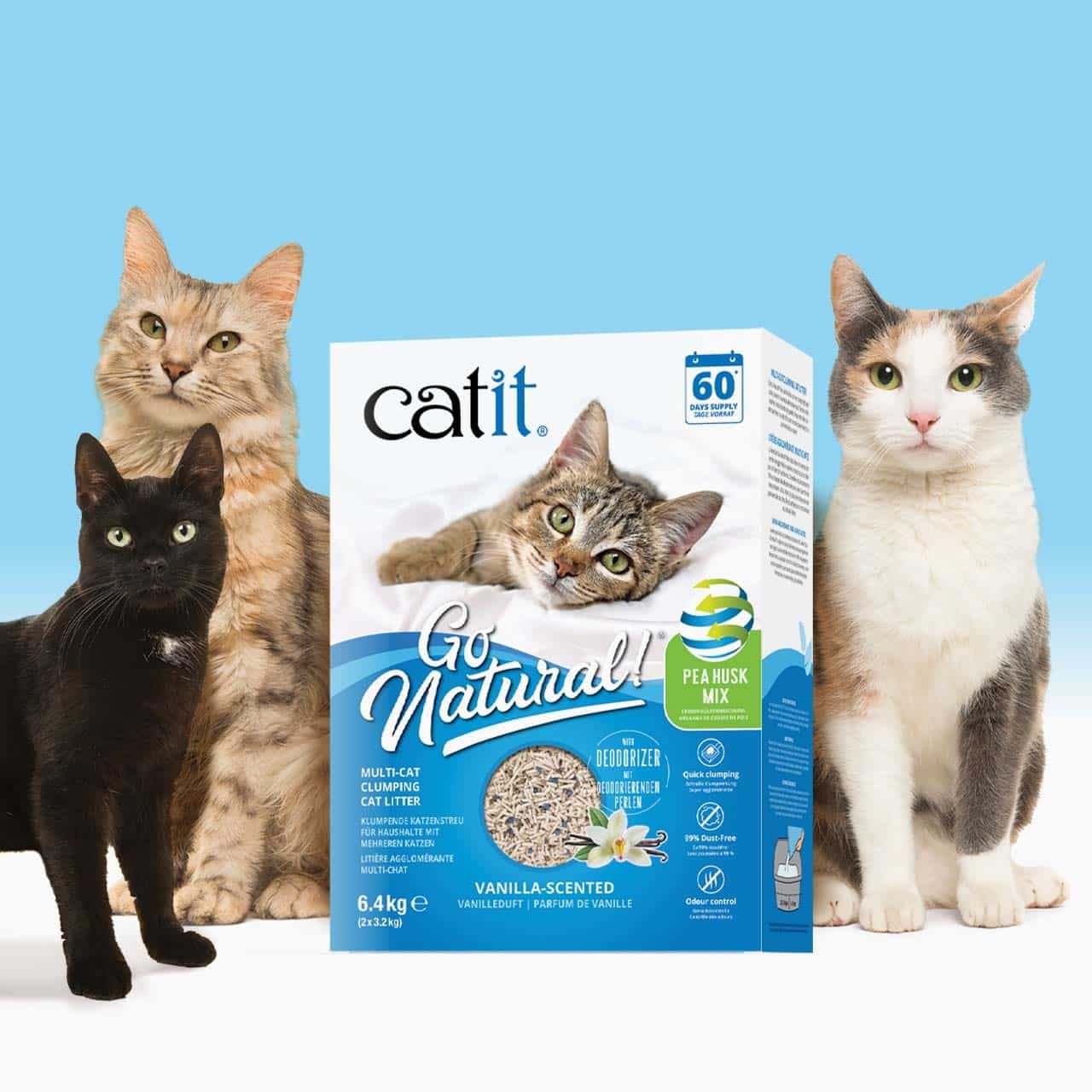
Catit’s Go Natural line is one of the few litters that puts “pea husk” right on the label: recycled pea husks blended with about 30% bentonite clay for a hybrid that clumps like clay and behaves like a plant litter. The pellets are small (around 1.5 mm), absorb up to 3x their weight per the brand, and come with deodorizing pearls in a light vanilla scent. For households switching from clay, this is the gentlest transition in the category — familiar clumping, fraction of the dust.
The honest part: the bentonite is doing real work here, which means it’s not the purist’s plant litter — it’s heavier than pure pea-husk formulas and not quite as eco-clean a story. Vanilla scent is light but it’s still scent, and scent-sensitive cats may object. As with all pellet litters, the small round pellets can roll on hard floors and turn into ankle-biters underfoot.
Specs: 14.1 lb · pea husk + 30% bentonite · 1.5mm pellets · vanilla scent · flushable in small amounts · 99% dust-free per brand.
Pros: easiest transition from clay; genuinely strong clumping; low dust; from an established pet brand.
Cons: bentonite content adds weight and dilutes the eco story; vanilla scent isn’t for every cat; pellets roll on hard floors.
Verdict: The best “pea husk”-labeled pick for clay converts — familiar performance, far less dust. Check the price on Amazon.
2. pidan Tofu Cat Litter (5.3 lb) — Best Classic Tofu
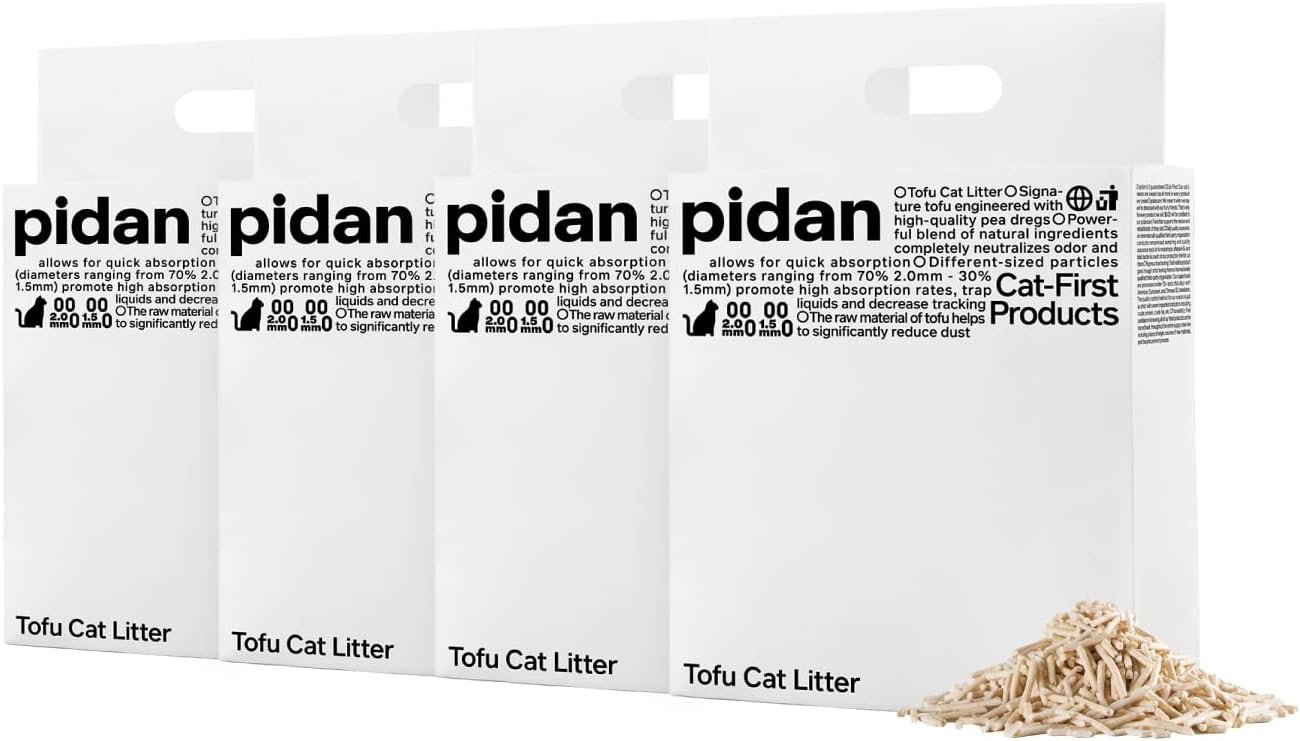
pidan is the brand that made tofu litter a global category, and this is the original formula: soy and pea pulp fiber with a starch blend, pressed into pellets that clump in seconds and dissolve in water. It’s the reference point everything else is compared against — widely reviewed, consistently rated, and genuinely near-dust-free in the pour. The 5.3 lb bag is the low-commitment trial size.
Owner complaints are specific and worth knowing: some find the pellets stickier or gummier than competing tofu litters, with clumps that can smear rather than lift cleanly. A few multi-cat owners note it doesn’t cover solid waste as decisively as they’d like. And the category-wide caveats apply in full: in humid climates, plant-based pellets can develop mold if the box sits in a damp bathroom — keep the box in a ventilated spot and don’t overfill.
Specs: 5.3 lb (6L) · soy + pea pulp fiber, starch blend · clumping · flushable in small amounts · “really dust-free” per brand.
Pros: the category reference standard; fast clumping; huge owner review base; compact trial bag.
Cons: can be gummier/stickier than rivals; weaker solid-waste coverage per some owners; mold risk in damp, unventilated spots.
Verdict: The safe first tofu litter — buy the small bag and see if the pellet life suits your cats. Check the price on Amazon.
3. pidan Mix 70:30 Tofu + Bentonite (4 × 5.3 lb) — Strongest Clumping
The Mix formula is pidan’s answer to the one thing pure tofu litters get criticized for: clump strength. Seventy percent pea-dreg tofu pellets plus 30% bentonite clay produces noticeably firmer, more clay-like clumps that survive scooping without crumbling. The 4-bag bundle is the committed-user pack — roughly 21 lbs total, which sounds like a lot until you remember how light this stuff is.
The trade-offs: you reintroduce clay dust (less than pure clay, more than pure tofu), and the listing notes it’s not suitable for automatic litter boxes. Price per pound runs higher than the classic formula. But for owners who tried pure tofu and bounced off the softer clumps, this is the fix — it’s the best clumper in the plant-pellet family.
Specs: 4 × 5.3 lb · 70% tofu (pea dregs, starch, guar gum) + 30% bentonite · clumping · flushable in small amounts.
Pros: firmest clumps of any plant-based pick; great for owners who found pure tofu too soft; bundle value.
Cons: bentonite reintroduces some dust; not for automatic boxes; pricier than classic tofu.
Verdict: For clump skeptics — the plant litter that scoops most like clay. Check the price on Amazon.
4. Michu Tofu Cat Litter, Peach (2 × 5.5 lb) — Best 100% Pea Formula
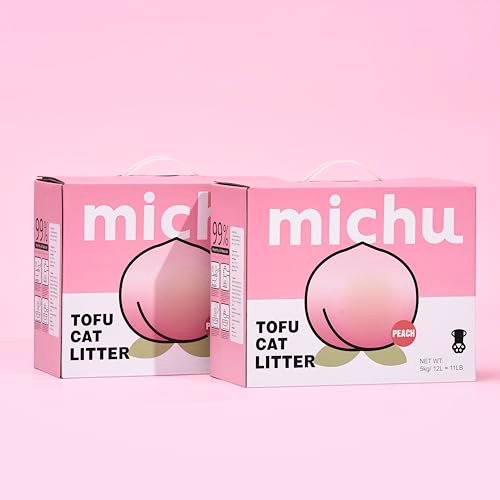
Michu’s differentiator is purity: 100% Canadian snow pea (human-grade, per the brand) with natural plant fiber and binders — no clay, no bentonite. The Peach scent is faint and fruity rather than perfumey, and owners with dust allergies single this brand out: multiple reviewers describe it as the only litter that doesn’t trigger their asthma. Clumping is fast and the pellets are petite and paw-friendly.
Complaints center on economics and cats, not performance: multi-cat owners report going through it quickly — one noted a box a week for three cats — which makes the per-month cost real. And as with every pellet litter, some cats simply reject the texture; one reviewer loved everything about it while her cats staged a protest and demanded their old litter back. Transition slowly.
Specs: 2 × 5.5 lb · 100% Canadian snow pea, plant fiber, natural binders · clumping · peach scent · flushable · no clay/bentonite.
Pros: purest pea formula here; excellent for dust-allergy households; fast clumping, gentle pellets.
Cons: consumption (and cost) adds up in multi-cat homes; some cats reject pellet texture outright.
Verdict: The pea purist’s pick — best for allergy-sensitive homes that go through litter steadily. Check the price on Amazon.
5. Michu Tofu Cat Litter, Original + Peach (2-Pack) — Best Scent Variety
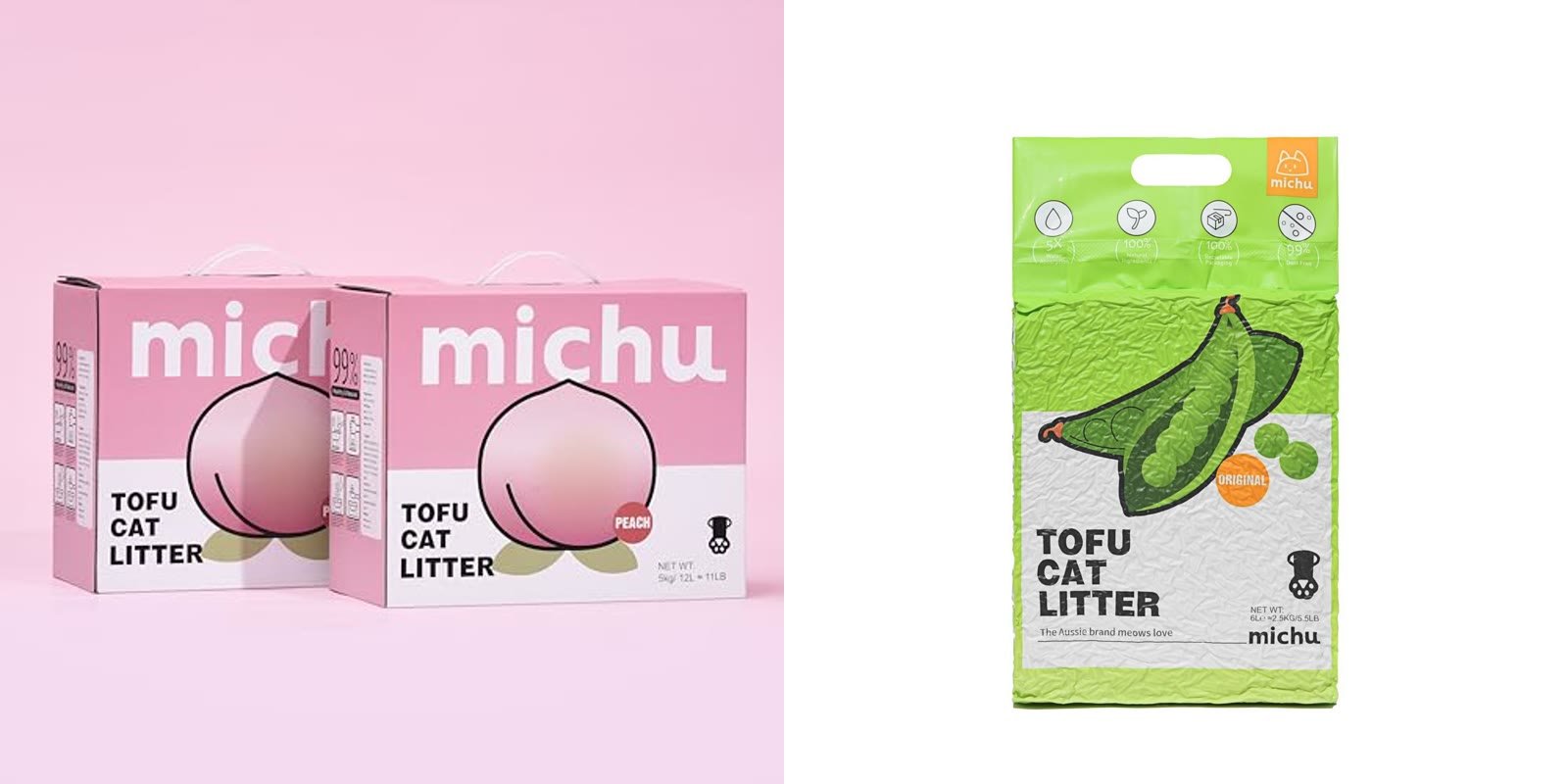
Same 100% Canadian snow pea formula as above, but the variety 2-pack pairs the Original (unscented-ish) with Peach — the practical way to run a two-box home or to test which scent profile your cats prefer without buying two full cases. Everything about the formula is identical: fast clumping, flushable, biodegradable, no clay.
Why a separate pick? Because scent preference in cats is genuinely individual — some cats ignore fragrance entirely, others will boycott a box over it. The combo pack lets you A/B test in your own home, which beats any reviewer’s opinion. Same caveats as the Peach twin: multi-cat consumption is brisk, and pellet texture isn’t universal.
Specs: 2-pack (Original + Peach) · 100% Canadian snow pea · clumping · flushable · no clay/bentonite.
Pros: test both scent profiles in one purchase; same pure-pea formula; good for two-box homes.
Cons: same brisk consumption in multi-cat homes; pellet texture still a gamble with picky cats.
Verdict: The smart way to buy Michu — let your cats vote on scent. Check the price on Amazon.
6. Tuft & Paw Really Great Cat Litter (2 × 9.25 lb) — Best Premium Low-Tracking
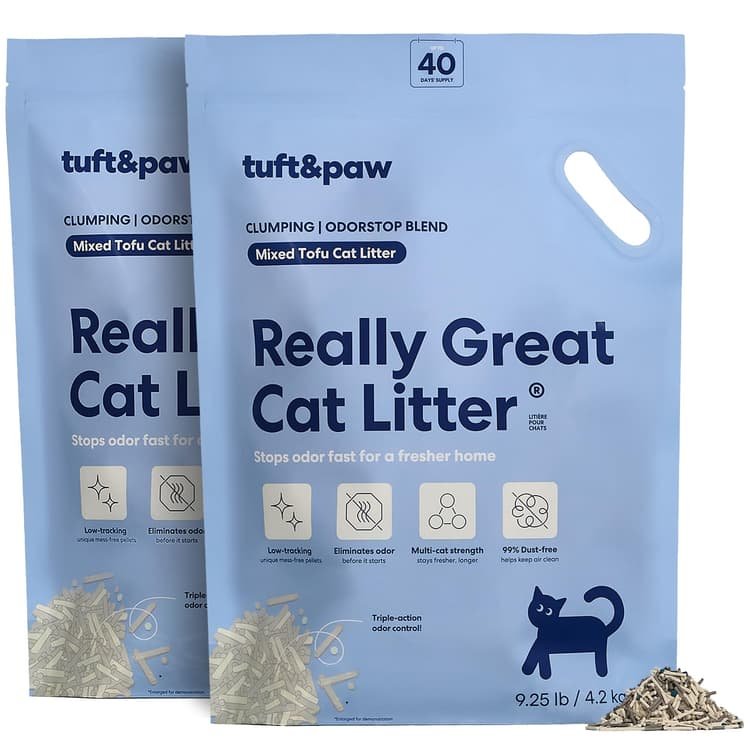
Tuft & Paw’s Really Great is the premium end of the tofu family: soybean-based pellets with activated charcoal for odor control, screened three times for dust, and shaped specifically to resist tracking. It’s the largest-format pick here — two 9.25 lb bags — and the brand’s whole identity is low-mess: the pellet geometry is designed not to lodge between paw pads, which is the main way litter migrates through a house (or an RV).
The honest framing: it’s soybean-forward rather than pea-husk, so it’s the tofu reference more than a pea-husk native — included because shoppers cross-shop the two constantly. It’s also the priciest per pound here (around the high end of the category), and it works best with a wide-slatted scoop; standard scoops can struggle to sift the pellets efficiently. Some cats need a longer transition to the pellet texture.
Specs: 2 × 9.25 lb · soybean tofu + activated charcoal · clumping · unscented · flushable in small amounts · screened 3x for dust.
Pros: best anti-tracking pellet design; charcoal odor control without fragrance; premium build quality.
Cons: highest cost per pound; needs a wide-slatted scoop; soybean-based, not pea-husk; longer cat transition for some.
Verdict: The low-mess luxury pick — worth it if tracking is your #1 complaint. Check the price on Amazon.
How to Choose a Pea Husk Litter
Know which “pea” you’re buying. True pea-husk litters (Catit Go Natural, Michu) are pressed from pea processing byproducts. Tofu litters (pidan, Tuft & Paw) are soybean/pea-fiber based. Performance overlaps heavily — don’t pay a premium for the word “pea” unless the ingredient list backs it up.
Decide how much clay help you want. Pure plant pellets (Michu, pidan classic) are lightest and dust-free-est but clump softer. Hybrids with bentonite (Catit Go Natural, pidan Mix) clump like clay at the cost of some dust and weight. Switching from clay? Start hybrid. Chasing zero dust? Go pure.
Plan for humidity. The documented weakness of plant-based pellets is mold in warm, damp conditions — an RV bathroom in summer is the danger zone. Keep the box ventilated, don’t overfill, and store unopened bags sealed and dry. If your climate is humid, smaller bags you use up fast beat bulk.
Store it like food, because it basically is. Plant-based litters have documented pantry-moth and grain-mite reports in stored bags — the same pests that find flour and dry pet food. Buy quantities you’ll use within a month or two, keep bags sealed, and if you stock up, the freezer kills hitchhiking eggs.
Flush carefully or not at all. Most of these litters are technically flushable in small amounts — the pellets dissolve in water. But “flushable” depends on your plumbing, your septic vs. sewer situation, and local rules (some areas prohibit flushing pet waste). On the road, when in doubt, bag it and trash it.
Transition like you mean it. Pellet texture rejects more cats than any other litter format. Mix 25/75 with the old litter for several days, then 50/50, then full — and keep a fallback box during the switch. A cat that won’t use the box is a bigger problem than any litter choice.
Bottom line: Catit Go Natural is the best pea-husk-labeled pick for most homes — real pea husks with clay-assisted clumping that converts skeptics. pidan’s classic tofu is the proven, affordable entry point, and the pidan Mix fixes clumping for doubters. Michu is the purity-and-allergy choice, and Tuft & Paw is the premium low-tracking option if the budget allows.
Frequently Asked Questions
What’s the difference between pea husk litter and tofu litter?
Mostly labeling. Pea-husk litters are pressed from pea processing byproducts (husks, fibers); tofu litters are pressed from soybean and pea pulp with starch binders. Both form lightweight plant pellets that clump, stay low-dust, and biodegrade. True pea-husk formulas (Michu, Catit Go Natural) lean on pea ingredients; tofu formulas (pidan, Tuft & Paw) lean on soy. In the box, they behave nearly identically.
Is pea husk cat litter flushable?
In small amounts, usually yes — the pellets are designed to break down in water, and brands from pidan to Tuft & Paw claim flushability. But never flush a full box change at once, check whether your plumbing and local regulations allow pet waste flushing (some prohibit it), and be extra cautious with septic systems and RV black tanks. Bag-and-trash is always the safe default.
Can pea husk litter get moldy?
Yes — this is the category’s most documented weakness. Plant-based pellets in warm, humid, poorly ventilated spots can develop mold. Mitigate it: keep the litter box in a ventilated area, don’t overfill, scoop daily, store unopened bags sealed and dry, and buy smaller bags in humid climates or seasons.
Will it attract bugs?
There are documented owner reports of pantry moths and grain mites in stored plant-based litters — the same stored-product pests that target flour, grains, and dry pet food. It’s a storage issue, not a sign of a bad product: buy what you’ll use within a month or two, keep bags sealed, and freeze bulk bags for a few days if you’re stocking up.
Will my cat actually use pellets?
Most cats transition fine with a gradual mix-in over 1–2 weeks — but pellet texture has the highest rejection rate of any litter format. Keep the old litter available in a second box during the switch, and don’t force it: a cat avoiding the box will find somewhere worse. Kittens and young cats typically adapt fastest.
Is pea husk litter good for multi-cat homes?
Yes, with realistic budgeting. The pellets handle multi-cat traffic well — fast clumping, good odor control, low dust in shared airspace. But consumption scales with headcount: several owners report going through plant-based litters noticeably faster than clay in 3+ cat homes, so compare cost per month, not per bag.
About our process: specs come from manufacturer and retailer listings; complaints are summarized from verified owner reviews. Prices and star ratings change constantly and are intentionally not stated as facts — check the current listing before you buy.
