

Here’s the travel scenario that makes cat owners religious about harnesses: you’re transferring your cat from carrier to car at a rest stop, something spooks her, and she does the move — head down, shoulders back, reverse out of the harness in two seconds flat. A loose or badly designed harness doesn’t just fail; it fails at the exact moment you need it most.
The honest note most roundups skip: no cat harness is escape-proof. The Kitty Holster’s own manufacturer says it outright, and every experienced adventure-cat owner agrees — a determined cat with a loose fit and a backward pull can defeat any design. What “escape proof” really means is a snug, well-fitted harness that makes escape very difficult, combined with handling that never gives the cat leverage against the leash. This guide compares six harnesses genuinely designed for escape resistance, with the complaints owners actually report: straps that loosen, neck gaps, Velcro that terrifies cats, and cats that escaped anyway.
Pet Travel Items is reader-supported. When you buy through links on this page, we may earn a commission at no extra cost to you. Our picks are driven by documented owner feedback, never by commission rates.
Best Escape Proof Cat Harnesses at a Glance
| # | Product | Key spec | Best For | |
|---|---|---|---|---|
| 1 | rabbitgoo Cat Harness (XS) | 4 straps · dual buckles | Best overall budget | Check Price |
| 2 | Voyager Step-in Air Cat Harness (XXXS) | Step-in · Velcro + buckle | Easiest on/off | Check Price |
| 3 | Kitty Holster (M/L) | Wide Velcro vest · cotton | Best for true escape artists | Check Price |
| 4 | RC Pets Adventure Kitty (S) | Air mesh · neck buckle | Best premium pick | Check Price |
| 5 | OutdoorBengal Houdini (M) | Passing-ring neck · ultralight | Best lightweight adventure | Check Price |
| 6 | Supet Cat Harness (M) | 5 buckles · reflective | Best cheap backup | Check the price on Amazon |
Prices shift constantly — check before you buy. Sizes are manufacturer figures; measure your cat, don’t guess.
1. rabbitgoo Cat Harness (XS) — Best Overall Budget
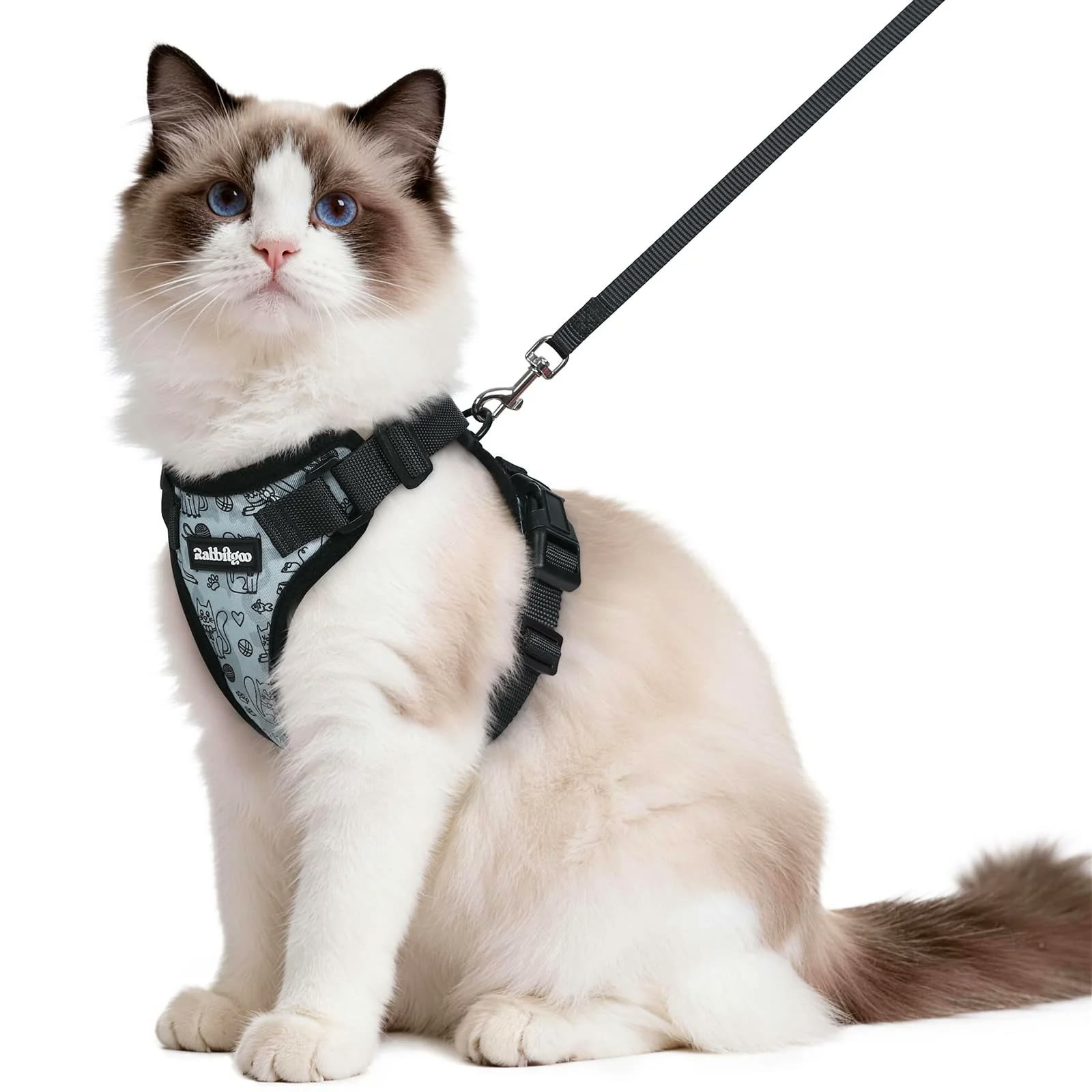
rabbitgoo’s cat harness is the best-selling escape-resistant design for a reason: four adjustment straps with two quick-release buckles let you dial in a genuinely snug fit, the vest style spreads pressure across chest and shoulders instead of the throat, and breathable air mesh keeps it light (around 100g). Reflective strips, a sturdy back D-ring, and a matching leash in the box round out a package that costs roughly what two coffees cost. The XS fits necks 8.5–11 inches and chests 13.5–16 inches.
The honest part, documented by an adventure-cat reviewer (chumkascorner.com): the straps can loosen on their own with wear, and her cat escaped once because of it — her fix is re-tightening before every walk, which is good practice for any harness. Also note the neck section slips over the head with no neck clip; one owner review notes head-shy cats hate this and the fixed neck loop is the easiest part to slip. Fit it snug — one finger under the straps — and it’s secure; fit it loose and it isn’t.
Specs: XS fits neck 8.5–11 inches, chest 13.5–16 inches · 4 adjustment straps · 2 quick-release buckles · breathable air mesh vest · reflective strips · leash included.
Pros: excellent fit adjustability for the price; light and breathable; leash included; huge owner base.
Cons: straps loosen over time — re-tighten before each walk; overhead neck design, no neck clip; determined cats can still back out if loose.
Verdict: The default pick — cheap, adjustable, and secure when fitted properly. Check the price on Amazon.
2. Voyager Step-in Air Cat Harness (XXXS) — Easiest On/Off
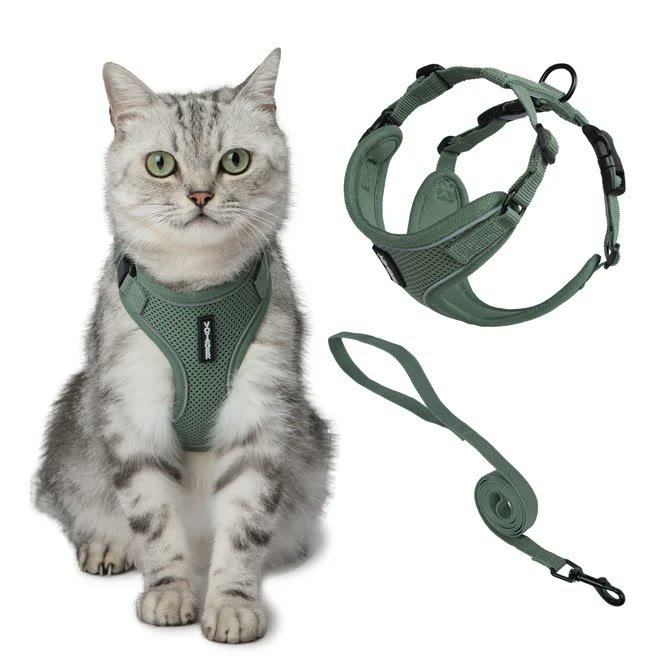
The Voyager is the harness for cats (and owners) who dread the wrestling match: the cat steps in with its front legs, and hook-and-loop plus a buckle close it up — nothing goes over the head. The air mesh is soft and genuinely all-weather, double D-rings give a secure leash point, and reflective bands add visibility. Sizes run from XXXS up, and the XXXS harness-and-leash set is the right starting point for average cats.
The honest part: the step-in convenience is also the security trade-off. A Chewy reviewer reports their cat “easily escaped” because the neck area ran too loose, and another notes a cat can back out with leash tension if you’re not paying attention. Velcro closures also collect fur and weaken over time — plan on replacing it sooner than a buckle-only design. And per one roundup, it’s not recommended for kittens (sizing starts too big). For calm cats it’s lovely; for committed Houdinis, look at picks 3 and 5.
Specs: step-in design (no overhead) · hook-and-loop + buckle closure · double D-rings · breathable air mesh · reflective bands · sizes XXXS and up · leash set available.
Pros: easiest on/off here — great for head-shy cats; soft and comfortable; secure-feeling double closure; affordable.
Cons: neck can gap and allow escapes; Velcro weakens with fur and time; not for kittens; less secure than buckle-vest designs for determined cats.
Verdict: The convenience pick — ideal for cooperative cats, not for escape artists. Check the price on Amazon.
3. Kitty Holster (M/L) — Best for True Escape Artists
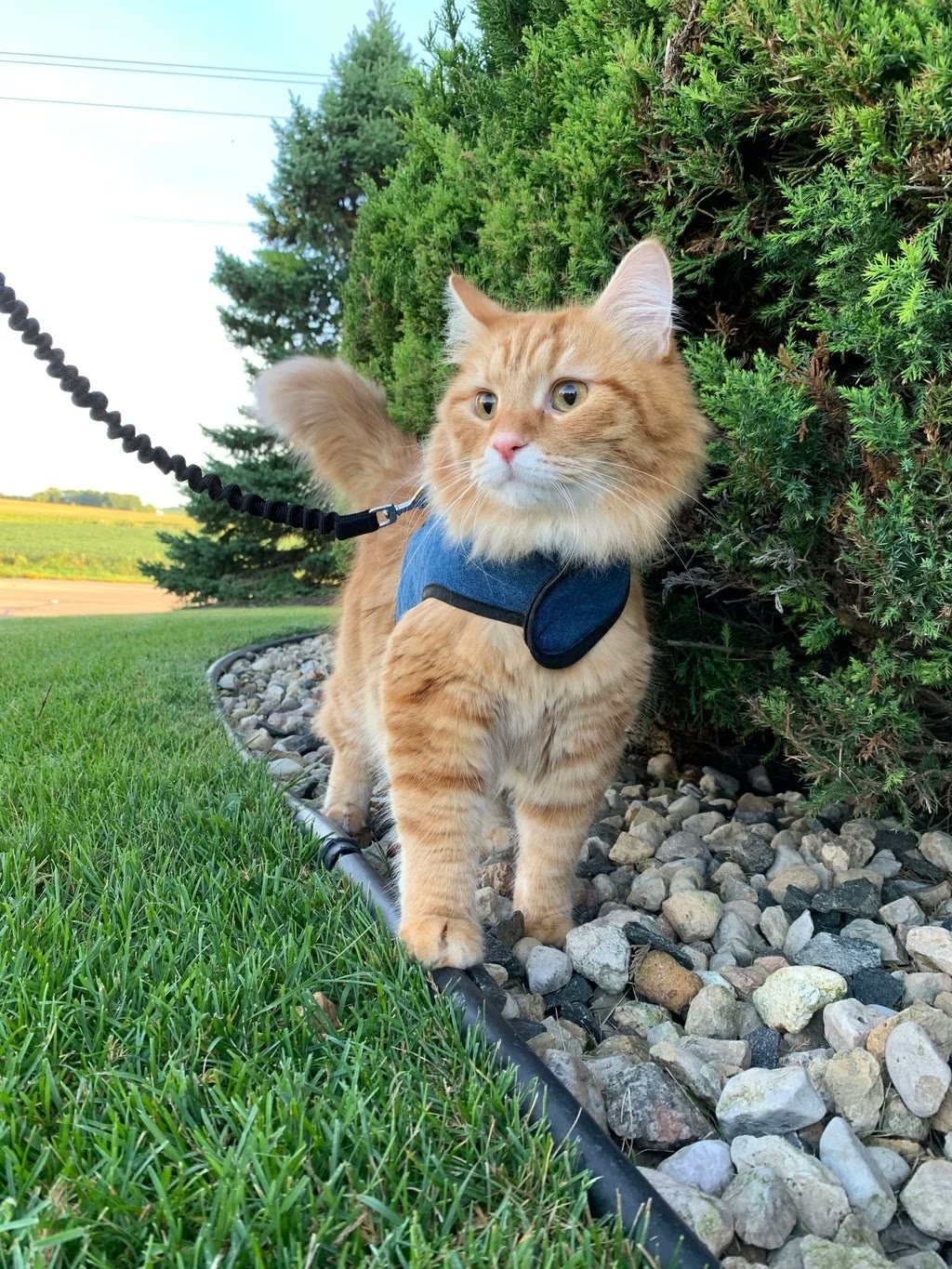
When owners say “my cat escapes everything,” the Kitty Holster is the answer that comes up most. It’s a wide cotton vest — not straps — that wraps the torso, closing with broad hook-and-loop panels at the neck and chest. No plastic buckles to break, nothing to slip over the head, and the wide coverage means there’s no single strap for a cat to back out of. It’s made in the USA, vet-recommended, and includes a leash-training pamphlet. Sizes run XS–XL; M/L fits necks 10–13 inches and chests 16–20 inches.
The honest part: that Velcro is the whole personality of this harness, for better and worse. Chewy reviewers report the hook-and-loop is so strong it’s hard to undo, the tall neck piece can force small cats to look up, and long-haired cats get fur pulled. Multiple owners also note the material feels thin for the price. And fitting between sizes is common — the brand’s own guidance says snug is everything. Introduce it gradually; the Velcro rip sound alone sends some cats under the bed.
Specs: wide cotton vest (polyester mesh version also available) · broad hook-and-loop closures, no buckles · metal D-ring · M/L fits neck 10–13 inches, chest 16–20 inches · made in USA · training pamphlet included.
Pros: the hardest design here to back out of; no buckles to fail; wide pressure distribution; nothing over the head.
Cons: loud, strong Velcro upsets some cats; neck runs tall on small cats; pulls long fur; thin-feeling for the price.
Verdict: The escape-artist specialist — maximum security, with Velcro you must introduce patiently. Check the price on Amazon.
4. RC Pets Adventure Kitty (S) — Best Premium Pick
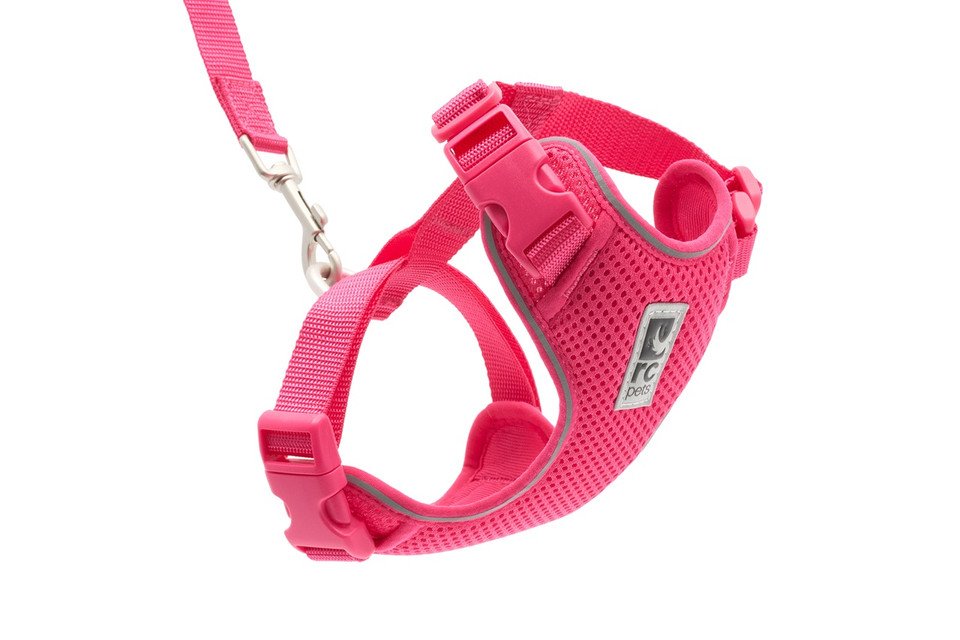
RC Pets is a proper pet-gear brand (not a white-label Amazon seller), and the Adventure Kitty is its cat-specific design: breathable air mesh vest, adjustable neck and waist straps, strong side-release buckles, reflective binding, and a nickel-plated D-ring with a matching 6-foot leash. The current version includes a neck buckle so it doesn’t have to go over the head. It’s the most “finished” feeling harness here, and a cats.com review puts pricing around $38–42 depending on size.
The honest part is documented in unusual detail: a Chewy reviewer found the webbing thin and scratchy and the mesh chest piece “stiff, hard, and almost crunchy” compared to RC Pets’ own Moto line — premium price, budget feel. Cats.com’s negative reviews add that some versions lack the neck buckle (check which version you’re buying), the neck can run loose while the chest runs tight, there’s a scratchy interior tag, and sizing runs small. It’s a good design with inconsistent execution — buy from a seller with easy returns and inspect it on arrival.
Specs: S fits ~11–15 inch chest (measure carefully — runs small) · air mesh vest · adjustable neck + waist straps · side-release buckles · reflective binding · nickel D-ring · 6-ft leash included.
Pros: real brand with real quality control (mostly); cat-specific shaping; neck buckle on current version; comfortable when it fits.
Cons: quality inconsistent — some units feel cheap for the price; version lottery on the neck buckle; runs small; scratchy interior tag.
Verdict: The premium pick with an asterisk — excellent when you get a good unit; verify the version. Check the price on Amazon.
5. OutdoorBengal Houdini (M) — Best Lightweight Adventure
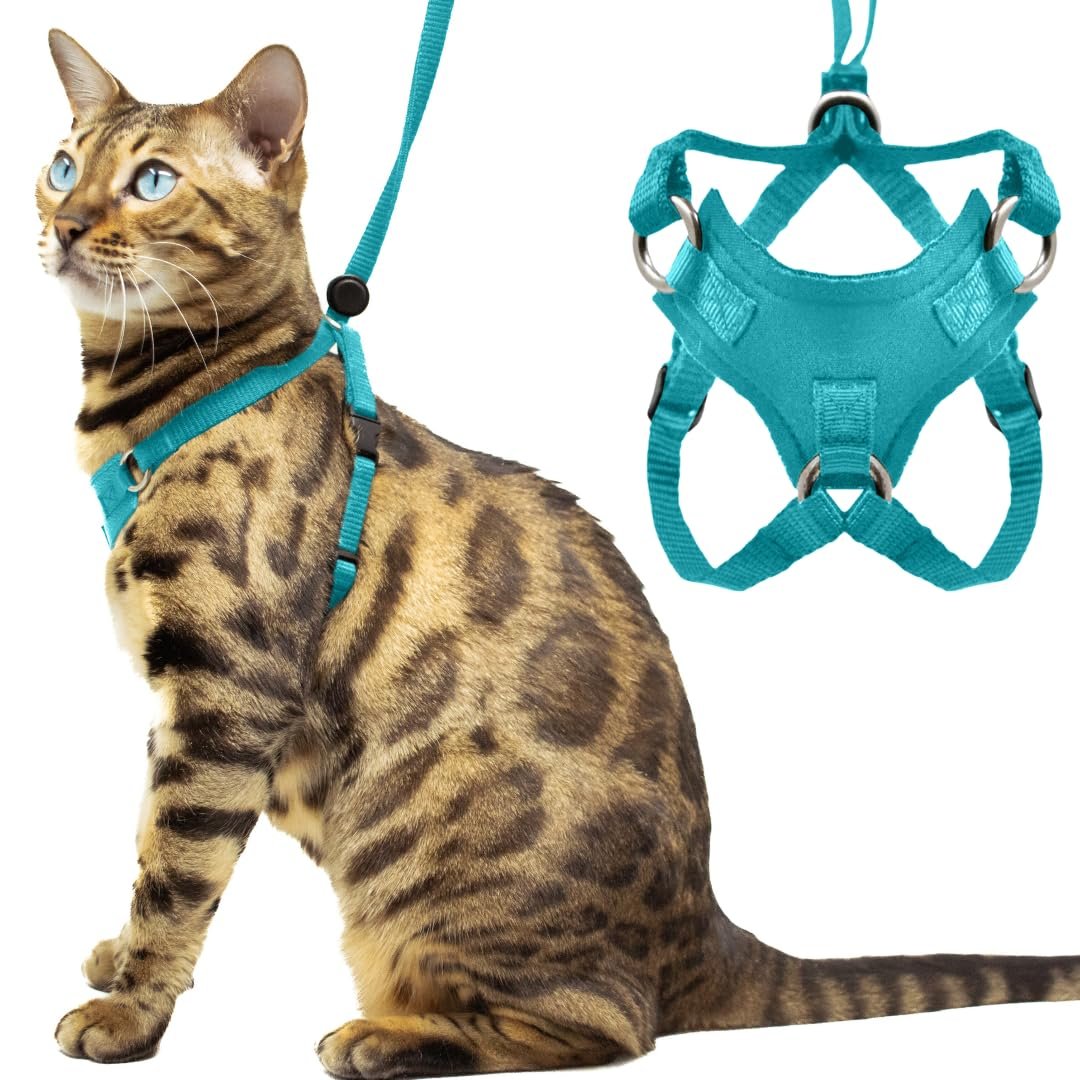
Designed by adventure-cat owner Albert of @outdoorbengal and tested on real trail cats, the Houdini takes a different approach to escape resistance: a passing ring at the neck tightens restraint when the cat pulls forward — the feline equivalent of a martingale — while the padded chest and adjustable straps keep it comfortable. It’s strikingly light (under 2 oz), made from parachute-grade scratch-resistant fabric, and comes with a leash and training guide. The M fits medium cats (12–20 inch girth); an XL covers large cats up to 27 inches.
The honest part: it’s a young product with a thinner review base than the leaders, and owner reports are mixed on the details — one reviewer had to cut and re-sew a twisted strap to get the pictured fit, another found the many size options confusing, and one owner of a 30-lb cat reported the straps loosened and the cat escaped. The minimalist look also divides opinion (“not the prettiest”). The passing-ring mechanism is clever, but like all escape resistance, it depends entirely on correct adjustment.
Specs: passing-ring neck restraint · padded chest · adjustable straps · parachute-grade fabric · ~1.8 oz · sizes Kitten–XL (girth 7–27 inches) · leash + training guide included.
Pros: genuinely innovative escape mechanism; ultralight — cats forget it’s on; adventure-tested design; good size range including XL.
Cons: thin review history; fiddly strap layout for some owners; straps can loosen; minimalist look isn’t for everyone.
Verdict: The adventurer’s pick — clever design, light as a feather, but adjust it meticulously. Check the price on Amazon.
6. Supet Cat Harness (M) — Best Cheap Backup
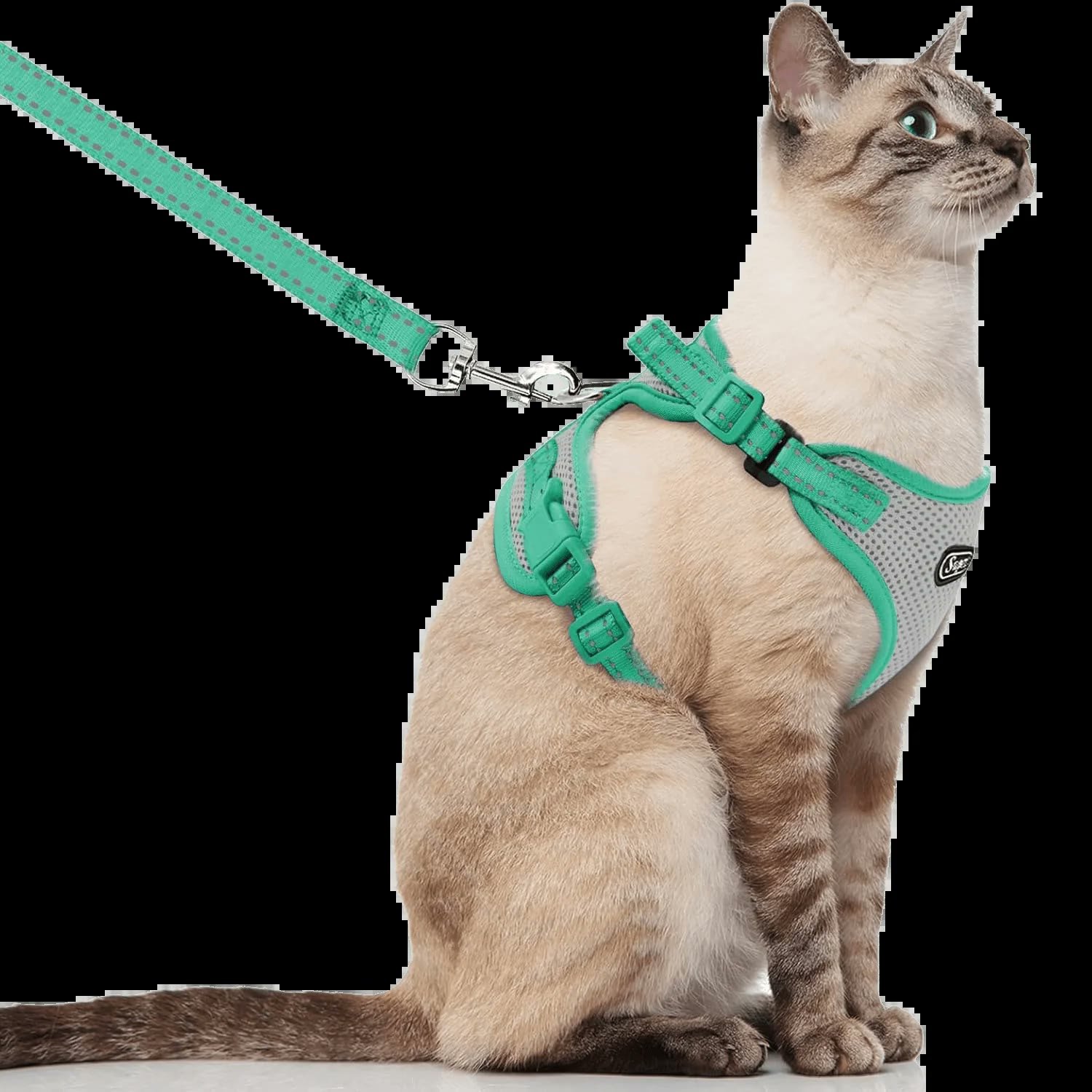
The Supet is the “second harness” — the one that lives in the travel bag, the car glovebox, or the suitcase as a backup. Five side buckles, four adjustment straps, breathable air mesh, reflective trim, and a leash included, at a price that makes owning two painless. The M fits chests 13–15 inches and necks 9–11 inches.
The honest part: you get what you pay for. Chewy reviewers report tricky sizing — one cat wore it at the tightest adjustment and still had room to roll out of it — and multiple owners report cats backing out of it when spooked despite correct adjustment. One desertcart reviewer also flags a strong chemical smell on arrival (wash it before first use). It’s a backup, not a primary: fine for the hotel room or the carrier transfer, not the harness you trust on a trail.
Specs: M fits neck 9–11 inches, chest 13–15 inches · 5 side buckles · 4 adjustment straps · air mesh vest · reflective trim · leash included.
Pros: cheapest way to have a spare everywhere; decent adjustability; leash included; light and breathable.
Cons: sizing runs tricky — can be loose at max tightening; determined cats back out of it; chemical smell on arrival — wash first.
Verdict: The backup harness — buy two, keep one in the car, and don’t trust it as your only line of defense. Check the price on Amazon.
How to Choose an Escape Proof Cat Harness
Fit is the escape-proofing. Every escape story in the research traces to fit: a loose neck (Voyager), loosened straps (rabbitgoo, Houdini), or wrong size (Supet, RC Pets). You should fit exactly one finger under every strap. Measure neck, chest, and head circumference against the size chart — never guess by breed or weight.
Match the design to your cat’s escape style. Back-out artists (head down, reverse) need a snug neck and chest with no gap — vest designs like the Kitty Holster or rabbitgoo. Wrigglers who go sideways need full-torso coverage. Thrashers who panic need the widest pressure distribution you can get, so nothing digs in and triggers more panic.
Decide how much Velcro you can live with. Hook-and-loop is fast and infinitely adjustable (Kitty Holster, Voyager), but it’s loud, collects fur, weakens over time, and some cats find the rip sound genuinely frightening. Buckle designs (rabbitgoo, RC Pets, Houdini) are quieter and more durable but slower to adjust. For noise-sensitive cats, buckles win.
Test the escape at home, not at the rest stop. Put the harness on, attach the leash, and let the cat try its worst in the living room. If it can back out, re-fit or return it now. Never test a new harness for the first time in a parking lot — that’s the scenario all of this is meant to prevent.
Train before you travel. The standard protocol, repeated by every adventure-cat source: leave the harness near the cat for days, then 5-minute indoor sessions with high-value treats, then indoor leash walks, then the great outdoors. A harness the cat accepts calmly is ten times more secure than one it fights — a panicking cat generates the exact forces that defeat harnesses.
For car travel, the harness is part of a system. A harness plus leash keeps the cat controllable during carrier transfers and rest-stop breaks, but it’s not a car restraint by itself — the cat still rides in a carrier or secured crate. Keep the harness on under the carrier door so transfers are leash-first, hands-second.
Bottom line: the rabbitgoo is the best escape-resistant harness for most cats — adjustable, affordable, and proven, as long as you re-tighten the straps. For genuine Houdinis, the Kitty Holster’s wide Velcro vest is the hardest to defeat. The RC Pets Adventure Kitty is the premium choice if you verify the version, and the OutdoorBengal Houdini is the most interesting design for adventure cats — light, clever, and demanding of careful fitting.
Frequently Asked Questions
Is any cat harness truly escape-proof?
No — and honest manufacturers say so. The Kitty Holster’s own guidance admits no harness is completely escape-proof; a panicking cat with a loose fit can back out of anything. “Escape proof” means a snug, well-fitted harness that makes escape very difficult, plus handling that never gives the cat backward leverage against the leash.
How tight should a cat harness be?
Exactly one finger between the strap and the body at every point — snug enough that the cat can’t wriggle, loose enough not to restrict breathing or movement. Check before every outing, not just at purchase: straps loosen with wear, and cats’ weight fluctuates.
Why does my cat freeze or fall over in a harness?
Completely normal — it’s a startle response to the unfamiliar pressure, not pain. Most cats adapt within a few short, treat-filled sessions. If the freezing persists past a week of gradual introduction, the harness may be too tight, too heavy, or the wrong style for that cat.
H-style vs. vest harness — which is more escape-proof?
Vest (jacket) styles are generally harder to escape because they distribute pressure over the torso with no single strap to back out of. H-style harnesses are lighter and cooler but leave more gaps a flexible cat can exploit. For travel and new environments, vest styles are the safer default.
Can I leave the harness on my cat all day?
Short answer: no. Harnesses are for supervised outings — unsupervised wear risks snagging, chafing, and the cat working at it until something gives. Put it on for the outing, take it off after. The one exception some owners make is a snug vest during active travel days, still supervised.
What do I do if my cat escapes the harness outdoors?
Don’t chase — a running human triggers a running cat. Crouch down, stay calm, and try lures (treat bag shake, familiar voice) while keeping the cat in sight. This is why the home escape-test matters: you want to discover the failure mode in your living room, and you want a harness-and-leash routine your cat knows before the first real outing.
