

Here’s the scenario nobody warns new kitten owners about: you bring home an 8-week-old kitten, set up the standard clumping clay litter you bought for your adult cat, and watch in horror as the kitten does what kittens do — tastes it. That single moment is the entire reason this guide exists. Young kittens explore the world with their mouths, and clumping clay litter can expand inside a tiny digestive tract. The stakes are genuinely different than with an adult cat.
The honest note most roundups skip: many “best kitten litter” lists are just the regular best-litter lists with a kitten badge slapped on. This one isn’t. Veterinarians consistently recommend non-clumping, low-dust litter for kittens under 4 to 6 months — paper pellets, wood, or walnut — and only then a transition to clumping formulas. Four of our six picks are non-clumping for that exact reason; the other two are honest transition picks for older kittens, with the trade-offs spelled out. (Travel note: if you’re driving a new kitten home or RVing with one, low-dust paper or wood pellets in a small box are the travel-friendly choice — nothing clouds a car cabin like clay dust.)
Pet Travel Items is reader-supported. When you buy through links on this page, we may earn a commission at no extra cost to you. Our picks are driven by documented owner feedback, never by commission rates.
Best Cat Litters for Kittens at a Glance
| # | Product | Type / Key Spec | Best For | |
|---|---|---|---|---|
| 1 | Fresh News Recycled Paper (25 lb) | Non-clumping paper pellets · 99% dust-free | Best overall — safest first litter | Check Price |
| 2 | Yesterday’s News Softer Texture (26.4 lb) | Non-clumping paper · 99.9% dust-free | Best soft paper pellets | Check Price |
| 3 | ökocat Dust-Free Paper Pellet (8 lb) | Non-clumping white paper · dust-free | Best truly dust-free | Check Price |
| 4 | Naturally Fresh Pellet Walnut (26 lb) | Non-clumping walnut pellets · unscented | Best walnut-based pellet | Check Price |
| 5 | SmartCat All Natural Grass (20 lb) | Clumping grass seed · 99% dust-free | Best transition to clumping (4+ months) | Check Price |
| 6 | Dr. Elsey’s Kitten Attract (20 lb) | Clumping clay · herbal attractant | Best training aid (4+ months) | Check Price |
Prices shift constantly — check before you buy. Weights are manufacturer figures.
1. Fresh News Recycled Paper Original Pellets — Best Overall
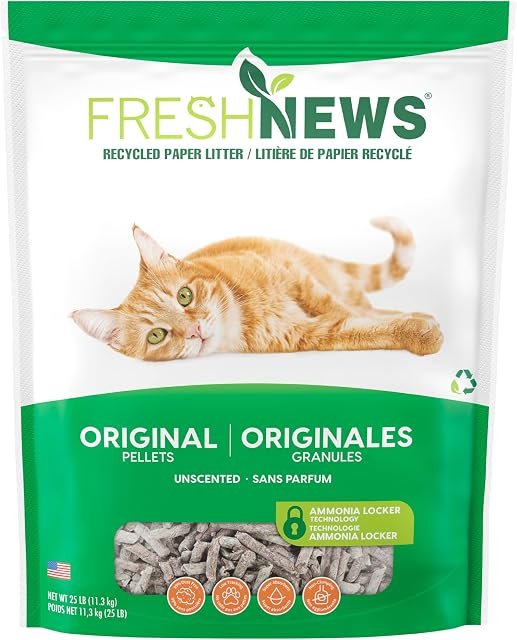
Fresh News is the vet-recommended default for a reason: recycled paper pellets that can’t clump inside a kitten, can’t puff clay dust into tiny lungs, and are made in the USA from 100% post-consumer newspaper. It uses an “ammonia locker” carbon technology for odor, and the 25 lb bag is the practical buy. One review guide that consulted a veterinarian named it the safest overall kitten litter specifically because ingestion poses no blockage risk.
The honest part: paper pellets are a safety tool, not a performance tool. Owner complaints are consistent — odor control is the weak point, with several owners reporting ammonia smell returning within a couple of days and describing “virtually zero odor control.” Non-clumping means a different routine: daily stirring and full box changes every 3–5 days, or wet pellets turn to pulp. Some kittens also reject the large pellet texture at first. Think of this as a health decision for the first few months, not a forever litter.
Specs: 25 lb · non-clumping recycled paper pellets · unscented · 99% dust-free per manufacturer · made in USA.
Pros: zero ingestion risk; genuinely low dust; low tracking; vet-recommended for young kittens.
Cons: weak odor control per many owners — needs full changes every 3–5 days; some kittens reject pellets; urine spots are hard to clean.
Verdict: The safest first litter for a kitten under 4 months — buy it for safety, not performance. Check the price on Amazon.
2. Yesterday’s News Softer Texture — Best Soft Paper Pellets
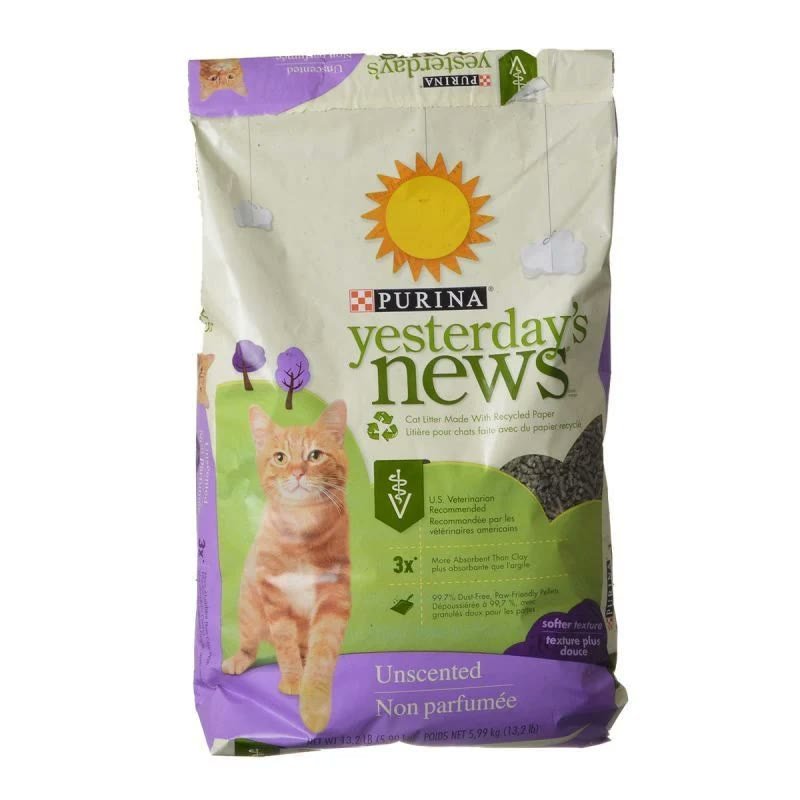
Purina’s Yesterday’s News is the other paper-litter classic, and the “Softer Texture” formula answers the main complaint about paper pellets — the harsh, chunky feel. These are still non-clumping recycled-paper pellets, but gentler on tender paws, 99.9% dust-free, unscented, and the brand claims they absorb 3x the moisture by volume of clay. Purina’s listing explicitly says it “works great for kittens as well as adult cats.”
Complaints to know: the same paper-litter trade-offs apply — odor control depends entirely on how often you change it, and several owners note it tracks more than expected for a pellet litter. Availability is the other caveat: multiple owner reviews mention past discontinuation, so confirm it’s actually in stock before building a routine around it. When it’s available, it’s the most paw-friendly paper option.
Specs: 26.4 lb · non-clumping recycled paper · softer texture · 99.9% dust-free · unscented.
Pros: gentler on paws than standard paper pellets; very low dust; unscented and low-tracking by design.
Cons: odor control needs frequent full changes; some tracking; verify availability before committing.
Verdict: The premium paper pellet — softer on paws, same non-clumping safety. Check the price on Amazon.
3. ökocat Dust-Free Non-Clumping Paper Pellet — Best Truly Dust-Free

If your kitten has respiratory issues — or you’re traveling in a car or RV where every puff of dust stays in the cabin with you — ökocat’s paper pellet litter is the purist’s pick. Clean white paper fiber with no inks, no clay, no airborne dust. It’s the formula vets reach for post-surgery, and kitten owners with asthmatic households swear by it. The pale pellets darken when wet, which at least gives you a visual cue for what to scoop.
The complaints are practical: several owners report that urine can pool beneath the pellets instead of absorbing, leaving ammonia smell and a two-layer mess — this litter demands prompt, frequent full changes more than most. It’s also pricier per pound than other paper litters, the 8 lb bag is small for the price, and a few owners report a yeasty smell if wet litter sits. Don’t buy this for odor control; buy it for air quality.
Specs: 8 lb · non-clumping clean white paper pellets · dust-free · unscented · plant-based odor control.
Pros: zero airborne dust — best for respiratory-sensitive kittens and small travel spaces; ink-free white paper; pellets darken when wet for easier scooping.
Cons: urine can pool underneath if not changed frequently; ammonia complaints from infrequent changers; small bag for the price.
Verdict: The air-quality pick — unmatched for dust-sensitive kittens, demanding on maintenance. Check the price on Amazon.
4. Naturally Fresh Pellet Non-Clumping Walnut — Best Walnut-Based

Naturally Fresh takes a different natural route: walnut shells, a food byproduct, formed into non-clumping pellets. The brand’s own comparison chart marks this pellet formula as ideal for kittens, seniors, and fussy cats. It’s unscented, and fans love the faint nutty smell and the fact that it’s a genuinely sustainable material. The pellets are larger and lower-tracking than the brand’s clumping walnut formula.
The honest complaints are distinctive to walnut: the dark brown color makes it hard to spot urine or monitor stool, the pellets break down into a fine brown powder that stains white paws brown and coats the box interior, and a handful of owners have reported mold in bags that got damp — store it bone-dry. Some owners also find odor control underwhelming. It’s a good litter for the right owner, but the dark color is a real downside if you like to monitor your kitten’s health by looking at the box.
Specs: 26 lb · non-clumping walnut-shell pellets · unscented · sustainable food-byproduct material.
Pros: non-clumping and kitten-safe; natural unscented odor handling; low tracking as a pellet; eco-friendly material.
Cons: dark brown color hides waste and health cues; breaks down into brown dust that stains paws and the box; store dry — mold complaints on damp bags.
Verdict: The natural-material pick for kittens — just accept you’ll be scooping by feel, not sight. Check the price on Amazon.
5. SmartCat All Natural Grass Litter — Best Transition to Clumping (4+ Months)
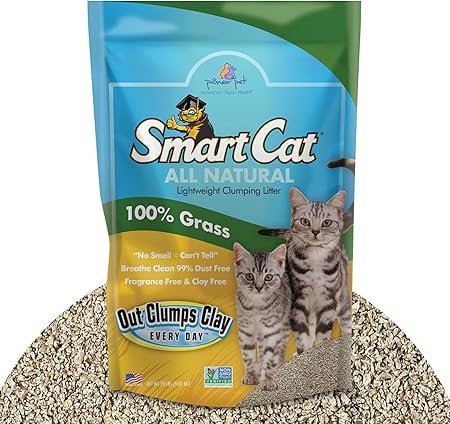
Once your kitten passes the 4-month mark and the mouth-everything phase fades, most owners want the convenience of clumping — and SmartCat’s grass-seed litter is the gentlest on-ramp. Made from 100% US-grown grass seed, it clumps on contact like clay but contains no bentonite, no silica, no fragrance. The fine, sand-like texture is familiar to clay-raised kittens, and Chewy reviews sit around 4.4 stars across roughly 2,300 ratings. It’s also genuinely lightweight — a 20 lb bag goes much further than 20 lb of clay — which makes it the most travel-friendly clumping pick here.
Complaints are consistent: it’s so light it tracks — one forum user summarized it as “great for clumping and odor control, and there is zero dust, but it tracks everywhere.” It also doesn’t cover feces odor as well as urine, and if you skip scooping, owners report a stale smell developing. Keep it for kittens 4 months and up, scoop daily, and pair it with a litter mat.
Specs: 20 lb · clumping grass seed · unscented · 99% dust-free · lightweight.
Pros: clumps without bentonite clay; very low dust; lightweight and travel-friendly; familiar sand-like texture for transitioning kittens.
Cons: tracks more than clay — use a litter mat; weaker on feces odor; needs daily scooping to stay fresh; for 4+ months only.
Verdict: The best first clumping litter for an older kitten — grass, not clay. Check the price on Amazon.
6. Dr. Elsey’s Kitten Attract — Best Training Aid (4+ Months)
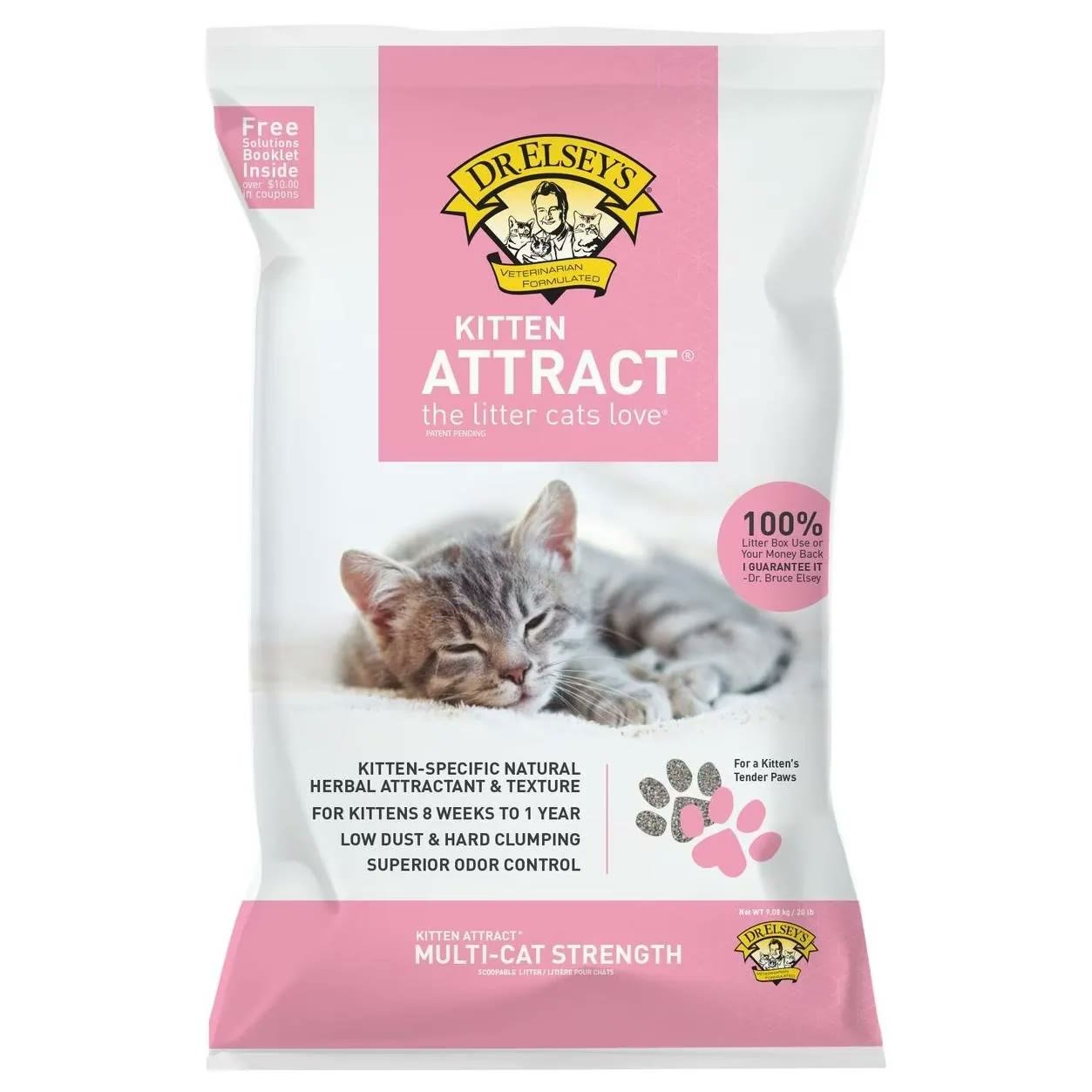
Here’s the honest framing: Kitten Attract is clumping clay. Full stop. It is not the non-clumping safety pick — it’s the #1 kitten training litter, designed for kittens 8 weeks to 1 year, with a kitten-specific fine granule size for tender paws and a natural herbal attractant that genuinely draws hesitant kittens to the box. Multiple owner reviews confirm the attractant works where other litters failed. Follow conservative vet guidance and use it for kittens 4 months and older (or per your vet), and it’s excellent.
Complaints: several owners dispute the “99% dust-free” claim, reporting visible dust clouds on pouring — one owner with asthma said it triggered an attack, and another noted the kitten came out of the box “wrapped in the dust.” The fine granules also track more than the adult Cat Attract formula. And a few kittens simply ignore the herbal attractant. It’s a training tool with real trade-offs, not a magic litter.
Specs: 20 lb · clumping clay · natural herbal attractant · kitten-sized granules · unscented.
Pros: the herbal attractant genuinely helps litter-train reluctant kittens; fine texture suits small paws; hard clumps for easy scooping.
Cons: it IS clumping clay — follow the 4-month guidance; dustier than advertised per multiple owners; fine granules track.
Verdict: The training specialist — use it to teach box habits from 4 months, not as a newborn’s first litter. Check the price on Amazon.
How to Choose a Litter for Your Kitten
Under 4 months: non-clumping, no exceptions (unless your vet says otherwise). Kittens taste everything. Sodium bentonite clay expands on contact with moisture, and a blockage in a 2 lb kitten is an emergency. Paper, wood, and walnut pellets can’t do that. This is the single most important decision in this guide.
Go unscented and low-dust. A kitten’s respiratory system is still developing, and artificial fragrance compounds irritate small airways. Every pick on this list is unscented; keep it that way. In a car or RV, low-dust matters doubly — clay dust has nowhere to go in a vehicle cabin.
Match texture to tiny paws. Standard paper pellets can feel like walking on gravel to a 2 lb kitten. Softer-texture paper (Yesterday’s News), fine grass seed (SmartCat), or kitten-sized clay granules (Kitten Attract) get better acceptance. If your kitten refuses the box, texture is the first suspect.
Plan the 4-month transition. Around 4 months, most kittens stop mouthing litter and their GI tracts are sturdier. That’s when you can move to a clumping litter — do it gradually over a week, mixing increasing amounts of the new litter into the old, or you’ll get a box boycott.
Budget for the paper phase honestly. Non-clumping paper litters need full changes every few days, which makes them surprisingly expensive per month. This is temporary — a few months of higher litter spend while your kitten is tiny.
For travel, pack light and dust-free. A new kitten’s first car ride home (or an RV trip) is exactly when you want a small bag of paper or grass litter in a low-sided box — light to carry, no dust cloud in the vehicle, and a familiar texture that encourages the kitten to actually use it.
Bottom line: start with Fresh News paper pellets for the youngest kittens — it’s the safest, vet-aligned first litter. If your kitten is a reluctant box user, Dr. Elsey’s Kitten Attract (from 4 months) is the training aid that actually works, and SmartCat grass litter is the gentlest bridge to clumping. For dust-sensitive households or car/RV travel, the ökocat paper pellets are the air-quality pick.
Frequently Asked Questions
When can my kitten switch to clumping litter?
Most veterinarians say 4 to 6 months. By then, kittens have largely stopped tasting non-food objects and their digestive systems handle an accidental nibble far better. Transition gradually over 7–10 days by mixing the new clumping litter into the old non-clumping one. When in doubt, ask your vet — they know your specific kitten.
Is clumping litter really dangerous for kittens?
The concern is real but specific: sodium bentonite clay expands dramatically when wet, and if a young kitten eats enough of it, intestinal blockage is possible — and that’s a life-threatening emergency. It’s uncommon, but the consequence is severe enough that vets recommend simply avoiding clumping clay until 4–6 months. Plant-based clumping litters (grass, corn) don’t expand the same way, which is why they’re the safer transition choice.
What if my kitten eats the litter?
First, don’t panic — a nibble of paper or wood pellet litter is generally harmless. Switch to (or confirm you’re using) a non-clumping, non-toxic litter, and watch for vomiting, lethargy, loss of appetite, or straining, which warrant a vet visit. Persistent litter-eating (pica) can signal anemia or dietary deficiency, so mention it at the next checkup.
Is scented litter safe for kittens?
No — stick with unscented. Kittens’ airways are still developing, and the fragrance compounds in scented litters can irritate them (and many adult cats dislike strong scents too). All the picks in this guide are unscented for exactly this reason.
How often should I change non-clumping kitten litter?
More often than you’d like. Non-clumping litter can’t be scooped clean the way clumping litter can — urine just soaks in. Plan on stirring daily and doing a full dump-and-replace every 3–5 days for paper pellets, or odor builds fast. It’s the main downside of the safest litters, and it’s temporary.
What litter should I use when traveling with a kitten?
A small bag of paper pellets or grass-seed litter in a low-sided travel box. Paper and grass are light to carry, genuinely low-dust (important in a car cabin), and the familiar fine texture encourages a nervous kitten to use the box. Avoid clay on the road — the dust and weight aren’t worth it, and bring a spare bag; kittens in new environments can be picky.
