

Here’s the travel scenario that separates a good litter box from a mediocre one: you’re at a pet-friendly hotel, the bathroom is the size of a closet, and your cat needs a box that fits in that space, contains litter, and doesn’t stink up the room by morning. At home the stakes are lower — until your cat starts peeing next to the box because the box is too small, too stinky, or too hard to get into.
The honest note most roundups skip: the litter box itself matters less than size and cleanliness. Veterinarians consistently recommend a box at least 1.5 times your cat’s body length (nose to tail tip), and plastic pans degrade — scratches harbor bacteria and absorbed odor that no amount of scrubbing fully removes. That’s why this list mixes the best plastic pans, a stainless steel upgrade, a premium design pick, and a disposable option built for travel.
Pet Travel Items is reader-supported. When you buy through links on this page, we may earn a commission at no extra cost to you. Our picks are driven by documented owner feedback, never by commission rates.
Best Cat Litter Boxes at a Glance
| # | Product | Size / Type | Best For | |
|---|---|---|---|---|
| 1 | IRIS USA XX-Large Side Entry (30″ x 20″) | 30″ x 20″ x 14″ · plastic, high-sided | Best overall | Check Price |
| 2 | Kirecoo Stainless Steel Litter Box (XL) | 23.4″ x 15.6″ x 5.7″ · stainless steel | Best stainless steel | Check Price |
| 3 | Modkat XL Litter Box | Top or front entry · seamless base | Best premium design | Check Price |
| 4 | Petmate Litter Pan (Large) | 18.5″ x 15″ x 5″ · plastic, open | Best budget classic | Check Price |
| 5 | Kitty Sift Disposable Litter Box (Large, 6-ct) | 17.75″ x 13.8″ x 4″ · recyclable cardboard | Best for travel | Check Price |
| 6 | Amazon Basics Large Cat Litter Box | 19″ x 15″ x 11.75″ · plastic, high-sided | Best cheap high-sided | Check Price |
Prices shift constantly — check before you buy. Sizes are manufacturer figures.
1. IRIS USA XX-Large Side Entry Cat Litter Box — Best Overall
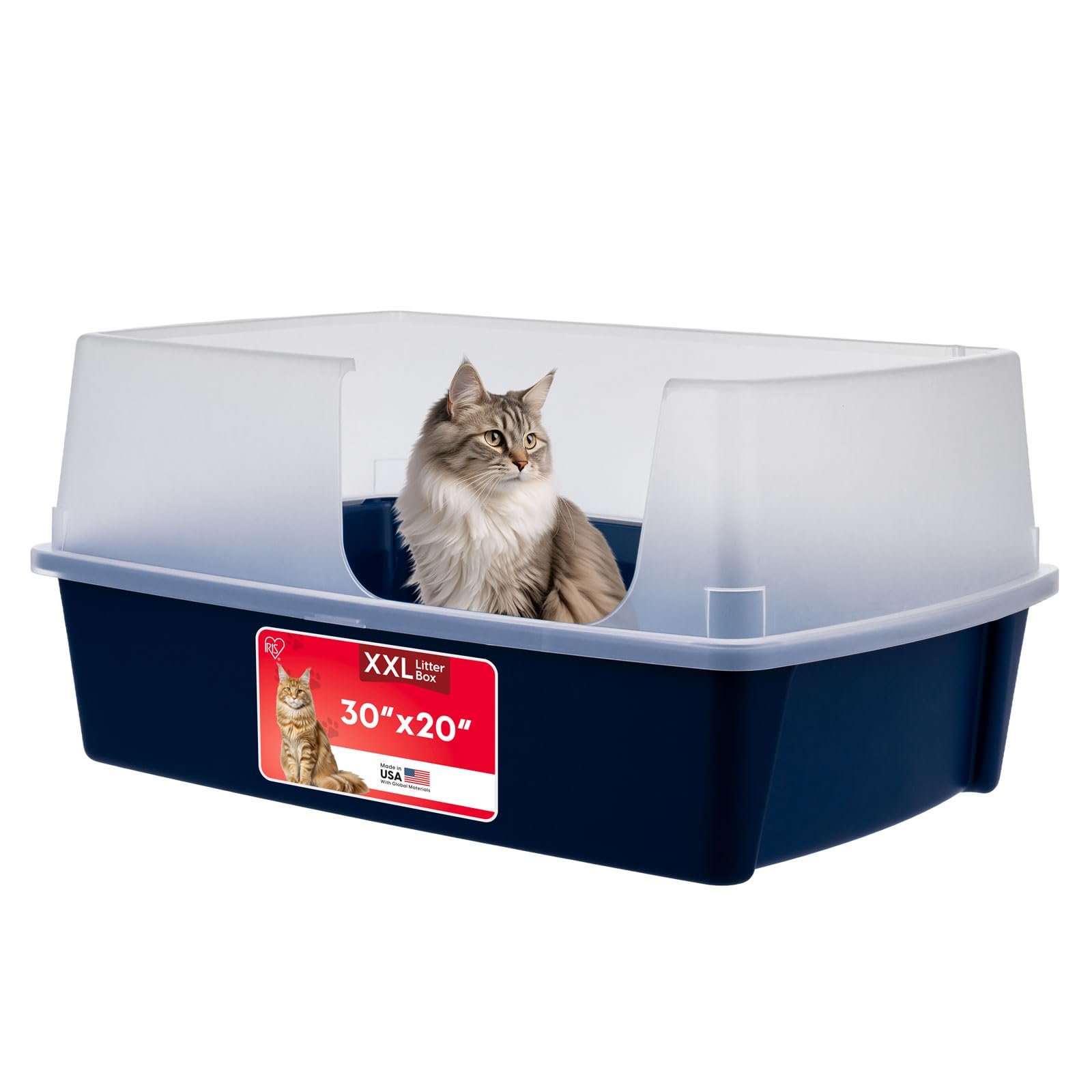
The IRIS XXL is the default recommendation for a reason: at 30″ long, 20″ wide, and 14″ tall, it actually fits large cats — Maine Coons, Ragdolls, Savannahs — with room to turn, dig, and stretch. The tall walls act as a scatter shield that contains kicked litter and high spraying, while the 6.5″ curved side entrance keeps it accessible. The open-top design encourages airflow (less trapped ammonia smell) and lets you monitor litter habits, and the smooth, high-polished interior with minimal crevices wipes down easily. It’s made in the USA.
The honest part: plastic has a shelf life. Owner experience across the category shows plastic pans gradually absorb odor and develop scratches that harbor bacteria — the IRIS is no exception, so plan on replacing it yearly. The XXL footprint also takes real floor space (30″ x 20″ is a commitment in a small apartment), and the tall walls can be a hurdle for kittens or arthritic seniors.
Specs: 30″ x 20″ x 14″ (XXL) · open top with 6.5″ curved side entrance · tall 14″ scatter-shield walls · smooth high-polish interior · made in USA.
Pros: genuinely large-cat sizing; tall walls contain scatter and spray; easy to clean and monitor; made in USA.
Cons: plastic absorbs odor and scratches over time — replace yearly; large footprint; tall walls tough for kittens and seniors.
Verdict: The safest default — buy the biggest size your space allows. Check the price on Amazon.
2. Kirecoo Stainless Steel Litter Box (XL) — Best Stainless Steel
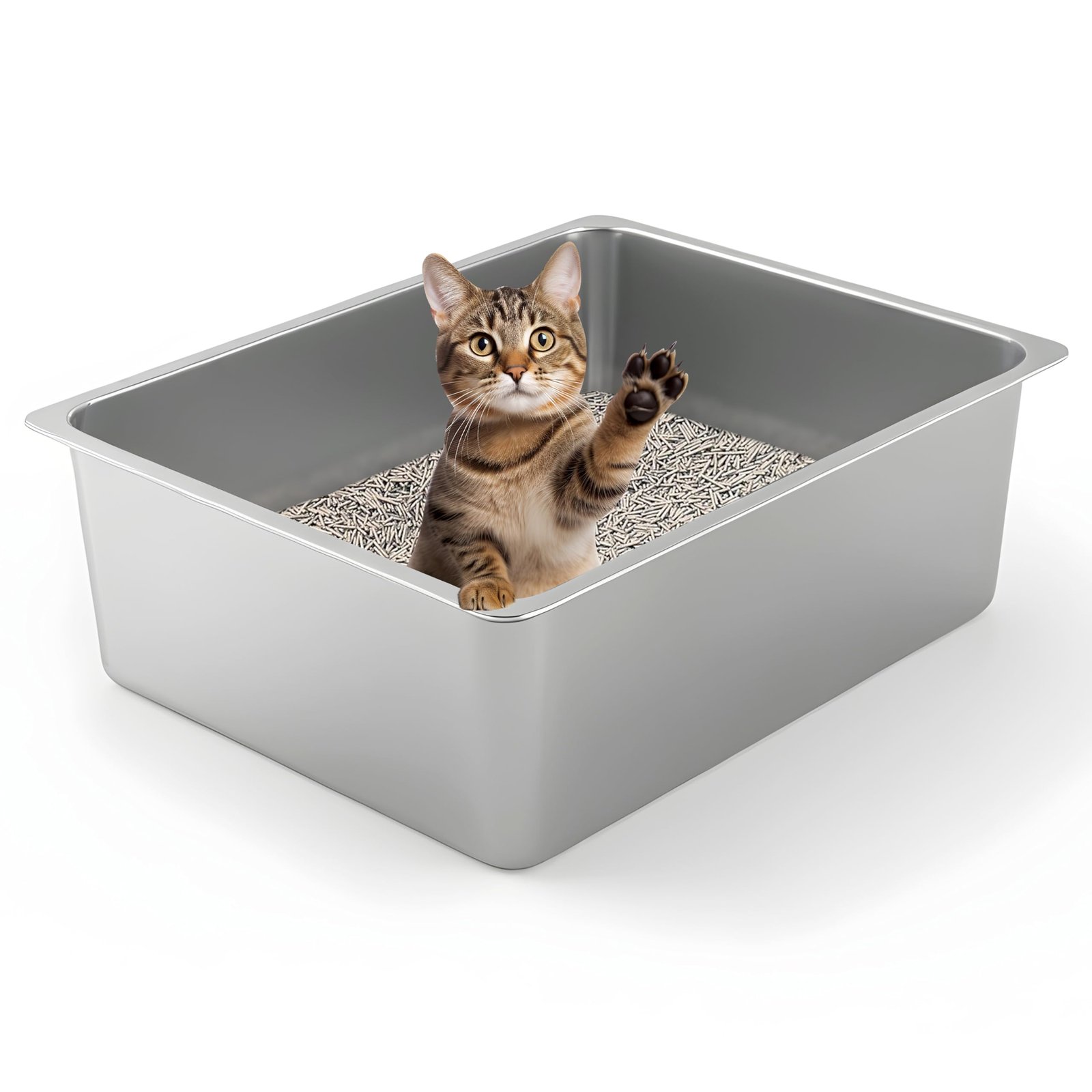
Stainless steel is the upgrade for anyone tired of replacing smelly plastic pans. The non-porous surface doesn’t absorb urine or odors, resists the scratching that turns plastic pans into bacteria farms, and rinses clean without scrubbing. The Kirecoo XL measures 23.43″ x 15.55″ with 5.7″ high sides, and claims a smooth rolled rim and rounded edges for comfortable handling.
The honest part: metal pans cost more upfront than plastic, and build quality varies across the stainless category — owner reviews of budget stainless pans have flagged sharp edges on sifting inserts and even rusting within weeks, so inspect welds, rims, and seams on arrival (Kirecoo advertises smooth, rounded edges, but verify yours). It’s also heavier than plastic when loaded with litter, and litter clumps can be louder on bare metal.
Specs: XL 23.43″ x 15.55″ x 5.7″ (multiple sizes) · 304-type stainless steel, open top · high sides · smooth rolled rim and rounded edges per manufacturer.
Pros: non-porous — no odor absorption or staining; scratch-resistant; rinses clean easily; lasts far longer than plastic.
Cons: higher upfront cost than plastic; inspect edges and seams on arrival (cheap stainless pans have had sharp-edge and rust complaints); heavier when filled.
Verdict: The buy-it-once pick — inspect the finish on arrival, then enjoy never smelling your pan again. Check the price on Amazon.
3. Modkat XL Litter Box — Best Premium Design
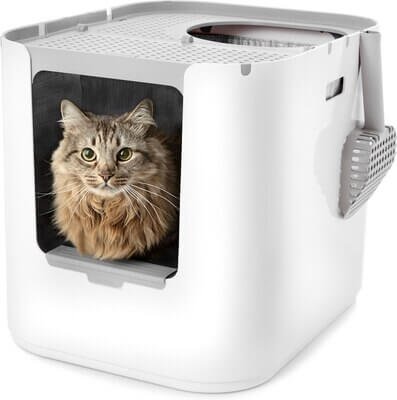
Modkat is the design-forward pick: the XL configures as either top-entry or front-entry, so it suits both enthusiastic diggers (top entry keeps litter in) and cats that won’t tolerate a lid (front entry). The full-height seamless base prevents leaks at the corners — the classic failure point of two-piece pans — and it ships with reusable liners (good for up to ~3 months each per the manufacturer) plus bamboo charcoal filters and a sifting scoop.
The honest part is the cost of ownership. The XL runs around $139, and replacement liners cost roughly $30 for a 3-pack, so the box keeps charging you after purchase. Owners also report the liners can slip and slide when cats scratch vigorously, and liner seams can rip during litter changes. Budget for the liners or this isn’t the box for you.
Specs: XL size for large cats and multi-cat homes · top-entry or front-entry configuration · seamless full-height base · reusable liners + bamboo charcoal filters + sifting scoop included.
Pros: configurable top or front entry; seamless leak-proof base; reusable liners and charcoal filters included; looks like furniture.
Cons: expensive (~$139 for XL); replacement liners ~$30/3-pack every ~3 months; liners can slip or rip at the seams.
Verdict: The premium pick for design-conscious homes — factor liner costs into your decision. Check the price on Amazon.
4. Petmate Litter Pan (Large) — Best Budget Classic
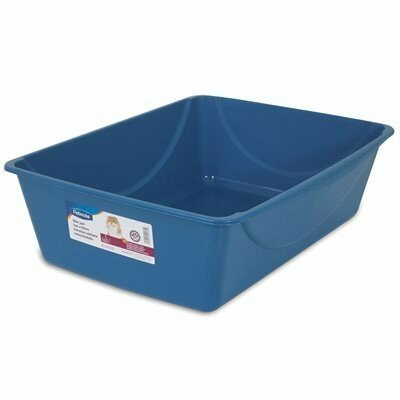
The Petmate open pan is the humble best-seller that has outsold nearly everything else in the category for years — it regularly ranks #1 in Amazon’s Standard Cat Litter Boxes. The Large measures 18.5″ x 15″ x 5″, with rimmed sides for easy lifting and a wide, stable base. Low sides mean easy entry for kittens, seniors, and cats that hate enclosed spaces. It’s made in the USA from pre-consumer recycled plastic, and it costs a fraction of the premium picks.
The honest part: this is a basic pan. The 5″ walls won’t contain an enthusiastic digger’s kick-out, there’s zero odor control beyond what your litter does, and like all plastic pans it will eventually absorb odors and need replacing. For the price, though, it’s the cheapest way to give every cat their own box — which matters, since the rule is one box per cat plus one.
Specs: Large 18.5″ x 15″ x 5″ (4 sizes available) · open-top plastic pan · rimmed sides · made in USA from pre-consumer plastic.
Pros: best-seller with a long track record; very cheap — easy to buy one per cat; low entry suits kittens and seniors; made in USA.
Cons: low sides mean litter kick-out for diggers; no odor control features; plastic absorbs odor over time and needs replacing.
Verdict: The “buy three of them” pick — nothing fancy, everything functional. Check the price on Amazon.
5. Kitty Sift Disposable Litter Box (Large, 6-Count) — Best for Travel
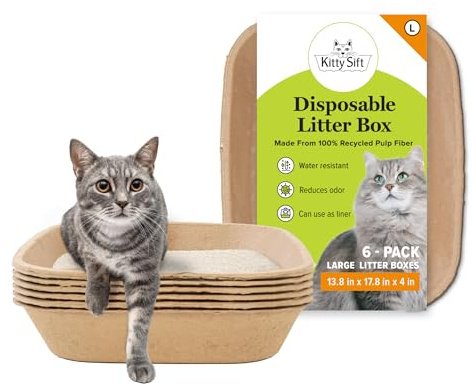
This is the travel pick, and it’s the one I’d pack for a road trip. The Kitty Sift is a sturdy recyclable-cardboard litter box — the Large measures 17.75″ x 13.8″ x 4″ — sold in a 6-pack. Use it for a couple of weeks, toss it, grab a fresh one: no scrubbing a plastic pan in a hotel bathtub, no hauling a dirty box home. The breathable cardboard keeps litter drier and helps with odor, and it’s ranked #1 in disposable litter boxes on Amazon.
The honest part: cardboard has limits. Replace every 2–3 weeks per the manufacturer, which makes it a recurring cost, not a one-time purchase. Heavy urinators can soften the box, aggressive scratchers can puncture it, and the low 4″ walls mean more tracking than a high-sided pan. It’s a travel and temporary-setup solution, not a permanent replacement.
Specs: Large 17.75″ x 13.8″ x 4″ (Jumbo also available) · 6-count pack · 100% recyclable cardboard · replace every 2–3 weeks.
Pros: perfect for travel, hotels, and temporary setups; no scrubbing; #1 in disposable litter boxes; eco-friendlier than plastic pans.
Cons: recurring cost (replace every 2–3 weeks); can soften with heavy use; scratchers can puncture it; low sides mean more tracking.
Verdict: The travel essential — pack a flat 6-count and never scrub a hotel bathtub again. Check the price on Amazon.
6. Amazon Basics Large Cat Litter Box — Best Cheap High-Sided
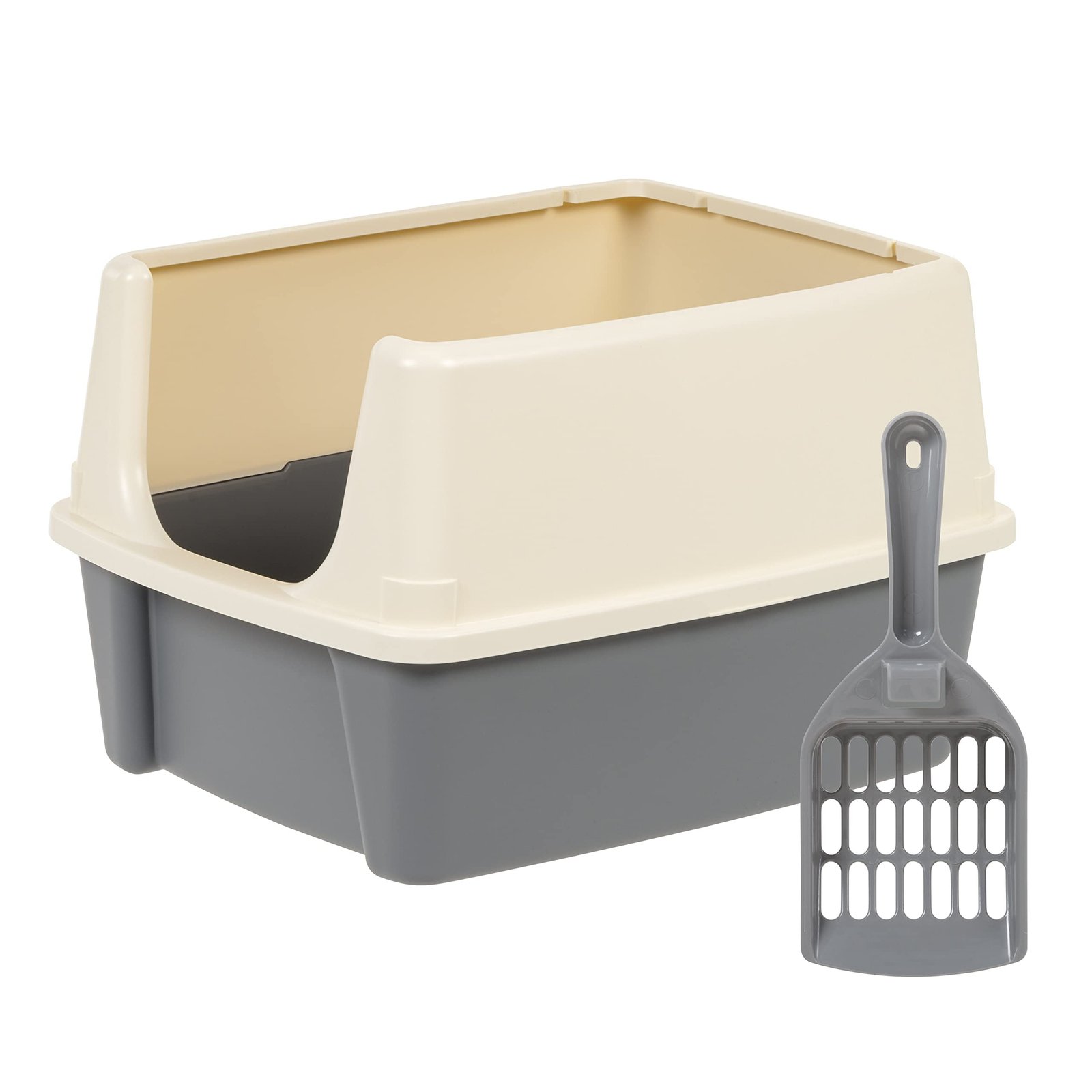
If you want high walls without the IRIS price, the Amazon Basics box delivers: 19″ x 15″ x 11.75″ with tall sides, a lowered front for easy entry, and an included scoop that stores on the box’s edge. It’s the budget way to get scatter containment, and at 4.3 stars from over 9,000 ratings, owners broadly like it.
The honest part: you get what you pay for. The 4.3-star average trails the category leaders, and owner feedback points to thinner, flexier plastic than the IRIS. It’ll do the job — but expect it to show wear and absorb odors sooner, which shortens the already-finite life of a plastic pan.
Specs: 19″ x 15″ x 11.75″ · high-sided open top with lowered front entry · includes scoop with on-board storage.
Pros: cheapest high-sided option; scoop included with on-board storage; lowered front aids entry; 9,000+ ratings.
Cons: thinner plastic than pricier pans; 4.3-star average trails the leaders; will absorb odors sooner.
Verdict: The budget high-sided pick — great value, just replace it sooner. Check the price on Amazon.
How to Choose a Cat Litter Box
Size it to the cat, not the room. The rule of thumb: the box should be at least 1.5 times your cat’s length from nose to tail tip. A 30″ box sounds huge until you watch a Maine Coon try to turn around in a standard pan. When in doubt, go bigger — box avoidance is one of the top reasons cats pee outside the box, and cramped quarters are a common cause.
High sides vs. low entry is a trade-off. Tall walls (11–14″) contain kicked litter and high sprayers but can block kittens, seniors, and arthritic cats. Low-sided pans are accessible to everyone but need a litter mat and more sweeping. Households with both a digger and a senior should run two different boxes rather than compromising on one.
Pick your material honestly. Plastic is cheap and light but absorbs odors and scratches over time — budget to replace plastic pans roughly yearly. Stainless steel costs more upfront but doesn’t absorb odors, resists scratches, and can last years. If your plastic pan smells even after a full scrub, the pan — not the litter — is the problem.
Open, hooded, or top-entry? Open pans maximize airflow (less ammonia buildup) and let you monitor habits — important for catching health issues early. Hooded and top-entry boxes contain mess and odor better and suit shy cats, but need the charcoal filter replaced and the lid cleaned regularly. Top-entry boxes are not suitable for cats with mobility issues.
Count the boxes, not just the box. The standard guidance is one box per cat, plus one extra, spread across the home — not lined up in a row. Three cheap Petmates in three rooms beat one premium box in one room for a multi-cat household.
For travel, go disposable. A recyclable cardboard box like the Kitty Sift weighs almost nothing, packs flat, and gets tossed instead of scrubbed in a hotel bathroom. Pair it with a small bag of your cat’s usual litter and a travel deodorizer, and the hotel bathroom stays civilized.
Bottom line: the IRIS USA XX-Large is the best all-rounder — big enough for large cats, tall enough to contain mess, easy to clean. Upgrade to the Kirecoo stainless steel if you’re done replacing smelly plastic pans, splurge on the Modkat XL for a box that looks like furniture, and pack the Kitty Sift for every trip. On a budget, the Petmate pan (buy one per cat) and Amazon Basics high-sided cover the basics well.
Frequently Asked Questions
What size litter box does my cat need?
At least 1.5 times your cat’s body length from nose to tail tip, with room to turn around fully. For most adult cats that means a “large” or “jumbo” box; for Maine Coons, Ragdolls, and other big breeds, look at XXL boxes around 30″ long. Too small is one of the most common reasons cats avoid the box.
Is a stainless steel litter box better than plastic?
For odor control and longevity, yes. Stainless steel is non-porous, so it doesn’t absorb urine or odors the way scratched plastic does, and it resists the scratch grooves where bacteria collect. The trade-offs: higher upfront cost, heavier when filled, and you should inspect welds and edges on arrival since cheap stamped pans have had sharp-edge complaints.
Covered or open litter box — which is better?
Open boxes win on airflow and let you spot health changes (straining, blood, frequency) sooner. Covered and top-entry boxes contain litter scatter and odor better and suit shy cats. Avoid top-entry for kittens, seniors, and arthritic cats. Many behaviorists prefer open boxes because cats generally prefer them too.
How often should I scoop and change the litter?
Scoop at least once daily — twice for multi-cat homes. Top up litter to maintain 3–4 inches of depth. Do a full litter change and box wash (warm water, mild detergent) every 2–4 weeks for clay litter. If the box smells right after a full clean, the plastic pan itself has absorbed odor and it’s time to replace it.
Are disposable litter boxes good for travel?
Yes — that’s their best use case. A recyclable cardboard box like the Kitty Sift packs flat, sets up in seconds, and gets thrown away instead of scrubbed in a hotel bathroom. Bring a small bag of your cat’s regular litter so the scent is familiar, and replace the box every couple of weeks on long trips.
How often should I replace a plastic litter box?
Roughly once a year with regular use — sooner if it’s deeply scratched or retains odor after washing. Scratches in plastic harbor bacteria and absorbed urine smell that scrubbing can’t fully remove. Stainless steel pans don’t have this expiration date, which is part of their value.
