

As an Amazon Associate, we earn from qualifying purchases. That means if you buy through one of our links, we may earn a commission at no extra cost to you. It keeps this site running and our reviews honest — we flag the flaws we find, even on products we recommend.
A medium dog that shakes, pants, or whines the whole car ride is miserable — and so are you. Calming sprays promise an easy fix: spritz the crate blanket, wait fifteen minutes, drive in peace. The honest version? Sprays are one of the mildest tools in the anxiety toolbox. Pheromone sprays mimic the scent a mother dog gives off while nursing, and herbal sprays use lavender and chamomile to nudge a dog toward a calmer state. Some dogs visibly settle. Plenty don’t. Nothing in this list will fix separation anxiety, storm phobia, or true panic on its own, and none of them replace training or a vet visit. Think of them as a small, low-risk addition to a bigger plan — worth trying for travel jitters and vet-visit nerves, not a cure for a genuinely anxious dog.
| # | Product | Why it made the list | Check Price |
|---|---|---|---|
| 1 | ADAPTIL Spray 60 mL | The original D.A.P. pheromone spray — the most studied option, and the one vets name first | Check Price |
| 2 | ThunderEase Dog Calming Pheromone Spray | Uses the same ADAPTIL pheromone analog; the travel-friendly pick of the ThunderShirt family | Check Price |
| 3 | Sentry PET Care Calming Spray for Dogs | Budget pheromone option with simple 2–3 pump dosing for cars and crates | Check Price |
| 4 | Bodhi Dog Natural Calming Spray | Lavender, chamomile, and geranium formula in a big 8 oz bottle — the herbal route | Check Price |
| 5 | Rowe Casa Organics Doggy Calming Spray | Alcohol-free essential-oil blend with published ingredients; gentle option for scent-sensitive owners | Check Price |
| 6 | ALFIE’S CHOICE Pet Calming Spray | Water-based valerian/lavender/vetiver mist designed for bedding and crates | Check Price |
1. ADAPTIL Spray 60 mL
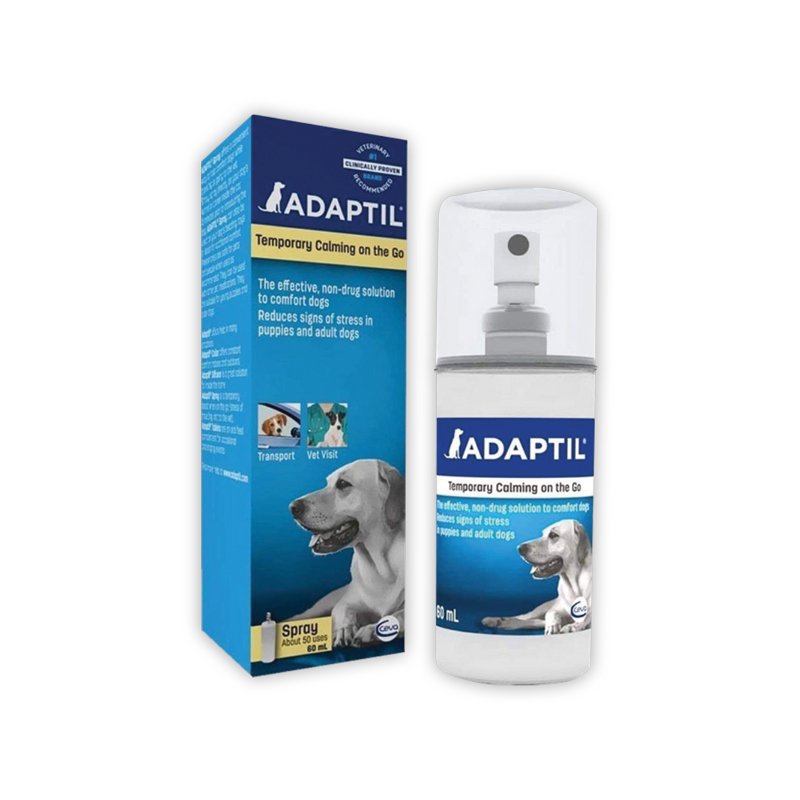
The reference point for the whole category. Adaptil’s spray is the synthetic copy of the dog appeasing pheromone — the scent nursing mothers release — and it has the longest track record of any product here. Vets stock it, shelters use it, and it’s the formula the copycats are copying. For travel, you spray the carrier, crate blanket, or a bandana and give it fifteen minutes to dry before the dog goes in.
Key specs
- Active: synthetic D.A.P. (dog appeasing pheromone) analog
- 60 mL bottle; roughly 50 applications per bottle
- Apply 8 pumps to an object or surface (carrier, blanket, harness); wait 15 minutes
- Effect per application lasts about 4–5 hours; reapply as needed
- Drug-free; odorless to people once dry
- Brand says: never spray it directly on the dog
Pros
- Best-studied pheromone product in the category; the one most vets reach for first
- Odorless once dry — no lingering perfume smell in the car
- Compact bottle; easy to pack for trips
Cons
- A real chunk of owners report zero effect — multiple verified reviews call it useless for their dogs
- Small bottle at a premium price; 8 pumps per application adds up
- Alcohol-based, so you have to plan ahead: spray, wait 15 minutes, then load the dog
- Helps mild nerves at best; severe anxiety or panic barely registers
Verdict: If you’re going to try one pheromone spray, this is the one with the most credibility behind it. Keep expectations modest — it takes the edge off travel stress for some dogs and does nothing for others. Worth a single bottle as an experiment, not a case.
2. ThunderEase Dog Calming Pheromone Spray
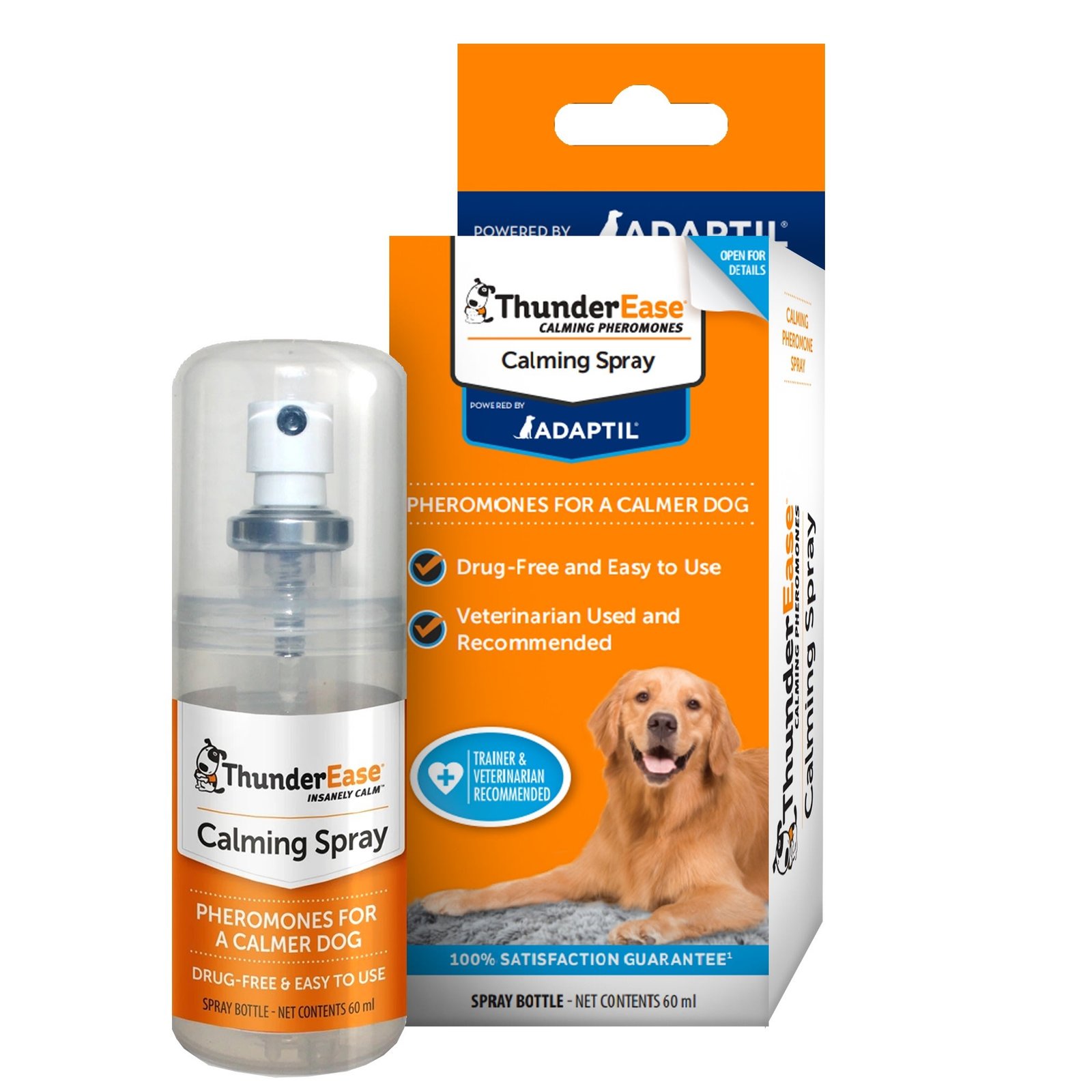
ThunderWorks — the ThunderShirt people — sells this as the spray version of the same idea: it’s powered by the ADAPTIL pheromone analog, marketed specifically for travel, vet visits, and boarding. The pitch is simple and the directions are easy: 8–10 pumps on the car interior, crate, or bandana, wait fifteen minutes, reapply every four to five hours.
Key specs
- Active: ADAPTIL pheromone analog (2%), isopropanol carrier
- 2.03 fl oz (~60 mL) bottle
- Spray 8–10 pumps on car interior, collars, kennels, leashes, blankets, or bandanas
- Wait 15 minutes before introducing the dog; reapply every 4–5 hours
- Do not spray directly on the dog
Pros
- Clear, simple directions and wide availability
- Some owners report noticeably calmer long car rides and vet visits
- Drug-free and pairs with the ThunderShirt if you already use one
Cons
- Owner feedback is genuinely split — plenty of “zero difference” reviews, including failed car-travel tests
- Several reviewers note a strong rubbing-alcohol smell on application
- One credible report: multiple bottles lost half their contents to evaporation through the crimped cap in storage
- Won’t touch thunderstorm panic or serious fireworks fear on its own
Verdict: A reasonable second option if Adaptil is out of stock or you want the ThunderShirt ecosystem. The evaporation-in-storage complaint is worth knowing about — use it up rather than shelving it for six months.
3. Sentry PET Care Calming Spray for Dogs
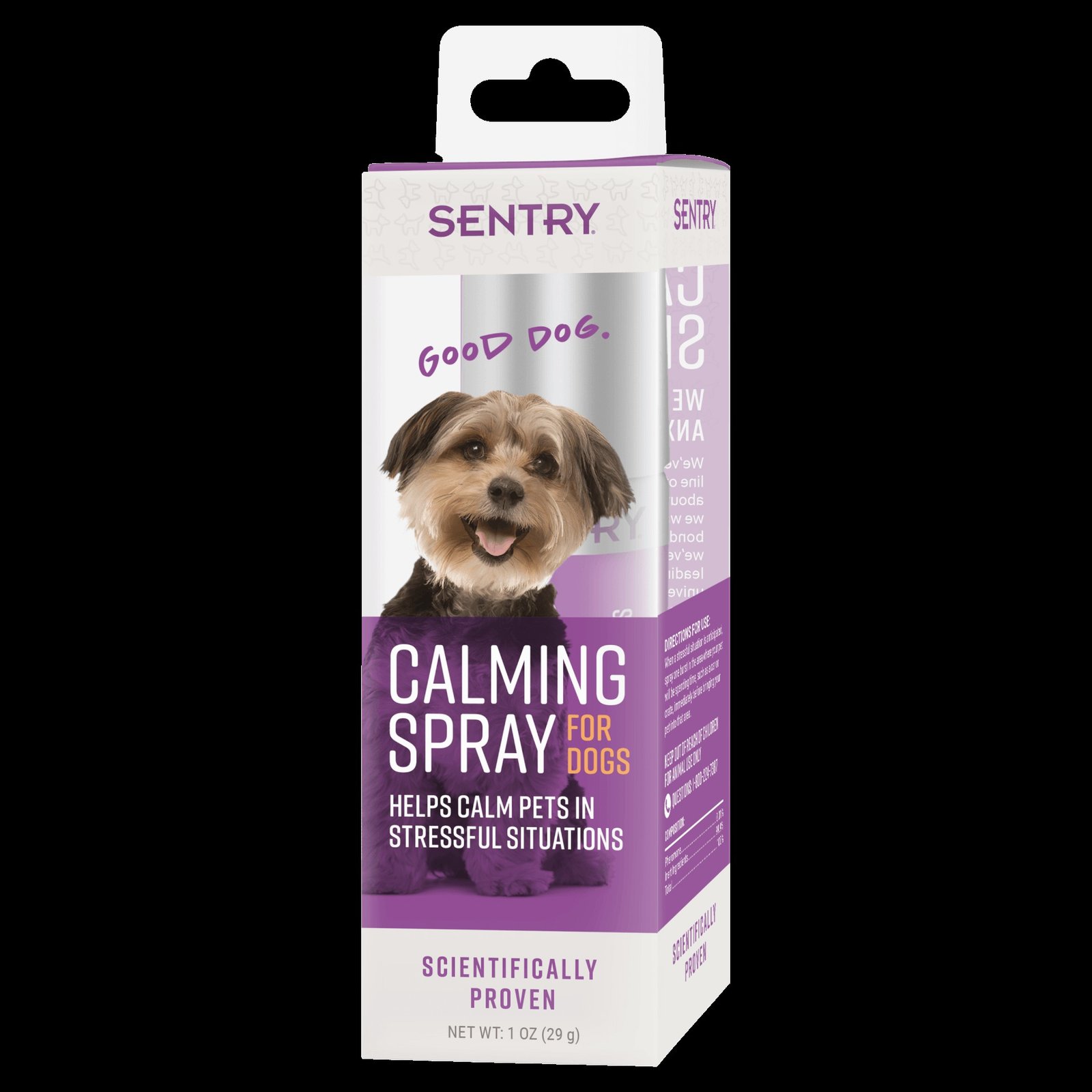
Sentry’s entry is the budget pheromone pick. Dosing is lighter than the two above — just 2–3 pumps in the car or crate right before the dog goes in, no fifteen-minute wait on the label. Some owners swear by it for travel settling; others find it underwhelming on truly anxious dogs.
Key specs
- Active: synthetic calming pheromone (exact concentration not stated)
- Compact pump bottle (~2.9 oz total weight)
- Directions: 2–3 pumps (or more) in the area the pet will occupy — car, crate — just before use
- Marketed for separation, travel, and loud noises; all life stages
Pros
- Low-effort dosing: a few pumps and you’re done
- Some owners report quick settling on car rides
- Pleasant smell, per multiple reviewers
Cons
- Small bottle goes fast if you need more than the label’s 2–3 pumps — “a few uses and the bottle was empty”
- No effect reported on very high-strung or panicking dogs
- Works best sprayed before the stressful event, not after panic has set in
Verdict: A fair low-cost trial option for mild travel jitters. Don’t expect it to carry a genuinely anxious medium dog through a thunderstorm — and budget for more than one bottle if your dog needs heavy applications.
4. Bodhi Dog Natural Calming Spray
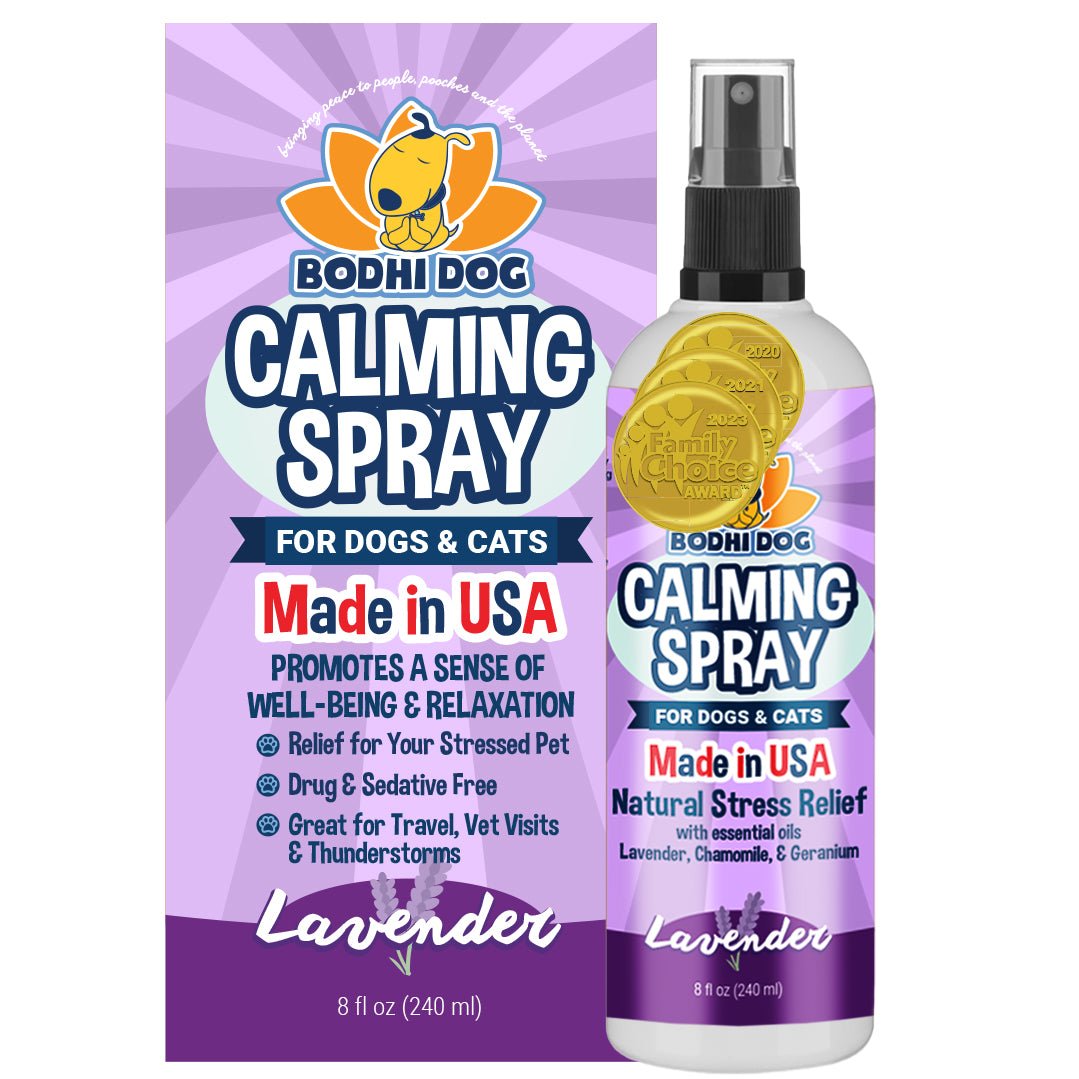
Switching camps: this is the herbal route. Bodhi Dog’s spray uses lavender, chamomile, and geranium essential oils instead of pheromones, in a big 8 oz bottle — the largest volume here by a wide margin. It’s also sold in the dog-cologne corner of Amazon, which tells you something about expectations: it’s a pleasant-smelling spray first, a calming aid second.
Key specs
- Active approach: lavender, chamomile, and geranium essential oils (per the brand’s own product label; natural, no pheromones)
- 8 fl oz (237 mL) bottle
- Marketed for travel, vet visits, grooming, thunderstorms, fireworks
- Made in USA by a small, family-run company
Pros
- Huge bottle — far more sprays per dollar than the pheromone options
- No alcohol carrier; gentler on fabrics and bedding
- Pleasant lavender scent doubles as a mild deodorizer for the crate
Cons
- No product-specific complaint pattern found for this exact variant — owner feedback is sparse, so treat claims cautiously
- Lavender is the whole mechanism, and some dogs dislike strong scents — patch-test before a long trip
- Essential-oil evidence for anxiety relief is thinner than even the pheromone evidence
Verdict: The value pick if you want to try the herbal route. It’s the cheapest way to experiment with aromatherapy-style calming — just know you’re buying a scent spray, not a proven anxiety treatment.
5. Rowe Casa Organics Doggy Calming Spray
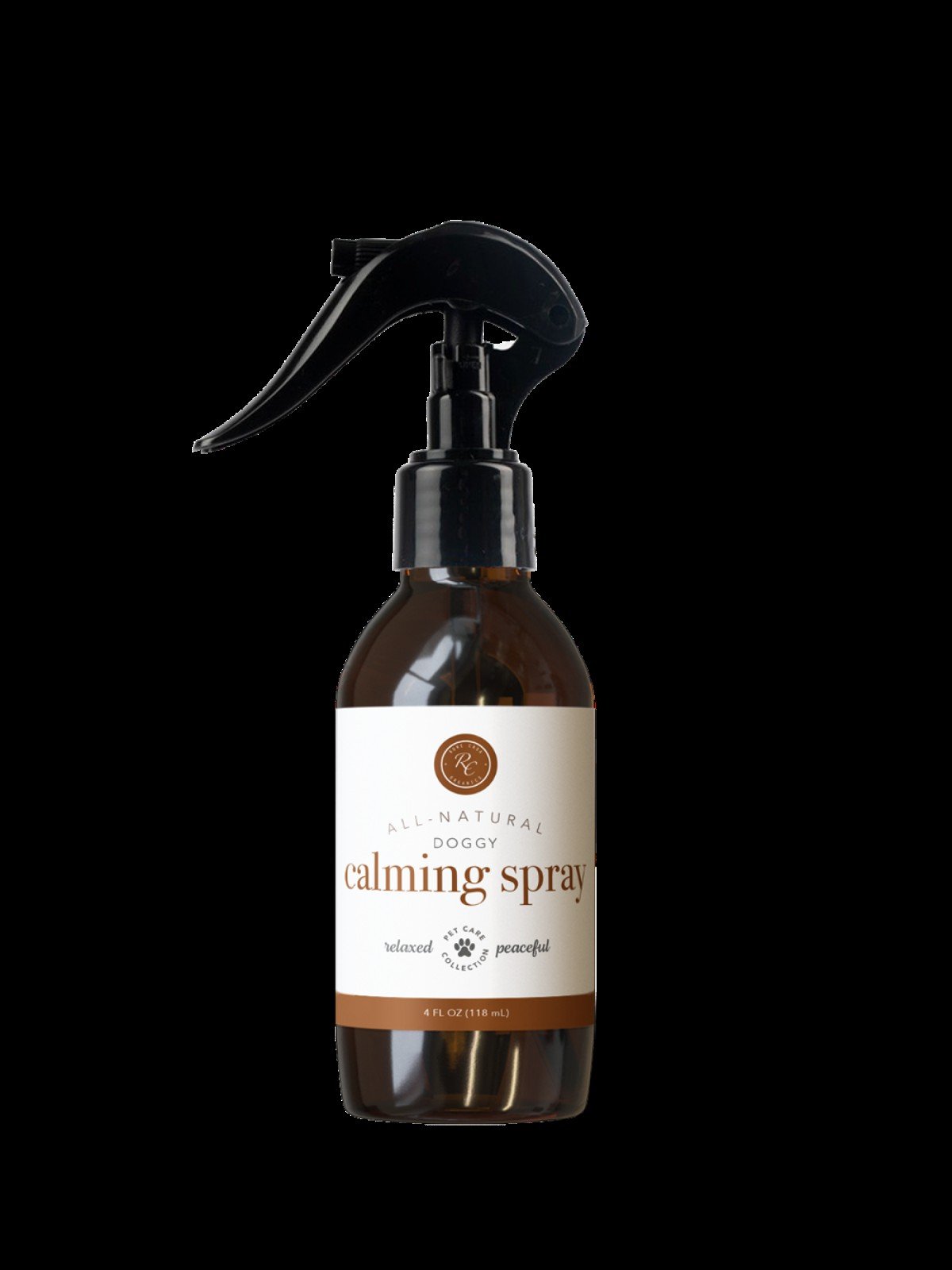
A small-batch essential-oil spray with the most transparent ingredient list in this roundup: lavender, cedarwood, and Roman chamomile oils in a water base, no alcohol. One thing to know before you shop: Rowe Casa has renamed this product “Dog Comfort Spray” (8 oz) on its own website, while the Amazon listing still sells under the old “Doggy Calming Spray” name — same idea, slightly confusing.
Key specs
- Ingredients (published by the brand): water, lavender oil, cedarwood bark oil, Roman chamomile flower oil, sodium bicarbonate
- Alcohol-free, no artificial fragrance or dyes
- Amazon listing: 118 mL; brand site now sells an 8 oz “Dog Comfort Spray” version
- Application: mist on bedding, collar, or resting spots
Pros
- Fully published ingredient list — rare at this price level
- Alcohol-free; gentler option if alcohol-based sprays irritate you or the dog
- Light application with no heavy perfume residue
Cons
- Product rename across sites is confusing — confirm you’re buying the calming formula, not a different product
- Small brand with limited independent review volume; no verified complaint pattern, but also little third-party validation
- Same caveat as all herbal sprays: scent sensitivity varies by dog
Verdict: The best-documented herbal option here. If you like knowing exactly what’s in the bottle, this is the one to try — just double-check the product name at checkout.
6. ALFIE’S CHOICE Pet Calming Spray
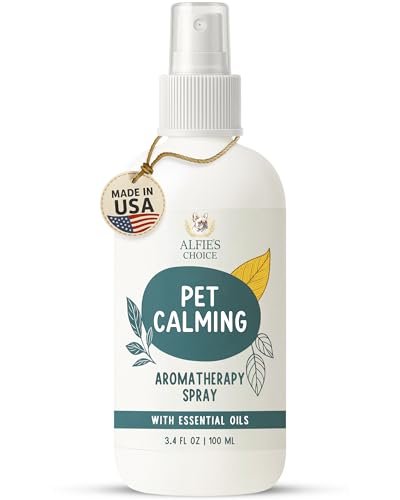
The newest product on this list — first sold in September 2025 — and the one with the most complex formula: valerian root, lavender, vetiver, rosemary, and frankincense in a diluted water base. It’s marketed for bedding, crates, and collars, and the label explicitly says to avoid direct contact with the dog’s eyes, nose, mouth, skin, and fur. Use in a ventilated area and stop if you see irritation.
Key specs
- Active approach: valerian root, lavender, vetiver, rosemary, frankincense + other botanicals in diluted water base
- 3.4 fl oz bottle
- Directions: shake well, lightly mist bedding, crate, or collar; let the area dry before the dog returns
- Avoid direct contact with eyes, nose, mouth, skin, fur; external use only
- Labeled as safe for cats when used as directed; made in USA
- First available September 2025 — limited long-term track record
Pros
- Broadest botanical blend in the roundup — valerian and vetiver are interesting additions
- Honest, cautious labeling (avoids direct contact, ventilated use)
- Cat-safe positioning is a plus in multi-pet homes
Cons
- Brand-new listing — almost no long-term owner track record to judge by
- Busy formula means more potential irritants; patch-test is a must
- Must avoid the dog’s body entirely — it’s strictly an environment spray
Verdict: Intriguing, but buy it as an experiment, not a solution. The valerian/vetiver blend is a genuine differentiator; the lack of history is the price you pay for novelty.
Pheromone vs. Herbal Sprays: Which Type Fits Your Dog?
The six picks split into two camps. Pheromone sprays (Adaptil, ThunderEase, Sentry) copy the scent signal of a nursing mother dog — odorless to you once dry, undetectable, and aimed specifically at canine stress responses. They have the most research behind them, though “most” is doing heavy lifting: results are mixed and the effect is subtle. Herbal sprays (Bodhi Dog, Rowe Casa, Alfie’s Choice) use lavender, chamomile, valerian, and similar botanicals. They smell like something, which is both the feature and the risk: a pleasant lavender mist can set a calmer scene, but a dog that hates the scent gets more stressed, not less.
For travel with a medium dog, the practical difference is small. Pheromone sprays need a 15-minute dry-down in most cases (alcohol carrier); herbal sprays are usually water-based and ready sooner. Neither type works on truly panicked dogs. Pick pheromone if you want the option vets trust most, herbal if you prefer plant-based ingredients and don’t mind scent — and consider buying one of each only if you’re prepared for one to do nothing. Most people are.
How to Actually Use a Calming Spray (Without Wasting It)
Almost every failed-spray story starts with wrong application. The rules are the same across brands: spray the environment, not the dog. Hit the crate pad, the carrier blanket, a bandana, or the car seat cover — never the dog’s face, and ideally never the dog at all. For alcohol-based pheromone sprays (Adaptil, ThunderEase), spray 8–10 pumps and wait the full fifteen minutes for the carrier to evaporate; introducing the dog too early means they smell rubbing alcohol, not pheromones. Water-based herbal sprays are more forgiving but still benefit from a few minutes of air time.
Timing matters more than quantity. Spray before the stressful event, not during it — once a dog is in full panic mode, no scent in the world pulls them back. For a car trip: spray the crate or seat blanket at home, wait, load up. Reapply every four to five hours on long drives. And run a test day first: spray the dog’s bed on a calm afternoon and watch. If the dog avoids the bedding or seems restless, that’s your answer — the scent is wrong for that dog, and no amount of re-spraying will fix it.
When a Spray Isn’t Enough: See Your Vet
If your medium dog is destroying crates, injuring themselves, drooling rivers, or panicking every time you leave, a spray is not your treatment plan. Those are signs of an anxiety level that needs professional help: a vet to rule out pain or medical causes and discuss medication, and ideally a certified behaviorist for a desensitization plan. Calming sprays can sit alongside that work as a mild comfort measure. They should never be the whole plan, and they should never delay the vet visit a struggling dog clearly needs.
Do calming sprays actually work for dogs?
Sometimes, mildly, for some dogs. Pheromone sprays have the most published research, and the results are mixed — some studies show reduced stress behaviors, others show no difference from placebo. Herbal sprays have even thinner evidence. Owner reviews across every brand here are split between “settled right down” and “did absolutely nothing.” Go in expecting a gentle nudge, not a transformation.
Are calming sprays safe for medium dogs?
Generally yes when used as directed — sprayed on bedding or the environment, not on the dog. Pheromone sprays are odorless and drug-free. Herbal sprays contain essential oils, so patch-test: spray a small area of bedding, watch for avoidance, sneezing, or skin irritation, and stop if any appear. Dogs with respiratory issues, puppies, and pregnant dogs deserve extra caution and a vet’s input first.
Can I spray calming spray directly on my dog?
No — every brand in this list says to spray the environment (bedding, crate, bandana, car interior) and not the dog. Adaptil’s own product page says “Never spray your dog.” Alfie’s Choice goes further, telling users to avoid contact with eyes, nose, mouth, skin, and fur entirely. If you want scent on the dog, a pheromone collar is the product built for that job.
How long before travel should I apply calming spray?
For alcohol-based pheromone sprays like Adaptil and ThunderEase, apply 8–10 pumps about 15 minutes before the dog enters the area, and reapply every 4–5 hours. Water-based herbal sprays need less lead time — a few minutes of air time is enough. Either way, apply before the stressful event starts; once panic sets in, sprays don’t work.
What’s the difference between calming sprays and calming collars?
Sprays treat a space: the crate, the car, the vet-visit blanket. Collars treat the dog, releasing pheromones close to the nose continuously for about 30 days. Sprays are better for travel and specific events; collars are better for ongoing home anxiety. They can be combined — some owners spray the crate and put the collar on the dog for trips.
Can I use a calming spray for separation anxiety?
Realistically, no — not as the fix. Separation anxiety is a behavioral disorder, and the review record is clear: owners of dogs with real separation anxiety repeatedly report that sprays change nothing. Spraying the crate blanket won’t hurt as part of a wider plan, but the actual treatment is gradual desensitization work, often with vet-prescribed medication. If your dog panics when left alone, talk to your vet before buying anything.
