

Here’s the scenario air purifiers exist for in a cat household: the litter box lives in the laundry room (or, let’s be honest, the hallway closet), and every time the front door opens, a wave of litter-box funk greets your guests before you do. You’ve tried the covered box, the fancy litter, the plug-in fresheners that just layer perfume over ammonia. An air purifier won’t replace scooping — nothing does — but the right one, parked near the box with a real carbon filter, takes the edge off between cleanings in a way nothing else can.
The honest note most roundups skip: HEPA filters don’t remove smells at all — they catch particles. Odor removal is the carbon filter’s job, and carbon filter quality varies enormously. A thin carbon sheet (common in budget units) saturates fast and does little for strong litter odor; a thick pellet-based carbon filter is a different machine entirely. Also, no purifier fixes the source: scoop daily, ventilate the room, and put the unit close to the box. This guide compares six purifiers with the carbon filtration to actually matter for litter smell, plus the complaints owners report.
Pet Travel Items is reader-supported. When you buy through links on this page, we may earn a commission at no extra cost to you. Our picks are driven by documented owner feedback, never by commission rates.
Best Air Purifiers for Cat Litter Smell at a Glance
| # | Product | Coverage / Key Tech | Best For | |
|---|---|---|---|---|
| 1 | Levoit Core 300S | ~1,058 sq ft · smart + auto mode | Best overall | Check Price |
| 2 | Levoit Core P350-P | ~1,050 sq ft · pet-specific ARC odor filter | Best pet-specific | Check Price |
| 3 | Winix 5500-2 | 360 sq ft CADR · washable pellet carbon | Best odor technology | Check Price |
| 4 | GermGuardian AC4825E | 743 sq ft · UV-C + carbon | Best budget | Check Price |
| 5 | Coway Airmega 150 | 518 sq ft · HyperCaptive + deodorization filter | Best compact | Check Price |
| 6 | Alen BreatheSmart 45i | up to 1,900 sq ft · H13 HEPA + odor filter option | Best premium | Check Price |
Prices shift constantly — check before you buy. Coverage figures are manufacturer-stated and assume closed rooms.
1. Levoit Core 300S — Best Overall
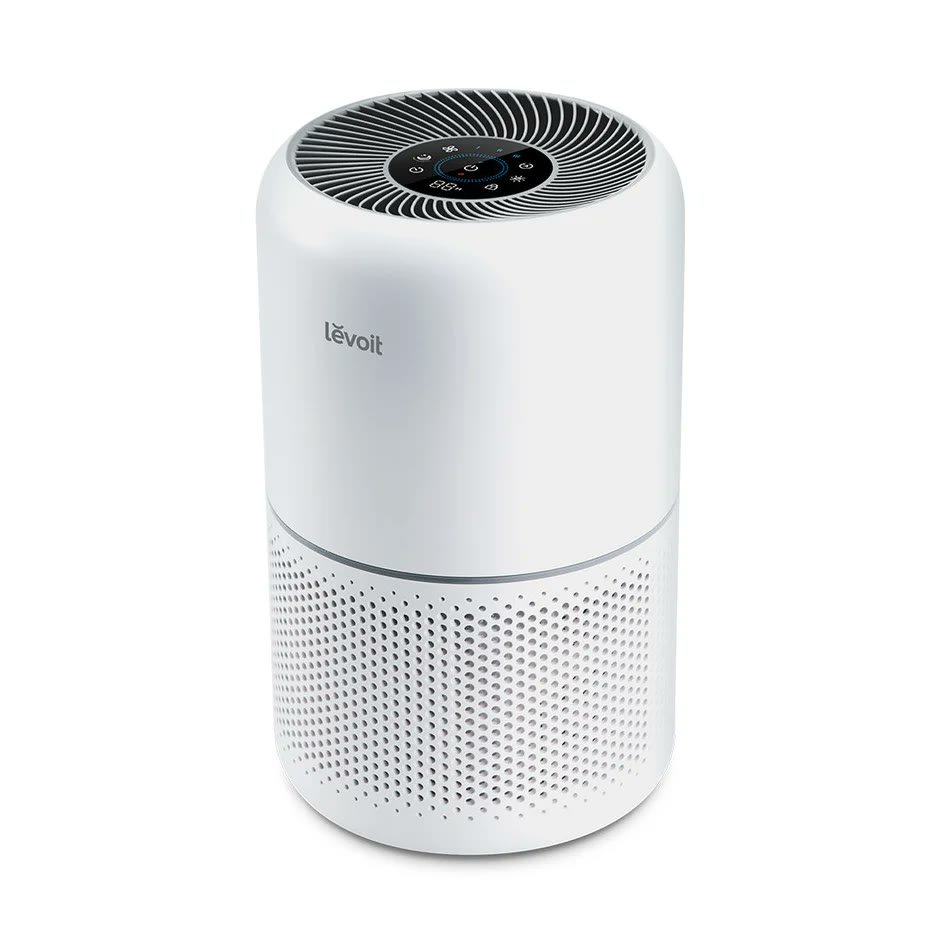
The Core 300S is the best-selling purifier in its class for a reason, and it’s a strong litter-odor pick: AHAM-verified CADR of 141 CFM (smoke) / 156 (dust) / 175 (pollen), a 22 dB sleep mode, auto mode that ramps up when the air quality sensor detects a problem, and WiFi/Alexa control through the VeSync app. For litter smell specifically, grab the Pet Allergy replacement filter — it adds extra odor absorption over the standard filter. Owners with multiple cats report it noticeably cuts the ambient litter funk in bedrooms and small living rooms.
The honest part: the carbon layer is on the thin side — reviewers note strong smells (curry, heavy litter odor) can linger longer than with pellet-carbon units, and replacement filters run roughly $25–30 every 6–8 months. At max speed it’s genuinely loud (~65 dB in independent testing), and the glowing air-quality ring bothers ultra-light sleepers. It’s the best all-rounder, not the best pure odor machine.
Specs: 8.66″ × 8.66″ × 14.17″ · AHAM CADR 141/156/175 CFM · 22 dB sleep mode · auto mode + air quality sensor · WiFi/Alexa · 2-year warranty.
Pros: best-selling with huge owner base; auto mode reacts to odor events; whisper-quiet sleep mode; pet-specific filter available.
Cons: thin carbon layer vs. pellet-carbon rivals; filters ~$25–30 every 6–8 months; loud at max; light ring bothers light sleepers.
Verdict: The safest default — smart, quiet, and proven in real cat households. Check the price on Amazon.
2. Levoit Core P350-P — Best Pet-Specific
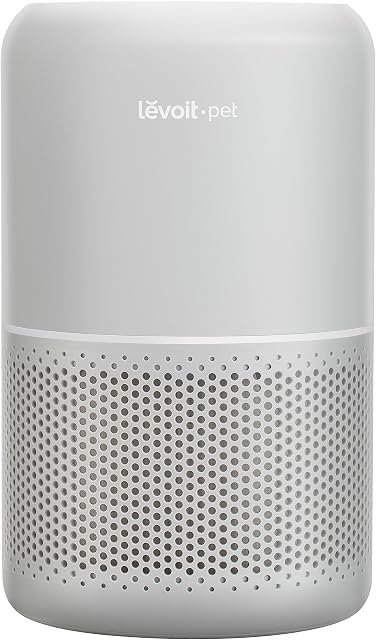
The P350-P is Levoit’s purifier built specifically for pet homes, and for litter smell it’s arguably better targeted than the 300S: the 3-in-1 Pet Allergy filter uses Levoit’s ARC Formula odor-neutralizing technology (the brand claims over 92% deodorization in testing) and explicitly names litter box smells in its marketing. It skips ionizers entirely — no ozone concerns around cats — and adds a Pet Lock so curious paws can’t change the settings. Sleep mode runs at 24 dB.
The trade-off: this is an older, simpler machine — no auto mode, no WiFi, no app; you set the fan speed manually. If you want the purifier to ramp up automatically after the cat visits the box, the 300S does that and this doesn’t. Replacement filters are the Core P350-RF. Buy it for the pet-tuned filter and the price, not the smarts.
Specs: 8.7″ × 8.7″ × 14.2″ · 3-in-1 Pet Allergy filter with ARC odor tech · no ionizer (pet-safe) · Pet Lock · 24 dB sleep mode · manual controls only.
Pros: filter explicitly designed for pet/litter odors; no ions or ozone; pet lock; quiet and affordable.
Cons: no auto mode, no WiFi/app — manual fan speed only; older model; replacement filter availability is narrower.
Verdict: The pet-specialist pick — best filter for the job, dumbest controls. Check the price on Amazon.
3. Winix 5500-2 — Best Odor Technology
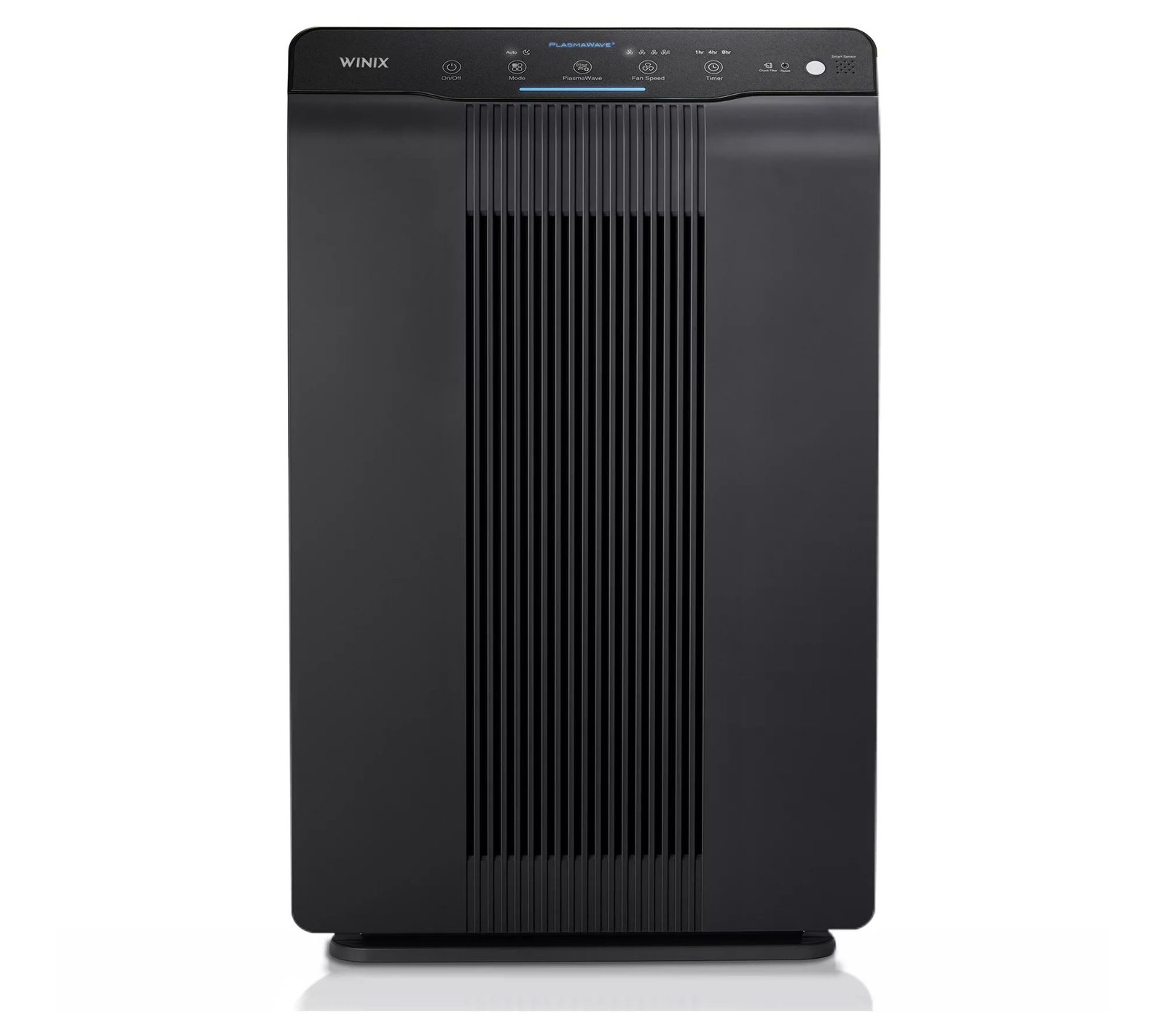
If litter odor is the entire mission, the Winix 5500-2 has the best carbon tech in this price class: a washable AOC filter made from actual activated carbon pellets — far more odor-absorbing mass than the thin carbon sheets in budget units — backed by PlasmaWave technology that breaks down odors and gases at a molecular level. It’s AHAM-verified, Energy Star certified, CADR-rated for 360 sq ft rooms, and comes with a remote and an air quality sensor with auto mode.
The honest complaints: turbo mode is loud (~66 dBA in testing) — fine for airing out the litter room while you’re out, less fine at night. PlasmaWave is an ionizer, which makes some pet owners nervous; it can be turned off, but only from the unit itself, not the remote. And the “smart” sensor mainly detects odors rather than particles, with owners reporting the indicator light flipping colors randomly. Wash the pre-filter regularly and the pellet carbon lasts.
Specs: 14.9″ × 7.8″ × 23.6″ · 17.5 lbs · True HEPA + washable pellet AOC carbon filter · PlasmaWave (defeatable) · CADR 360 sq ft · remote + auto mode.
Pros: pellet-based carbon — the real deal for odors; washable pre-filter extends filter life; remote included; proven long-term reliability.
Cons: loud on turbo; PlasmaWave can’t be toggled from the remote; odor-biased sensor can read erratically; bulky.
Verdict: The odor-fighting champion — buy it for the carbon, tolerate the quirks. Check the price on Amazon.
4. GermGuardian AC4825E — Best Budget
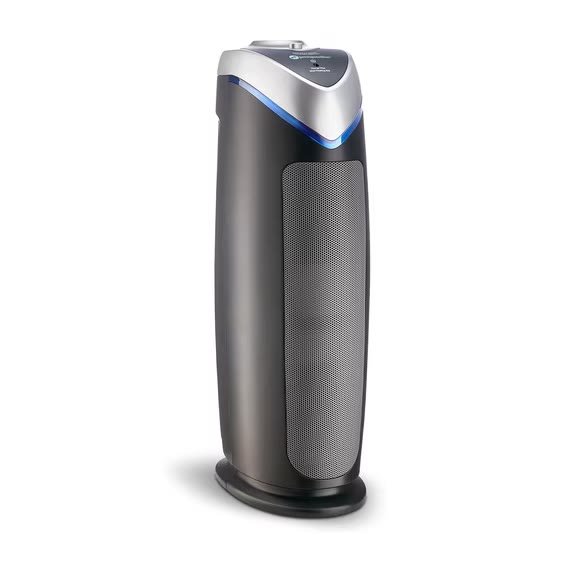
The AC4825E is the classic budget tower: True HEPA plus an activated carbon layer plus a UV-C sanitizer, in a slim 22-inch tower rated for rooms up to 743 sq ft per hour, usually selling well under $100. Owners give it 4.5 stars on Amazon, with cat owners specifically praising how it cuts household odor. The 3-year warranty is generous at this price.
Now the documented downsides, because there are several: many buyers report a strange plastic/chemical smell from the unit itself for the first days to weeks (it fades, but it’s ironic in an odor product). Reviewers consistently find the thin carbon layer weak against strong smells and VOCs — this is a light-odor machine, not a heavy-litter-box one. It’s noisy on high (~55 dB), the indicator LEDs can’t be turned off, there are no smart features, and filter costs run 30–40% of the unit’s price annually. Great second purifier; shaky primary.
Specs: 22″ tower · True HEPA + carbon + UV-C · 3 speed settings · up to 743 sq ft/hr (manufacturer) · 3-year warranty.
Pros: cheapest way into HEPA + carbon + UV-C; slim tower footprint; long warranty; well-reviewed for the price.
Cons: plastic off-gassing smell on arrival; thin carbon struggles with strong litter odor; noisy on high; LEDs can’t be dimmed; no smart features.
Verdict: The budget entry — fine for light odor duty, not a heavy-litter solution. Check the price on Amazon.
5. Coway Airmega 150 — Best Compact
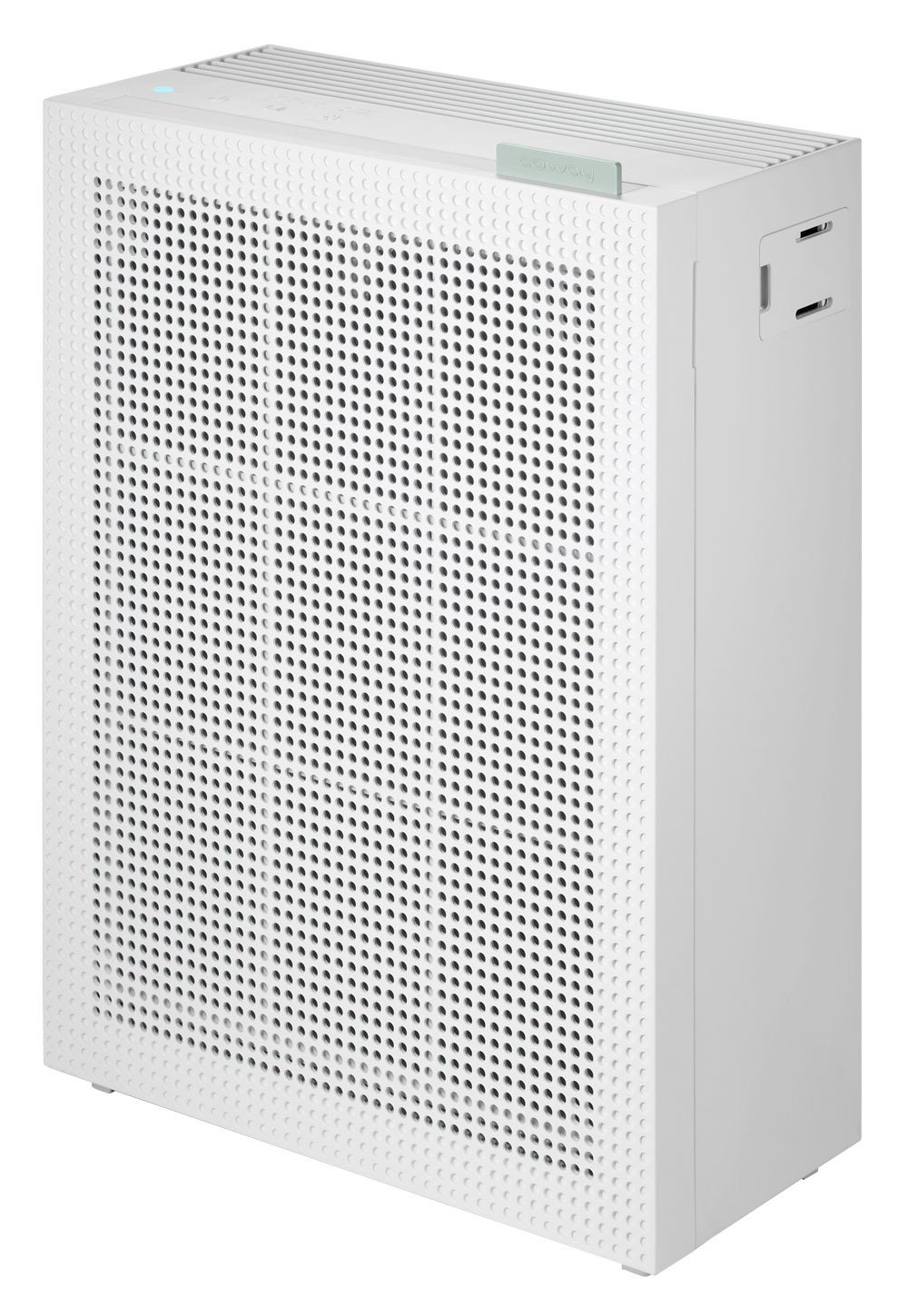
Coway’s Airmega 150 is the design-conscious pick: a slim, compact unit (13.4″ × 6.5″ × 18.5″) with Coway’s HyperCaptive filtration — washable pre-filter, dedicated deodorization (carbon) filter, and Green True HEPA — plus auto mode driven by a real-time air quality sensor. It’s remarkably quiet (down to ~20 dB on low), sips power (35W), and carries a 3-year warranty. For a litter box tucked in a small laundry room or bathroom, the footprint and the dedicated deodorization filter are exactly right.
The honest math: Coway recommends it for rooms around 214 sq ft — this is a small-room machine, and putting it in a big open-plan space wastes its talents. The combo replacement filter runs about $45/year, the casing feels thin and plasticky next to Coway’s bigger units, and there’s no app or WiFi. It’s the pretty, quiet specialist — not the workhorse.
Specs: 13.4″ × 6.5″ × 18.5″ · 12.1 lbs · HyperCaptive system (washable pre + deodorization + True HEPA) · CADR 138 smoke/161 dust/219 pollen · ~20–48 dB · auto mode · 3-year warranty.
Pros: slim and genuinely attractive; dedicated deodorization filter; whisper-quiet on low; auto mode works well.
Cons: small-room coverage (~214 sq ft recommended); ~$45/year in filters; thin plasticky casing; no smart features.
Verdict: The small-space specialist — perfect parked next to the litter box. Check the price on Amazon.
6. Alen BreatheSmart 45i — Best Premium

The 45i is the “buy once, cry once” option: a 245 CFM CADR machine covering up to 1,900 sq ft, H13 True HEPA, a laser particle sensor with auto mode, whisper-quiet operation (23–49 dB), and — the key for this guide — interchangeable filters including a dedicated HEPA-Odor filter with extra carbon for smell-heavy homes. Alen’s build quality and customer support are consistently rated among the best in the business, and the lifetime warranty (with registration) is unmatched.
The catches are price and size: it starts around $429–449, the Odor filter upgrade costs extra (~$89), and at 25″ × 15″ × 8.5″ it’s a piece of furniture. TechRadar’s review also notes the basic Pure filter won’t eliminate all odors on its own — you need the Odor filter for serious litter duty, which pushes the real price higher. But for a multi-cat home where the smell is a whole-house problem, nothing here moves more air.
Specs: 25″ × 15″ × 8.5″ · up to 1,900 sq ft · H13 True HEPA · 245 CFM CADR · 23–49 dB · laser sensor + auto mode · interchangeable filters (Pure/Fresh/Odor) · lifetime warranty (registration required).
Pros: most powerful here by far; dedicated Odor filter option; excellent build and support; lifetime warranty; quiet for its size.
Cons: ~$429+ plus ~$89 for the Odor filter; large footprint; basic filter is weak on odors — budget for the upgrade.
Verdict: The premium whole-house answer for multi-cat homes — but only with the Odor filter. Check the price on Amazon.
How to Choose an Air Purifier for Cat Litter Smell
Carbon quality is the whole game. HEPA catches particles; only activated carbon adsorbs odor molecules. Pellet or granular carbon (Winix 5500-2) holds far more odor than thin carbon sheets (budget units). If litter smell is the primary mission, rank by carbon mass first and everything else second.
Size the CADR to the room, not the marketing. Manufacturers love big “up to X sq ft” numbers. Look for the AHAM-verified CADR instead, and put the purifier in the room with the litter box — a small unit next to the box beats a big unit down the hall. Closed doors multiply effectiveness.
Budget for filters, not just the unit. A $90 purifier with $40/year in filters costs more over three years than a $150 purifier with $25/year filters. Check replacement filter prices and intervals before you buy — 6–8 months is typical for carbon in odor-heavy use.
Mind the noise where the box lives. If the litter box is near a bedroom, sleep-mode noise (dB) matters more than max CADR — a purifier you turn off at night purifies nothing. Look for sub-25 dB sleep modes, and check whether indicator lights can be dimmed or turned off.
Place it near the box, not across the room. Air purifiers clean the air that reaches them. Park the unit within a few feet of the litter box (but not where the cat can knock it over or sit on it), keep the room door closed when possible, and give it clear airflow on all sides.
Don’t fear ionizers — but know what you’re buying. PlasmaWave (Winix) and similar ionizers are CARB-certified low-ozone, but some cat owners prefer to disable them, and cats’ small lungs make caution reasonable. The Levoit P350-P skips ions entirely if you want zero debate.
Bottom line: the Levoit Core 300S is the best all-rounder for most cat homes — smart, quiet, proven. If litter odor is the entire mission, the Winix 5500-2‘s pellet carbon is the stronger weapon. On a budget, the Levoit Core P350-P gives you a pet-tuned odor filter for less, and multi-cat households with whole-house smell should look at the Alen BreatheSmart 45i with the Odor filter.
Frequently Asked Questions
Do air purifiers really get rid of cat litter smell?
They reduce it — they don’t eliminate it. A purifier with a good carbon filter continuously adsorbs odor molecules from the air, which noticeably cuts the ambient funk between scooping. But it can’t compensate for a dirty box: scoop daily, change litter regularly, and ventilate the room. Think of the purifier as the finishing move, not the whole strategy.
Where should I place an air purifier for litter odor?
As close to the litter box as practical — within a few feet, with clear airflow around the intake. Purifiers clean the air that reaches them, so distance is the enemy. Keep the room door closed when you can, and don’t tuck the unit in a closet or behind furniture where airflow is blocked.
HEPA vs. carbon — which matters more for litter smell?
Carbon, by a mile. HEPA filters trap particles (dust, dander, litter dust) but do nothing for gases and odors. Activated carbon adsorbs the volatile compounds behind the smell. For litter odor specifically, prioritize carbon filter thickness and mass; HEPA is a bonus for the dust that litter kicks up.
How often do I need to replace the filter?
In a cat household, plan on every 6–8 months for combination filters — carbon saturates faster in odor-heavy environments than the manufacturer’s “up to 12 months” suggests. Vacuum the pre-filter every 2–4 weeks to extend the main filter’s life. If the smell starts creeping back, the carbon is spent regardless of what the indicator light says.
Are ionizers and PlasmaWave safe around cats?
Winix’s PlasmaWave and similar technologies are CARB-certified to produce only trace ozone, well below safety limits — but some owners prefer to disable them around small animals, and the Winix lets you turn PlasmaWave off (from the unit). If you’d rather skip the question entirely, the Levoit Core P350-P uses no ionization at all.
Will an air purifier help with litter dust too?
Yes — that’s the HEPA filter’s job. Clay and crystal litters throw fine dust that settles on everything and irritates allergies; a True HEPA filter captures it. If dust is as big a complaint as smell in your house, consider switching to a low-dust litter alongside the purifier — the combination works better than either alone.
