

Pet Travel Items is reader-supported. When you buy through links on this page, we may earn an affiliate commission at no extra cost to you. This keeps our reviews honest: we never let commissions decide what makes the cut, and every product below carries its real drawbacks as well as its strengths.
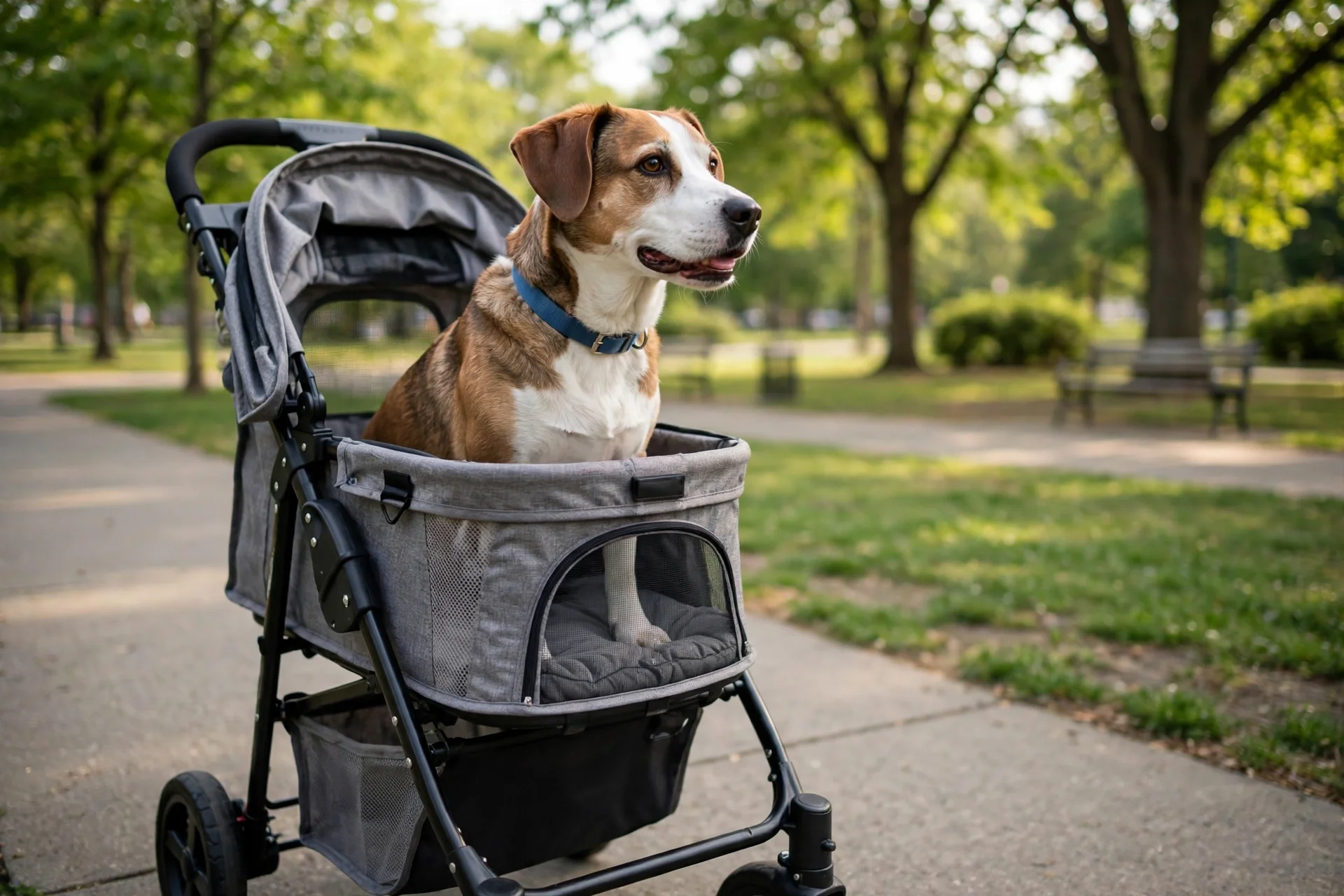
Shopping for a pet stroller for a medium dog is where the “up to 50 pounds” marketing starts getting dishonest. A surprising number of strollers sold under the medium-dog banner are really built for small dogs: 25-pound weight limits, cabins too narrow for a beagle to turn around in, wheels so small they jam on the first crack in the sidewalk. If your dog weighs 30 to 45 pounds, weight capacity is not a bragging number, it is the spec that decides whether the frame wobbles, the wheels splay, and the ride feels safe or sketchy. Every stroller below is rated for at least 44 pounds, and every rating below comes from the brand’s own listing, not from wishful thinking.
Three caveats before the list. First, a stroller is not a crash restraint. The interior tethers keep your dog from hopping out at a crosswalk; they do nothing in a collision, so do not roll the stroller down the highway in the bed of a pickup. Second, weight limits are real structural limits, and a 40-pound dog in a 44-pound stroller will ride differently than a 30-pound dog does. Third, cheap wheels are the single biggest reason budget strollers disappoint. Small plastic wheels rattle on rough pavement, rattle the dog, and rattle loose over a season. Rubber tires with real diameter are worth more than any cup holder. This roundup is ordered by overall value for a medium-dog owner who wants to spend under the premium tier.
| # | Product | Key Spec | Best For | Check Price |
|---|---|---|---|---|
| 1 | Bicystar Pet Stroller for Medium Dogs, Grey | 50 lb, solid rubber wheels 7 in/10 in, detachable carrier | The best wheels at a budget price | Check Price |
| 2 | Kenyone Pet Stroller C310 | 55 lb, 13.6 lb aluminum frame, no-zip entry | Carrying up stairs and loading trunks | Check Price |
| 3 | Critter Sitters 3-Wheel Jogging Dog Stroller, Tan | 55 lb, 14 in rear wheels, 18 lb | Cracked sidewalks and park paths | Check Price |
| 4 | Pet Gear No-Zip AT3, Summit Grey | 60 lb, 12 in EVA jogging tires, 28 lb | Heavier medium dogs and rough trails | Check Price |
| 5 | Pet Gear No-Zip Special Edition 3-Wheel, Willow | 45 lb, 17 lb, panoramic paw-rest window | Dogs under 40 lb; easy in and out | Check Price |
| 6 | BestPet 3-in-1 Multifunction Dog Cat Jogger Stroller, Grey | 44 lb, detachable carrier, 5.2 in EVA wheels | Tightest budget; smooth pavement only | Check Price |
1. Bicystar Pet Stroller for Medium Dogs, Grey
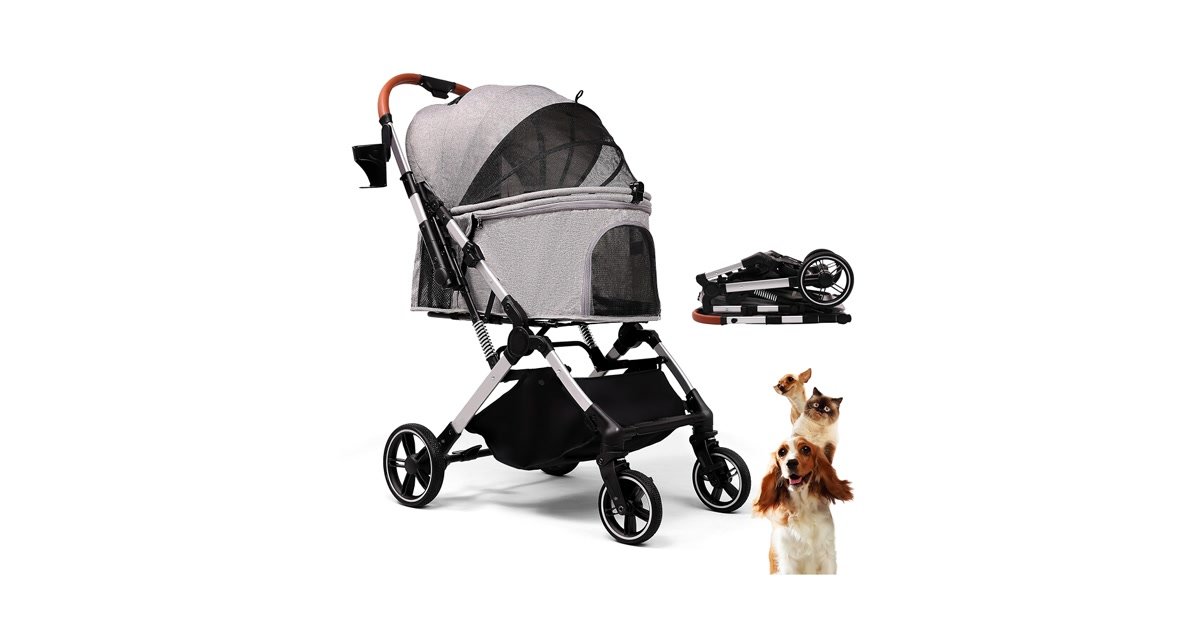
Most budget strollers ship with foam or hard-plastic wheels, which is why the Bicystar stands out immediately: real solid rubber wheels, 7 inches up front and 10 in the back, with a direction lock on the swiveling front pair. That is the wheel setup that separates a stroller that glides from one that clatters. It is rated for 50 pounds, and the carrier interior runs 26 inches long by 14.2 wide, which is genuinely sized for a dog under about 23 inches of body length, not a cat-sized afterthought.
The standout feature beyond the wheels is the detachable carrier. It lifts off the frame at 7.5 pounds and works as a car seat, which turns one purchase into two tools: stroller for the walk, car seat for the drive over. The frame alone weighs 15.2 pounds, so the whole thing is 22.7 pounds when assembled, honest numbers the listing states outright instead of burying. A 2-year warranty is unusual at this tier and suggests the company expects these to hold up.
The honest downsides. The carrier sits low: 9.4 inches of interior height, so a tall, sit-upright dog like a poodle mix will have their head in the canopy mesh. It is a three-wheel-adjacent four-wheeler with smallish front wheels, and while rubber beats foam, 7 inches still thunks on broken pavement. And Bicystar is a newer, lesser-known brand, so you are betting on the listing’s specs rather than a decade of owner history the way you can with Pet Gear.
- Specs: 50 lb max; solid rubber wheels (7 in front, 10 in rear); 22.7 lb total (7.5 lb carrier + 15.2 lb frame); carrier interior 26 in L x 14.2 in W x 9.4 in H; folds to 23.6 in W x 10 in x 34.6 in; 360-degree front wheels with direction lock; one-touch brake; 2 internal tethers; waterproof pad; cup holder; storage basket; adjustable handle 36.6–44 in; 2-year warranty.
- Pros: Only stroller here with solid rubber wheels; detachable carrier doubles as car seat; transparent weight breakdown; tall handle range suits taller pushers.
- Cons: Low 9.4 in interior height cramps sit-upright dogs; small front wheels still thud on broken pavement; newer brand with thin long-term track record.
Verdict: The best-value pick for most medium-dog owners. The rubber wheels and the detachable carrier are real features, not marketing gloss, and 50 pounds covers a 35-to-40-pound dog with room to spare. Check Price on Amazon
2. Kenyone Pet Stroller C310
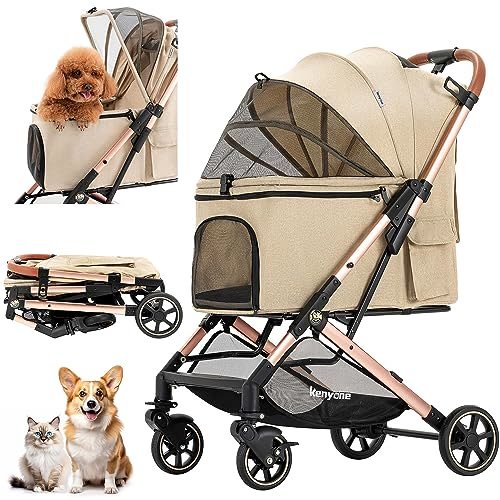
Here is the number that matters: 13.6 pounds, for a stroller rated to 55 pounds. That ratio is the whole pitch. If you live up a flight of stairs, or you load the stroller into a trunk daily, ten fewer pounds than the Pet Gear models changes the chore from miserable to manageable. The aluminum frame, one-click fold, and a no-zip entry round out a design that is clearly optimized for being handled, not just pushed.
The cabin is respectably roomy too. At 24.5 inches long and 13.8 wide with a 25.2-inch interior height, this is one of the few budget strollers a leggy medium dog can actually sit upright in. The fully detachable mesh fabric is a thoughtful touch: when the mesh tears or the fabric stinks after a muddy season, you can take it off and clean or replace it instead of throwing out the whole stroller.
But lightness always has a cost, and here it is the wheels. PU wheels with shock absorbers are fine on mall floors and fresh asphalt, and they will rattle your fillings on a cracked sidewalk. The brand’s claim of being 30 to 40 percent lighter than similar-capacity strollers is a clue, not just a boast: the frame is doing less work, and owners of lightweight strollers consistently report more wobble when the dog shifts or stands at full capacity. Keep your 45-pound dog under control and off curbs, and it will be fine. Expect it to feel like a tank, and it will not.
- Specs: 55 lb max; 13.6 lb aluminum frame; interior 24.5 in L x 13.8 in W x 25.2 in H; PU wheels with front brake and direction lock; shock absorbers; one-click fold; no-zip entry; detachable mesh fabric; cup holder; waterproof anti-slip pad; two safety rope buckles.
- Pros: Lightest 50-lb-class stroller in this roundup; tall 25.2 in cabin lets dogs sit upright; detachable mesh is cheap to clean and replace; no-zip entry.
- Cons: PU wheels rattle on rough pavement; light frame means more wobble at full capacity; shorter owner history than legacy brands.
Verdict: Buy it for the weight. If lifting and folding matter as much as pushing, nothing else here at this capacity comes close to 13.6 pounds. Check Price on Amazon
3. Critter Sitters 3-Wheel Jogging Dog Stroller, Tan
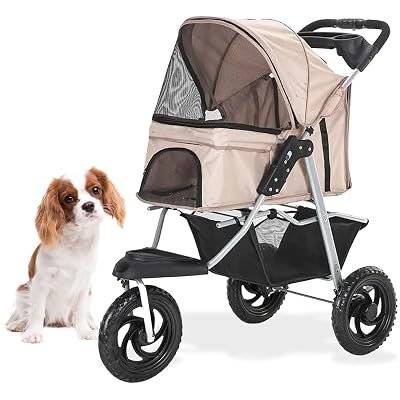
Three-wheel jogger layouts have one big advantage for pet strollers: big rear wheels. The Critter Sitters runs 14-inch rubber tires out back, the largest wheels in this roundup, and wheel diameter is the single most important spec for rough sidewalks. A 14-inch wheel rolls over cracks that stop a 6-inch wheel cold, and it does it without the vibration that tires a dog out on a long walk. If your daily route includes tree roots, brick pavers, or gravel paths, this geometry beats every other pick here.
It is rated to 55 pounds, weighs a manageable 18 pounds, and the jogger triangle gives it a long, stable wheelbase that resists the tippiness narrow four-wheelers develop when a dog lunges at a squirrel. Two cup holders and a storage basket cover the parent basics, and the aluminum frame keeps the weight sane. Critter Sitters backs it with a 1-year limited warranty.
The trade-offs are real. The fold measures 18 x 18 x 42 inches, which is long and awkward; this is not the stroller for a small car trunk. The jogger handle geometry is designed for forward motion, so it is clumsier in tight store aisles than a four-wheeler. And while the Amazon product information table confirms the 55-pound rating and the 14-inch rear wheels, the listing’s detail on the front wheel and brake setup is thinner than I would like. Confirm the brake situation on the listing page before you buy, because a jogging stroller without a reliable parking brake is a runaway risk on a hill.
- Specs: 55 lb max; 18.08 lb aluminum frame; 14 in rubber rear wheels; 3-wheel jogger layout; folds to 18 x 18 x 42 in; 43 in L x 19 in W x 43 in H open; built-in safety leash; storage basket; 2 cup holders; 1-year limited warranty.
- Pros: Largest rear wheels here, best on rough pavement; long jogger wheelbase resists tipping; light for its wheel size.
- Cons: Long awkward fold eats trunk space; clumsy in tight aisles; front-wheel and brake details are thin on the listing.
Verdict: The rough-terrain pick. If your neighborhood chews up small wheels, the 14-inch rear tires earn this stroller its place. Check Price on Amazon
4. Pet Gear No-Zip AT3, Summit Grey

Pet Gear is the legacy name in this category, and the AT3 is the company’s answer to owners who want one stroller for neighborhood streets and dirt trails. Pet Gear’s own comparison chart rates it at 60 pounds, the highest capacity in this roundup, with 12-inch EVA jogging tires on all three wheels and a front wheel that locks straight for trail use or swivels for the sidewalk. The push-button No-Zip entries open front and back, so an injured or arthritic dog never has to be lifted over a high wall or turned around inside the cabin.
This is also the heaviest stroller here at 28 pounds, and that weight is doing structural work. A 40-pound dog shifting around inside a 60-pound-rated frame rides noticeably calmer than in a frame rated right at the dog’s weight. The elevated paw rest with the panoramic window is genuinely loved by dogs that want to see out, and the removable washable liner survives muddy-paw season better than fixed upholstery.
The catch is the price class. With a retail price around the $230 mark, the AT3 is stretching the word “affordable.” You are paying for the capacity margin and the jogging tires, not for luxury. The EVA tires are the honest compromise: they are airless and never go flat, but they transmit more vibration than pneumatic or solid rubber tires, and the 28-pound frame is a workout to lift into a tall SUV. It is the right call for a 45-to-50-pound dog or an active trail user. It is overkill for a 30-pound cocker spaniel on flat pavement.
- Specs: 60 lb max (brand chart); 28 lb; 12 in EVA jogging tires; front wheel locks or swivels; interior approx 28 in L x 12.5 in W x 22.5 in H; push-button No-Zip front and rear entries; elevated paw rest with panoramic window; removable washable liner; 42 in handle height; one-hand fold.
- Pros: Highest capacity here; dual No-Zip entries mean no lifting and no turning the dog around; jogging tires handle trails; most-documented brand in the category.
- Cons: Near $230, the priciest in this roundup; 28 lb is heavy to lift; EVA tires vibrate more than rubber.
Verdict: The heavy-duty pick. If your dog is at the top of the medium range or you actually jog, the 60-pound rating and the No-Zip entries justify the premium over the budget five. Check Price on Amazon
5. Pet Gear No-Zip Special Edition 3-Wheel, Willow
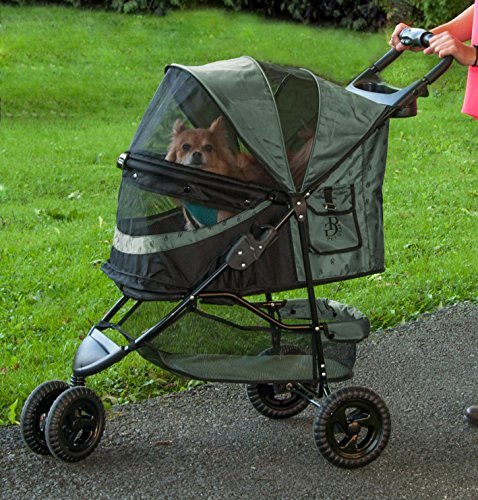
The Special Edition is Pet Gear’s middle child: lighter than the AT3, roomier-feeling than the Happy Trails, and rated to 45 pounds. At 17 pounds it is the second-lightest stroller here, and the three-wheel layout with the push-button No-Zip entry makes it one of the easiest to load a reluctant dog into. The elevated paw rest with the panoramic view window is the same well-executed feature as the AT3, and dogs that like to ride with their chin on the front bar genuinely prefer it.
The 45-pound rating is the number to read carefully. It covers a 30-to-35-pound dog with a comfortable margin, but a 42-pound border collie is running at 93 percent of capacity, and every frame behaves worse near its limit. This is a stroller for the lower half of the medium range. The 7-inch front and 7.75-inch rear plastic/EVA wheels are also firmly in the smooth-pavement category; they will do fine on sidewalks and store floors and will complain on anything rougher.
Where it wins is day-to-day handling. Seventeen pounds, a one-hand fold, and the zipperless entry mean you will actually use it for the quick errands that justify owning a stroller in the first place. It is not the exciting pick in this roundup, but for a beagle or a corgi it may be the most-used pick.
- Specs: 45 lb max (brand chart); 17 lb; plastic/EVA wheels 7 in front / 7.75 in rear; interior approx 25 in L x 12 in W x 21 in H; push-button No-Zip entry; elevated paw rest with panoramic window; removable liner; cup holder; one-hand fold.
- Pros: Light at 17 lb; No-Zip entry is genuinely easier with a squirmy dog; paw-rest window dogs enjoy; proven brand.
- Cons: 45 lb rating is tight for dogs over 40 lb; small hard wheels are smooth-pavement only; interior is narrower than the numbers above suggest once the padding is in.
Verdict: The sensible pick for dogs 40 pounds and under. Do not stretch the 45-pound rating; buy it for the dog it fits, not the dog you wish it fit. Check Price on Amazon
6. BestPet 3-in-1 Multifunction Dog Cat Jogger Stroller, Grey
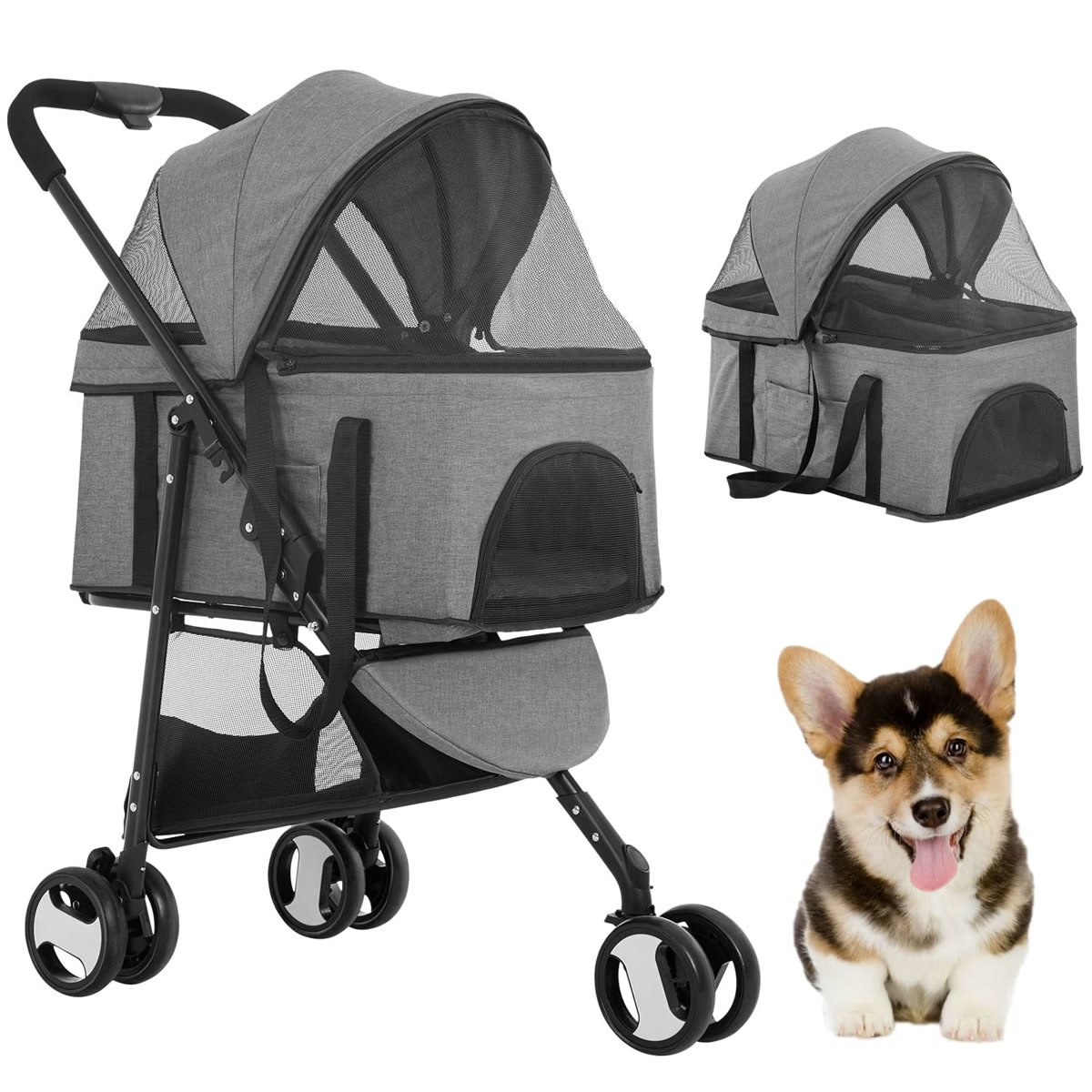
The BestPet is here because it is usually the cheapest way into a 44-pound-rated stroller with a detachable carrier, and sometimes the budget genuinely decides. The 3-in-1 concept is the same as the Bicystar’s: the carrier lifts off the frame to work as a travel carrier, the frame folds by one-click, and the whole package covers smooth-pavement walks and vet visits without demanding much money.
The 5.2-inch EVA wheels are the smallest in this roundup, and you should buy with your eyes open about what that means. They will glide across a mall floor and a fresh parking lot. They will snag on every expansion joint, pebble, and tree-root crack on a real sidewalk, and each snag jerks the dog. If your walks are rough pavement, spend the difference on the Bicystar or the Critter Sitters. This stroller’s natural habitat is indoor malls, smooth paths, and short trips.
BestPet is a value brand without the long owner history of Pet Gear, and the listing is thinner on structural detail than the others here. The rear brakes and the safety tether cover the basics, and the mesh windows give ventilation and visibility. Treat it as what it is: the minimum viable stroller for a medium dog, honestly priced for what it delivers.
- Specs: 44 lb max; 5.2 in high-strength EVA wheels; detachable carrier; one-click fold; 360-degree front swivel; rear brakes; safety tether; mesh windows; storage basket.
- Pros: Lowest price tier for a 44-lb rating; detachable carrier adds versatility; simple fold.
- Cons: 5.2 in wheels are the smallest here and snag on rough pavement; thin listing detail on frame and dimensions; value-brand track record.
Verdict: The tightest-budget pick, with a hard limit: smooth pavement only. Buy it for the mall and the vet, not the broken sidewalk. Check Price on Amazon
Buying Guide: How to Choose a Pet Stroller for a Medium Dog
Read the weight rating like an engineer, not a shopper
The rating is a structural limit, not a suggestion, and strollers ride worse as you approach it. A 40-pound dog in a 45-pound stroller will feel every bump through the frame and shift the whole thing when they stand. Aim for at least 5 to 10 pounds of headroom above your dog’s actual weight, and weigh the dog, not your memory of the dog. Puppies grow into the limit too; a 6-month-old lab mix at 35 pounds will not stay there.
Measure the cabin, not just the weight limit
Weight capacity without interior dimensions is half a spec. Your dog needs to sit, lie down, and turn around without folding themselves into the mesh. Measure your dog’s body length from chest to base of tail and their sitting height, then compare against the interior numbers. Pet Gear’s own advice is to fold a towel to the interior dimensions and set the dog on it, which sounds silly and works perfectly. The Gen7Pets Regal Plus is the cautionary example here: marketed to medium-dog shoppers, rated to only 25 pounds, with a 22-by-11-inch cabin. That is a small-dog stroller wearing a medium-dog keyword.
Wheels decide everything about the ride
Small hard-plastic wheels are the number-one reason budget strollers get returned. The physics are simple: a bigger wheel rolls over an obstacle instead of stopping against it. On rough sidewalks, 10-to-14-inch wheels (the Critter Sitters, the Bicystar’s rear pair, the Pet Gear AT3) ride like different machines than 5-to-7-inch wheels. Rubber beats EVA foam beats hard plastic for vibration. If your route includes anything rougher than a parking lot, put wheel size at the top of your priority list and cup holders at the bottom.
No-zip entries are worth it for heavy or injured dogs
Zippers on cheap strollers catch fur, jam, and eventually separate, and lifting a 40-pound dog over a high cabin wall gets old fast. Push-button or latch entries like Pet Gear’s No-Zip system and the Kenyone’s no-zip door solve both problems: the dog walks in through the front or back without being lifted or turned around. For senior dogs with arthritis or post-surgery dogs with lifting restrictions, this feature matters more than any other.
Folded size and your actual car
Stroller dimensions in the product photos are the open dimensions. Check the folded dimensions against your trunk before you buy, especially with jogger-style frames like the Critter Sitters, which folds to a long 18-by-18-by-42-inch shape. If you drive a compact car, the Kenyone’s one-click compact fold is the safer bet. Measure the trunk with a tape measure. It takes thirty seconds and has saved more returns than any review ever will.
What to do when your dog is over 50 pounds
None of the strollers in this roundup are right for a 55-to-60-pound dog at full capacity except the Pet Gear AT3, and even that is at its ceiling. For heavier dogs, the honest options are the Pet Gear No-Zip Expedition (150-pound rating, around $290, 26 pounds of stroller) or the HPZ Pet Rover premium line, which is excellent and not affordable. Do not put a 60-pound dog in a 55-pound stroller and hope. The hope is not structural.
Do dogs actually like strollers?
Most dogs accept a stroller within a few sessions if you train it like crate training: treats in the stationary stroller first, short rolls second, and never the dog’s first long outing as the training session. Dogs that hate confinement will hate the stroller regardless of brand. Senior dogs and injured dogs are usually the easiest converts, because the stroller returns something they lost: the walk. Anxious dogs sometimes do better with the canopy open so they can see you.
Is a pet stroller safe to use?
For its intended use, yes, with two non-negotiable rules. Always clip the interior tether to your dog’s harness, never to a collar, so a lunge does not become a choking incident. And always set the parking brake before you let go of the handle, because a loaded stroller on even a slight slope will roll. What a stroller is not: a car seat, a crate for unsupervised time, or exercise. A dog that rides everywhere and walks nowhere loses conditioning, which is the opposite of what an aging dog needs.
How do I clean a pet stroller?
Mud is inevitable, so buy for it. Removable washable liners (Pet Gear’s models, the Bicystar’s waterproof pad) go straight in the washing machine. For the frame and fabric, a damp cloth with mild detergent handles most of it; avoid pressure washers, which force water into wheel bearings and frame joints. The Kenyone’s fully detachable mesh fabric is the easiest long-term maintenance story here: when the mesh tears or permanently smells like wet dog, you deal with the fabric, not the whole stroller.
Can I jog with a pet stroller?
Only with a stroller built for it, and “jogger” in a product name is not proof. Real jogging strollers have a front wheel that locks straight, large airless or pneumatic tires, and a frame rated well above your dog’s weight, like the Pet Gear AT3’s 12-inch jogging tires and 60-pound rating. The 3-wheel budget models with 5-inch wheels are walking strollers with sporty styling; jogging with them is how axles bend. And no pet stroller is a bike trailer. Ever.
What is the weight limit for most medium dog strollers?
Most strollers marketed to medium-dog owners land between 25 and 55 pounds of rated capacity, which is exactly why the marketing is treacherous. A 25-pound rating (like the Gen7Pets Regal Plus) is a small-dog stroller. The honest medium range is 44 to 60 pounds, which is why every pick in this roundup starts at 44. If the listing does not state both a weight rating and interior dimensions, treat that as a red flag and move on.
Are expensive pet strollers worth it over budget ones?
Sometimes, and the difference is almost entirely wheels and frame. A $400 HPZ Pet Rover rolls on pneumatic tires with real suspension; a $90 budget stroller rolls on hard plastic. Between those extremes, the value curve bends hard around $150 to $230, where you get rubber or EVA jogging tires and a frame that does not flex at capacity. Below that, you are buying disposable wheels. Above that, you are buying comfort features. The Bicystar at the top of this list is the best argument that the sweet spot is lower than the premium brands want you to believe.
