

As an Amazon Associate, Pet Travel Items earns from qualifying purchases. This guide links products we think are worth your money, and if you buy through them, we may earn a commission at no extra cost to you. Read our full policy at https://pettravelitems.com/affiliate-disclosure/.
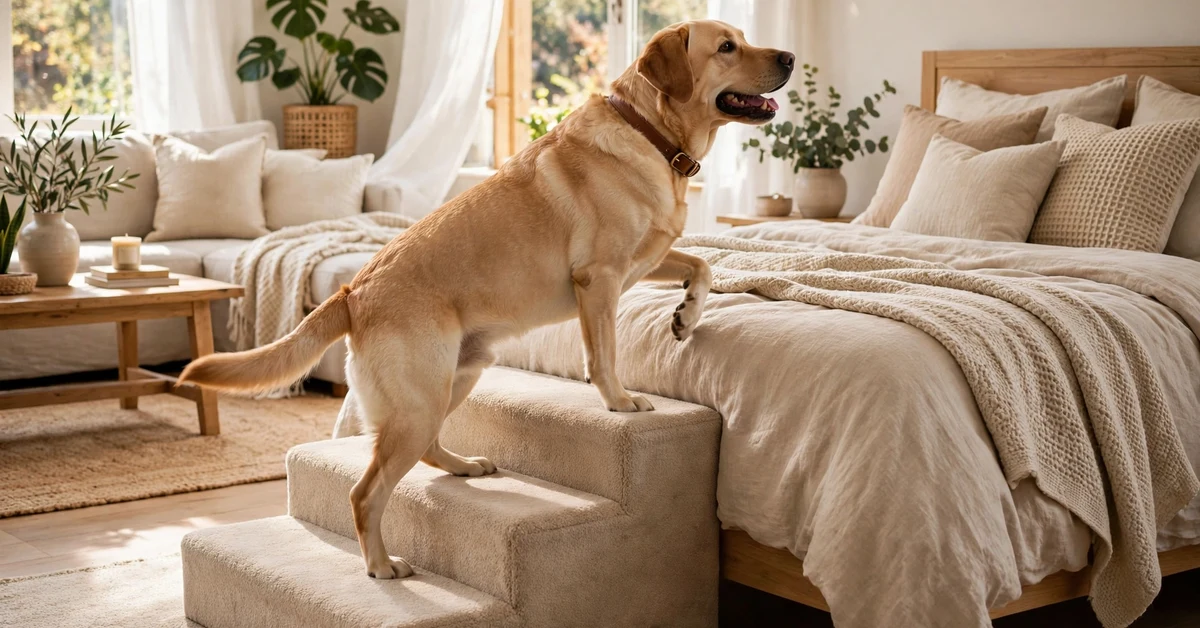
A large dog that cannot get onto the bed anymore is a daily negotiation. You wake up to a Labrador staring at the mattress edge, or a German Shepherd who launches herself up and lands wrong, and suddenly the furniture is the problem. Pet steps promise an easy fix. Most of them, though, are designed for dogs under 50 pounds and marketed as if that detail did not matter.
That mismatch is the whole reason for this guide. “Large dog” on an Amazon listing is a marketing label, not a weight rating. Some of the most-bought pet steps on Amazon top out well below a full-grown Lab, and at least one hugely popular foam stair is explicitly titled for small dogs and cats. Below, every pick carries its actual weight rating, or an honest note where the listing publishes none, so you can see which steps are genuinely built for a heavy dog and which ones would just be decorative.
One more thing before the list: steps are mobility aids, not medicine. If your dog is limping, stiff in the mornings, or hesitating at stairs they used to fly up, that is a vet conversation, not a shopping problem. Steps can reduce the daily joint pounding that makes arthritis worse, but they do not treat arthritis, and for a dog in real pain a ramp is usually the kinder answer. The last pick on this list exists for exactly that reason.
Quick Comparison: Pet Steps for Large Dogs
| # | Product | Why it made the list | Check Price |
|---|---|---|---|
| 1 | Pet Gear Easy Step III Pet Stairs, Cocoa (150 lbs) | The long-running standard; 23-inch height, washable carpet treads, snaps together without tools | Check Price |
| 2 | Pet Gear Easy Step II Extra Wide, Chocolate (200 lbs) | The 200-lb rating pick for heavy dogs; only 16 inches tall, so couches and low beds only | Check Price |
| 3 | PetSafe CozyUp Folding Dog Stairs, Grey, 20 Inch (150 lbs) | Folds flat for storage and travel; side rails and replaceable fabric tread covers | Check Price |
| 4 | Best Pet Supplies Foam Steps, Ash Gray Linen, 4-Step (no published weight rating) | One of the most-bought stair listings anywhere; included so you know its real limits before buying for a big dog | Check Price |
| 5 | Pet Gear Easy Step III Extra Wide, Fog (200 lbs) | The most honest large-dog pick here: 20-inch wide frame, 200-lb rating, true bed height | Check Price |
| 6 | PetSafe CozyUp Steps & Ramp Combo (200 lbs) | Converts between stairs and ramp mode; the pick for stiff or senior dogs that find steps painful | Check Price |
1. Pet Gear Easy Step III Pet Stairs (Cocoa)
If pet steps had a default option, this would be it. The Easy Step III has been sold for nearly two decades, and the formula has barely changed: wide 6-inch rises, deep landings, carpet treads that peel off for machine washing, and a frame that snaps together with no tools. At 23 inches tall it genuinely reaches a real bed, which is more than most of the stairs on Amazon can say.
The catches are the kind that only matter for genuinely large dogs. Sixteen inches of width is workable for a Lab but tight for a broad-chested breed. The carpet treads are the classic complaint: the adhesive holding them down weakens with time and wash cycles, and treads start to slide or curl at the edges. And while the frame is rated to 150 pounds, dogs near that ceiling can make the plastic sides flex, which is exactly the kind of wobble that makes a nervous dog stop using stairs. It is the best-known pick, not the strongest one.
Key specs:
- 3 steps; 25″L x 16″W x 23″H overall
- Maximum weight: 150 lbs
- Step rise: 6 inches per step
- Removable, machine-washable carpet treads; rubber grippers on the base
- Snaps together, no tools required
Pros:
- Tall enough (23″) for real beds, not just couches
- Deep landings with gentle incline per Pet Gear’s design
- Carpet treads come off for washing instead of forcing you to scrub in place
- Long-established product line with consistent parts availability
Cons:
- Narrow 16-inch width for giant or broad-chested breeds
- Tread adhesive weakens over time; treads can curl or slip
- Plastic frame flexes near the 150-lb limit
- Not tall enough for extra-high platform beds
Verdict: The safe, well-understood default for dogs up to about 120 pounds. Heavier dogs, or dogs that flinch at wobble, should look at pick 5 instead.
2. Pet Gear Easy Step II Extra Wide (Chocolate)
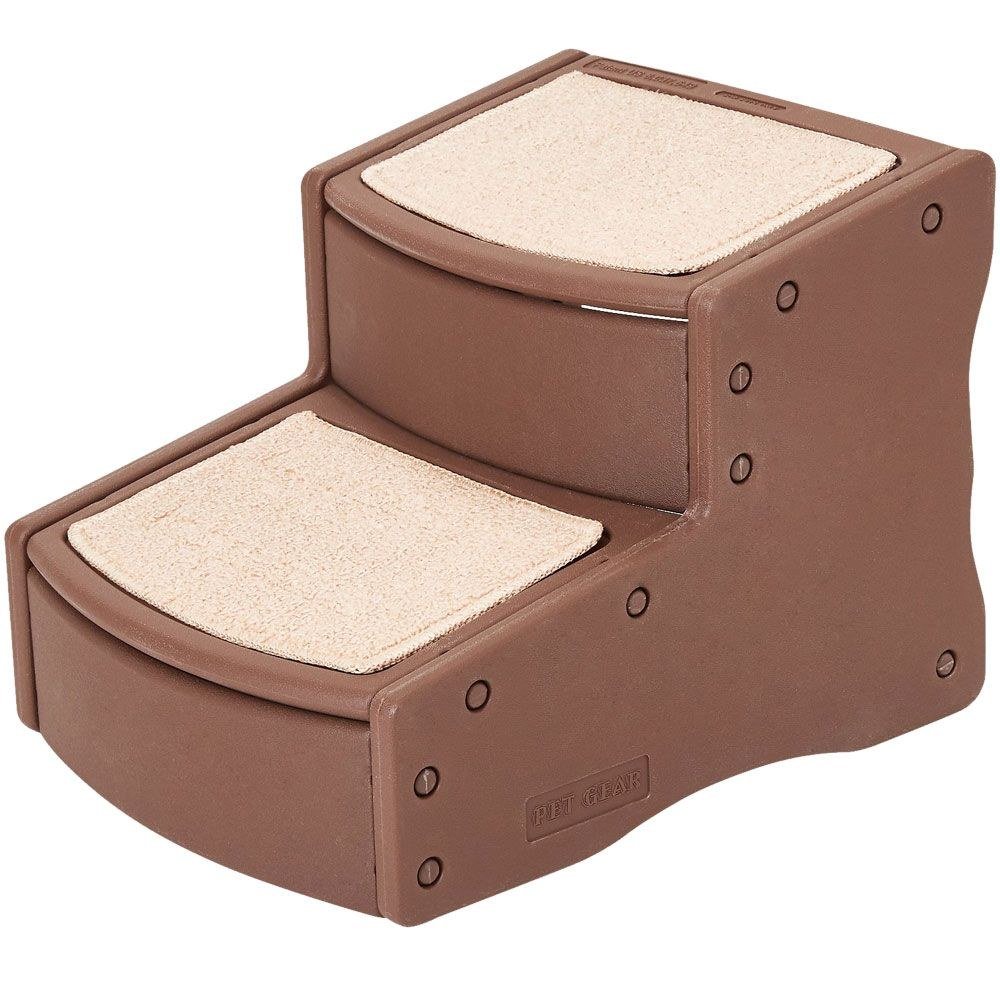
This one exists for a very specific buyer: the owner of a genuinely heavy dog who keeps finding stairs rated to 75 or 100 pounds. The Easy Step II Extra Wide is rated to 200 pounds with a 20-inch-wide platform, and that combination is rare in this price range. If your dog is a 150-pound Mastiff-type and the question is “will it hold,” the answer here is yes.
The honest problem is height. This is a two-step stair topping out at about 16 inches. That reaches a couch or a low guest bed. It does not reach a standard platform bed, and it certainly does not reach an SUV cargo floor. Pet Gear clearly built this for dogs that need width and weight capacity at couch height, and for that job it is excellent. Just measure your furniture before assuming it fits, because 16 inches is not enough for most beds people are actually buying steps for.
Key specs:
- 2 steps, Extra Wide; approximately 22″L x 20″W x 16″H
- Maximum weight: 200 lbs
- Step rise: 6 inches per step
- Removable, machine-washable carpet treads
- Snaps together, no tools required
Pros:
- 200-lb rating handles genuinely heavy dogs
- Extra-wide 20-inch platform gives big dogs room to place their feet
- Washable treads, simple assembly
- Compact footprint that sits close against furniture
Cons:
- Only 16 inches tall, unsuitable for high beds
- Two taller steps rather than three or four shallow ones, harder on stiff joints
- The compact 22-inch length needs to sit flush or the incline steepens
Verdict: The strongest couch-height pick for heavy dogs. If you need bed height with a 200-lb rating, pick 5 is the same brand’s taller answer.
3. PetSafe CozyUp Folding Dog Stairs (Grey, 20 Inch)
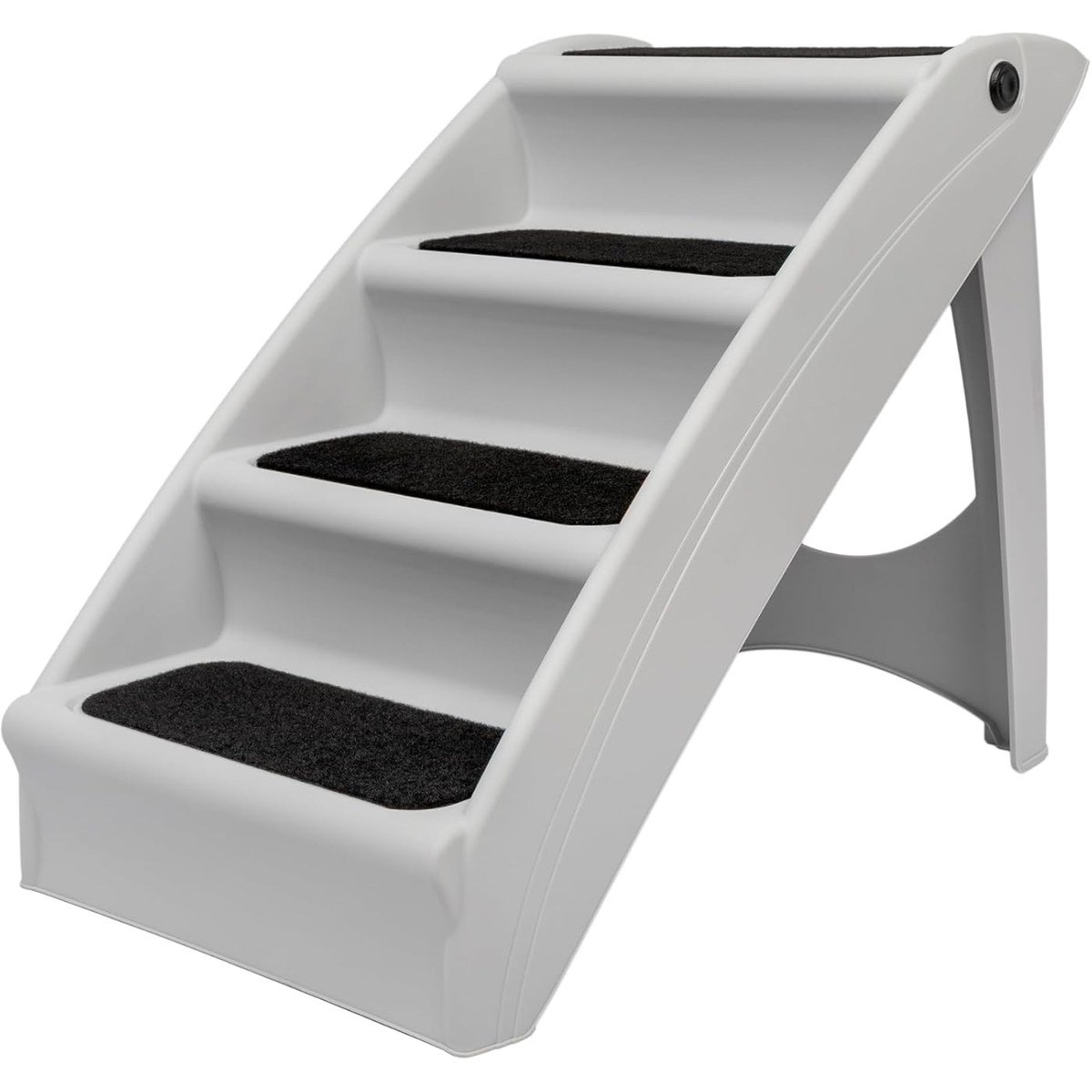
PetSafe’s CozyUp line is the answer to “but where do I put it.” These fold flat, slide under a bed or couch, and come back out for road trips, which none of the solid Pet Gear units can do. The 20-inch model stands 24 by 16 inches open, holds up to 150 pounds, and adds two things nervous dogs appreciate: side rails and non-skid feet.
The naming is the trap. PetSafe sells a 20-inch version rated to 150 pounds and a 25-inch version rated to 200 pounds, and the listings look nearly identical. If you click the wrong variant you get the lighter one. Owner feedback also flags the fabric tread covers as hair magnets that need replacing, and the folding hinge as a potential flex point under very heavy dogs. The hinge deserves a specific warning: keep curious dogs from mouthing the mechanism, and check it periodically for looseness.
Key specs:
- 4 steps; 24″L x 16″W x 20″H; folds flat for storage
- Maximum weight: 150 lbs (20″ model; 25″ model rated to 200 lbs)
- Side rails, non-skid feet, replaceable fabric tread covers
- Indoor/outdoor use
Pros:
- Folds flat, stores under furniture, travels well
- Side rails give hesitant dogs visible boundaries
- Tread covers are replaceable when worn
- Light and easy to move between rooms
Cons:
- 20-inch height misses tall beds; the 25-inch variant is a separate purchase
- Fabric treads collect hair relentlessly
- Folding hinge can flex under dogs near the 150-lb ceiling
- Similar variant names make it easy to order the wrong weight rating
Verdict: Best pick for people who need stairs in more than one place. Double-check you are ordering the 20-inch/150-lb or 25-inch/200-lb model on purpose, not by accident.
4. Best Pet Supplies Foam Pet Steps (Ash Gray Linen, 4-Step)
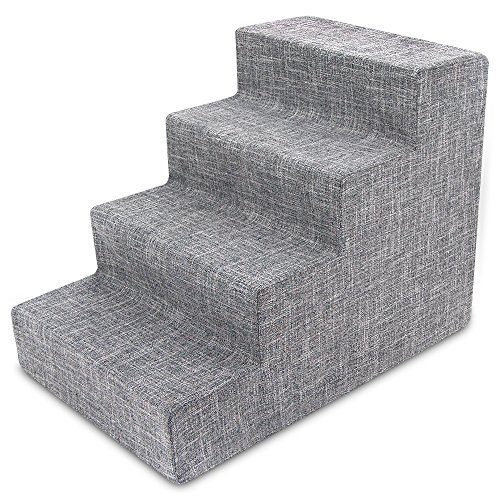
This pick is here as a warning with a buying button, not a recommendation for big dogs. The Best Pet Supplies foam stairs are one of the most-bought stair listings on Amazon, and their title says “Small Dogs & Cats.” Read that again. The foam core has no published maximum weight rating anywhere on the listing. A heavy Labrador will compress these steps with every climb, the stairs will slowly sag, and the dog will feel it.
There is a legitimate use case: a large dog that barely loads the stairs, or more realistically a household where the stairs serve a medium dog and occasionally a big one. The CertiPUR-US certified foam is fine material, the cover zips off and machine washes, and the 18-inch height suits couches and medium beds. It also arrives vacuum-packed and needs a full day or two to rebound before it is stable. But if your dog is 80 pounds and uses these daily, this is the wrong category of product, popular or not.
Key specs:
- 4 foam steps; 24″L x 15″W x 18″H
- Maximum weight: no published rating
- CertiPUR-US certified foam core
- Removable, machine-washable cover; ships vacuum-packed (24-48 hour rebound)
Pros:
- Soft on paws and joints for dogs it actually fits
- Washable cover in many colors to match furniture
- Light enough to move room to room
- No assembly
Cons:
- Marketed for small dogs and cats; foam compresses under heavy dogs
- No published weight limit, which is itself the warning
- Only 18 inches tall, too short for high beds
- Foam core is not washable and absorbs moisture; only the cover washes
Verdict: Fine for medium dogs and light use. For a daily-use large dog, this is the pick to skip, no matter how many five-star reviews it has.
5. Pet Gear Easy Step III Extra Wide (Fog)
This is the pick this whole article has been circling. Take the standard Easy Step III, widen it to 20 inches, and raise the weight rating to 200 pounds, and you get the one stair in this lineup designed around an actual large dog instead of a scaled-up small one. The 23-inch height reaches real beds, the deep landings fit a big paw, and Pet Gear’s own materials flag this line as the one “for larger pets.”
It is newer (2025) than the standard Easy Step III, so the owner-feedback record is thinner. It shares the family’s known weak point: removable carpet treads whose adhesive wears over time. And at roughly 14 to 15 pounds assembled, it is not something you will happily haul in and out of a car. None of that changes the verdict. For a large dog that needs bed-height stairs with an honest weight rating, this is the first thing to look at.
Key specs:
- 3 steps, Extra Wide; 25″L x 20″W x 23″H
- Maximum weight: 200 lbs
- Step rise: 6 inches per step
- Removable, machine-washable carpet treads; rubber grippers on the base
- Snaps together, no tools required
Pros:
- Only pick combining a 200-lb rating with true bed height and a wide frame
- 20-inch-wide landings suit broad-chested and giant breeds
- Washable treads, no-tool assembly
- Listed for large breed sizes on the product page
Cons:
- Heavier and bulkier than the standard model; not a travel piece
- Newer listing with a thinner owner-feedback record
- Same long-term tread-adhesive wear as the standard Easy Step III
- Still tops out at 23 inches; measure extra-tall beds first
Verdict: The best headline pick for large dogs in this guide. If you only buy one thing from this list, make it this one.
6. PetSafe CozyUp Steps & Ramp Combo
Some dogs will never trust stairs. The rise hurts, the footing feels wrong, and they plant all four feet at the bottom and refuse. This PetSafe combo is the honest answer for those dogs: it converts between a 20-inch stair mode and a 16-inch ramp mode, rated to 200 pounds either way. Let the dog choose. Some dogs take to the ramp the first day they would never have touched stairs.
Treat it as what it is, a compromise. A convertible is neither as shallow as a dedicated long ramp nor as compact as dedicated stairs, and at 20 inches the stair mode tops out below the taller dedicated picks here. For a dog in genuine joint pain, a longer fixed ramp at a gentler angle still beats this. But for the very common middle case, an older dog who is slowing down rather than suffering, the ability to switch modes while you learn what your dog tolerates is genuinely useful. And the fold-flat storage keeps it practical for multi-room use.
Key specs:
- Convertible: 16″ ramp mode or 20″ stairs mode
- Maximum weight: 200 lbs (per PetSafe’s own model comparison)
- Heavy-duty non-slip carpet tread surface
- Folds for storage
Pros:
- Ramp mode for dogs that refuse or struggle with steps
- 200-lb rating across both modes
- Let the dog pick the mode that works; useful during recovery or aging
- Folds away when not needed
Cons:
- 20-inch max height is lower than dedicated tall stairs
- Jack of both modes, master of neither
- Moving parts need periodic checks for looseness
- A fixed long ramp is still gentler for dogs in real pain
Verdict: The pick for uncertain cases: senior dogs, dogs that distrust stairs, or owners who want to try both before committing. For diagnosed joint pain, skip straight to a proper ramp.
What Actually Matters When the Dog Is Large
Three numbers decide whether pet steps work for your dog, and none of them are the marketing copy. First, the weight rating. A stair that “supports large dogs” without a number is a guess you are paying for. Second, the top height against your actual furniture. Measure the bed or couch surface off the floor with a tape measure, not your memory. If your bed is 28 inches high and the stair tops out at 20, your dog gets a partial lift and still has to jump the last stretch, which is the jump that was hurting them in the first place.
Third, the step rise, the height of each individual step. Six inches per step is the common number here, and healthy large dogs handle it fine. For a stiff senior, shallower rises mean less joint loading per step, which is why a four-step 20-inch stair (5 inches per rise) can be easier on an old dog than a two-step 16-inch stair (8 inches per rise), even though both end at a lower height. Width matters more than most buyers expect, too. A nervous dog that cannot get its whole body on one landing will hurry, and hurrying on stairs is how slips happen.
On hard floors, check the base before the dog does. Rubber grippers and non-skid feet are standard features on the picks above, but a stair on slick tile can still walk across the room when a 90-pound dog lands on it. Push the stair flush against the furniture, put a rug or mat under it if needed, and watch the first few climbs. A stair the dog does not trust is a decoration.
Steps or a Ramp? Be Honest About Your Dog’s Joints
This is the part of the guide that costs me affiliate clicks, and it needs saying anyway. Steps reduce jumping. They do not eliminate joint loading. Every rise on a stair still bends the elbows, shoulders, hips, and knees under the dog’s full weight, which is why a dog with real arthritis can find stairs almost as punishing as the jump they replaced.
A ramp replaces impact with incline. For dogs with diagnosed hip dysplasia, arthritis, cruciate injuries, or post-surgical restrictions, a gentle ramp is usually the right tool, and the combo pick above is the minimum honest option. Some vets will tell you straight: no stairs until the joint is managed. If your dog hesitates at the bottom of steps they used to take, if they bunny-hop on the way down, or if they have started avoiding the stairs entirely, stop shopping for taller steps and call your vet first. A ramp recommendation from a vet who has seen your dog’s hips beats any article, including this one.
Getting Your Dog to Actually Use Them
About a third of dogs treat new steps like a trap. That is normal, and it is fixable in a weekend with treats. Start with the steps flat against the lowest thing your dog already climbs, like a couch cushion, so the first step is barely a step. Lure the dog across with high-value treats, one step at a time, and let them walk back down for another treat. Never push or lift a hesitant dog onto stairs. A dog that is forced up will not come down on its own, and you have just built a fear of the thing you bought.
Keep sessions short, five minutes, twice a day, and end while the dog is still enjoying it. Most dogs get it within three days. The dogs that do not usually object to one specific thing: wobble, a slick tread, or a rise that is too tall. Fix the objected thing rather than repeating the training. And supervise the first week of independent use, especially on the way down, because going down is where most stair falls happen.
What weight rating do pet steps need for a large dog?
Match the rating to your dog’s actual weight with margin. A 90-pound dog belongs on stairs rated to at least 100 pounds, and ideally 150 or 200, because the rating assumes even weight distribution and a dog does not distribute weight evenly when climbing. Two picks here carry 200-pound ratings: the Pet Gear Easy Step II Extra Wide and the Easy Step III Extra Wide, plus the PetSafe Steps & Ramp Combo. If your dog is over 150 pounds, those are your short list.
How tall should pet steps be for a large dog’s bed?
As tall as the bed, minus nothing. Measure from the floor to the top of the mattress. Standard platform beds run 24 to 30 inches high; the tallest picks in this guide reach 23 inches (both Easy Step III models), which covers most beds but not the tallest ones. A stair that stops 6 inches short still leaves your dog jumping the last bit, which defeats the purpose.
Are foam steps safe for large dogs?
Usually not as a daily solution. Foam compresses under load, so a heavy dog sinks into each step, which makes the climb harder and wears the foam out faster. The Best Pet Supplies foam pick here is included for completeness, but its listing is aimed at small dogs and cats and it publishes no weight rating. For large dogs, rigid plastic or wood frames with real weight ratings are the honest choice.
Steps or a ramp for an arthritic large dog?
A ramp, in most cases. Steps still load the joints on every rise, while a ramp spreads the work across an incline. The PetSafe CozyUp Steps & Ramp Combo in this guide lets you try both modes with one purchase, but for a dog with diagnosed arthritis or hip problems, ask your vet first. If your dog is limping or refusing stairs they used to use, that is a vet visit, not a shopping decision.
Why won’t my large dog use pet steps?
The three usual reasons are wobble, footing, and fear of the new object. Check that the stair does not flex or walk on your floor, confirm the treads are not slick, and retrain with treats starting from a very low height. Never force the dog. If the dog still refuses after a week of patient training, some dogs simply prefer ramps, and that is useful information, not failure.
Do pet steps work on hardwood or tile floors?
They can, but you have to set them up for it. The picks here include rubber grippers or non-skid feet, and you should still push the stair flush against the furniture and consider a rug or mat underneath. Test stability yourself by pressing down on the top step before the dog’s first climb. On slick floors, a stair that walks even an inch will teach your dog not to trust it.
