

As an Amazon Associate, Pet Travel Items earns from qualifying purchases. If you buy through a link on this page, we may earn a commission at no extra cost to you.
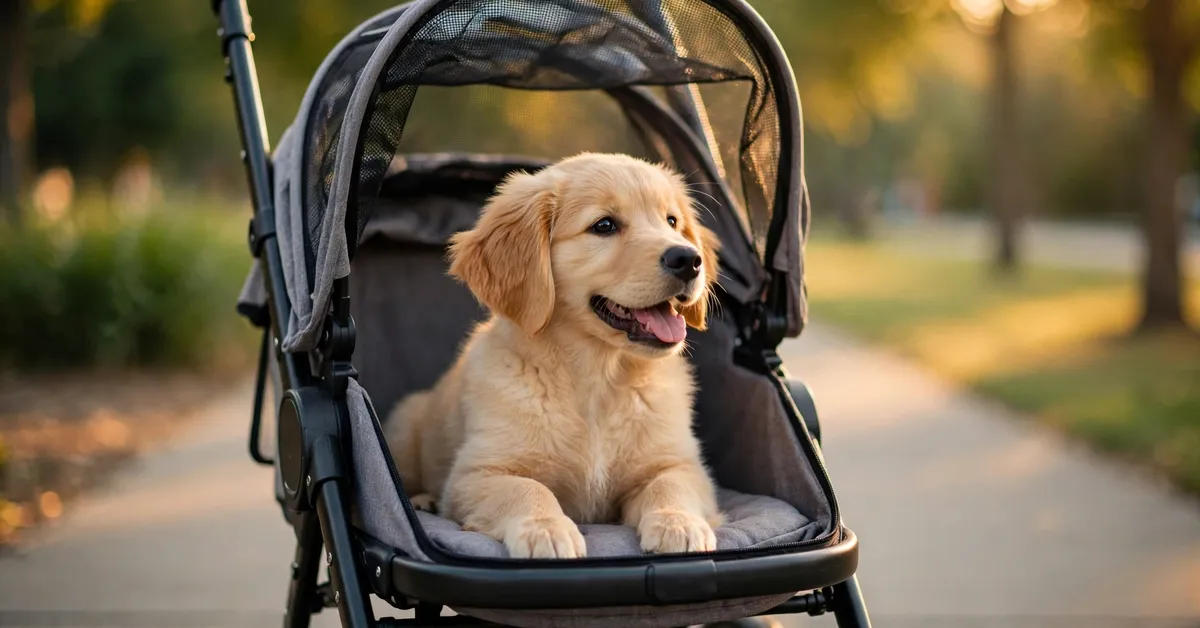
A puppy stroller exists for one real reason: your pup needs to see the world before their vaccinations are complete, and before their little legs can handle a full walk. A vet will tell you to keep an unvaccinated puppy off public ground. A stroller lets you take them through the farmers market, down the boardwalk, past the noisy construction site — exposure that builds a calmer adult dog, without the disease risk of paws on pavement. That’s the job.
What a stroller is not: a substitute for walking and training. The moment your puppy is cleared for ground walks, the stroller should shrink to a supporting role — long outings, crowded events, injury recovery. Dogs learn the world through their feet and nose, and no stroller delivers that. Also be honest about the physics: most “puppy strollers” on this list are small. A 25-pound weight limit buys you a few months with a Labrador pup before it outgrows the cabin. Buy for the dog your puppy is becoming, not the one in your lap right now. With that frame, here are six strollers worth your money — with the real tradeoffs of each.
| # | Product | Why it made the list | Check Price |
|---|---|---|---|
| 1 | BestPet 4-Wheel Pet Stroller (Black) | The honest budget pick — 10 lbs, folding, and the only listing here Amazon tags for puppies. Small, light, cheap. | Check Price |
| 2 | Pet Gear No-Zip NV (Rose) | Zipperless latch entry, 70-lb limit, gel-filled tires — the established premium pick that outlasts the puppy phase. | Check Price |
| 3 | HPZ Pet Rover Premium (Midnight Blue) | Zipperless entry with a reversible handle and 75-lb capacity — overbuilt for a tiny puppy, but it never becomes too small. | Check Price |
| 4 | Pet Gear No-Zip Dual Entry (Platinum) | Front and back zipperless access with a 45-lb limit — the middle ground between the budget BestPet and the big premium rigs. | Check Price |
| 5 | BestPet 3-in-1 Detachable Carrier Stroller (Black) | The carrier pops off the frame — roll to the vet, then carry the carrier inside. One purchase covers two jobs. | Check Price |
| 6 | BestPet 3-Wheel Jogger Stroller (Grey) | Jogger looks at a budget price with a 33-lb limit. Honest frame: walking speed only — this class is not built for running. | Check Price |
1. BestPet 4-Wheel Pet Stroller (Black)
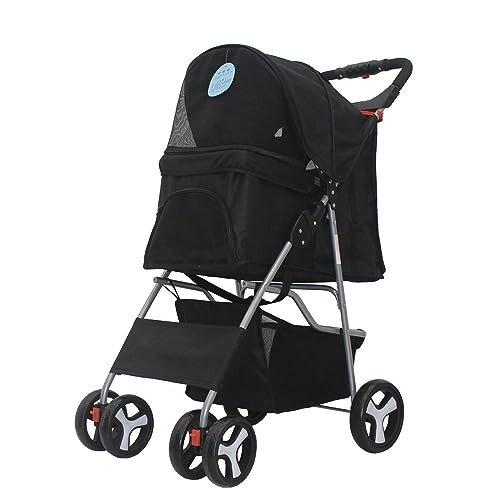
This is the stroller the keyword had in mind. BestPet’s 4-wheel folding stroller is the cheapest real option here — ten pounds of alloy-steel frame and nylon that folds down for a car trunk — and Amazon’s own listing tags it for puppies. It’s the only pick on this page explicitly aimed at the age you’re shopping for.
Key specs
- Weight limit: up to 25 lbs
- Stroller weight: 10 lbs
- Unfolded: 35 L x 17.9 W x 38.4 H inches
- Features: folding frame, storage basket, two cup holders, rear brake
- Warranty: 90 days
Pros
- Lightest stroller here — genuinely easy to lift into a trunk one-handed
- Explicitly puppy-tagged listing, so sizing and marketing match your use case
- Folds down and includes a storage basket and cup holders at the budget price
Cons
- 25-lb limit means a medium or large-breed puppy outgrows it in a few months — this is a short-term purchase
- Small plastic wheels are fine on smooth pavement and struggle on uneven ground; plan your routes accordingly
- 90-day warranty is the thinnest coverage on this list
- No verified product-specific complaint pattern found beyond the class-level notes above — but budget strollers as a class get complaints about wheel wobble and zipper snags
Verdict: The right buy for a small-breed puppy you’ll also carry by hand half the time, or for anyone who wants to test whether stroller life suits their pup before spending real money. Owners of Lab, Golden, or any pup headed past 25 lbs should skip straight to a 45-lb-or-higher pick below.
2. Pet Gear No-Zip NV (Rose)
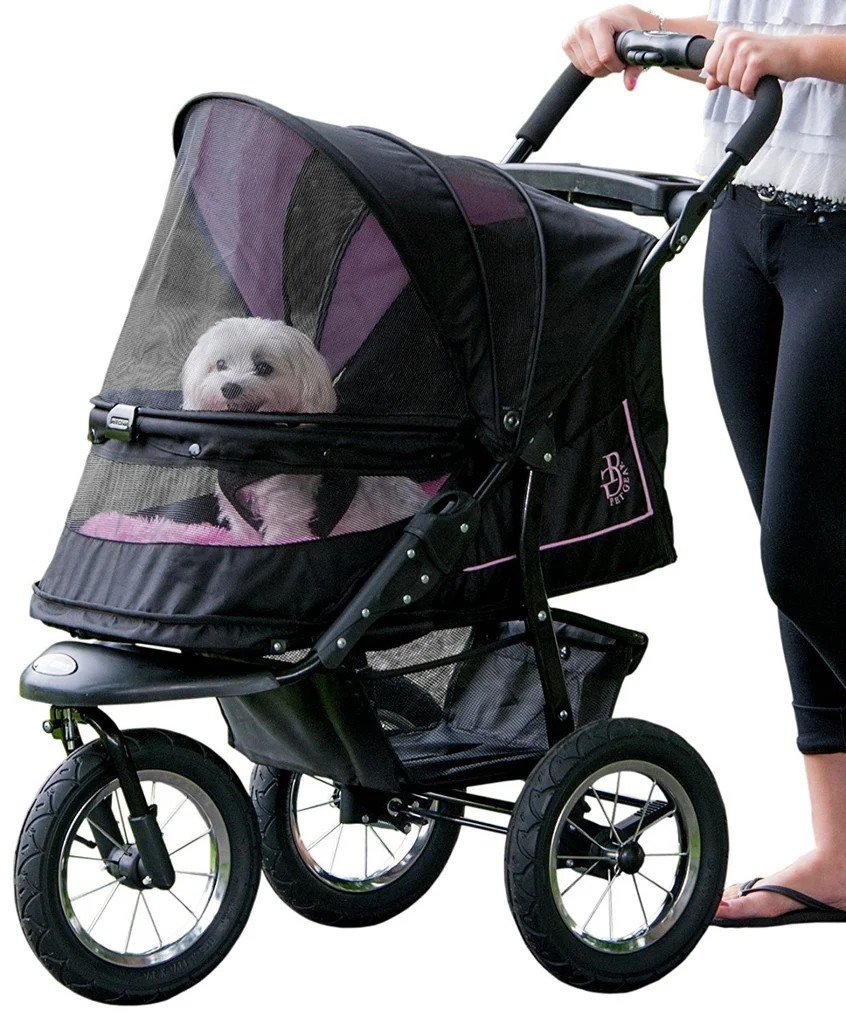
Pet Gear is the established name in this category, and the NV is the model that made “no-zip” a selling point. Instead of fiddling with zippers around a squirming puppy, an easy-locking latch opens the cabin. That sounds like a small thing until you’re holding a wriggling eight-week-old in one arm. The 70-lb weight limit also means this is the rare puppy stroller that survives the puppy phase — it becomes the adult-dog stroller later.
Key specs
- Weight limit: up to 70 lbs
- Stroller weight: 27 lbs
- Interior: ~28 L x 12.5 W x 22.5 H inches
- Tires: gel-filled (Air Ride class), 12-inch front and back
- Features: zipperless latch entry, one-hand fold, plush bolster pad, weather cover included, elevated paw rest, panoramic view window, optional divider
Pros
- No-zip latch is genuinely easier than zippers with a puppy in your arms — and latches don’t snag or separate the way zippers do
- 70-lb limit covers nearly every adult dog, so you buy once
- Gel-filled tires ride far better than the plastic wheels on budget strollers, on grass and cracked sidewalks alike
- Weather cover included, not sold separately
Cons
- 27 lbs is heavy — the “one-hand fold” is real, but lifting a folded 27-lb stroller into an SUV one-handed is a different story
- The no-zip latch has a learning curve; first-time users commonly fumble it for a few outings
- Priced like premium gear — several times the budget picks, for a puppy that may use it six months
- No verified product-specific complaint pattern found at research time
Verdict: The buy-it-once pick. If you know your adult dog will still use a stroller — seniors, small breeds, crowded events — this is the one. If your puppy just needs three months of pre-vaccination outings, it’s more stroller than the job requires.
3. HPZ Pet Rover Premium (Midnight Blue)
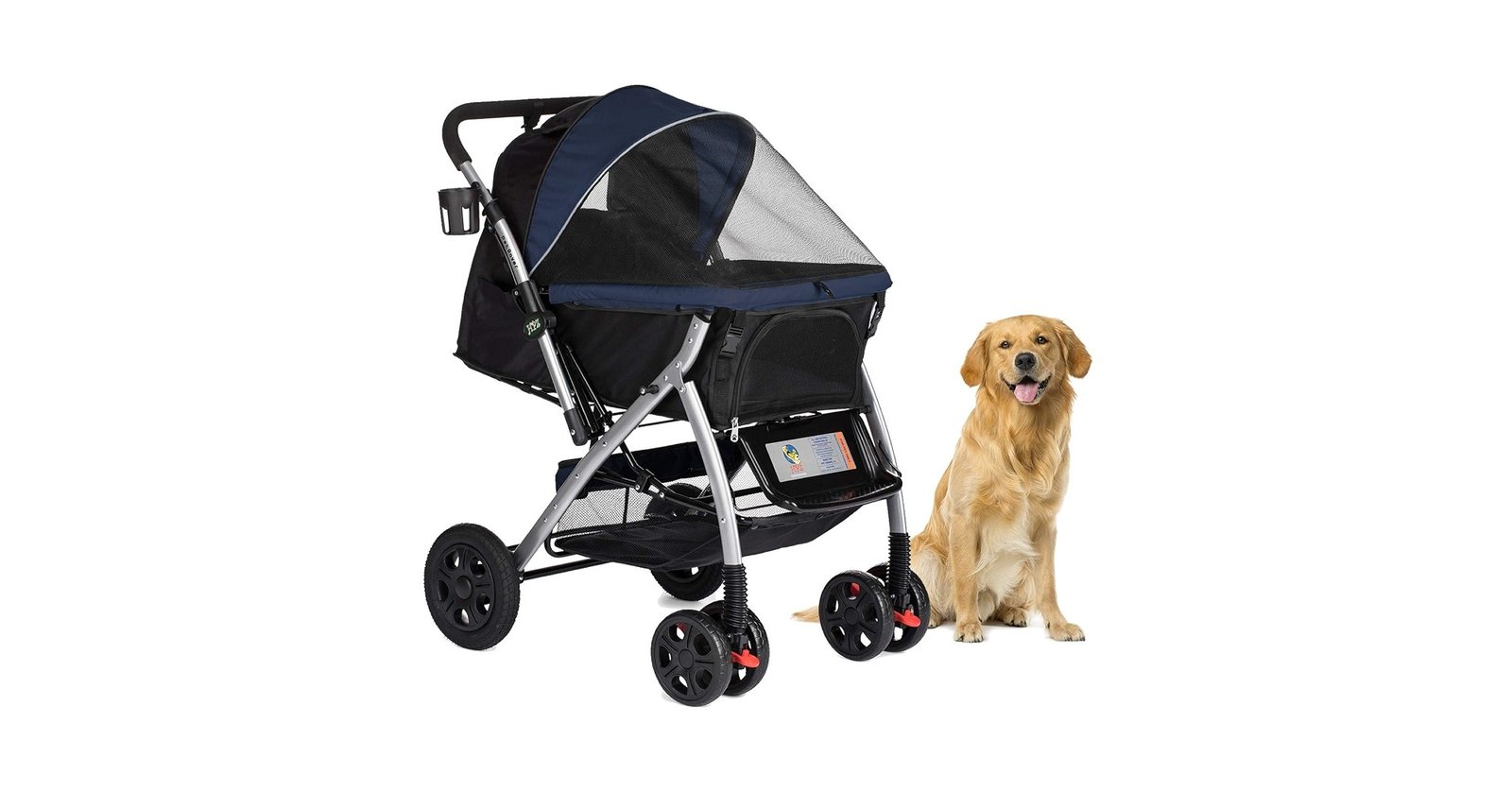
The HPZ Pet Rover is the other heavyweight in the zipperless camp: no zippers, a latch-style entry, a reversible handle so your puppy can face you or face forward, and a 75-lb capacity. It’s visibly more substantial than the budget picks — pump-free rubber tires, a convertible compartment, two interior tethers. For a large-breed puppy that will be a 60-lb adult, this is the “grow into it” argument made concrete.
Key specs
- Weight limit: up to 75 lbs
- Stroller weight: 22 lbs
- Dimensions: 30 L x 22 W x 42 H inches
- Features: zipperless entry, reversible handlebar, pump-free rubber tires, convertible compartment, two interior tethers
Pros
- Highest weight limit on this page — the only pick a large-breed puppy will never outgrow
- Reversible handle is genuinely useful for nervous puppies: face them toward you until they settle, then flip
- Pump-free rubber tires handle rough ground better than anything else here
- Zipperless entry plus interior tethers covers both access and containment
Cons
- 22 lbs of stroller plus a growing puppy is a heavy push on hills and a heavy lift into a trunk
- Overbuilt for a 10-lb puppy — you’re paying for capacity you won’t touch for months, in a cabin sized for an adult dog
- No verified product-specific complaint pattern found at research time
Verdict: Best for large-breed puppies and for buyers who hate replacing gear. For a toy or small-breed puppy, it’s overkill — the cabin will feel cavernous and the weight will annoy you daily.
4. Pet Gear No-Zip Dual Entry (Platinum)
Sitting between the budget BestPet and the two premium rigs, Pet Gear’s Dual Entry no-zip stroller does exactly what the name says: zipperless push-button access from the front and the back, so you can load the puppy from whichever side is convenient. The 45-lb limit is the honest middle — enough for most puppies through the entire first year, and enough for most small-to-medium adult dogs after.
Key specs
- Weight limit: up to 45 lbs
- Tires: gel-filled
- Features: dual-entry push-button zipperless access, two interior tethers, back-wheel brakes, parent tray, cup holder, removable washable liner
Pros
- Dual entry is the most practical access layout here — load from front or back without rearranging
- 45-lb limit covers the full puppy phase for every breed except the largest
- Removable washable liner matters more than it sounds: puppies have accidents, and a liner you can pull and wash beats scrubbing a fixed cabin
- Gel-filled tires outride plastic-wheel budget models
Cons
- 45 lbs excludes large-breed adults — a Lab puppy will eventually outgrow it
- Same no-zip learning curve as the NV: the push-button latch takes a few outings to operate smoothly
- No verified product-specific complaint pattern found at research time
Verdict: The sensible middle. If your puppy is a small or medium breed — under ~40 lbs adult — this is the best balance of price, features, and lifespan on the list. Large-breed owners should step up to the HPZ or the NV.
5. BestPet 3-in-1 Detachable Carrier Stroller (Black)
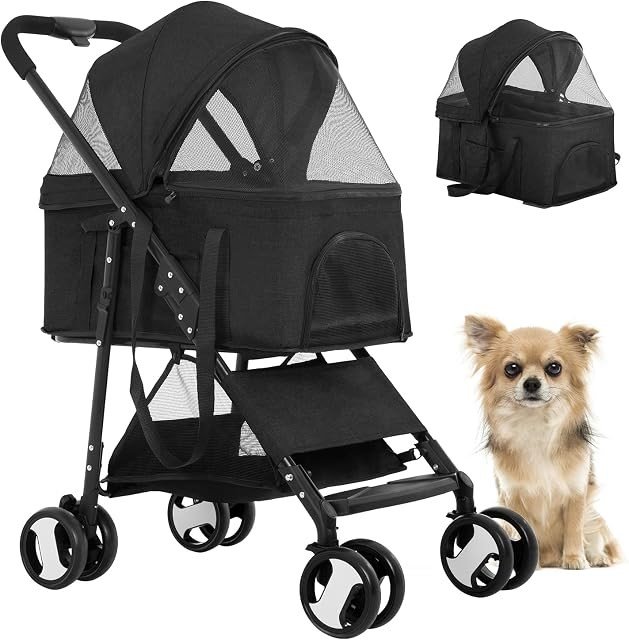
This is the clever one. The 3-in-1’s carrier detaches from the stroller frame, which means one purchase does two jobs: roll the puppy to the vet in the stroller, then unclip the carrier and carry it into the exam room. For a puppy’s first months — which are mostly vet visits — that’s a real workflow advantage over every other pick here.
Key specs
- Weight limit: up to 44 lbs
- Stroller weight: 15 lbs
- Features: detachable carrier, extra-large storage basket, two cup holders, rotatable front wheels, one-foot brake
- Material: linen
Pros
- The detachable carrier is genuinely useful for vet visits — no other pick does this
- 44-lb limit covers the whole puppy phase for small and medium breeds
- Extra-large storage basket is the roomiest cargo space on this page
- At 15 lbs it’s meaningfully lighter than the premium rigs
Cons
- More moving parts than a fixed-cabin stroller — the carrier-to-frame attachment is another mechanism to check and maintain
- The detach mechanism can feel fiddly to release until you’ve done it a few times
- Detachable carriers trade some cabin rigidity for the trick; this is not the sturdiest-feeling cabin here
- No verified product-specific complaint pattern found at research time
Verdict: Buy it for the vet-visit workflow. If your puppy’s first months will be heavy on clinic trips — they will be — the carrier that unclips at the door is worth more than any tire upgrade.
6. BestPet 3-Wheel Jogger Stroller (Grey)
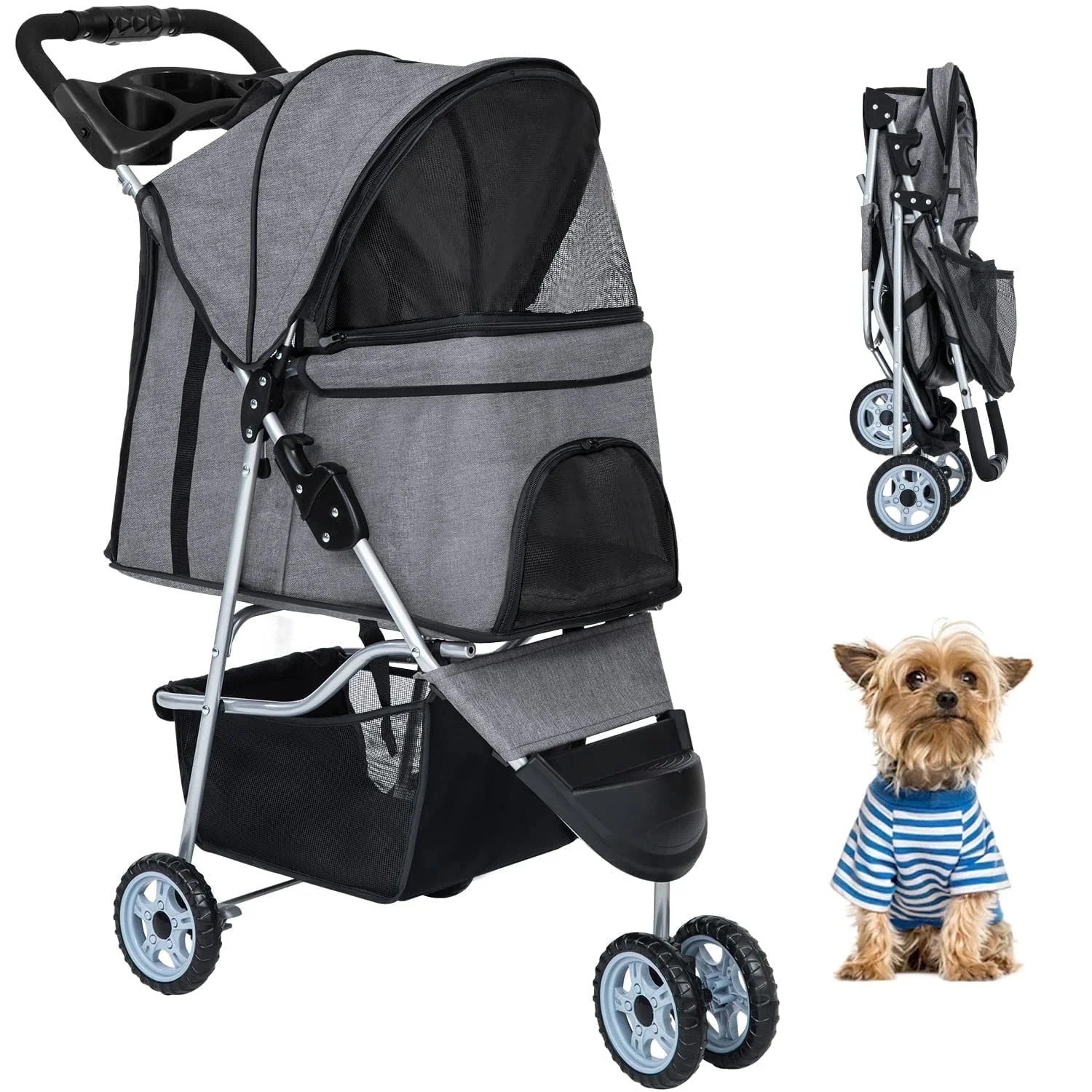
The jogger look sells itself: three big wheels, sporty frame, the promise of running with your dog. Be honest with yourself before buying one for a puppy. Puppies should not be run — their growth plates are still open, and forced running is one of the worst things you can do to developing joints. This stroller is for walking, at walking speed, with a puppy riding along. If that’s understood, it’s a decent budget pick with a 33-lb limit.
Key specs
- Weight limit: up to 33 lbs
- Stroller weight: 10 lbs
- Dimensions: 29.5 L x 18.9 W x 39.8 H inches
- Tires: EVA
- Features: two cup holders, removable liner
Pros
- Light at 10 lbs, with the easiest push of the budget picks on smooth paths
- 33-lb limit buys more growing room than the 25-lb BestPet 4-wheeler
- Removable liner for accident cleanup
Cons
- Marketed as a jogger but this class is not built for running — treat it as a walking stroller, period
- Single front wheels on 3-wheel designs can wobble at speed unless locked; another reason to keep it slow
- 33 lbs still excludes large-breed puppies before they’re a year old
- No verified product-specific complaint pattern found at research time
Verdict: A fine walking stroller for a small-to-medium puppy at a budget price — as long as “jogger” doesn’t tempt you into jogging. Buy the look, not the sport.
Buy for the weight your puppy is becoming
This is the decision that matters and the one most puppy-stroller roundups gloss over. A weight limit is a countdown. A Labrador puppy hits 25 lbs around four months. A Golden hits 45 lbs around six or seven months. The 25-lb budget stroller that looks perfect for your eight-week-old becomes decoration by spring.
Do the math before you buy: look up your breed’s growth curve, find the weight at six months, and buy a stroller rated past it. Small breeds (under 25 lbs adult) can buy anything here. Medium breeds (25–50 lbs adult) want 45 lbs or more. Large breeds (50+ lbs adult) want 70 lbs or more — which is exactly why two of the six picks on this page are rated 70 and 75. The cheapest stroller is the one you buy once.
Escape-proofing: zippers, latches, and the tether habit
Puppies are escape artists with no sense of self-preservation. Every stroller on this page closes — zippers on the BestPets, latch mechanisms on the Pet Gear and HPZ models. Both work, with different failure modes: zippers snag and can separate under pressure; latches are cleaner but take practice to operate smoothly.
The real containment, though, is the interior tether, and the habit of using it every single ride. Clip it to your puppy’s harness — not a collar — before you close the canopy. A startled puppy can get a surprising amount of leverage against a mesh panel, and the tether is what keeps a canopy fumble from becoming a bolt into traffic. Close first, then roll. Every time.
What a stroller can’t do: the training caveat
Say this plainly because stroller marketing won’t: a stroller does not socialize your puppy. It exposes them to sights and sounds from a safe distance, which is valuable — vets actively recommend it before vaccinations are complete. But dogs learn the world through their feet, their nose, and their interactions. A puppy that only ever experiences the dog park from a mesh cabin doesn’t learn how to greet, how to read other dogs, or how to walk on a leash.
The stroller is a bridge, not a destination. Once your vet clears ground walks, the leash takes over and the stroller moves to the trunk for crowded festivals, long travel days, and recovery. A stroller should never be the reason your puppy misses their training window.
Is a stroller safe for a puppy that isn’t fully vaccinated?
Yes — that’s one of the best reasons to own one. The risk vets warn about is paws on contaminated ground: parvo and distemper spread through surfaces and soil, not through the air at stroller height. A puppy riding in a closed stroller gets the sights, sounds, and smells of the world without the ground contact. Keep the canopy closed in high-traffic dog areas and don’t let strangers’ dogs nose into the cabin.
Will a stroller hurt my puppy’s socialization?
Only if it replaces real socialization. Used correctly — stroller for exposure before vaccinations, then leash walks, puppy class, and supervised play once cleared — it’s a socialization tool, not a threat to it. The danger is the lazy version: a puppy that rides everywhere and walks nowhere. Set the rule early: the stroller is for outings the puppy can’t safely walk yet, not for outings you’re too tired to train through.
How do I keep my puppy from jumping out of the stroller?
Three layers. First, the interior tether clipped to a harness — never a collar — kept short enough that the puppy can sit and lie down but not launch. Second, the canopy fully closed and latched or zipped before you move. Third, never leave the stroller unattended with the puppy in it, not even “for a second” — that’s when the squirrel appears. Test the whole setup at home first: close the puppy in, walk around the block, watch what they try.
Can I jog with a pet stroller?
Not with a puppy, and not really with these. Two separate truths: puppies’ growth plates are still open, and forced running risks permanent joint damage — no puppy should be a jogging partner until your vet clears it, usually 12–18 months depending on breed. And the budget “jogger” strollers on this page are walking-speed designs; their front wheels and frames aren’t built for running pace. If you want a true running stroller later, that’s a different purchase for a different year.
What weight limit do I need for a growing puppy?
Buy past your breed’s six-month weight. Rough guide: small breeds (adult under 25 lbs) are fine with any pick here; medium breeds (adult 25–50 lbs) want at least 45 lbs of capacity; large breeds (adult 50+ lbs) want 70 lbs or more. When in doubt, size up — a stroller that’s slightly too roomy is an inconvenience, but one your puppy outgrows in three months is a second purchase.
Stroller, carrier, or wagon — which is best for a puppy?
Different tools. A stroller wins for paved outings and events: one-handed pushing, storage basket, easy rolling. A carrier (backpack or shoulder) wins for hiking trails and stairs. A wagon wins for multiple puppies or a puppy plus gear, but wagons are bulkier to store and push. For a single puppy’s first months — vet visits, markets, neighborhood exposure — the stroller is the most practical of the three, and the detachable-carrier pick (#5) blurs the stroller/carrier line nicely.
