

Here’s the scenario Tuft + Paw is selling to: you’ve tried the clay, and your floors are a gray beach. You’ve tried the crystals, and your cat staged a walkout. You’re sweeping every day, dusting every week, and wondering why the “premium” litter costs as much as your coffee habit. Really Great Cat Litter — Tuft + Paw’s tofu-based litter — promises to end all of that: clumping, flushable, virtually dust-free, and so low-tracking you’ll forget the broom exists.
The honest note: it mostly delivers on the mess — the low-tracking and low-dust claims are the real deal according to the bulk of owner reviews. But “really great” has fine print. It’s expensive, the odor control doesn’t impress everyone (especially on solids), the dark pellets hide what you’re trying to scoop, and “flushable” comes with asterisks your plumber would want you to read. This is a focused, single-product review: what it is, what owners actually report, and whether the premium is worth it for your household.
Pet Travel Items is reader-supported. When you buy through links on this page, we may earn a commission at no extra cost to you. Our picks are driven by documented owner feedback, never by commission rates.
The Short Version
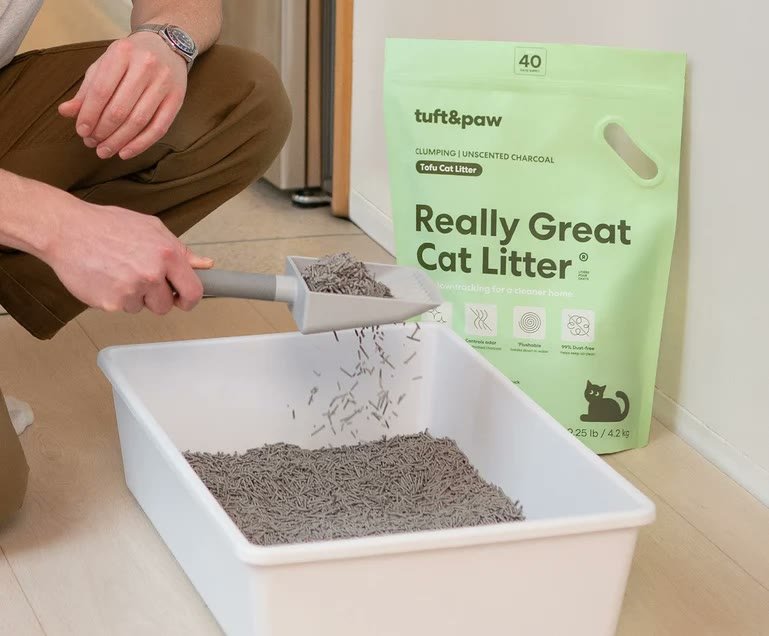
Really Great Cat Litter is a tofu (soybean-based) pellet litter from the modern cat brand Tuft + Paw. It’s unscented, clumping, marketed as flushable, triple-screened for dust, and shaped to resist tracking. Owners overwhelmingly praise the low dust and low tracking — the two things it promises most loudly — and most report solid clumping. The recurring complaints are cost, inconsistent odor control, pellets that can stick to a wet box, and a dark color that makes spotting waste annoying. Across Chewy and Petco it sits around 4.1–4.4 stars from thousands of ratings: well-loved, not universally.
Check the price on Amazon — sold as two 9.25-lb bags; the brand also sells it by subscription (about $29/bag monthly) with a 30-day money-back guarantee on first purchase.
Specs
- Material: Tofu — soybean byproduct (soybean fiber) with calcium carbonate, corn starch, and pea fiber; charcoal added for odor control in the unscented version
- Size: 9.25-lb bags (Amazon listing is a 2-bag pack); brand recommends ~1 bag per cat per month
- Type: Clumping pellet — unusual, since most pellet litters don’t clump
- Scent: Unscented (lavender and OdorStop versions also exist)
- Dust: Triple-screened during manufacturing; marketed as 99% dust-free
- Disposal: Marketed as flushable — small amounts at a time, and only where local rules and your plumbing allow
- Tracking: Elongated smooth pellet shape designed not to catch in paws
Pros
Tracking is genuinely minimal. This is the product’s signature win and the thing even skeptical reviewers concede. The long, smooth pellets don’t wedge between toes the way clay granules do, and multiple reviewers describe going from daily sweeping to barely noticing litter outside the box. For small apartments where the box lives in plain sight, this alone can justify the price.
Dust is near zero. Triple-screening isn’t just marketing language owners parrot — reviewers consistently report no dust cloud on pouring, which matters most for flat-faced breeds, kittens, and anyone with allergies. One multi-Persian household reviewer called the first pour “almost quiet” compared to years of clay.
It actually clumps — rare for a pellet. Most pellet litters (pine, paper) don’t clump; this one does, forming scoopable urine clumps. Owners report it out-clumps other tofu litters they’ve tried, and a bag lasts longer than an equivalent volume of clay because you’re removing waste instead of dumping the box.
Unscented with charcoal, not perfume. Odor control comes from activated charcoal rather than fragrance — the right approach for sensitive cats. No dyes, no synthetic perfumes.
Eco story is legitimate. Soybean byproduct is a food-industry leftover, the litter is biodegradable, and flushability (with caveats below) keeps it out of landfills. It won an NBC Select Pet Award, which at least signals it’s been vetted by someone.
Cons (Real Documented Complaints)
Odor control disappoints a meaningful minority. This is the #1 substantive complaint pattern. Multiple owners report it handles urine fine but underperforms on feces odor, with some saying charcoal tofu litters from other brands did better. Petco’s review summary flags “inconsistent odor control” outright. If your household’s main problem is smell rather than mess, this may not be the fix.
It’s expensive. Around $29 per bag on the brand’s subscription (about $79 per quarter), and the Amazon 2-pack is priced at a premium versus clay. Reviewers repeatedly cite cost as the reason they hesitated or didn’t repurchase — one honest summary: great litter, but you’re paying 2–3x clay prices for the privilege.
Can stick to the box when wet. Several owners report wet pellets adhering to the box bottom or sides, making scooping trickier than the marketing suggests. A slotted scoop with wide slots (not round holes) helps, but it’s a real handling quirk.
Dark pellets hide waste. A genuinely practical complaint from owners: the charcoal-gray pellets make it hard to spot clumps and solids, so scooping takes longer and you second-guess whether you got everything. Light-colored litters win on visibility; this one doesn’t.
Some cats reject the pellet texture. Most cats transition fine, but a small number refuse it outright — pellets underfoot are the most-rejected texture in the litter world. The brand’s money-back guarantee exists partly for this reason. Transition gradually by mixing with the old litter.
Flushable has asterisks. The brand says flush small amounts; vets and wastewater experts generally advise against flushing any cat waste because of toxoplasmosis risk to waterways, and your pipes may disagree regardless. Treat flushability as a convenience feature for tiny amounts, not a disposal plan — and check local rules.
Storage matters. Like all tofu/plant litters, it can grow mold if stored damp or too long — buy what you’ll use, keep it sealed and dry. And the pellet size doesn’t work with most automatic litter boxes, so Litter-Robot households should look elsewhere.
Verdict
Really Great Cat Litter earns its name on the two things it promises loudest: tracking and dust are dramatically better than clay, and it clumps like a pellet litter shouldn’t be able to. Where it stumbles — odor control consistency, price, and the dark-pellet visibility issue — is exactly where a careful buyer should look before committing. It’s a genuinely good premium litter, not a miracle. Buy one bag (or use the 30-day guarantee) before subscribing.
Check the current price on Amazon.
Who It’s For / Who Should Skip It
Buy it if: dust or tracking is your household’s main war — small apartments, allergy sufferers, flat-faced breeds, dark floors that show every clay granule. Also if you want a plant-based clumping litter and are willing to pay for it.
Skip it if: odor control is your #1 problem (charcoal clay litters do more per dollar), you’re on a tight budget (clay costs a third as much), your cat has rejected pellets before, you use an automatic litter box, or anyone in the home needs to visually monitor what’s in the box closely (the dark color works against you).
How to Evaluate a Premium Litter (Before You Pay Premium Prices)
Price it per month, not per bag. A 9.25-lb bag at ~$29 lasting one cat one month is roughly $29/month. Compare that honestly against your current litter’s monthly cost — premium litter has to earn a 2–3x multiple in reduced sweeping, dusting, or vet-visit avoidance. If the math doesn’t work, the litter doesn’t work.
Interrogate “flushable.” Flushability describes whether the litter dissolves — not whether flushing cat waste is safe or legal where you live. Vets advise trashing cat waste regardless of litter type due to toxoplasmosis. If flushability is the main reason you’re considering a premium litter, the value proposition is thinner than it looks.
Test pellet acceptance before committing. Pellet texture is the most commonly rejected litter texture. Buy a single bag, mix 25% new with 75% old litter, and phase over 1–2 weeks. A 30-day money-back guarantee (which Tuft + Paw offers on first purchase) is worth using deliberately — set a calendar reminder to decide before it expires.
Check the auto-box compatibility. Pellet litters generally don’t work with sifting automatic boxes like the Litter-Robot — the pellets are too large for the sift mechanism. If you run an auto box, confirm compatibility with your specific model before buying any pellet litter.
Read recent reviews, not just the average. A 4.1–4.4 star average hides the pattern that matters: are the 1–3 star reviews complaining about the same thing (odor, in this case)? Consistent minority complaints predict your own experience better than the star count does.
Frequently Asked Questions
Is Really Great Cat Litter actually flushable?
The manufacturer says yes — small amounts at a time, since the tofu pellets break down in water. But most vets advise against flushing any cat waste because wastewater treatment doesn’t reliably neutralize toxoplasmosis, which harms marine wildlife. Many owners just trash it. Check your local rules and your plumbing before deciding.
What is tofu cat litter made of?
Really Great Cat Litter is made from soybean byproduct (soybean fiber) plus calcium carbonate, corn starch, and pea fiber, with charcoal added to the unscented version for odor control. It’s a food-industry leftover rather than a mined or purpose-grown material, which is the basis of its eco claims.
Does it really not track?
“Minimal” is accurate; “zero” is marketing. Owners consistently report dramatically less tracking than clay — many say they went from daily sweeping to nearly none — but a few pellets still escape, and one owner noted pellets occasionally sticking in paws. A litter mat still helps.
How long does one bag last?
Tuft + Paw recommends about one 9.25-lb bag per cat per month with daily scooping. Because it clumps and you remove waste rather than dumping the box, owners report it stretches further than an equivalent volume of clay — but multi-cat homes should budget proportionally.
Why is it so expensive compared to clay?
You’re paying for the manufacturing (triple-screened, shaped pellets), the soybean-based materials, and the brand’s positioning — roughly 2–3x the monthly cost of basic clay. Whether that’s worth it depends on how much you value the low dust and low tracking. The 30-day money-back guarantee on first purchase lowers the risk of finding out.
Will my cat actually use pellet litter?
Most do, but pellets are the most commonly rejected texture, and a small minority of cats refuse them outright. Transition gradually over 1–2 weeks by mixing with the old litter. If your cat has rejected pellets before, take the hint — no litter works if the cat won’t step in it.
Bottom Line
Really Great Cat Litter is the real deal on mess — tracking and dust are as good as advertised, and it clumps when most pellets can’t. It’s not the real deal on everything: odor control is inconsistent enough that smell-focused households should look at charcoal clay instead, and the price is firmly premium. Worth it if dust and tracking are your war; skippable if odor or budget is. Try one bag under the money-back guarantee before you subscribe.
