

Here’s the scenario that pushes people off clay: you’re loading the car for a two-week road trip and realize the litter situation means hauling 40 lbs of bentonite, breathing its dust in a sealed vehicle, and finding a trash can for heavy bags of used clay every few days. Or your cat has started sneezing, your vet mentioned silica dust, and strip-mined clay suddenly feels like a 20th-century answer. Non-clay litters — silica crystal, walnut shell, grass seed, pine, and recycled paper — solve different pieces of that problem.
The honest note most roundups skip: “non-clay” is not one category, it’s five, and they barely resemble each other. Crystal litter doesn’t clump. Pine litter turns to sawdust. Paper pellets need full box changes. Walnut clumps like clay but looks like dirt. Grass seed tracks like nothing else. Anyone who ranks them on a single scale is misleading you — the right pick depends entirely on which clay problem you’re trying to escape. This guide compares six genuinely different alternatives, with the complaints owners actually report for each.
Pet Travel Items is reader-supported. When you buy through links on this page, we may earn a commission at no extra cost to you. Our picks are driven by documented owner feedback, never by commission rates.
Best Non Clay Cat Litters at a Glance
| # | Product | Key spec | Best For | |
|---|---|---|---|---|
| 1 | PrettyLitter (6 lb) | Silica crystal · color-changing | Best health-monitoring | Check Price |
| 2 | SmartCat All Natural (20 lb) | Grass seed · clumping | Best grass litter | Check Price |
| 3 | Naturally Fresh Quick-Clumping (30 lb) | Walnut shell · clumps in ~15 min | Best walnut litter | Check Price |
| 4 | Feline Pine Platinum (18 lb) | Pine shavings · non-clumping | Best pine litter | Check Price |
| 5 | Fresh News Original (25 lb) | Recycled paper pellets · non-clumping | Best paper pellet | Check Price |
| 6 | So Phresh Odor Control Paper Pellet (25 lb) | 95% recycled paper · baking soda + zeolite | Best budget paper | Check Price |
Prices shift constantly — check before you buy. Sizes are manufacturer figures.
1. PrettyLitter — Best Health-Monitoring
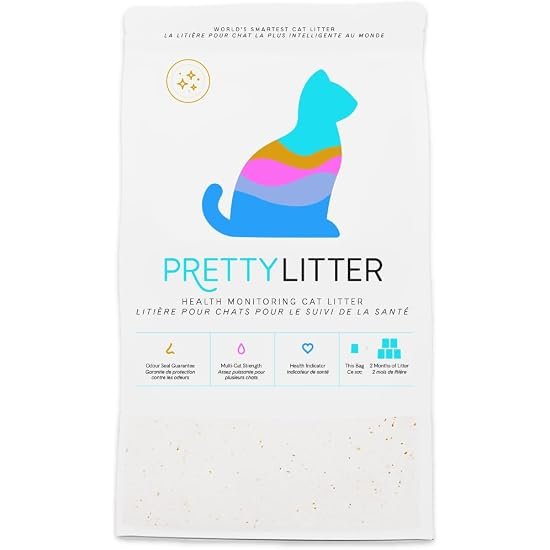
PrettyLitter is the silica crystal litter that made “health monitoring” a category: the crystals change color with shifts in urine pH or the presence of blood, offering an early signal for UTIs, bladder crystals, and kidney issues. As a litter it’s non-clumping — crystals absorb urine into their pores and dehydrate solids — with one 6 lb bag rated for a month per cat, low dust, and up to 80% less weight than clay. For travelers, that weight difference is the whole game: a month’s supply weighs 6 lbs.
The honest part: it’s expensive — owner discussions put it around $25–$33 per bag, and one bag per cat per month adds up fast in multi-cat homes. The crystals track; owners describe feeling them underfoot long after sweeping. The color monitoring produces false alarms that send anxious owners to the vet, some cats refuse the crystal texture, and one bag often doesn’t stretch the full month in practice.
Specs: 6 lb bag (multi-packs sold) · silica gel crystals · non-clumping · color-changing health monitoring · low dust · ~80% lighter than clay · unscented.
Pros: health monitoring is genuinely unique; excellent odor absorption; ultralight for travel; very low dust.
Cons: expensive, especially multi-cat; crystals track and feel sharp underfoot; color changes can cause false alarms; some cats reject the texture; non-clumping means no pee scooping.
Verdict: Buy it for the health monitoring and the weight — not for the budget. Check the price on Amazon.
2. SmartCat All Natural — Best Grass Litter
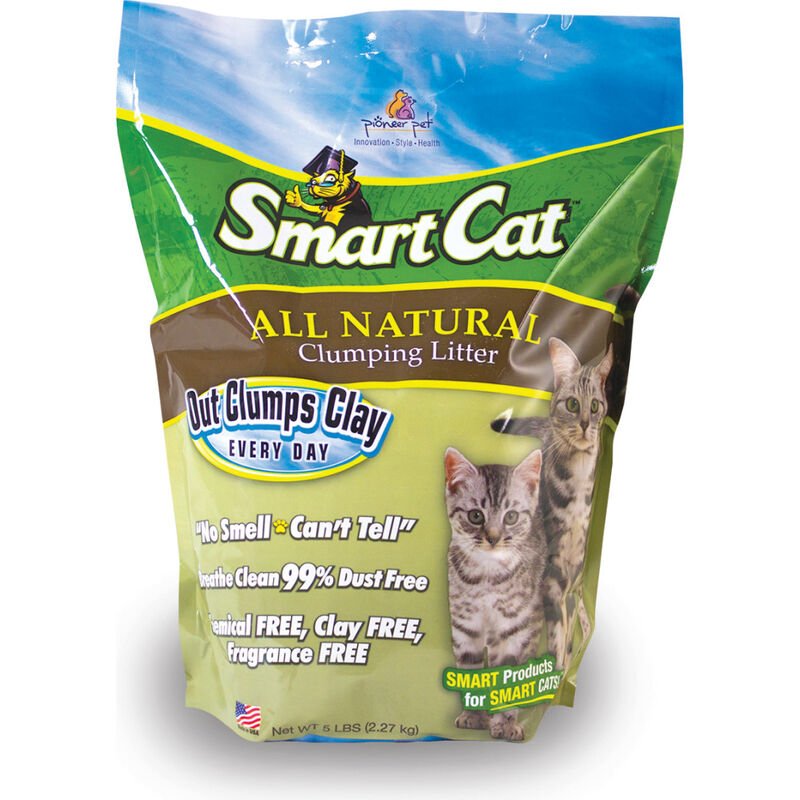
SmartCat is the standout of the grass-seed litters: 100% US-grown grass seed that clumps as hard as clay — reviewers call it the gold standard for clumping among natural litters — with a soft, sand-like texture that clay-trained cats accept immediately. It’s 99% dust-free by claim, unscented, lightweight, and Chewy reviewers with asthmatic cats rate it highly for air quality. A 20 lb bag lasts far longer than 20 lbs of clay because you scoop so little waste out.
The defining complaint is tracking: the fine, lightweight granules are, in one thorough review’s words, “the definition of tracking” — they stick to paws and get kicked several feet. A top-entry box or a deep-cleat mat is essentially mandatory. It’s also pricey per pound (around $3/lb at list, per a 2026 review), and clumps can stick to the pan if you skip daily scooping.
Specs: 20 lb (5 lb and 10 lb also sold) · 100% grass seed · clumping · 99% dust-free claim · unscented · lightweight.
Pros: clumps like clay — rare for natural litters; truly low dust; clay-like texture cats accept; lightweight for hauling.
Cons: tracking is severe — plan on a top-entry box and a serious mat; high price per pound; needs daily scooping or clumps stick.
Verdict: The best natural clumper here — if you can manage the tracking, nothing else in the category clumps like it. Check the price on Amazon.
3. Naturally Fresh Quick-Clumping — Best Walnut Litter
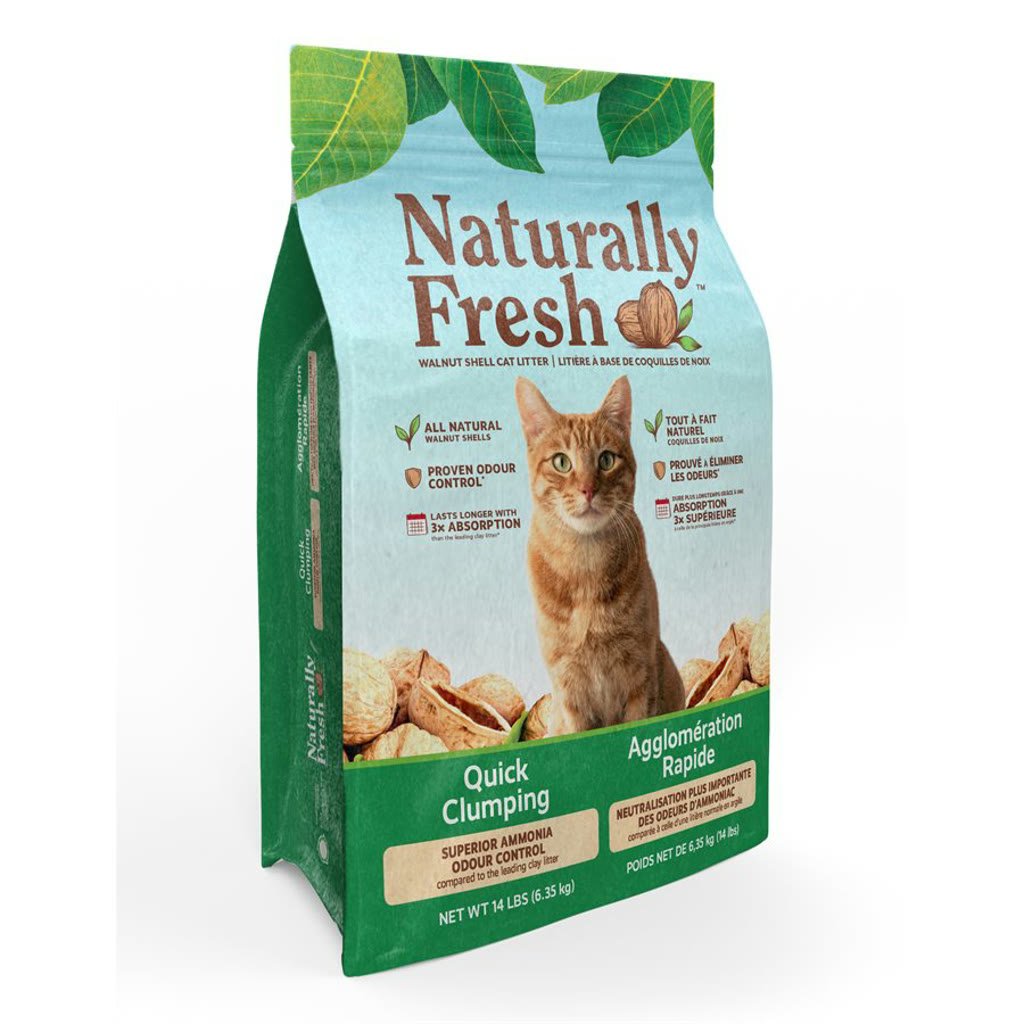
Naturally Fresh is made from walnut shells — a food-industry byproduct — and it’s the non-clay litter that behaves most like clay: it forms hard clumps in about 15 minutes, scoops cleanly, and controls ammonia odor without perfume. It’s unscented, low-tracking, and an October 2026 price survey listed the 30 lb bag around $35, making it one of the cheapest per-pound options here. For clay loyalists who want out of strip-mined bentonite, this is the gentlest transition.
Complaints to know: some owners find it dustier than expected — “dusty” is the recurring knock in owner forums. The dark brown color makes it hard to spot waste and monitor urine color. Walnut dust is still dust, and the brand itself cautions against use where anyone could have a severe nut allergy. Clumps can crumble if disturbed too early.
Specs: 30 lb bag · walnut shell · quick clumping (~15 min) · unscented · low dust · upcycled food byproduct.
Pros: clumps and scoops like clay — easiest transition; strong ammonia odor control; affordable per pound; eco-credible sourcing.
Cons: dustier than the marketing suggests, per owners; dark color hides waste; nut-allergy caution; clumps need time to set.
Verdict: The clay-quitter’s litter — closest to the clay experience without the clay. Check the price on Amazon.
4. Feline Pine Platinum — Best Pine Litter
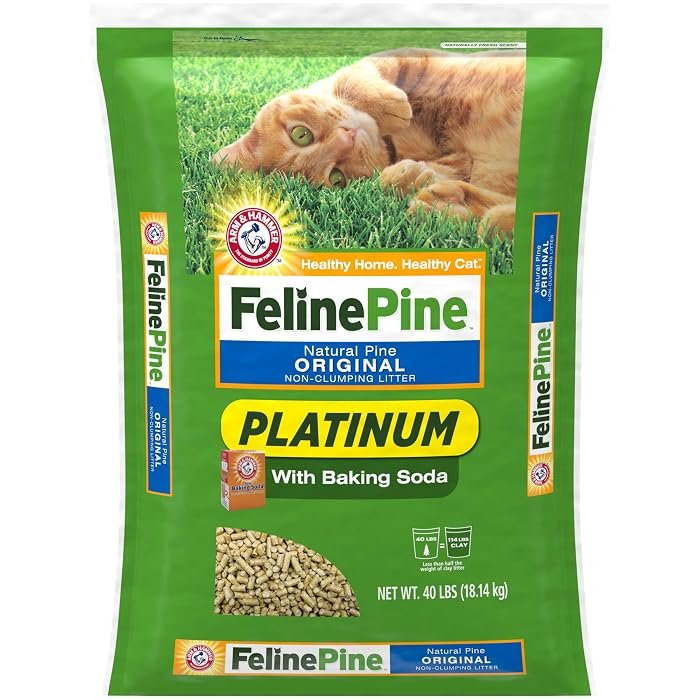
Feline Pine is the old hand of alternative litters: pine shavings (from reclaimed lumber, per the brand) plus baking soda, non-clumping, with pine’s natural odor-neutralizing doing the heavy lifting on urine smell. The Platinum version upgrades the classic pellet formula. It’s cheap, it’s genuinely low-dust, it’s light, and owners with single cats report essentially zero urine odor — the pine handles it.
The honest framing: this is a non-clumping litter, which is a dealbreaker for many — there’s no pee to scoop, just sawdust to eventually dump. Used pellets break down into sawdust that tracks and can get sticky in busy boxes; reviewers note it performs much worse in multi-cat homes. The pine scent bothers some people (and the whole family, in one memorable forum thread), and some cats refuse the pellet texture outright.
Specs: 18 lb bag · pine shavings + baking soda · non-clumping · low dust · no added fragrance · lightweight.
Pros: excellent urine odor control for the price; very low dust; cheap; light bags; no clay.
Cons: non-clumping — full box changes required; sawdust mess in busy boxes; pine scent is divisive; some cats refuse pellets; weak in multi-cat homes.
Verdict: The budget alternative for single-cat homes — unbeatable value if you accept non-clumping. Check the price on Amazon.
5. Fresh News Original — Best Paper Pellet
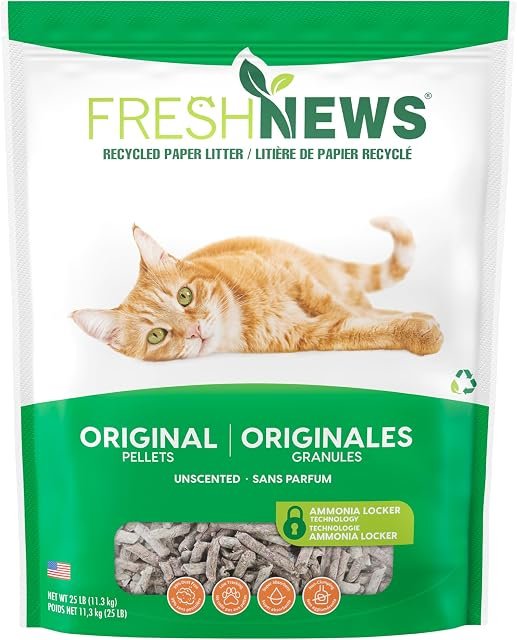
Fresh News is 100% recycled paper pressed into pellets — the litter vets hand out after surgery, because it’s virtually dust-free, soft enough for healing paws, and won’t contaminate wounds the way clay dust can. The pellets are 99% dust-free by claim, low-tracking, and use the paper’s natural carbon plus an ammonia-locking additive for odor. It’s non-allergenic and made in the USA.
The trade-offs are inherent to paper: it’s non-clumping, so you’re doing full litter changes rather than scooping pee, and odor control is weaker than clumping litters — owners describe it as adequate for one cat, stretched for more. The pellets are firm underfoot and some cats dislike the texture. Think of it as a specialty litter (recovery, kittens, severe dust sensitivity) rather than a daily-driver upgrade.
Specs: 25 lb (12 lb also sold) · 100% recycled paper pellets · non-clumping · 99% dust-free claim · ammonia-lock odor tech · unscented · made in USA.
Pros: near-zero dust — the safest pick for post-surgery cats and kittens; low tracking; non-allergenic; recycled and US-made.
Cons: non-clumping; odor control is modest; firm pellets put off some cats; frequent full changes needed.
Verdict: The recovery and kitten pick — unmatched for dust-sensitive situations, not a clay replacement. Check the price on Amazon.
6. So Phresh Odor Control Paper Pellet — Best Budget Paper
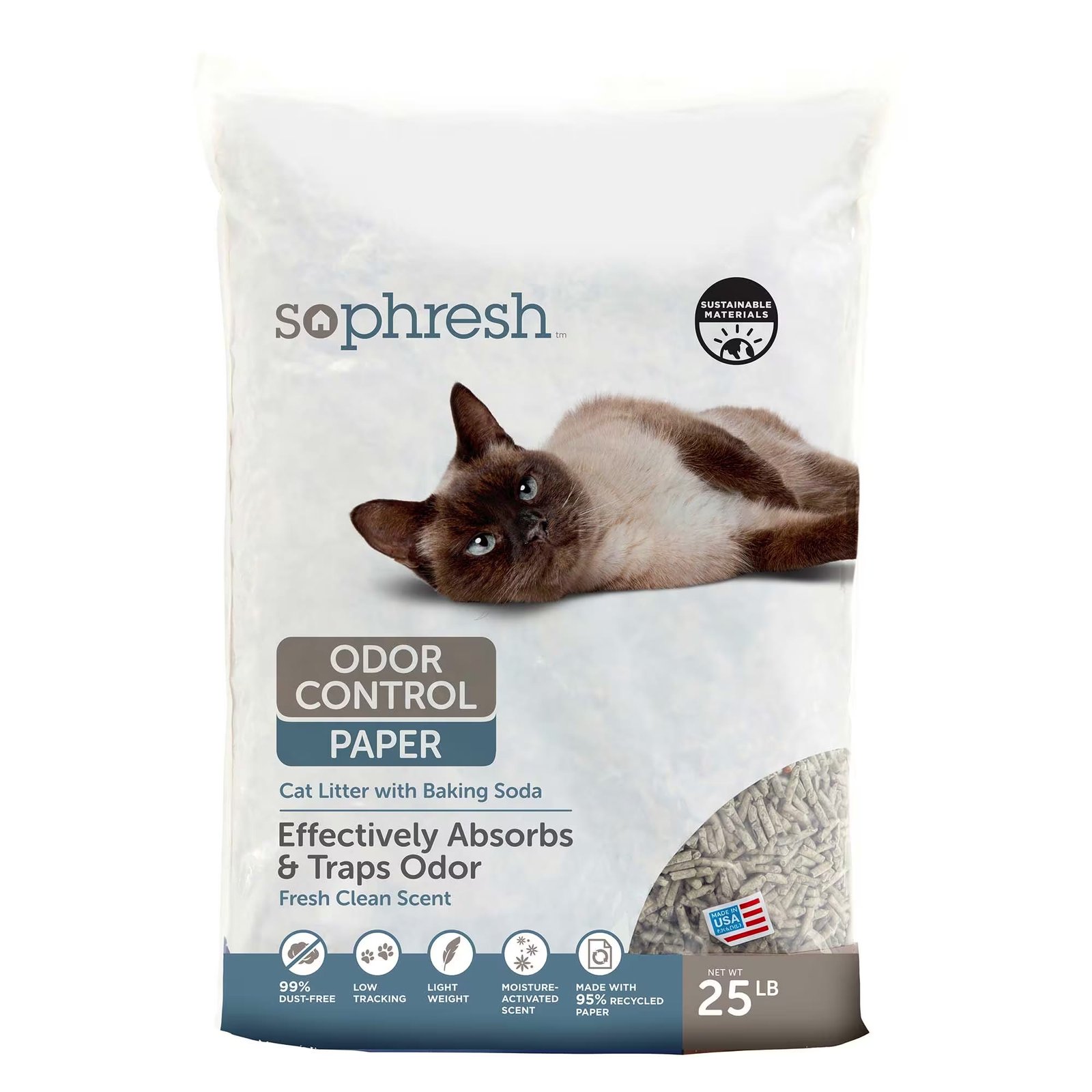
So Phresh (Petco’s brand) is the affordable way into paper litter: 95% recycled paper pellets with baking soda and zeolite for odor, made in the USA. It hits the same notes as Fresh News — very low dust, low tracking, good for kittens and post-surgery recovery — at a lower price point and with easy Petco availability for top-ups on the road.
The complaints match the category: paper pellets can break down into mush under heavy use, odor control fades between full changes, and there’s some paper dust as pellets degrade. It’s a solid budget paper litter, not a miracle — set expectations accordingly and change it on schedule.
Specs: 25 lb bag · 95% recycled paper · baking soda + zeolite odor control · non-clumping · low dust · made in USA.
Pros: cheapest credible paper litter; very low dust; good for kittens and recovery; easy to find at Petco.
Cons: pellets degrade into mush with heavy use; odor control fades; needs disciplined full changes.
Verdict: The budget paper pick — all the dust-free virtues of paper at the lowest price. Check the price on Amazon.
How to Choose a Non Clay Cat Litter
Start from the clay problem you’re escaping. Dust? Go crystal, paper, or grass. Weight for travel? Crystal or pine. Strip-mining guilt? Any of them. Clumping is the thing most alternatives sacrifice — if you must have clumps, your shortlist is grass seed and walnut, full stop.
Non-clumping is a lifestyle change. Crystal, pine, and paper litters don’t make pee clumps — you stir, sift, or dump the whole box. If you’re a dedicated daily scooper of clumps, switching to non-clumping will feel like a downgrade no matter how good the material is.
Budget for the real monthly cost, not the bag price. A $30 bag of PrettyLitter that lasts one cat one month costs more per year than a $35 bag of walnut litter that lasts two. Lightweight litters look expensive per pound and cheap per month — do the math for your cat count.
Multi-cat homes should stay conservative. Pine and paper litters degrade fast under heavy use — reviewers consistently say they fall apart in multi-cat boxes. Walnut and grass hold up better; crystal needs one bag per cat.
Transition slowly, especially off clay. Texture-sensitive cats reject pellets and crystals outright. Mix the new litter over 1–2 weeks, and keep a clay box available during the switch — a cat that won’t use the box is worse than any dust.
For travel, weight beats everything. A month of crystal litter weighs 6 lbs; a month of clay weighs 40. If you’re packing a rig, the lightweight alternatives (crystal, pine, grass) earn their price premium in payload alone.
Bottom line: PrettyLitter is the pick if health monitoring or minimum weight matters most; SmartCat is the best natural clumper for dust-sensitive homes that can handle tracking; Naturally Fresh is the easiest switch for clay loyalists. On a budget, Feline Pine Platinum is unbeatable for single cats, and paper pellets (Fresh News, So Phresh) own the kitten and post-surgery niche.
Frequently Asked Questions
Is non-clay litter actually healthier for cats?
It depends on the concern. Low-dust alternatives (paper, crystal, grass) are easier on cats with asthma or respiratory issues. But “natural” doesn’t automatically mean safer — walnut shells are a nut-allergy risk for sensitive humans, and any litter ingested in large quantities can cause problems. Match the litter to the specific health concern, not the marketing.
Why is non-clay litter so expensive?
You’re paying for processing and lower density: grass seed, walnut shells, and silica crystals cost more to produce and package than strip-mined clay, and lightweight bags contain less material by weight. Per month, the gap narrows — a 6 lb bag of crystal litter can outlast 20 lbs of clay because you throw away less.
Can I use non-clay litter in an automatic litter box?
Usually not. Crystal litter works in some automatics, but pine pellets, paper, and most plant litters jam the rakes and sifters designed for clay granules. Grass and walnut clumping litters are the most likely to work — check your box manufacturer’s compatibility list before buying.
Which non-clay litter is best for kittens?
Paper pellets (Fresh News or So Phresh) — they’re virtually dust-free, soft, and safe if a kitten nibbles them, which is why vets recommend paper litter after surgery too. Avoid clumping clay-style alternatives and crystal litter for very young kittens who mouth everything.
Does crystal litter really detect health problems?
It detects changes in urine pH and the presence of blood through color changes, which can signal UTIs, bladder stones, or kidney issues early. But it’s a screening hint, not a diagnosis — diet, hydration, and stress also shift urine pH, and false alarms are a documented owner complaint. Any persistent color change deserves a vet visit, not a forum post.
What’s the lightest cat litter for travel?
Silica crystal litters like PrettyLitter — about 80% lighter than clay, with a month’s supply weighing around 6 lbs. Pine and grass litters are the next lightest. If you’re packing an RV or flying with a travel litter box, weight savings alone can justify the premium.
